
Reviewed · ACROPOLIS TOURS
Acropolis: Private Guided Tour
The smartest feature here is the private late-day timing. You get two hours at the Acropolis with an archaeologist guide, when summer heat has eased and the city below may be glowing toward sunset. I like the small limit of five people, which gives you room to stop for questions, and I like that guides such as Kimissa, Sophia, Rigoula, and Katerina have made the visit lively for both adults and children. The main drawback is cost: at $176 per person, you still pay the Acropolis admission fee separately.
You should also expect real work on your feet. The climb, uneven surfaces, and stairs can trouble anyone with knee, back, or mobility issues, although a private guide can slow the pace and shape the route around the group. Bring water, comfortable shoes, and cash for the entrance ticket.
In This Review
- Key points to know before booking
- Why a private Acropolis visit can be worth the price
- Meeting your guide and entering the Acropolis
- The climb to the Parthenon
- The Erechtheum and its unusual design
- The Temple of Athena Nike and the sacred entrance
- Theater of Dionysus, where Greek drama began
- Sunset views and the question of crowd levels
- The guide makes the biggest difference
- Who will get the most from this tour
- Practical details that affect your decision
- Should you book the private Acropolis tour?
- FAQ
- How long does the Acropolis private tour last?
- How many people can join the private group?
- Which Acropolis monuments are included?
- Is the Acropolis entrance fee included?
- What languages are available for the live guide?
- What should I bring to the tour?
Key points to know before booking
- Private group of up to five: You can ask specific questions, take photos, and set a comfortable pace.
- Late afternoon start: Cooler temperatures and softer light make this a smart choice in warm months.
- Licensed archaeologist guide: Expect context on the monuments, myths, and Athenian culture rather than a quick photo stop.
- Four major sights included: The route covers the Parthenon, Erechtheum, Temple of Athena Nike, and Theater of Dionysus.
- Admission is extra: You pay the Acropolis entrance fee on site, and you should be prepared to pay in cash.
- Two-hour visit: It is focused and efficient, but not long enough for every corner of the Acropolis complex.
Why a private Acropolis visit can be worth the price
The Acropolis is not hard to recognize, but it is easy to misunderstand. From below, the Parthenon can look like one grand ruin on a hill. Once you are among the monuments, you begin to see that this is a whole sacred complex, shaped by religion, politics, war, rebuilding, and centuries of change.
That is where a private archaeologist guide earns the fee. You are not simply pointed toward the famous columns. You can ask why the temples were built, how the buildings worked together, and what later generations did to the site. The guides are also able to adjust the explanation to your interests. If you want myths, architecture, Athenian politics, or practical help taking in the ruins, you can steer the conversation.
The price needs an honest look. At $176 per person, this is expensive for a two-hour activity, especially since admission is not included. For one person or a couple, a private tour may cost more than a small-group alternative. For a family of five, however, the cost is easier to justify because the total price is shared across the group and you get your own guide.
I especially like the value for families and mixed-age groups. A guide can keep children involved instead of delivering a long lecture. One guide used questions and a children-versus-parents game to hold attention, while another adapted the pace for a group member who had trouble keeping up. That kind of flexibility is difficult to get in a large group.
More Acropolis and Parthenon visits:
- Athens: Acropolis & up to 5 Archaeological Sites Combo Pass
★ 4.4 · 12,619 reviews - Athens: Acropolis Ticket with Optional Audio or Live Guide
★ 4.2 · 11,055 reviews - Athens: Acropolis, Parthenon & Acropolis Museum Guided Tour
★ 4.8 · 9,316 reviews
Meeting your guide and entering the Acropolis
You meet at the local partner’s shop before heading into the archaeological site. The exact starting time depends on availability. The experience is promoted as a late-afternoon visit, but scheduled times can vary, and one family’s two-hour visit ran from 8:30 to 10:30.
The late start is the key seasonal advantage. In Athens during summer, the exposed upper hill can be hot, bright, and tiring. A later visit may give you more comfortable temperatures and better light for views over the city. It can also reduce the crush that often builds around the major monuments during the morning.
Do not read skip the ticket line as free admission. Your guide helps you avoid the ticket queue, but you still need to buy the Acropolis entrance ticket separately on the day. The instructions say to be ready to pay cash, so do not arrive assuming the tour price covers the site fee.
Reduced admission rules matter for younger visitors. EU citizens under 25 enter free, while non-EU citizens under 25 receive a 50 percent discount. Bring a passport if you want to claim a reduced rate. This can lower the total cost for families, but the guide or operator does not cover the admission fee.
The climb to the Parthenon
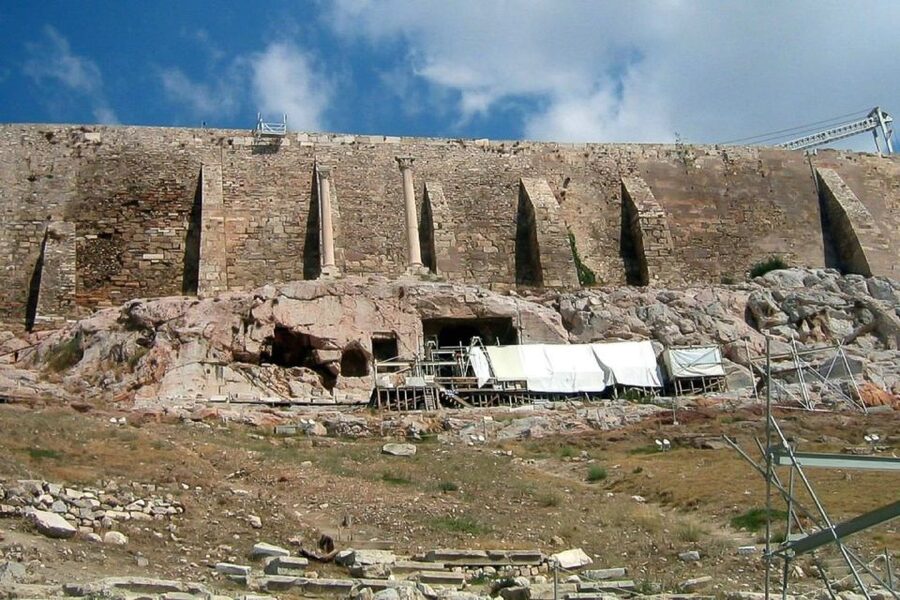
The approach is part of the experience, but it is also the physical challenge. You will walk uphill, use stairs, and cross surfaces that are not designed like a modern museum floor. Comfortable shoes are essential, and a sunhat is a good idea for protection on the exposed site.
Your guide can use the climb to explain what you are seeing before you reach the summit. That opening overview is useful because it gives the rest of the visit a clear shape. Instead of arriving at the Parthenon with a blur of names, you can understand how the buildings relate to one another.
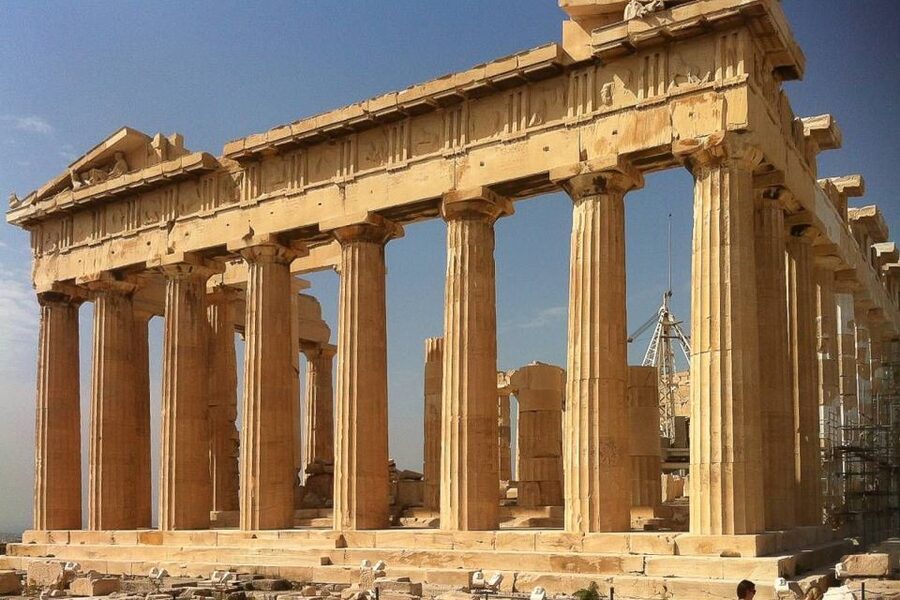
The Parthenon is the obvious centerpiece. Its scale and position make it the monument most people picture before arriving, but the guide’s explanation can help you look beyond the familiar facade. Pay attention to the surviving sculpture, the columns, the damage, and the way the building dominates the hill.
You will not be walking through an intact temple. The Parthenon is a major archaeological monument under ongoing preservation, and parts of the structure are missing or reconstructed. That is not a flaw in the tour, but it does mean the guide’s words are important. A strong explanation helps you picture the building as an active place of worship rather than a silent shell.
The Erechtheum and its unusual design
The Erechtheum gives the visit a different feel. Its design is less straightforward than the Parthenon, and it is closely tied to the sacred traditions of Athens. The famous porch with the female figures is one of the site’s most recognizable views.
This is a good place to ask questions. A private guide can spend more time on the parts that catch your eye instead of following a fixed speech. You might want to ask about the building’s purpose, the religious stories connected with the Acropolis, or the difference between its design and the Parthenon’s more familiar form.
Because the site is exposed and often crowded, you may not linger exactly where you wish. The private format gives you more freedom, but it cannot remove every visitor from the monument or change official access rules. Your guide can help you find a sensible place to listen and photograph without treating the Acropolis like a private set.
A few more Athens days worth a look
- Best of Athens Half Day Private Tour
★ 5.0 · 3,714 reviews - Athens Full Day Private Tour
★ 5.0 · 2,903 reviews - Athens Airport Private Arrival Transfer with Meet & Greet
★ 4.5 · 1,495 reviews - Athens Airport to Athens Hotels Private Arrival Transfer
★ 5.0 · 947 reviews
The Temple of Athena Nike and the sacred entrance
The Temple of Athena Nike is smaller than the Parthenon, yet its position near the entrance gives it real importance. It is easy to overlook if you are focused only on the large temple at the top. A guide brings the smaller monument into the story and shows how the Acropolis was designed as a sequence of meaningful spaces.
This is one reason an archaeologist-led visit works better than simply walking up with a printed map. You gain a sense of priority. The guide can point out what deserves a close look, what is best understood from a distance, and how the monuments fit into the religious life of ancient Athens.
You should still expect a brisk pace. Two hours is enough for the main monuments and a clear introduction to the site, but it is not enough for every detail. If you want extensive time for inscriptions, construction methods, or long photo sessions, you may need to continue on your own after the tour.
Theater of Dionysus, where Greek drama began
The Theater of Dionysus is included among the major stops, and it adds a welcome change from temple architecture. Here you can think about performance, public life, and the way ancient Athenians gathered for drama and civic events.
The theater sits on the southern slope of the Acropolis, so the route involves more walking and changes in elevation. That makes the shoe advice practical, not decorative. If someone in your party has back, knee, or climbing difficulties, tell the guide early. The private setup allows the guide to adjust the pace and make the route less stressful.
One important benefit is that the tour is not limited to a single postcard view. The Parthenon gets the attention, but the Theater of Dionysus helps show how broad the Acropolis experience really is. You are seeing religious monuments, civic spaces, art, mythology, and the physical setting that connects them.
Sunset views and the question of crowd levels
The late-afternoon schedule is designed to help with two common Acropolis problems: heat and crowds. It does not guarantee an empty site. The Acropolis is one of Athens’ busiest attractions, and popular monuments can still be crowded at any hour.
What the private tour changes is your ability to respond. A guide can choose a sensible order, move you away from a congested spot, and help you use your limited time well. One family found that its guide made the Acropolis feel unusually calm and helped speed up the exit, which is particularly useful when someone in the group is tired.
The views over Athens are another reason to favor the later start. As the light changes, the city becomes easier to read from above. You may also get more attractive photographs than you would in harsh midday sun. The sunset element depends on the time of year and the booked start, so confirm the available slot rather than assuming every tour ends at sunset.
Winter requires special attention. From November 1 to May 1, the Acropolis closes earlier, so tours cannot start later than 10:00 during the period covered by the operating information. In cooler months, the timing advantage is less about escaping heat and more about fitting the visit around the shorter opening hours.
The guide makes the biggest difference
The strongest feature of this experience is the guide, not just the route. The tour is offered in English, French, and German, with live guidance from a licensed archaeologist.
Several guide names appear in the experience history, including Kimissa, Sophia, Rigoula, Dimitra, and Katerina. The praise is consistent in useful ways: clear explanations, strong storytelling, flexibility, and the ability to respond to questions. Rigoula, for example, connected the Acropolis to Athenian culture and also shared extra information about the Acropolis Museum. Katerina kept children interested for the full two hours.
That does not mean every guide will use the same style. One may focus on myths and stories, another on architecture or archaeology. I recommend arriving with two or three questions ready. Ask about the parts you care about most, because a private tour gives you a better chance to shape the discussion.
The small group also helps with photographs. You do not have to wait for a large party to assemble before moving on, and you can pause without feeling that you are holding up strangers. For a family or group of friends, this is a real comfort.
Who will get the most from this tour
I would choose this experience for a first visit to Athens when you want the Acropolis to make sense, not just appear in your photo album. It is also a good fit if you have only a short time in the city and want a focused introduction to the essential monuments.
Families should consider it seriously. The private format allows a guide to change the pace, answer children’s questions, and use stories or simple games to keep the visit moving. The same flexibility helps groups with different walking speeds.
It suits visitors who enjoy asking questions and do not want a fixed script. If you already know a great deal about ancient Greek architecture, you may prefer to explore independently and save the fee. If you want context, structure, and help with the site’s physical demands, the price is easier to defend.
This is less suitable for anyone seeking a relaxed, seated activity. The tour involves uphill walking, stairs, uneven ground, and sun exposure. A private guide can help, but the Acropolis itself remains a demanding archaeological site.
Practical details that affect your decision
Wear sturdy, comfortable shoes. Bring a sunhat, especially in warm weather, and expect to be outdoors for the full two hours. A bottle of water is included, but carrying what you need for the walk is still sensible.
The tour includes the private guide and water. It does not include the Acropolis entrance ticket. You should bring cash for that fee and a passport if you may qualify for an age-based reduction.
Cancellation is free up to 24 hours before the experience for a full refund. You can also reserve now and pay later, which helps if your Athens schedule is still shifting. Check the available starting times carefully, especially in winter.
The overall rating is 4.9 from 56 reviews, and the most repeated strengths are useful ones: guides who explain clearly, private pacing, family-friendly storytelling, help with mobility concerns, and good handling of busy conditions. Those qualities matter more here than a long list of included extras.
Should you book the private Acropolis tour?
Book it if you are traveling with up to five people, want a guide who can respond to your interests, and value cooler timing over the lowest possible price. The late afternoon slot, private pace, and archaeologist’s explanation turn a demanding monument visit into a more organized two hours.
Think twice if $176 per person feels high once admission is added, or if you prefer to wander without a guide. You can see the Acropolis independently. You will simply need to provide your own structure and historical context.
For most first-time visitors, I would choose this tour when the budget allows, especially for families and small groups. Arrive ready to walk, carry cash for admission, and ask the guide to adapt the visit to your group. That is where the private format earns its keep.
FAQ
How long does the Acropolis private tour last?
The tour lasts two hours.
How many people can join the private group?
The private tour is available for groups of up to five people.
Which Acropolis monuments are included?
The visit includes the Parthenon, Erechtheum, Temple of Athena Nike, and Theater of Dionysus, along with other important areas of the Acropolis.
Is the Acropolis entrance fee included?
No. You must pay the Acropolis entrance fee separately on site and should be prepared to pay cash.
What languages are available for the live guide?
Live guidance is available in English, French, and German.
What should I bring to the tour?
Wear comfortable shoes and consider bringing a sunhat. Bring your passport if you may qualify for a reduced entrance fee, and carry cash for the Acropolis ticket.
Freshly added Athens trips
- Athens and Ancient Corinth Private from Athens★ 5.0 · 3 reviews
- From Athens: Mycenae and Epidaurus Private Tour★ 4.8 · 3 reviews
- Full day Meteora private tour★ 5.0 · 3 reviews
- Double Shore Dive (certified divers)★ 4.5 · 3 reviews
- Athens Hills: Mythology Treasure Hunt★ 5.0 · 3 reviews
- Sunset & swimming at Cape Sounio, Poseidon temple★ 5.0 · 3 reviews
- Philosophy Experience at Plato’s Academy Park – basic version★ 5.0 · 3 reviews
- Private Acropolis Tour – Ticket Included★ 5.0 · 3 reviews
Acropolis Tours, compared.

Acropolis & up to 5 Archaeological Sites Combo Pass
Read our review →

Acropolis, Parthenon & Acropolis Museum Guided Tour
Read our review →
Acropolis, Parthenon & Acropolis Museum Guided Tour
Read our review →


Acropolis monuments & Parthenon Walking Tour with Optional Acropolis Museum
Read our review →Browse the lists this tour appears in