
Reviewed · ACROPOLIS TOURS
Acropolis, Parthenon and Plaka, Monastiraki Guided tour
The best thing about this 3.5-hour Athens walk is its change of pace. You begin among the great stones of the Acropolis, then move into Plaka’s lanes, Monastiraki’s market streets, and Psirri’s cafes and street art. Ancient Athens is not kept behind glass here. It meets the city you can see and hear today.
I like the pre-booked Acropolis entry, which saves you from buying tickets on the spot, and I like the small local touches: medieval chapels, a bakery stop for bougatsa, and practical dinner advice from guides such as Artemis and Kostas. The main consideration is physical effort. You will walk on hills, stairs, and uneven ground, and the tour is not suitable for wheelchair users.
In This Review
- Key points at a glance
- Starting at the Acropolis, where Athens makes its first impression
- Why a guided Acropolis visit earns its place in the price
- Plaka, where Athens turns into a walking town
- A Greek pastry stop that breaks up the history
- Monastiraki, where ruins meet market life
- Psirri and the final stretch through modern Athens
- What to bring, and who should book
- Is the $85 Athens walking tour worth booking?
- FAQ
- How long does the tour last?
- What language is the tour conducted in?
- Is Acropolis admission included?
- Where does the tour start?
- Does the tour include hotel pickup?
- What neighborhoods are included?
- Is food included?
- Is the tour suitable for wheelchair users?
Key points at a glance
- The Acropolis comes first: See the Parthenon, Erechtheion, and Theater of Dionysus with a licensed English-speaking guide.
- Plaka adds the local texture: Walk through old lanes, neoclassical buildings, courtyards, and medieval chapels.
- Bougatsa is part of the route: Stop at a local bakery for this Greek pastry, served sweet or savory.
- Monastiraki shows modern Athens: Expect market energy, street food, ancient ruins, and busy city life in one view.
- Psirri brings a younger edge: Finish among cafes, street art, and local culture.
- The walk is active: Bring sports shoes, a hat in summer, and no large bags or luggage.
Starting at the Acropolis, where Athens makes its first impression
You meet inside the Athens Walks tour office at Porinou 5, near the Acropolis area. There is no hotel pickup, so allow time to reach the office on your own. The tour is conducted in English and lasts about three and a half hours.
The Acropolis is the natural opening. It gives you the grandest setting in Athens, but it also gives your guide plenty to explain before the walk turns toward ordinary city streets. With the entrance ticket arranged ahead of time, you can focus on the monuments rather than the ticket counter.
The climb and stone paving call for sensible footwear. I would wear shoes with a firm sole and good grip, not smooth sandals. A hat matters in the summer, since the exposed upper site offers little comfort from the sun.
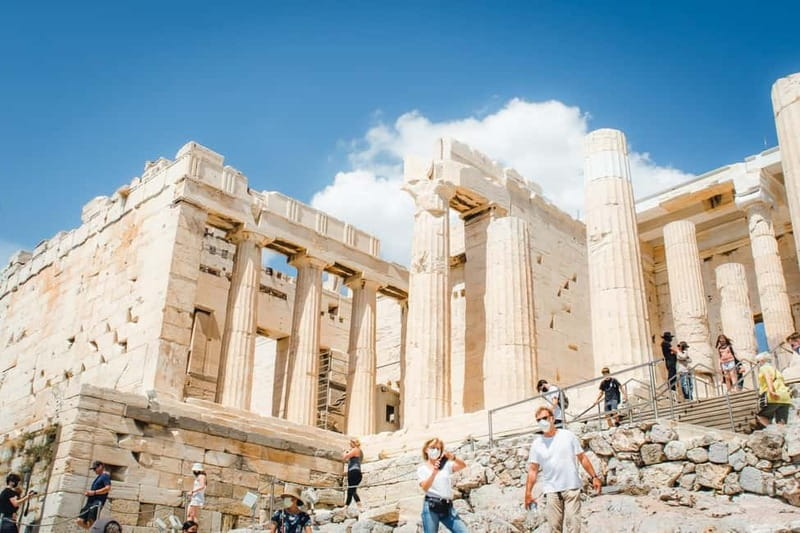
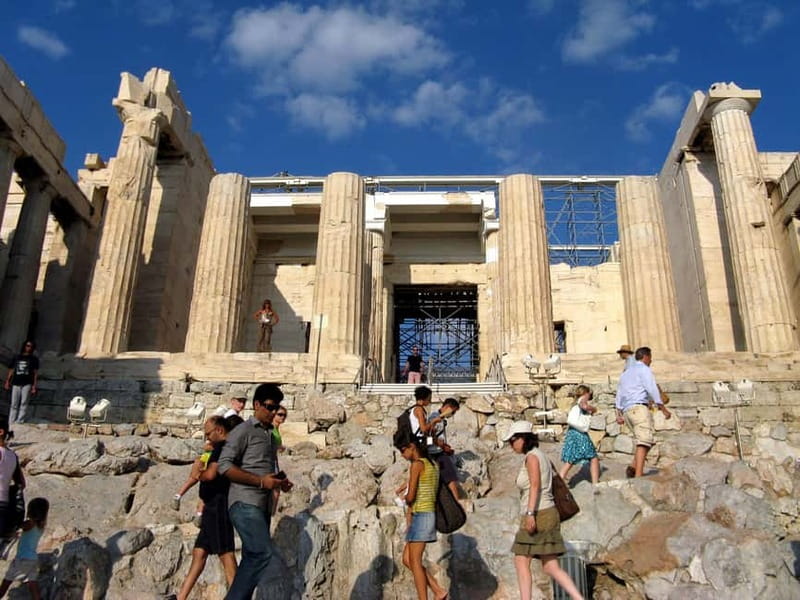
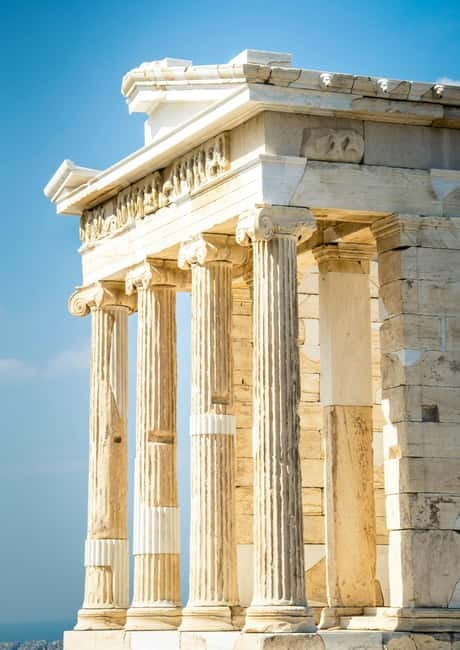
The Acropolis is more than the Parthenon alone. Your route includes the Parthenon, the Erechtheion, and the Theater of Dionysus. Each gives you a different window into Athens.
The Parthenon is the visual star. Its size, position, and surviving columns explain why it has become the symbol of classical Athens. A good guide can help you look past the familiar postcard view and notice how the temple was planned, decorated, and placed above the city.
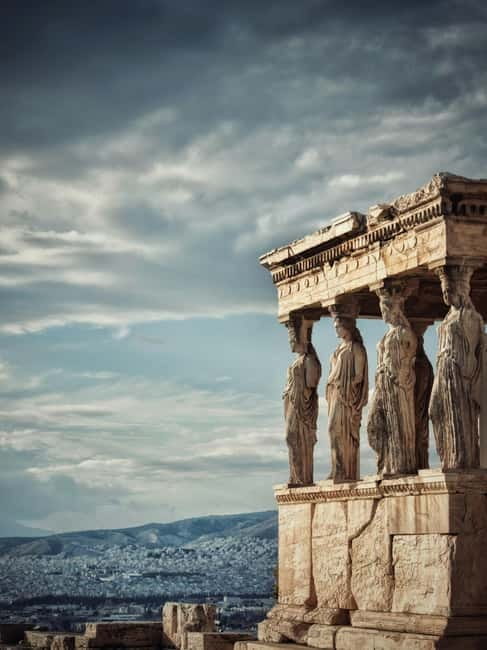
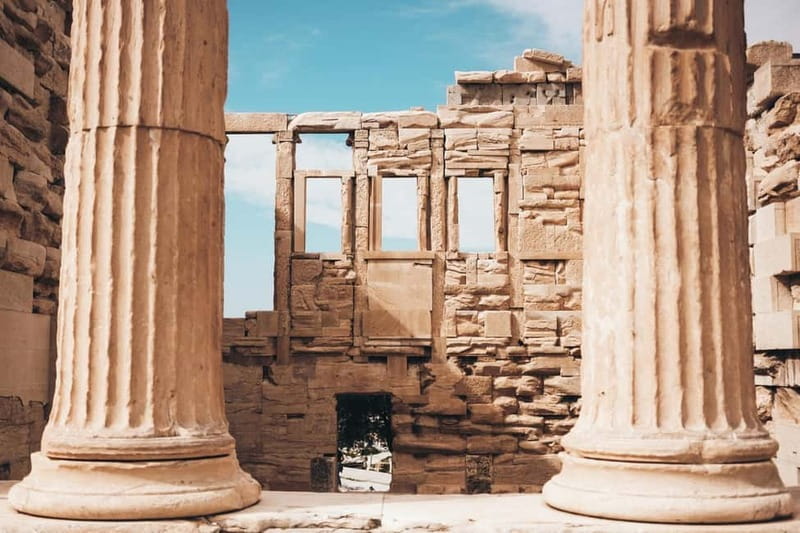
The Erechtheion has a different character. Its unusual design and famous female-shaped columns make it one of the most memorable stops on the hill. The Theater of Dionysus brings the ancient city down to earth in a different way. This is where the guide can connect architecture with drama, public life, and the culture that shaped later Western thought.
You will also hear how Athens became associated with democracy, philosophy, and civic debate. That context matters. Without it, the Acropolis can feel like a collection of broken buildings. With it, the stones begin to suggest how public life worked in the ancient city.
More Acropolis and Parthenon visits:
- Athens: Acropolis & up to 5 Archaeological Sites Combo Pass
★ 4.4 · 12,619 reviews - Athens: Acropolis Ticket with Optional Audio or Live Guide
★ 4.2 · 11,055 reviews - Athens: Acropolis, Parthenon & Acropolis Museum Guided Tour
★ 4.8 · 9,316 reviews
Why a guided Acropolis visit earns its place in the price
The listed price is $85 per person. That is not a bargain-basement walk, but it includes the Acropolis and Parthenon entrance, a licensed guide, and a long walking route through four central districts.
If you visited the Acropolis alone, you would still see the monuments, but you would need to arrange the ticket yourself and supply the explanation. Here, the cost covers both access and interpretation. That makes the price easier to justify for a first visit, especially if your time in Athens is limited.
The strongest part of the guiding is the storytelling. Guides named Ana, Anna, Artemis, Kostas, and Marisa have been praised for lively explanations, mythology, ancient history, and modern Athens. Ana is noted for giving detailed information about the sights. Anna’s approach links mythology with the monuments. Marisa is especially attentive to the people in her group and adds comments about present-day Athens, not only the ancient past.
That range is useful because the tour is not just a lecture on marble. Kostas has also helped visitors plan the rest of their day and offered dinner suggestions. If this is your only day in Athens, that kind of local advice can add real value.
The group experience can affect the pace. One account describes a route being adjusted to suit the group’s interests, while another wished for more hill and stair walking but found the group’s makeup limited that. You should expect a shared walking tour, not a fully private itinerary. The guide may adapt, but the needs of the group still set the rhythm.
Plaka, where Athens turns into a walking town
After the Acropolis, the route heads into Plaka, Athens’ old quarter. This is where the tour shifts from famous monuments to smaller details.
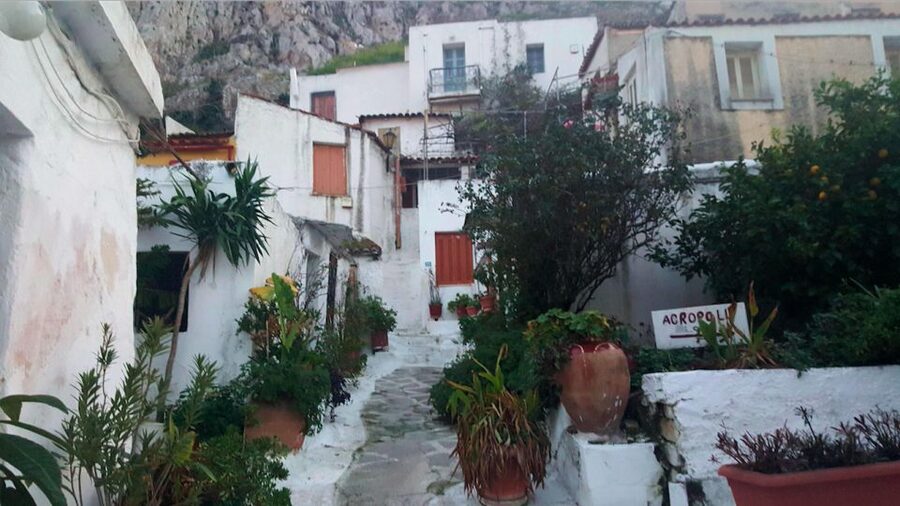
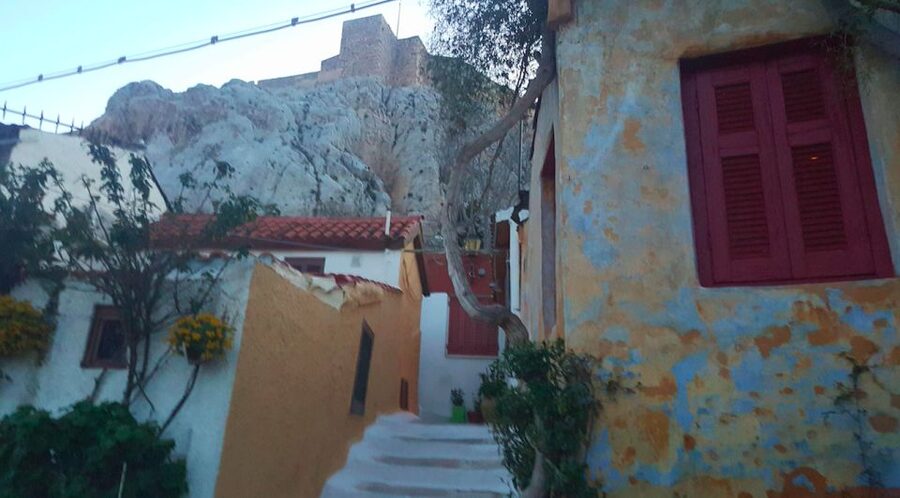
Plaka is known for cobbled lanes, neoclassical buildings, colorful houses, and courtyards. You will not need a museum ticket to appreciate it. The pleasure is in the change of scale: after the broad views and formal ruins of the Acropolis, you are walking past homes, cafes, chapels, and narrow streets.
The visit to medieval chapels is one of the more unusual parts of the route. Many first-time visitors come to Athens focused on classical Greece and miss the city’s Byzantine and later layers. A small church can show you that Athens did not stop existing after antiquity. It continued through the medieval period and into the modern city.
This is also the part where a guide earns their keep by pointing out places you might pass without noticing. The old quarter is pleasant to wander, but its meaning is easier to grasp when someone explains why a building, chapel, or lane matters.
You should keep your expectations practical. Plaka is attractive, but it is also a popular central district. Some streets can feel busy, and the uneven paving is not ideal for anyone with limited mobility. The tour information specifically says it is not suitable for wheelchair users.
The route’s hill and stair sections are another consideration. The walking is not extreme for most active visitors, but this is not a flat cafe stroll. Heat, stone surfaces, and the length of the route can make the Acropolis section tiring before you reach Plaka.
A Greek pastry stop that breaks up the history
The included bougatsa tasting gives the tour a welcome pause. You stop at a local bakery for a traditional Greek pastry, which may be sweet or savory.
Bougatsa is made with thin pastry and can be filled in different ways. The sweet version is commonly associated with creamy filling and a dusting of sugar, while savory versions may contain cheese or other fillings. The exact choice is not specified, so treat it as a chance to sample the bakery’s offering rather than a fixed menu order.
I like this stop because food explains a city in a way monuments cannot. You get a brief look at an everyday Greek habit, and the bakery visit keeps the route from becoming three straight hours of dates, names, and architectural terms.
It is also a useful moment to ask your guide for suggestions. Artemis is noted for recommending places to eat, and Kostas has offered advice for continuing the day after the tour. You should listen closely if you want a dinner idea that fits your plans.
Do not expect a full meal. The bougatsa is a snack included in the tour, not lunch. If you book a morning or midday start, you may still want to plan a proper meal afterward.
More Plaka and old town walks:
- Acropolis monuments, Parthenon and Plaka, Monastiraki walking tour
★ 5.0 · 182 reviews - Culinary Backstreets of Plaka – Athens Food Tour
★ 5.0 · 182 reviews - Traditional Greek Show in Plaka with Dinner
★ 3.6 · 178 reviews - VIP Private Guided Tour of Athens Acropolis & Plaka in a Sidecar
★ 5.0 · 108 reviews
Monastiraki, where ruins meet market life

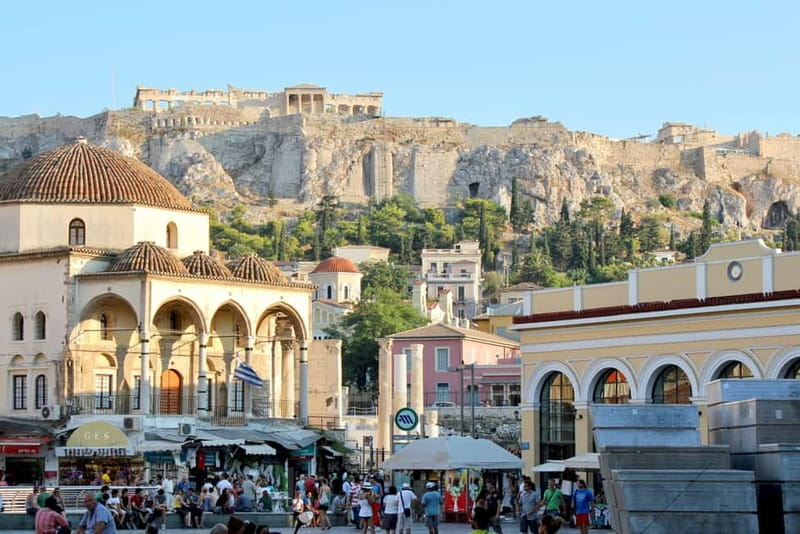
Monastiraki brings a sharper contrast. The district is known for its flea market, street food, and views where ancient remains sit beside modern Athens.
This is one of the most useful parts of the walk for getting your bearings. You see how the city operates around its old monuments instead of viewing ancient Athens as an isolated archaeological site. Shops, food stalls, pedestrians, and ruins share the same streets.
The market atmosphere can be lively and crowded. That is part of the appeal, but it also means you need to stay close enough to hear the guide. Keep your belongings secure, particularly in busy areas, and avoid bringing luggage or large bags. Large bags are not allowed on this activity in any case.
Monastiraki is a good place to understand the city’s mixed character. Athens can be formal and monumental on the Acropolis, relaxed and residential in parts of Plaka, then noisy and commercial only a short walk later. The route lets you see those changes without arranging separate tours.
The views of ruins mixed with present-day buildings are especially helpful if you are trying to understand Athens as a living capital. The city is not polished into one single style. Its appeal comes partly from the layers sitting close together.
Psirri and the final stretch through modern Athens
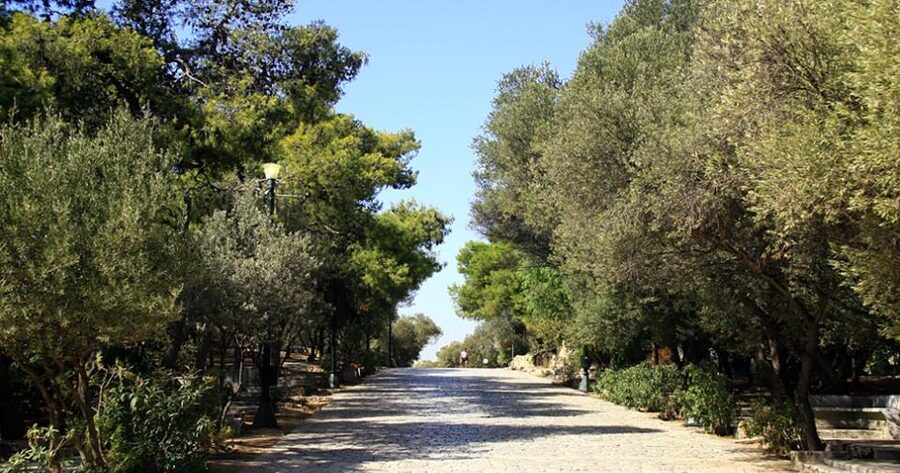
The walk includes Psirri, an area known for street art, cafes, and local culture. It gives the tour a more contemporary finish than simply ending at the Parthenon.
Psirri helps balance the ancient focus. After hearing about democracy, temples, theater, and mythology, you see a district shaped by current city life. Street art and cafes create a different mood from Plaka’s old buildings and Monastiraki’s market lanes.
The activity information says the walk ends back at the meeting point, while Psirri is described as part of the final portion of the route. Confirm the exact ending instructions when you book, especially if you have a restaurant reservation or another timed activity afterward.
The route may also give you ideas for the rest of your day. Kostas is praised for making useful recommendations, and the overall walk is designed to introduce you to central Athens rather than simply deliver you to one monument and send you off.
What to bring, and who should book
Bring comfortable sports shoes. This is the single most important preparation. The route includes Acropolis paving, hills, stairs, and cobbled streets, so comfort matters more than looking dressed up.
In summer, add a hat. You should also dress for sun and walking, though the supplied information only specifically calls out shoes and a hat. Leave pets, luggage, and large bags behind.
This tour suits you best if:
- You are visiting Athens for the first time.
- You want the main Acropolis monuments with context, not just an entry ticket.
- You prefer walking to riding between separate sights.
- You want Plaka, Monastiraki, and Psirri in one route.
- You enjoy local food and practical restaurant suggestions.
- You have only a short stay and want a strong first orientation.
It may not suit you if you need step-free access, dislike hills, or want to explore every site at your own pace. The fixed duration also means you cannot linger indefinitely at the Parthenon or spend a long time shopping in Monastiraki.
The cancellation terms are forgiving: you can cancel up to 24 hours before the tour for a full refund. You can also reserve now and pay later, which helps if your Athens schedule is still shifting.
Is the $85 Athens walking tour worth booking?
I would book this if you want one well-planned introduction to ancient and modern Athens. The strongest value comes from the combination of Acropolis admission and a licensed guide, followed by a route that keeps going into Plaka, Monastiraki, and Psirri.
The guide can make a major difference. Ana, Anna, Artemis, Kostas, and Marisa are associated with detailed explanations, lively history, mythology, modern city insight, and useful food advice. You cannot guarantee a particular guide unless the company confirms one, but the range of praised guiding styles is encouraging.
I would skip it if you want a quiet, unhurried Acropolis visit or if stairs and uneven paving will cause problems. I would also avoid booking it immediately before an important reservation, since the walk is active and the exact pace can depend on the group.
For a first day in Athens, though, this is a sensible route. You get the essential ancient sights, a pastry from a bakery, old chapels, market streets, street art, and a better feel for how the city’s past and present share the same blocks.
FAQ
How long does the tour last?
The tour lasts 3.5 hours. Starting times vary, so check availability for the date you want.
What language is the tour conducted in?
The live guided tour is conducted in English.
Is Acropolis admission included?
Yes. Entrance tickets for the Acropolis and Parthenon are included, with pre-booked access intended to help you skip the ticket line.
Where does the tour start?
You meet inside the Athens Walks tour office at Porinou 5, 11742.
Does the tour include hotel pickup?
No. Hotel pickup and drop-off are not included.
What neighborhoods are included?
The route includes Plaka, Monastiraki, and Psirri, along with the Acropolis area.
Is food included?
Yes. You receive a Greek bougatsa snack at a local bakery. It may be sweet or savory.
Is the tour suitable for wheelchair users?
No. The activity is listed as unsuitable for wheelchair users. Comfortable sports shoes are recommended, and a hat is a good idea during summer.
Freshly added Athens trips
- Athens and Ancient Corinth Private from Athens★ 5.0 · 3 reviews
- From Athens: Mycenae and Epidaurus Private Tour★ 4.8 · 3 reviews
- Full day Meteora private tour★ 5.0 · 3 reviews
- Double Shore Dive (certified divers)★ 4.5 · 3 reviews
- Athens Hills: Mythology Treasure Hunt★ 5.0 · 3 reviews
- Sunset & swimming at Cape Sounio, Poseidon temple★ 5.0 · 3 reviews
- Philosophy Experience at Plato’s Academy Park – basic version★ 5.0 · 3 reviews
- Private Acropolis Tour – Ticket Included★ 5.0 · 3 reviews
Acropolis Tours, compared.

Acropolis & up to 5 Archaeological Sites Combo Pass
Read our review →

Acropolis, Parthenon & Acropolis Museum Guided Tour
Read our review →
Acropolis, Parthenon & Acropolis Museum Guided Tour
Read our review →


Acropolis monuments & Parthenon Walking Tour with Optional Acropolis Museum
Read our review →Browse the lists this tour appears in