
Reviewed · ACROPOLIS MUSEUM TOURS
Acropolis & Acropolis Museum PRIVATE Expert led Guided Tour
The best part of this private tour is the connection between the stones on the Acropolis and the objects preserved below in the museum. A guide such as Marina, Vicky, Lydia, or Elina can turn a familiar marble temple into a story about politics, religion, theater, war, and daily life.
I like the licensed archaeological guide, since you can ask direct questions instead of following a fixed speech. I also like the choice of starting in the museum, as one guide used the galleries to explain details that made the later visit to the Acropolis easier to understand. The main drawback is cost: at $163 per person before admission tickets, this is a serious splurge for two people.
In This Review
- Key points at a glance
- What this private Acropolis tour is really offering
- Meeting near Makrigianni 7
- Starting at the Theater of Dionysus
- Climbing through the Propylaea
- The Temple of Athena Nike and the Parthenon
- The Erechtheion and the contest for Athens
- Descending past the Odeon of Herodes Atticus
- Making sense of the Acropolis Museum
- The Ancient Agora alternative
- How much value do you get for $163?
- Who should book this experience?
- Practical ways to improve your visit
- Should you book it?
- FAQ
- Where does the tour meet?
- Is hotel pickup included?
- Are admission tickets included in the price?
- How long does the tour last?
- Which languages are available?
- Is the tour private?
- Is the tour suitable for wheelchair users or pets?
Key points at a glance
- See the Acropolis and museum together: The tour links the Parthenon and its companion monuments with the original objects and sculptures displayed nearby.
- A private guide sets the pace: Your group can ask questions, pause for photos, and adjust the level of detail without waiting for a large tour.
- Theater history begins at Dionysus: You visit the theater where ancient Greek drama took shape nearly 3,000 years ago.
- Mythology has a clear home: The Erechtheion and Temple of Athena Nike provide memorable stories about Athens, its gods, and its rivals.
- Museum time is focused: Your guide points out the main works, models, films, and displays rather than leaving you to wander without a plan.
- Tickets need attention: Admission is not included, and you must respond after booking if you want the operator to arrange skip-the-line tickets.
What this private Acropolis tour is really offering
Athens gives you plenty of chances to look at ancient marble. The harder part is understanding what you are seeing. The Acropolis is a powerful place, but without context it can become a hot uphill walk toward a famous building, followed by a few photographs and a quick exit.
This tour is built to fill in those missing pieces. Your guide explains why the monuments were built, what they meant to ancient Athenians, and how later damage changed what remains today. You also get the museum’s sculptures, artifacts, scale models, and visual displays, which help you picture the Acropolis as a working religious center rather than a silent ruin.
The private format matters most if you are curious or traveling with mixed interests. You can ask why a temple was designed in a certain way, how mythology shaped public life, or what a particular sculpture once looked like. Guides are expected to speak English, German, Italian, or Greek, depending on the booking.
The published duration ranges from 1.5 to 3 hours, depending on the option you choose. The full Acropolis and museum experience is the longer choice. Shorter options can focus on the Acropolis alone, while another alternative pairs the Acropolis with the Ancient Agora instead of the museum.
More Acropolis Museum visits:
- Athens: Acropolis, Parthenon & Acropolis Museum Guided Tour
★ 4.8 · 9,316 reviews - Athens: Acropolis, Parthenon & Acropolis Museum Guided Tour
★ 4.8 · 3,579 reviews - Acropolis monuments & Parthenon Walking Tour with Optional Acropolis Museum
★ 5.0 · 2,678 reviews
Meeting near Makrigianni 7
The meeting point is at Makrigianni 7, close to the Acropolis Museum. Your guide carries a sign with your name, which makes the first meeting fairly clear, especially in an area where many walking tours gather.
Hotel pickup is not included. If your hotel is within an easy walk of the Acropolis, you can ask about meeting there, but the stated meeting point remains Makrigianni 7. Plan to arrive ready for a walking tour, not a vehicle-based excursion.
The tour is private and exclusive to your group. That gives you more control than a large group tour, but it does not remove the basic demands of the Acropolis: uneven ground, stairs, exposed areas, and strong sun in warm weather. The experience is not suitable for wheelchair users.
Admission tickets are separate. This is the most important booking detail. After you reserve, the operator will ask if you want it to purchase skip-the-line tickets for you. If you do not reply, the assumption is that you already have the correct tickets and time slots. A delay caused by missing or mistimed tickets is not the operator’s responsibility.
Starting at the Theater of Dionysus
The route begins with the Acropolis area and includes the Theater of Dionysus, often treated as a quick photo stop on less detailed visits. Here, it deserves real attention.
Your guide explains how Greek drama was first performed in this setting, linking the theater to the plays, festivals, and religious events of ancient Athens. You can look across the stone seating and consider that some of the best-known works of Greek drama were staged here long before modern theater existed.
This opening stop helps you see Athens as more than a city of temples. The Acropolis was tied to performance, civic identity, worship, and public life. I like beginning with this connection because it gives the rest of the visit a human scale.
The stop is listed as about 15 minutes. That is enough for a clear explanation, though not enough for a full study of the theater.
Climbing through the Propylaea
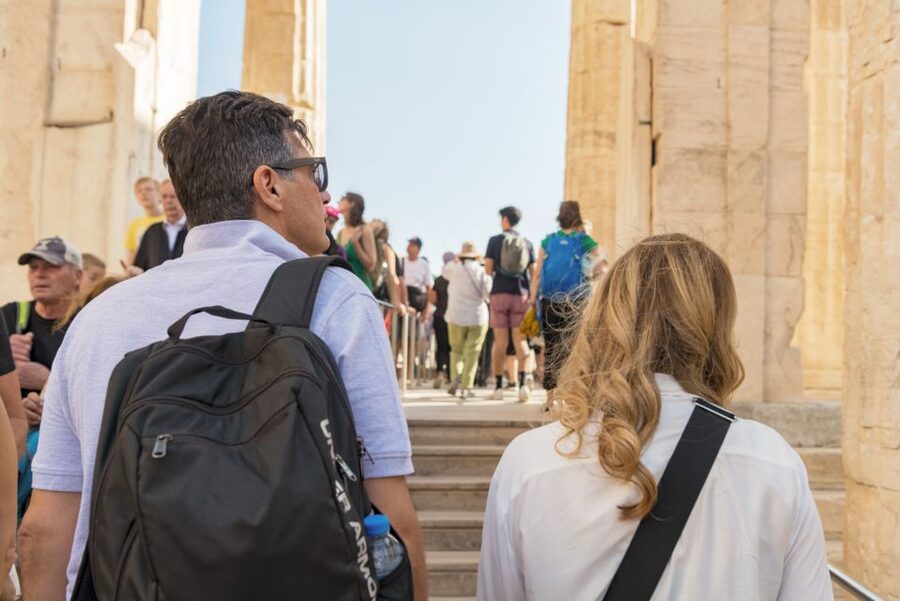
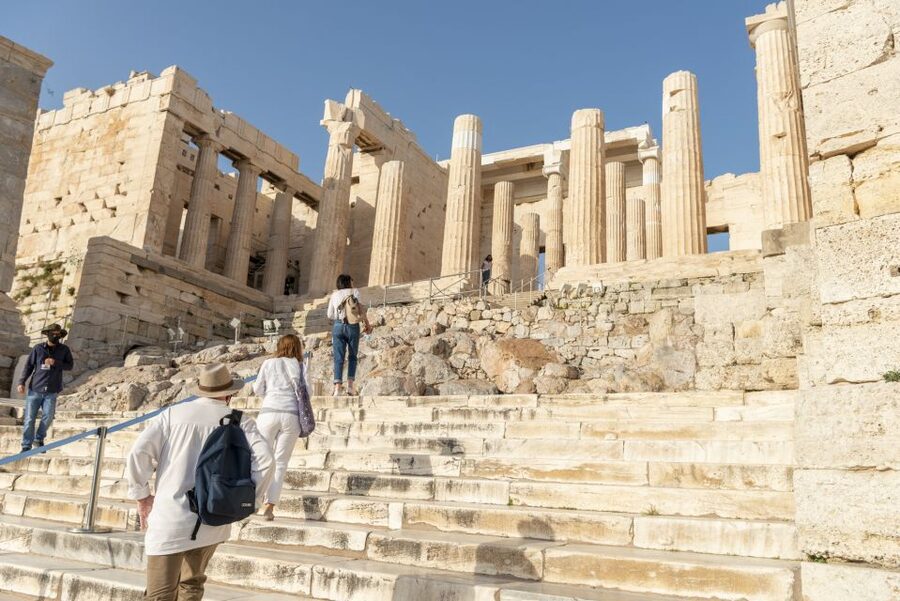
The approach to the summit leads through the Propylaea, the monumental entrance to the Acropolis. This is where the climb becomes more than a walk uphill. The gateway controlled movement into the sacred area and gave ancient visitors a carefully designed first impression.
Your guide also brings in the enormous statue of Athena that once stood nearby. One especially striking detail is the story of the bronze spear tip, said to have caught the sun and been visible to sailors leaving Cape Sounion, roughly 70 kilometers away. It is the kind of image that makes the vanished monuments easier to picture.
The Propylaea also introduces a useful warning: what you see today is only part of the ancient scene. Marble fragments, missing statues, and open spaces can make the Acropolis seem simpler than it was. A guide helps you imagine the color, metal, decoration, and scale that have largely disappeared.
This section involves an ascent and uneven surfaces. Wear sturdy shoes and expect limited shade. The private format helps here, since your guide can adjust the pace if someone in your group needs a pause.
More Acropolis and Parthenon visits:
- Athens: Acropolis & up to 5 Archaeological Sites Combo Pass
★ 4.4 · 12,619 reviews - Athens: Acropolis Ticket with Optional Audio or Live Guide
★ 4.2 · 11,055 reviews - Athens: Acropolis and Parthenon Guided Walking Tour
★ 4.6 · 5,882 reviews - Athens: Acropolis Ticket with Audio Guide
★ 4.0 · 3,575 reviews
The Temple of Athena Nike and the Parthenon
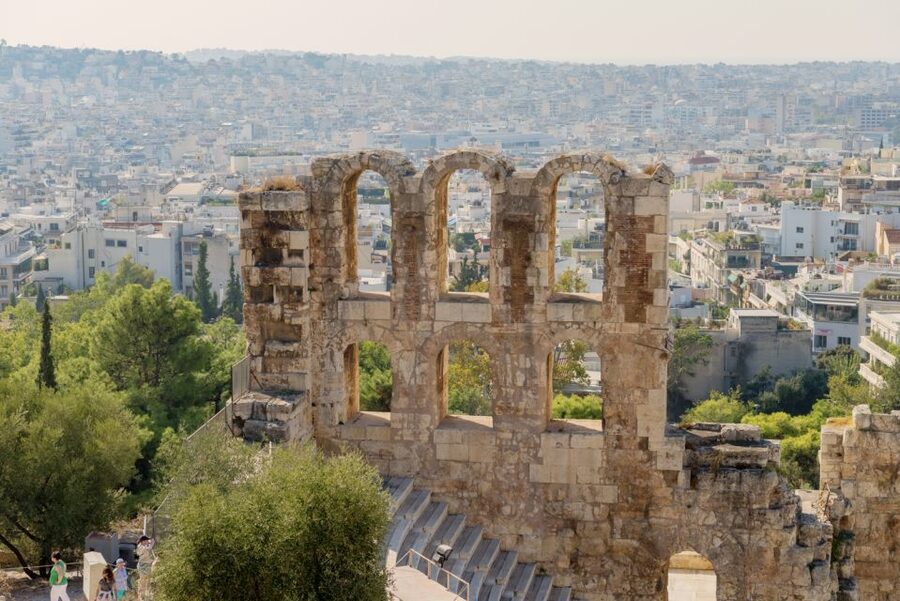
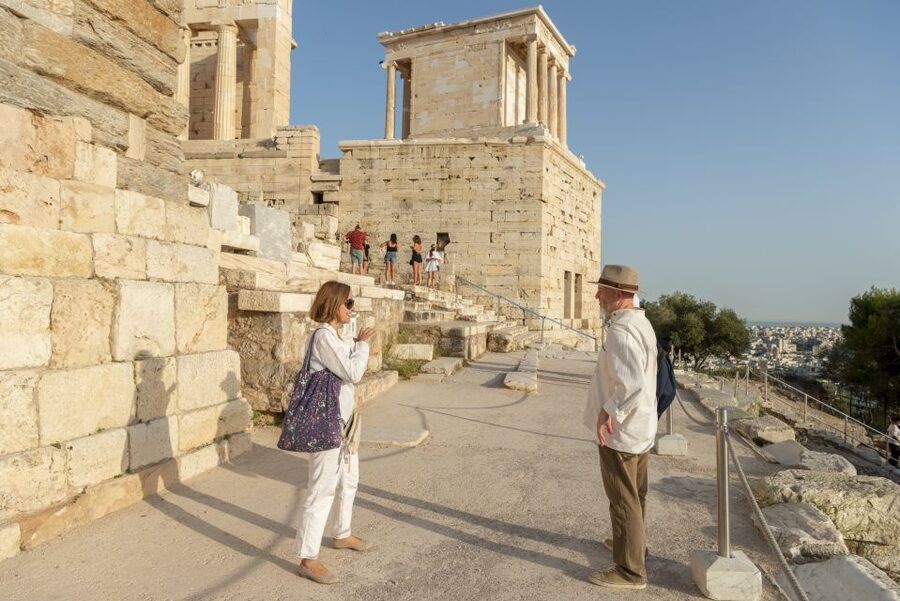
The small Temple of Athena Nike sits near the entrance, but its size can make it easy to overlook. Your guide explains its role and the meaning of Athena as Nike, the bringer of victory. It is a compact monument with an important place in the story of Athens.
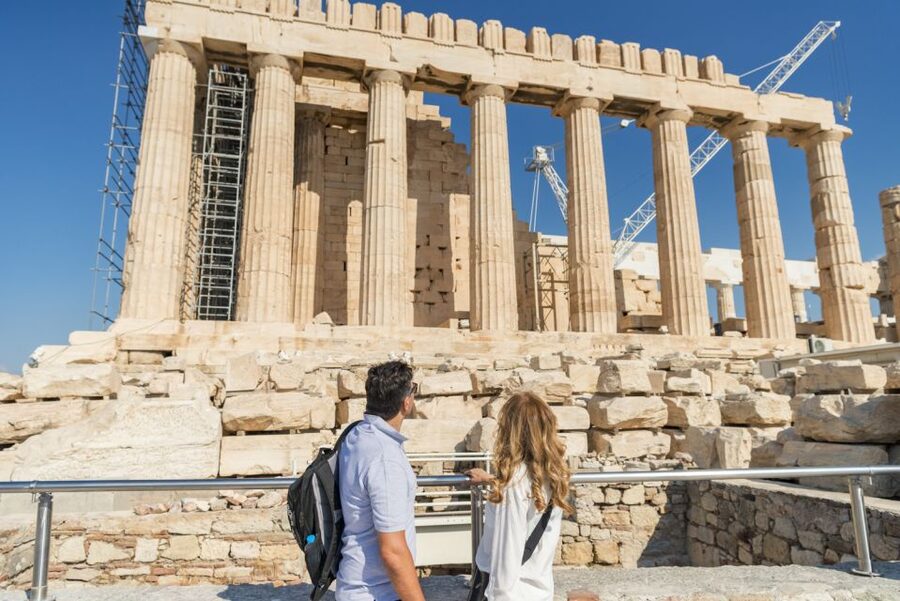
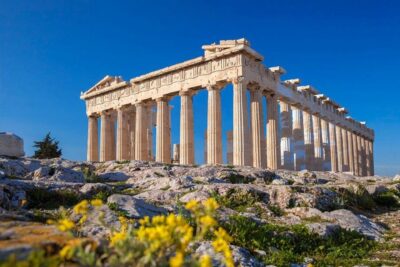
Then comes the Parthenon, the building most people have come to see. You will hear about its design, purpose, sculpture, and place in the culture of classical Athens. The guide’s job is not simply to identify the columns. It is to explain how architecture, religion, civic pride, and political power worked together.
I find a private explanation especially useful at the Parthenon because the details are easy to miss in a crowd. You can ask about the sculptures, the building’s proportions, the damage it suffered, or the difference between the temple as it appears today and the finished monument of antiquity.
The stop is listed as around 15 minutes, but the exact time can vary with the option, crowd levels, questions, and the pace of your group. Do not expect a quiet, private view of the temple. The value comes from knowing where to look and why each feature matters.
From the summit, your guide also points out the broad view over Athens. This is a good place to pause and grasp the Acropolis as a commanding hill in the middle of a modern capital, not an isolated archaeological park.
The Erechtheion and the contest for Athens
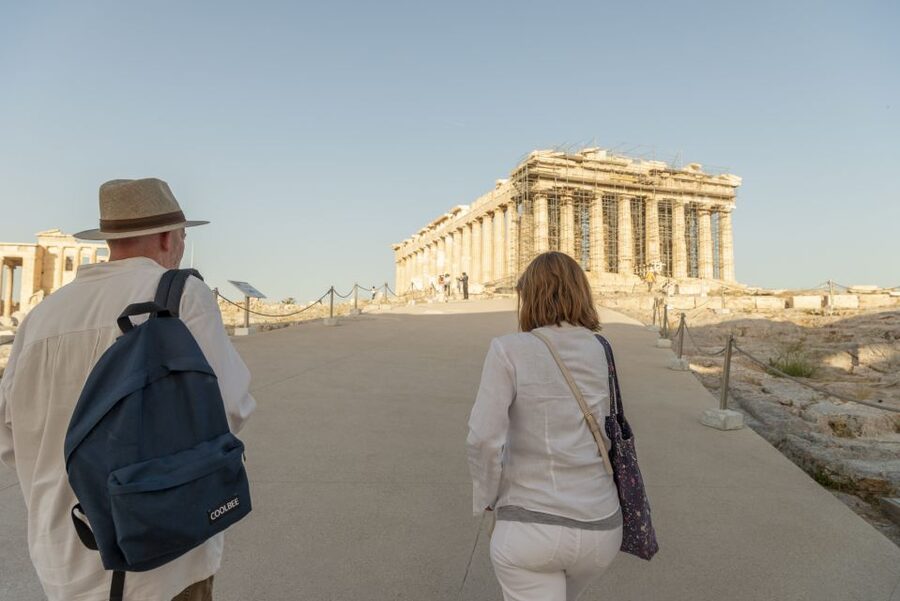
The Erechtheion offers a different mood from the Parthenon. Its unusual design and famous Caryatids invite stories about the myths tied to Athens and the rivalry between Poseidon and Athena.
Your guide explains the contest for the city and the religious importance of the site. This is where mythology can become more than a list of gods. The stories help explain why particular places, trees, springs, and objects mattered to ancient Athenians.
The Erechtheion also gives you a useful lesson in how ancient sanctuaries developed over time. Several sacred traditions could share one complex, and the building’s irregular shape reflects those layered needs. The guide can make sense of a monument that looks less immediately orderly than the Parthenon.
As with the other summit monuments, access and viewing angles can be affected by crowds and site rules. You may not get close to every feature, so listen carefully when your guide directs your attention.
Descending past the Odeon of Herodes Atticus
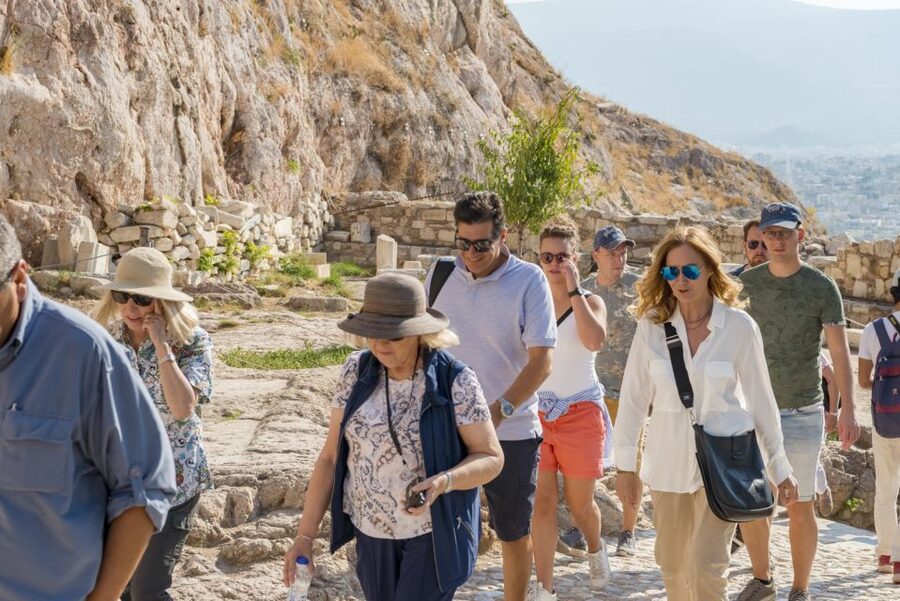
The route continues downhill through the olive trees toward the Odeon of Herodes Atticus. The theater is still used for summer performances, which creates one of the clearest links between ancient Athens and the city you see today.
The Odeon was built for music and public performance, and its preserved semicircular form makes it easy to understand as a theater. You may not enter the seating area during this tour, but the outside view is a worthwhile stop on the way to the museum.
This descent is also a practical transition. After the exposed summit, the route moves toward the museum and a more controlled indoor setting. Your guide may end the guided portion inside the Acropolis, allowing you to remain longer for photos and views. Confirm the exact ending plan when you meet.
Making sense of the Acropolis Museum
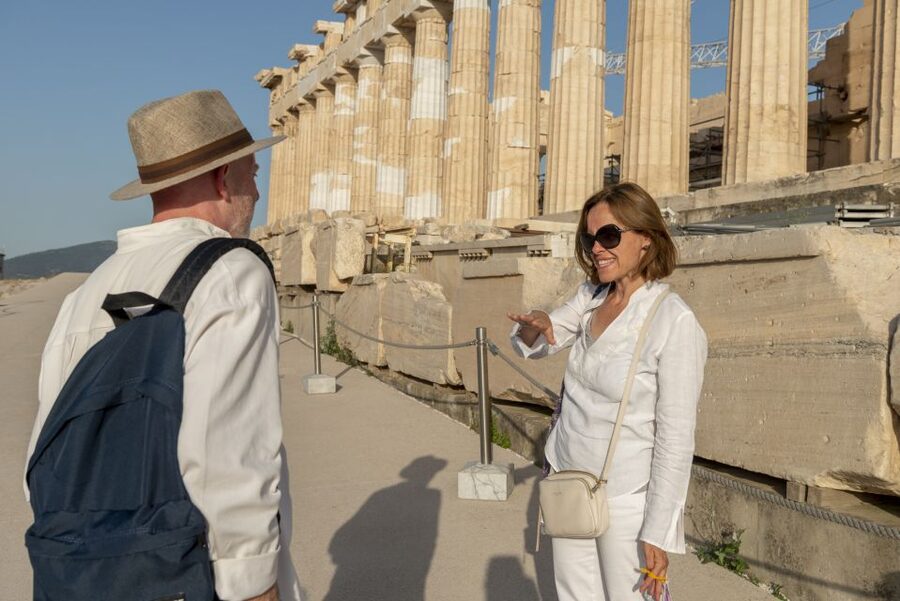
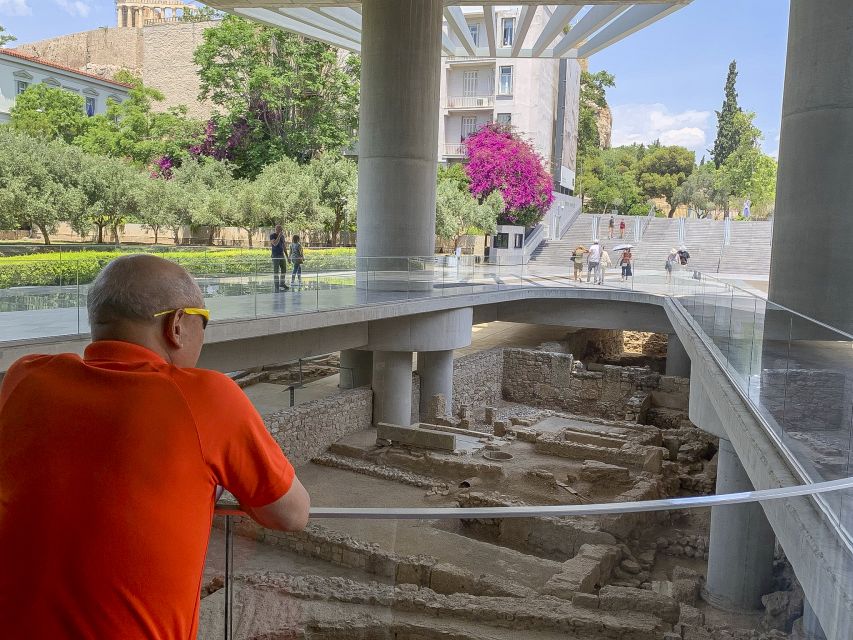
The New Acropolis Museum is not just an add-on. For many people, it is the part that turns the visit from impressive to understandable.
Inside, you see important finds from the Acropolis along with models, videos, and interactive displays. These materials help show the original setting of objects that now survive as fragments. Your guide selects the essential pieces and explains how they relate to the temples above.
One useful approach is to start at the museum before visiting the summit. A guide can introduce the sculptures and architectural details indoors, then point them out when you reach the monuments. A June visitor specifically found this order helpful, since the museum explanation prepared the group for what they saw on the Acropolis.
The museum also gives you a better sense of ancient life. The focus is not only on famous statues. You can learn how objects were used, what they reveal about religious practice, and how art supported the public ideals of Athens.
A guide such as Vicky, who was praised for connecting the museum objects with the Acropolis, can help prevent the two visits from feeling like separate attractions. The private setting also lets you stop for questions instead of rushing past displays with a large group.
The museum portion is listed at about 1.5 hours for the full option. That is enough for the major galleries and highlights, but not enough to study every object. If you already know Greek art well, ask your guide to spend more time on subjects that interest you.
The Ancient Agora alternative
If you prefer another outdoor site, you can choose an Acropolis and Ancient Agora option instead of the museum. The Agora is associated with philosophers, the birth of Athenian democracy, and the everyday public life of classical Athens.
This choice suits you if you want more ruins, open-air walking, and civic history. The museum option suits you better if you want sculpture, artifacts, models, and a clearer picture of what once decorated the Acropolis.
The listed finish is at the Ancient Agora of Athens, though the guide may end inside the Acropolis for the full museum option. Because the route can change with your selected version, confirm the final stop before booking.
How much value do you get for $163?
The listed price is $163 per person, and admission fees are extra. For two people, the guide cost alone is substantial. For a family or group of six, the per-person price may feel more reasonable because one private guide serves everyone.
I would not book this simply to avoid reading a few signs. I would book it if you want the Acropolis explained in a connected way, with time for questions and help choosing what matters. The strongest value comes from the guide’s subject knowledge, storytelling, pacing, and ability to connect the museum with the hilltop monuments.
The private price also buys flexibility. Guides have adjusted their pace for medical needs, helped groups find shade and restrooms, suggested photo spots, and kept children involved. These details matter in Athens, especially during hot months and on a steep, exposed site.
Still, you should compare the cost with your priorities. If you are happy using a guidebook and exploring at your own speed, the fee may not make sense. You also need to add admission tickets, so calculate the full cost before deciding.
Who should book this experience?
I see this as a strong fit for first-time visitors who want a solid introduction to ancient Athens. It also works well for repeat visitors. One person who had visited the Acropolis many times still learned new details through a private guide.
Families can benefit from the adjustable pace and direct questions. Several guides have kept children and mixed-age groups involved, and a private setting makes it easier to pause when attention fades.
History fans will appreciate the archaeology and architecture. But you do not need prior knowledge. The guides are expected to explain difficult ideas in plain language, and the strongest feedback centers on clear storytelling rather than a dry lecture.
This is less suitable if you want a fast photo stop, dislike walking uphill, or need wheelchair access. It is also not the best pick if your budget is tight and you are comfortable seeing the monuments without interpretation.
Practical ways to improve your visit
Choose the full museum combination if you want the clearest explanation of how the Acropolis looked and functioned. Choose the Ancient Agora instead if you prefer political history and another outdoor archaeological site.
Reply promptly after booking about admission tickets. This prevents confusion over skip-the-line arrangements and timed entry. The tour price does not cover admission.
Ask for an early start if times are available. An August booking found the early arrival useful before the site became more crowded. Morning also helps reduce the strain of heat, though conditions can vary.
Bring water, sun protection, and shoes suited to uneven ground. Guides have helped groups find shade and keep a sensible pace, but the hill remains exposed and physical.
Finally, tell your guide what interests you. You can ask for more mythology, architecture, daily life, art, theater, or connections with other Greek sites. That is one of the main reasons to pay for a private tour.
Should you book it?
Book this tour if you want the Acropolis to make sense, not simply appear in your camera roll. The licensed archaeological guide, private format, museum connection, and flexible pacing give you a fuller visit than a quick walk around the monuments.
I would especially recommend it for families, first-time visitors, repeat visitors who want fresh detail, and anyone who enjoys asking questions. I would skip it if $163 per person plus tickets strains your budget or if you prefer independent sightseeing.
For the best experience, choose the full Acropolis and museum option, confirm ticket arrangements, request an early time, and arrive ready to walk. You will pay more than you would for entry alone, but you are paying for the stories that make the Parthenon, Erechtheion, and museum objects memorable.
FAQ
Where does the tour meet?
The meeting point is Makrigianni 7 in Athens, close to the Acropolis Museum. Your guide will carry a sign with your name.
Is hotel pickup included?
No. Hotel pickup and drop-off are not included. If your hotel is within an easy walk of the Acropolis, you may be able to meet your guide there.
Are admission tickets included in the price?
No. Admission fees are separate. After booking, the operator will contact you to ask if you want it to purchase skip-the-line tickets for the appropriate time slots.
How long does the tour last?
The available options last from 1.5 to 3 hours. The full Acropolis and museum option is the longer experience. Other choices can focus on the Acropolis alone or combine it with the Ancient Agora.
Which languages are available?
The tour is offered in English, German, Italian, and Greek.
Is the tour private?
Yes. The tour is exclusive to your group, with a licensed archaeological guide.
Is the tour suitable for wheelchair users or pets?
No. The experience is not suitable for wheelchair users, and pets are not allowed.
More Athens museums
- Athens: Mythology of Delphi, Museum and Arachova Guided Tour
★ 4.6 · 4,008 reviews - Athens All Included: Acropolis and Museum Guided Tour with Ticket
★ 4.5 · 2,673 reviews - Athens: Acropolis Museum Ticket with optional Audio Guide
★ 4.4 · 2,652 reviews - From Athens: Small-Group Delphi, Museum & Arachova Day Trip
★ 4.8 · 2,476 reviews
Freshly added Athens trips
- Athens and Ancient Corinth Private from Athens★ 5.0 · 3 reviews
- From Athens: Mycenae and Epidaurus Private Tour★ 4.8 · 3 reviews
- Full day Meteora private tour★ 5.0 · 3 reviews
- Double Shore Dive (certified divers)★ 4.5 · 3 reviews
- Athens Hills: Mythology Treasure Hunt★ 5.0 · 3 reviews
- Sunset & swimming at Cape Sounio, Poseidon temple★ 5.0 · 3 reviews
- Philosophy Experience at Plato’s Academy Park – basic version★ 5.0 · 3 reviews
- Private Acropolis Tour – Ticket Included★ 5.0 · 3 reviews
Acropolis Museum Tours, compared.

Acropolis, Parthenon & Acropolis Museum Guided Tour
Read our review →Acropolis, Parthenon & Acropolis Museum Guided Tour
Read our review →
Acropolis monuments & Parthenon Walking Tour with Optional Acropolis Museum
Read our review →
Acropolis Museum Ticket with optional Audio Guide
Read our review →
Parthenon & Acropolis Museum with Audio or Live Tour Option
Read our review →
Acropolis, Parthenon and Acropolis Museum Guided Tour
Read our review →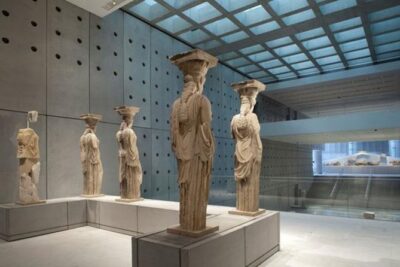
Browse the lists this tour appears in