
Reviewed · ANCIENT CORINTH TOURS
The Apostle Paul’s Missionary Journey in Athens and Corinth
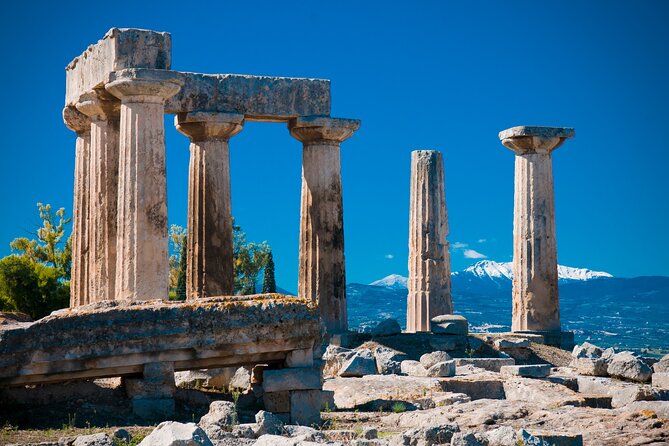
Paul’s time in Greece comes alive most clearly at the Areopagus in Athens, where he spoke to an audience of Athenian thinkers, and at Ancient Corinth, where his Christian community took root. This eight-hour private tour links those places with the Corinth Canal, the old port of Kechries, and a hilltop fortress with wide views.
I like two things right away. First, you get a private vehicle, hotel pickup, bottled water, and room to adjust the pace. Second, the route gives you both the famous biblical locations and the less obvious stop at Kechries, tied to Paul’s meeting with Aquila and Priscilla. The main consideration is that no licensed guide enters the archaeological sites with you, so you will explore the Agora, Acrocorinth, the museum, and Ancient Corinth on your own.
In This Review
- Key points to know before booking
- Why Paul’s Greek journey works best as a two-city day
- Starting in Athens at Saint Dionysius and the Ancient Agora
- Standing where Paul addressed Athens
- Crossing the Corinth Canal
- Kechries, the quieter port linked to Paul
- Acrocorinth and the view from the fortress
- Ancient Corinth and its archaeological museum
- The drive back to Athens
- What the $79 price really includes
- Who should book this Athens to Corinth tour
- Should you book it?
- FAQ
- How long does the Apostle Paul tour from Athens to Corinth last?
- Where does pickup take place?
- Is the tour private?
- What vehicle is used for small groups?
- Is a licensed guide included inside the archaeological sites?
- Are entrance fees included?
- Which languages are available?
- What should I bring?
- Can I cancel the booking?
Key points to know before booking
- Paul’s Athens and Corinth fit into one long private day: You visit the Agora and Areopagus before heading west to Corinth.
- Kechries adds a special biblical connection: This ancient port is linked with Paul, Aquila, and Priscilla.
- The archaeological sites are self-guided: Your driver explains the wider story, but an official site guide is not included.
- Private transport keeps the day flexible: For groups of one to four, the company uses a sedan with air conditioning, WiFi, and water.
- The guides are a major part of the experience: Michael, Ruslan, Giannis, George, and Konstantinos are among the guides praised for clear explanations and thoughtful service.
- The $79 price does not cover entry tickets: Add the archaeological site and museum fees when working out the real cost.
Why Paul’s Greek journey works best as a two-city day
Athens and Corinth tell different parts of Paul’s story. Athens shows Paul speaking in the intellectual center of the ancient Greek world. Corinth lets you walk through a commercial city where his work lasted much longer and where the Christian community later received two of his New Testament letters.
I like the shape of this tour because it does not treat Paul as an isolated religious figure. You also see Greek Orthodox Athens, classical ruins, Roman-era remains, a major engineering project, and a mountain fortress. The result is a day about faith, politics, trade, travel, and daily life in ancient Greece.
The schedule is full. You are on the road for roughly two hours in each direction, with about five hours of sightseeing spread among several stops. That is a sensible trade for a private outing, but you should not expect long, leisurely visits everywhere. The strength is coverage. The cost is depth.
The experience costs $79 per person, which is attractive for private transportation and a full day from Athens. It becomes a better value when you are sharing the vehicle with family or friends, since the group remains private rather than being placed on a large coach. Remember to budget separately for entry fees and lunch if you choose to stop.
More Ancient Corinth and canal stops:
- From Athens: Ancient Corinth Day Trip with Canal & VR Guide
★ 4.6 · 1,073 reviews - Private Biblical Tour Ancient Corinth & Isthmus Canal from Athens
★ 5.0 · 762 reviews - Athens: Ancient Corinth & Nafplio Full Day Trip with Swim
★ 4.8 · 523 reviews
Starting in Athens at Saint Dionysius and the Ancient Agora
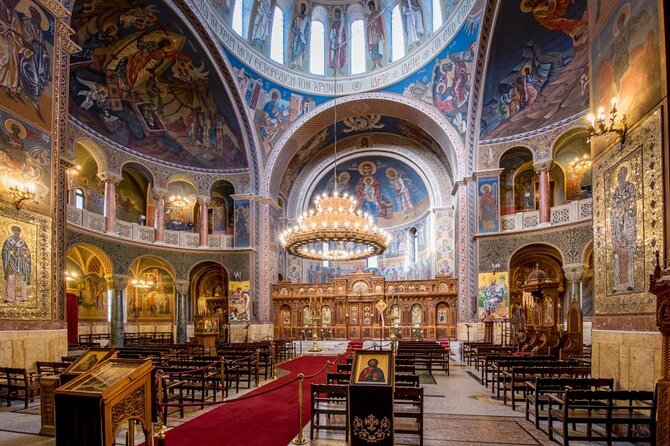
Pickup is in Athens, followed by a short transfer to the Holy Church of Saint Dionysius the Areopagite, patron saint of Athens. The stop lasts about 20 minutes and is mainly for photographs and orientation.
This is a useful opening because it places the day in a living religious setting before you move into the ancient world. Some guides also connect modern Greek Christianity with Paul’s early mission, giving the religious theme a wider frame. The church stop is brief, so think of it as a visual introduction, not a full church visit.
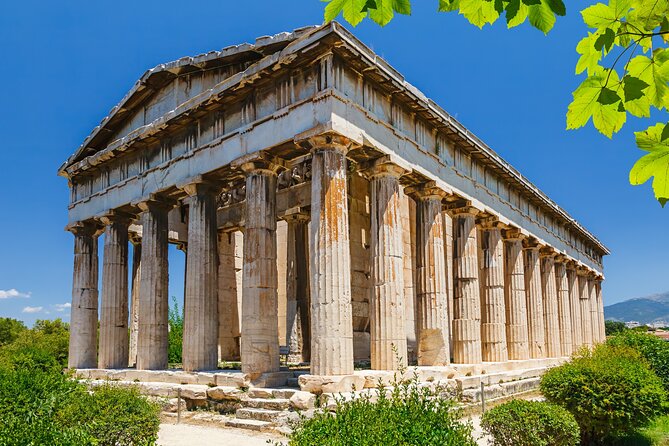
You then spend about an hour at the Ancient Agora on a self-guided visit. In Paul’s day, the Agora was not simply a collection of fallen columns. It was a civic center where people met, traded, argued, worshiped, and discussed ideas. That makes it one of the best places in Athens for understanding the sort of public setting Paul entered.
The self-guided format has both good and bad sides. You can move at your own pace and stop for photographs without following a group flag. On the other hand, you need to bring some preparation if you want the ruins to tell a clear story. Reading the Book of Acts and carrying a guidebook with site photographs will help you identify what you are seeing.
Your driver remains the main source of interpretation outside the site. Guides such as Ruslan and Michael have been praised for explaining both ancient Athens and Paul’s place in it. Still, this is not the same as having a licensed archaeological guide walk beside you among the remains.
Standing where Paul addressed Athens
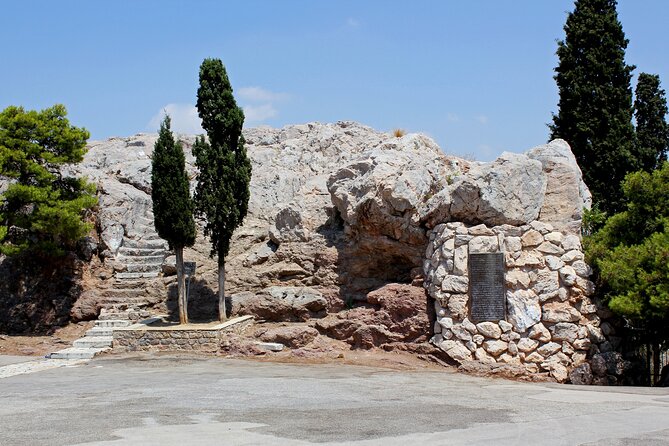
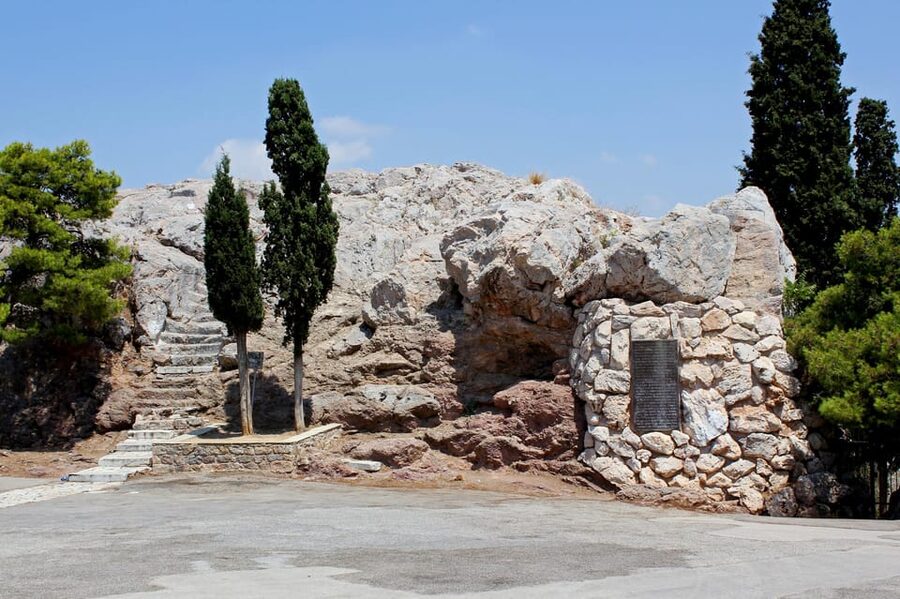
The Areopagus, also called Mars Hill, is one of the most important stops for anyone following Paul’s Greek mission. The rocky hill is associated with the speech described in Acts, when Paul addressed Athenians who were interested in new ideas and religious questions.
The sightseeing stop lasts around 30 minutes. That is enough to take in the setting, hear the historical explanation, and enjoy the views, but the footing can be uneven. Comfortable shoes are not a minor suggestion here. Wear shoes that give you a firm grip, especially if you are visiting in hot weather or have difficulty on stone.
The setting is more important than the remains themselves. You are not entering a preserved lecture hall with a plaque telling the whole story. You are looking across Athens from a rough outcrop and considering how unusual Paul’s position was in a city shaped by philosophy, civic debate, and many forms of worship.
A small practical point came up in the tour experience: work at Mars Hill sometimes limits access or changes how much time you can spend there. Site conditions can shift, so keep your expectations flexible. Your guide can still explain the biblical connection and help you make the most of the viewpoint.
Crossing the Corinth Canal
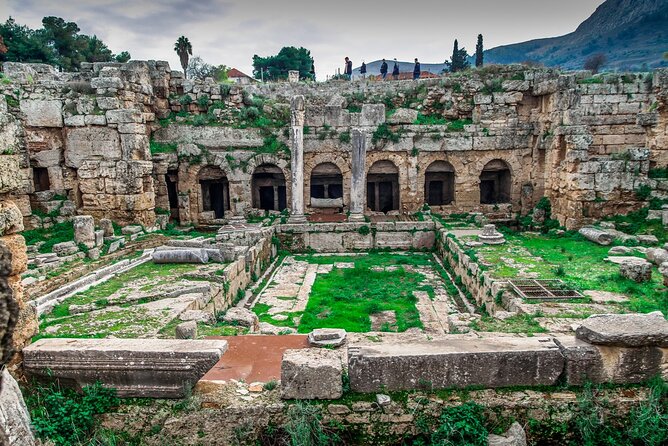
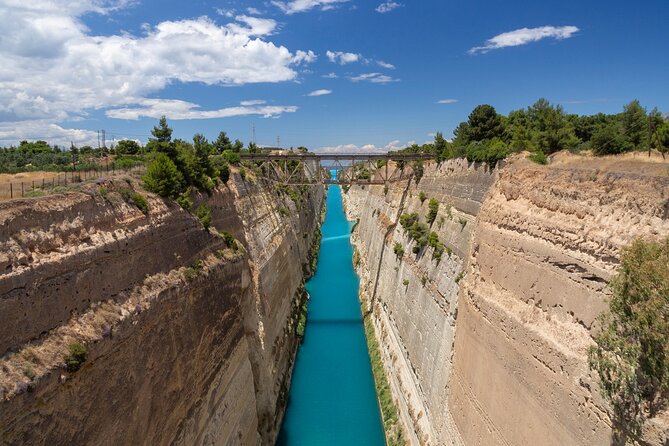
After Athens, the drive to the Isthmus of Corinth takes about an hour. The canal stop lasts roughly 20 minutes, giving you time to see and photograph the narrow waterway cut through the isthmus.
The Corinth Canal is not an ancient monument, but it helps explain why Corinth mattered. The isthmus links mainland Greece with the Peloponnese, and Corinth benefited from its position between major routes. Goods and people passed through this area, making the city a natural meeting point for merchants, sailors, officials, and religious teachers.
This is a good place to break up the drive. You get a short outdoor stop and a clear sense of the geography before reaching the ancient sites. Do not confuse the canal with the ancient city itself. It is a scenic and historical waypoint, not a substitute for exploring Corinth.
More footsteps-of-Paul trips:
- Biblical Tour Letters ToThe Corinthians St Paul’s Footsteps 6Hour
★ 5.0 · 1,065 reviews - Private Tour of Apostle Paul’s Footsteps in Ancient Corinth
★ 5.0 · 275 reviews - Paul”s Footsteps Ancient Corinth Biblical Tour
★ 5.0 · 184 reviews - Private Luxury Biblical Tour: Apostle Paul in Athens & Corinth
★ 5.0 · 162 reviews
Kechries, the quieter port linked to Paul
The stop at Kechries lasts about 20 minutes and is one of the most distinctive parts of the route. This ancient port is associated with Paul’s departure from Corinth and with his meeting with Aquila and Priscilla.
Kechries is less famous than the main Corinth ruins, which is exactly why I value it. The site helps you picture Paul’s movements as practical travel rather than a line on a map. Ports were places of arrival, departure, work, and chance meetings. A short stop here adds human scale to the biblical account.
The remains are not presented as a large museum complex, so do not expect an extensive visit. You come for the location, the connection with Paul, and the chance to pause at a place most independent day trips skip. Your guide’s explanation matters especially here because the physical remains alone may not tell you much.
Acrocorinth and the view from the fortress
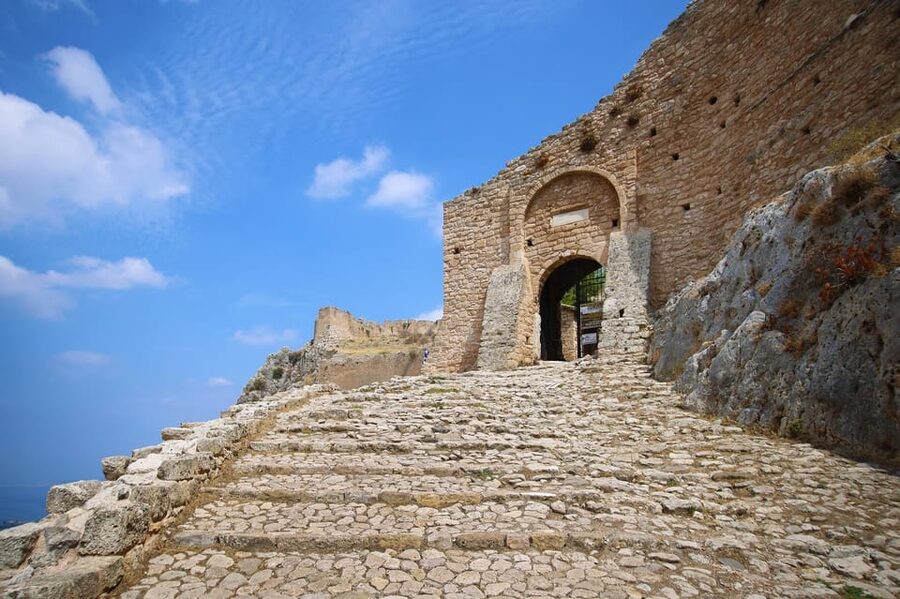
The route continues to Acrocorinth, the great fortified hill above the ancient city. The scheduled visit is about 30 minutes and is self-guided.
Acrocorinth gives you a strong visual understanding of why this high point mattered. From above, you can see the surrounding region and the routes that made Corinth so valuable. The fortress history extends well beyond Paul’s time, so the stop adds later chapters to the day rather than focusing only on early Christianity.
The visit is short for such a large site. You will get a taste of the fortress and the views, but you will not explore every wall, gate, or path. This is another reason to wear comfortable shoes and avoid treating the stop as a slow hike. If you want a long visit to Acrocorinth, ask about the timing before booking because the planned schedule gives it only half an hour.
Several guides have also used this stop for its broad views and regional context. That is valuable because Paul’s journeys make more sense when you can see the roads, water, and high ground around Corinth rather than viewing each ruin in isolation.
Ancient Corinth and its archaeological museum
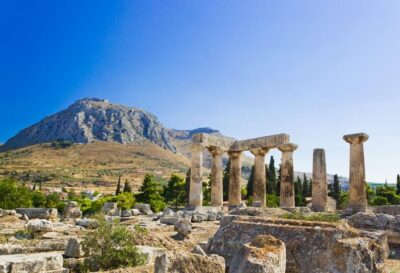
The heart of the day is Ancient Corinth. You have about 45 minutes in the Archaeological Museum of Ancient Corinth, followed by roughly one hour among the ruins.
The museum helps fill in what the open-air site cannot. Statues, objects, and everyday finds give you a better sense of the people who lived and worked here. You will also have a chance to connect the city’s public spaces with the religious and commercial world Paul encountered.
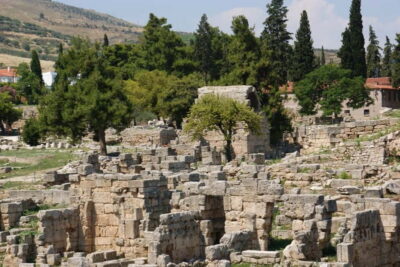
The ruins then bring the scale of Corinth into view. The ancient city was not just a biblical backdrop. It was a major settlement with civic buildings, temples, streets, and public areas. As you walk, you can think about Paul working within a real urban community, speaking with people whose lives involved business, family, politics, and local religious practice.
Again, the visit is self-guided. This suits you if you enjoy moving independently and already have some background. It is less ideal if you want a detailed explanation at every column and foundation. A little advance reading will make the hour much more rewarding. At minimum, read the relevant sections of Acts and bring a site guide with diagrams or photographs.
The advantage of a private driver is that the day can respond to your interests. Past guides have adjusted time at locations, answered questions in detail, and made recommendations for food. The formal schedule still matters, but you are not locked into the pace of a large group.
The drive back to Athens
The return transfer takes about an hour. By this point, you will have spent a full day visiting outdoor ruins, walking over uneven ground, and moving between several historical settings.
The air-conditioned vehicle matters, especially in summer. Bottled water is provided, and WiFi is available on board. For one to four people, the company uses a sedan. The comfortable ride lets you rest between sites, though a sedan may feel compact if everyone brings large bags.
Several guides have received especially strong praise for driving, timing, and small acts of care. Giannis has been described as prompt, patient, and good at keeping the day organized. Ruslan is often singled out for adapting the route to interests and answering questions across Greek history, culture, and Paul’s journey. Michael is praised for detailed explanations and attention to comfort. Konstantinos has been noted for energy and sensitivity to family needs.
Those names give you a sense of the service style, but you may not be able to choose your guide. The important point is that the quality of the day depends heavily on the person behind the wheel and the conversation between stops. This is a driver-led experience, not a fixed audio tour.
What the $79 price really includes
At $79 per person, the tour offers a useful package for a private day trip. You receive hotel pickup and drop-off in Athens, an air-conditioned vehicle, WiFi, bottled water, and an English-speaking tour driver with strong knowledge of Greek history.
You do not receive archaeological entry tickets or a licensed guide inside the sites. Airport pickup is also optional and costs extra. Those exclusions are easy to overlook, so include them in your budget before deciding.
For a solo visitor, $79 may still be reasonable because the route covers destinations that would take more planning by public transport. For two to four people, the value improves because you are splitting a private vehicle and gaining flexibility. The tour is less compelling if your only goal is a slow, detailed archaeological study. In that case, paying for a licensed guide or spending separate days in Athens and Corinth may suit you better.
The company offers free cancellation up to 24 hours before departure and lets you reserve now and pay later. Starting times depend on availability, so check the timing carefully if you have a cruise departure, flight, or another fixed appointment.
Who should book this Athens to Corinth tour
I would choose this outing if Paul’s life and the early Christian world are central to your trip. It is also a strong pick if you want to see Corinth without renting a car, or if you prefer a private day with an English-speaking local driver rather than a large coach.
Families can benefit from the private format, especially when someone needs a break or the group wants to adjust the pace. Couples also get a comfortable way to combine major sights with quieter places such as Kechries.
You should think twice if you dislike long drives or want every site explained by an archaeologist. The day includes substantial time in the vehicle, and the main archaeological visits are self-guided. It also involves outdoor walking, uneven stone, and limited time at each stop.
Bring comfortable shoes, water-friendly clothing for the heat, and a little background reading. If hearing is a concern, tell the company in advance that a vehicle microphone would help during explanations on the road. One person specifically found that hearing the guide while driving could be improved, a useful point for older ears.
Should you book it?
Book this tour if you want a practical, private connection between Paul’s Athens and Corinth, with a driver who can explain the story and handle the route. The strongest reasons are the private transport, the excellent range of stops, the overlooked Kechries port, and the chance to tailor the day through conversation.
Skip it if your priority is a slow archaeological study with a licensed guide at every ruin. For everyone else, $79 is a fair starting price, provided you add site admission costs and understand that the Corinth visits are self-guided. Read Acts before you go, wear sturdy shoes, and you will get far more from the stones than a quick photograph.
FAQ
How long does the Apostle Paul tour from Athens to Corinth last?
The tour lasts eight hours, including transfers between Athens, Corinth, and the archaeological sites.
Where does pickup take place?
Pickup and drop-off are provided in Athens. Airport pickup is optional and costs extra.
Is the tour private?
Yes. It is offered as a private group experience.
What vehicle is used for small groups?
For groups of one to four people, the company uses a sedan. The vehicle is air-conditioned and includes WiFi on board.
Is a licensed guide included inside the archaeological sites?
No. A licensed guide is not included for entry into the archaeological sites. The English-speaking tour driver provides historical information, while visits to the Agora, Acrocorinth, the museum, and Ancient Corinth are self-guided.
Are entrance fees included?
No. Entrance fees for archaeological sites and museums are not included in the tour price.
Which languages are available?
The tour is conducted in English, and the host or greeter speaks English.
What should I bring?
Bring comfortable shoes, since the tour includes outdoor archaeological sites and uneven walking surfaces.
Can I cancel the booking?
You can cancel up to 24 hours in advance for a full refund. You can also reserve now and pay later, keeping your plans flexible.
Freshly added Athens trips
- Athens and Ancient Corinth Private from Athens★ 5.0 · 3 reviews
- From Athens: Mycenae and Epidaurus Private Tour★ 4.8 · 3 reviews
- Full day Meteora private tour★ 5.0 · 3 reviews
- Double Shore Dive (certified divers)★ 4.5 · 3 reviews
- Athens Hills: Mythology Treasure Hunt★ 5.0 · 3 reviews
- Sunset & swimming at Cape Sounio, Poseidon temple★ 5.0 · 3 reviews
- Philosophy Experience at Plato’s Academy Park – basic version★ 5.0 · 3 reviews
- Private Acropolis Tour – Ticket Included★ 5.0 · 3 reviews
Ancient Corinth Tours, compared.
Ancient Corinth Day Trip with Canal & VR Guide
Read our review →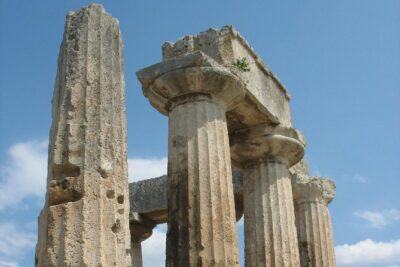
Private Biblical Tour Ancient Corinth & Isthmus Canal from Athens
Read our review →
Ancient Corinth & Nafplio Full Day Trip with Swim
Read our review →
Private Tour of Apostle Paul’s Footsteps in Ancient Corinth
Read our review →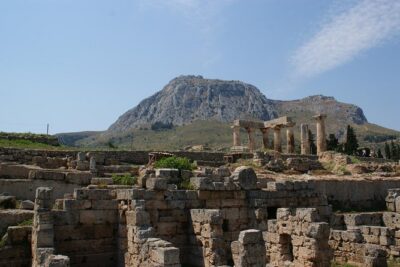
Corinth Half-Day Trip from Athens with Entrance Tickets
Read our review →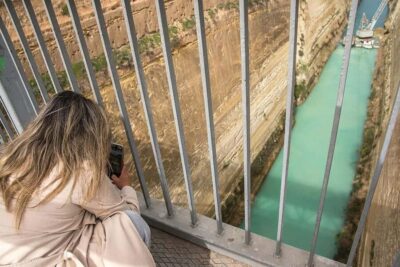
Browse the lists this tour appears in