
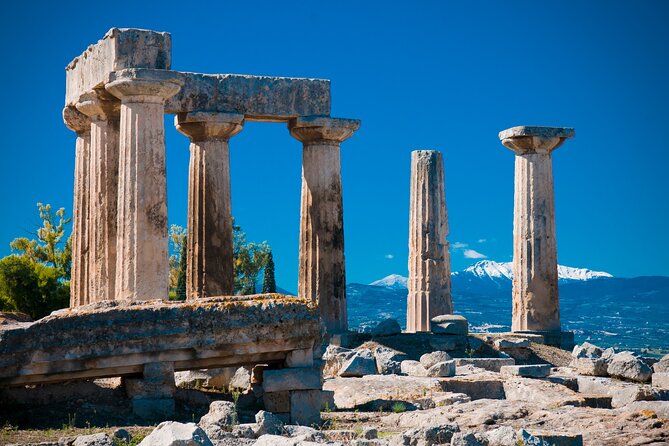
Reviewed · ANCIENT CORINTH TOURS
The Apostle Paul’s Missionary Journey in Athens and Corinth
Paul’s Greek mission comes into focus on this full-day trip from Athens to Corinth. You walk across the Ancient Agora, look up at the Areopagus where Paul addressed Athenian thinkers, then follow the road west to the ports and ruins tied to his work in Corinth.
I like the private format, which gives you room to ask questions and move at a sensible pace. I also like the mix of biblical sites and classical Greece: the trip is not only about Paul, but also about temples, marketplaces, Roman trade, early Christianity, and the geography that shaped his travels.
The main drawback is the length. You are looking at 8 to 9 hours, with rough ground, steps, and uneven paving at several sites. Entrance fees are extra, and the driver is not a licensed archaeological guide, so you should clarify the guiding arrangement before you set out.
In This Review
- Key things to know before you go
- Starting at Athens’ Ancient Agora
- The Areopagus and Paul’s public address
- Saint Dionysius and the early Christian link
- Crossing the Corinth Canal
- Kenchreai, Corinth’s eastern harbor
- Ancient Corinth and the Bema
- The Corinth Museum in 45 minutes
- Acrocorinth and the final climb
- What the private setup is really worth
- Timing, heat, and walking
- Who should book this day
- Should you book The Apostle Paul’s Missionary Journey?
- FAQ
- How long does the tour last?
- Where can pickup take place?
- How does port pickup work?
- Is the tour private?
- Is an English-speaking guide included?
- Are entrance fees included?
- What should I wear?
- Can I cancel for a refund?
Key things to know before you go
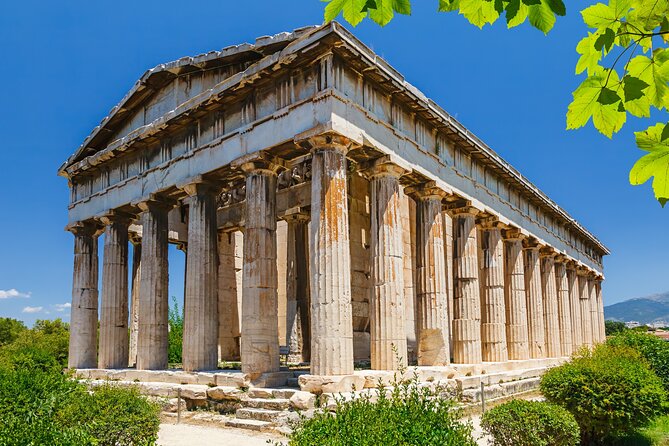
- Paul’s Athens begins at the Agora: This was the city’s center for politics, trade, religion, and public debate.
- The Corinth portion has the strongest biblical connection: Kenchreai, Ancient Corinth, and the Bema link directly to Paul’s time in the region.
- Private transport changes the day: Your group travels by air-conditioned sedan for one to four people, with hotel or port pickup.
- Acrocorinth adds a physical challenge: The hilltop ruins bring wide views but require walking on uneven ground.
- Local help can shape the day: Guides named Ruslan, Yannis, Giannis, George, Katerina, Fortis, and Karas have led versions of this tour.
- The cost is for convenience and privacy: At $200.25 per person, the value improves when shared by a small group and when you want door-to-door service.
Starting at Athens’ Ancient Agora
The Ancient Agora is the right place to begin because it lets you picture Athens as Paul encountered it. This was not a quiet ruin field. It was the center of public life, where people met for commerce, civic business, religion, and argument.
You have about an hour here, and the admission fee is not included. The site rewards visitors who enjoy connecting scattered stones to human activity. The Temple of Hephaistos, public buildings, walkways, and open spaces help explain how ideas moved through ancient Athens.
Paul’s approach was direct and public. He spoke with philosophers and other thinkers in a city that valued discussion and intellectual challenge. That gives this stop a useful edge: you are not simply looking at old columns. You are considering how a new religious message entered a culture already crowded with gods, schools of thought, and public debate.
Your driver can explain the broad setting, but the service includes a professional English-speaking tour driver rather than a licensed guide inside the archaeological sites. That distinction matters. If you want detailed interpretation at every monument, ask the operator whether a licensed guide will join you or meet you during the day.
More Ancient Corinth and canal stops:
- From Athens: Ancient Corinth Day Trip with Canal & VR Guide
★ 4.6 · 1,073 reviews - Private Biblical Tour Ancient Corinth & Isthmus Canal from Athens
★ 5.0 · 762 reviews - Athens: Ancient Corinth & Nafplio Full Day Trip with Swim
★ 4.8 · 523 reviews
The Areopagus and Paul’s public address
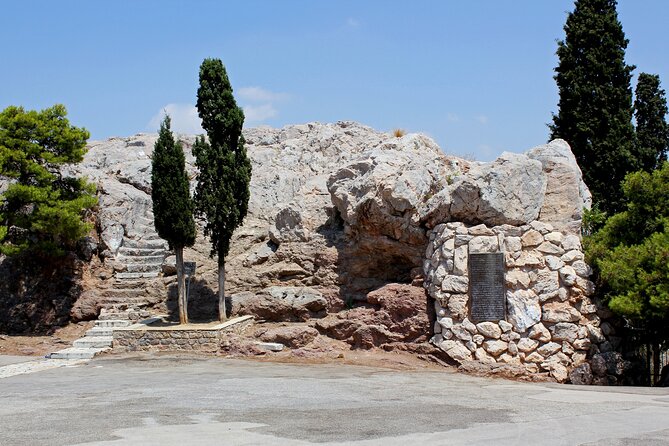
From the Agora, the tour continues to the Areopagus, a marble hill northwest of the Acropolis. The stop lasts about 30 minutes and is free to enter.
This is one of the most meaningful places for anyone following Paul’s story. The hill served as a judicial and political meeting place, and it was also linked to debate and public discussion. Paul presented his message here to an audience familiar with philosophy and civic argument.
The climb is short but the surface can be smooth, worn, and uneven. Comfortable shoes are not optional advice here. If you have mobility limits, tell the operator in advance, since the tour includes several archaeological sites with rough ground.
The view also helps. From the rock, you can orient yourself within Athens and see how closely the city’s ancient civic spaces, religious centers, and hills relate to one another. Bring a hat and sunscreen, especially in June and other hot months. Bottled water is provided, and the vehicle has Wi-Fi for the longer stretches between stops.
Saint Dionysius and the early Christian link
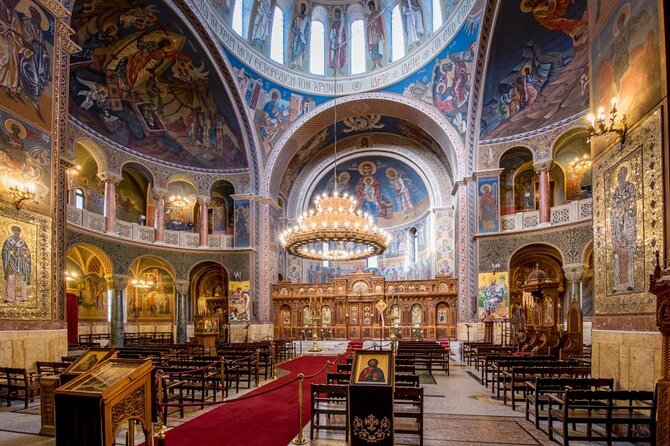
A short visit to the Church of Saint Dionysius the Areopagite adds a later Christian layer to the morning. The church is on Skoufa Street in Kolonaki, an upscale part of modern Athens, and admission is free.
Dionysius is remembered as an Athenian converted by Paul who later became the city’s first bishop. The church gives that story a visible home, though it is not an ancient Roman ruin in the same way as the Agora or Corinth.
You have about 20 minutes here. That is enough for a brief look and a moment of reflection, but not a long church visit or a full service unless the timing happens to align. One version of the day included an Orthodox service, but you should not count on that as a guaranteed part of the tour.
This stop works best for visitors who want the Christian story to continue beyond Paul’s speech. It also breaks up the archaeological sightseeing before the drive toward Corinth.
Crossing the Corinth Canal
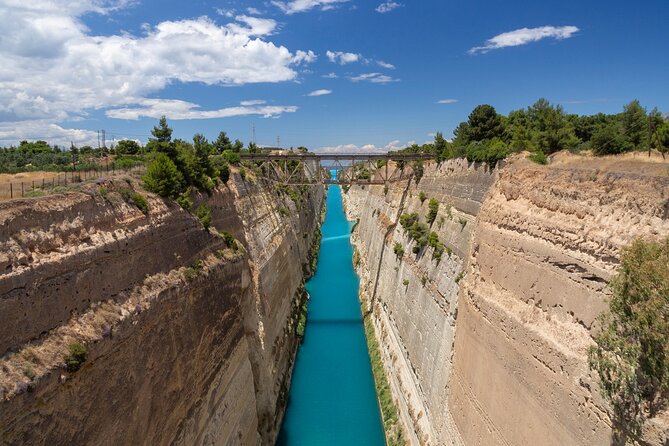
The trip then heads toward the Corinth Canal, about an hour by the stated schedule of stops and driving. The canal visit lasts roughly 20 minutes and is free.
The modern cut slices through the Isthmus of Corinth, linking the Gulf of Corinth with the Saronic Gulf. It separates the Peloponnese from mainland Greece, making the peninsula functionally an island.
Paul never saw this canal in its finished form. That is worth keeping clear. The canal was built long after the first-century mission, so this is not a biblical site in the strict sense. Its value is geographic. It shows why Corinth mattered as a passage between regions and why the isthmus made the city a center for trade and movement.
The stop is brief and visual. You get a sense of the dramatic engineering, take photos, and continue. It also gives the day a useful modern contrast: ancient travelers crossed this narrow land bridge, while ships now pass through the cut below.
More footsteps-of-Paul trips:
- Biblical Tour Letters ToThe Corinthians St Paul’s Footsteps 6Hour
★ 5.0 · 1,065 reviews - Private Tour of Apostle Paul’s Footsteps in Ancient Corinth
★ 5.0 · 275 reviews - Paul”s Footsteps Ancient Corinth Biblical Tour
★ 5.0 · 184 reviews - Private Luxury Biblical Tour: Apostle Paul in Athens & Corinth
★ 5.0 · 162 reviews
Kenchreai, Corinth’s eastern harbor
At ancient Kenchreai, also spelled Kechrees, the tour reaches a place directly tied to Paul’s arrival in Corinth in 51 A.D. The stop lasts about 20 minutes and is free.
Kenchreai was Corinth’s eastern port and an important Roman-era center for trade and travel. Much of the harbor is submerged or reduced to ruins, but remains connected with storerooms, breakwaters, a nymphaeum, sanctuaries, and a fourth-century Christian basilica.
This is a quieter stop than Ancient Corinth. You will not get the same concentration of columns and museum displays, but the setting helps you imagine the practical side of Paul’s journey. He did not move through a vacant countryside. He arrived through a working port tied to shipping, commerce, religious life, and the wider Roman world.
The limited remains mean that your guide’s explanation is especially useful here. Without context, you may see only scattered stones and water. With a clear account of the port’s role, the stop becomes a bridge between the written story of Paul and the physical routes he used.
Ancient Corinth and the Bema
Ancient Corinth is the core of the afternoon. You have about an hour at the site, and the entrance fee is not included.
Corinth was one of the most powerful and prosperous cities in the ancient world. Its Agora, temples, public buildings, and roads show a city shaped by trade, politics, religion, and Roman rule. For Christian visitors, the Bema is the central point. This raised platform in the city center is associated with Paul’s appearance before the Roman proconsul and his public dealings with the Corinthian community.
The Agora is equally important. Paul’s letters can feel abstract when read far from Greece, but walking through the marketplace gives you a better sense of the society he addressed. Arguments about worship, public behavior, status, food, and community life took place within a real city full of business and social pressure.
The Temple of Apollo provides another useful contrast. Its surviving columns recall the older religious world Paul entered, while the Bema points toward the legal and civic structures of Roman Corinth. In one compact site, you can follow the meeting of Greek religion, Roman government, and early Christianity.
A private tour helps here because you can pause over the details that matter most to you. Ruslan, Yannis, Giannis, George, Katerina, Fortis, and Karas are among the drivers and guides associated with praised outings. Their styles may differ, but the useful quality to look for is clear explanation tied to the actual ruins, not a memorized speech delivered at top speed.
The Corinth Museum in 45 minutes
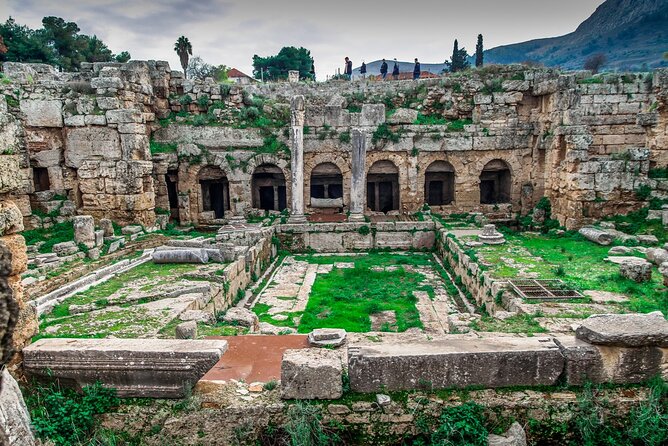
The Archaeological Museum of Ancient Corinth follows the ruins and lasts about 45 minutes. Admission is listed as free for this experience.
The museum, founded in 1932, protects objects found in and around Corinth. Its displays cover prehistoric material, finds from the Sanctuary of Asklepios, religious objects, art, and evidence of daily life.
This visit fills in what the open-air ruins cannot show. At the Agora, you see foundations and columns. In the museum, artifacts can make the people of Corinth easier to picture. You get clues about their beliefs, work, art, and ordinary routines.
Do not rush through this stop just because you have already seen the archaeological site. The museum gives useful background before Acrocorinth and helps you read the ruins with more care. If your interest is mainly devotional rather than archaeological, you may find 45 minutes more than enough. If you enjoy ancient objects, this can be one of the most rewarding parts of the day.
Acrocorinth and the final climb
The final scheduled stop is Acrocorinth, the fortified hill above ancient Corinth. You have about 30 minutes, and admission is listed as free.
The site served as a military stronghold and religious center. It was linked with the Temple of Aphrodite, described in the tour material as having up to 1,000 priestesses. The fortifications and high position show why this hill mattered for control of the surrounding region.
The reward is the view. From above, you can better understand the relationship between the ancient city, the routes toward the ports, and the narrow isthmus. This is a place where geography explains history without much help from words.
The caution is physical. Some people have treated Acrocorinth as a highlight, even pairing the visit with lunch at Taverna Kastro nearby, but the climb and rough footing are not ideal for everyone. The listed 30 minutes may feel short if you want to explore widely, and it may feel demanding if the day is hot.
What the private setup is really worth
The price is $200.25 per person. That is a serious day-trip cost, but it covers more than transport. You receive hotel or port pickup and drop-off, an air-conditioned vehicle, Wi-Fi, bottled water, and a private English-speaking driver with a strong background in Greek history.
For groups of one to four people, the vehicle is a sedan. That makes the ride personal and easy to manage, though it also means less space than a minibus. If you are starting from a cruise ship, the driver waits in the arrival area with a sign bearing your name. Hotel and apartment pickup is outside the property.
The value is strongest when you want to avoid arranging a rental car, navigating Athens traffic, finding Ancient Corinth, and managing the long return journey yourself. It is also a good fit if you want the day adjusted around your interests. One outing included help with a local coffee and snack, a restaurant recommendation, and a drop-off for lunch rather than a strict return to the hotel.
Lunch is not included. It may be arranged or suggested, but you should budget separately. Airport pickup also costs extra.
A private tour does not automatically mean a licensed guide enters every site with you. The included professional is a driver with historical knowledge, while archaeological admission and a licensed site guide are separate. Ask about this before booking if expert site interpretation is your main reason for going.
Timing, heat, and walking
The tour runs about 8 to 9 hours, so an early start makes sense. One pickup took place at 7:30 a.m., with the group back in Athens around 2 p.m., though your exact timing can vary.
You will spend much of the day moving between sites, with short stops at the canal, church, and port and longer visits at the Agora and Ancient Corinth. Wear sturdy, comfortable shoes. The pavement can be uneven, and Acrocorinth adds a climb.
Heat can change the feel of the day. June may be hot, and the exposed ruins offer limited shade. Carry a hat, apply sunscreen, and use the provided water. Most people can participate, and a child seat is available on request, but no detailed accessibility guarantee is provided.
The tour requires good weather. You can cancel for a full refund up to 24 hours before the start time. Late cancellations and late changes are not accepted, and a weather cancellation brings a new date or full refund.
Who should book this day
I would choose this experience if Paul’s time in Greece is central to your trip, but you also want the classical and Roman setting around it. It suits couples, families, and small church or study groups who value a private vehicle and the chance to ask questions.
It is also a strong choice for cruise passengers. Port pickup removes a major worry, and the itinerary covers a large area in one day. The tradeoff is that you will not linger everywhere, so visitors who want a slow archaeological study may prefer separate visits.
This is less suitable if you dislike long drives, hot open-air sites, or uneven ground. It is also not the best match if you want a fully guided museum and excavation experience at every stop unless a licensed guide is added.
Should you book The Apostle Paul’s Missionary Journey?
Book it if you want to connect Paul’s story with the actual roads, ports, civic spaces, and ruins of Athens and Corinth. The Agora, Areopagus, Kenchreai, Bema, and Acrocorinth create a strong sequence, and the private format gives you more control than a large group outing.
Before paying, confirm the entrance costs, the guide arrangement, and whether the plan includes time for lunch. Bring good shoes, sun protection, and realistic expectations about the full-day pace.
At $200.25 per person, this is not a bargain sightseeing shuttle. It is a convenient, private day with transport across two major destinations and room for personal attention. For a small group that wants biblical context, Greek archaeology, and a local driver who can adjust the day, it offers solid value.
FAQ
How long does the tour last?
The experience lasts approximately 8 to 9 hours.
Where can pickup take place?
Pickup is offered from Athens hotels, apartments, and the port. Airport pickup is available for an additional cost.
How does port pickup work?
At the port, the driver waits in the arrival area holding a signboard with your name.
Is the tour private?
Yes. Only your group participates in the private activity.
Is an English-speaking guide included?
A professional English-speaking tour driver is included. A licensed guide to accompany you inside archaeological sites is not included.
Are entrance fees included?
No. Entrance fees for archaeological sites and museums are separate.
What should I wear?
Wear comfortable shoes suitable for uneven ground and walking. A hat and sunscreen are also recommended because the weather can be hot and sunny.
Can I cancel for a refund?
You can cancel at least 24 hours before the start time for a full refund. Cancellations or changes made less than 24 hours before the start time are not refunded or accepted.
Freshly added Athens trips
- Athens and Ancient Corinth Private from Athens★ 5.0 · 3 reviews
- From Athens: Mycenae and Epidaurus Private Tour★ 4.8 · 3 reviews
- Full day Meteora private tour★ 5.0 · 3 reviews
- Double Shore Dive (certified divers)★ 4.5 · 3 reviews
- Athens Hills: Mythology Treasure Hunt★ 5.0 · 3 reviews
- Sunset & swimming at Cape Sounio, Poseidon temple★ 5.0 · 3 reviews
- Philosophy Experience at Plato’s Academy Park – basic version★ 5.0 · 3 reviews
- Private Acropolis Tour – Ticket Included★ 5.0 · 3 reviews
Ancient Corinth Tours, compared.
Ancient Corinth Day Trip with Canal & VR Guide
Read our review →
Private Biblical Tour Ancient Corinth & Isthmus Canal from Athens
Read our review →
Ancient Corinth & Nafplio Full Day Trip with Swim
Read our review →
Private Tour of Apostle Paul’s Footsteps in Ancient Corinth
Read our review →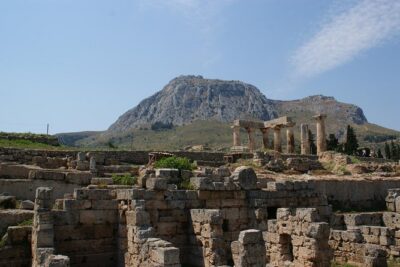
Corinth Half-Day Trip from Athens with Entrance Tickets
Read our review →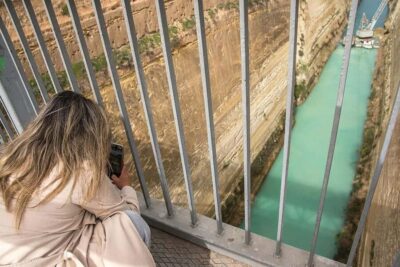
Browse the lists this tour appears in