
Reviewed · MYCENAE & EPIDAURUS TOURS
Private Tour of Isthmus Canal, Ancient Corinth & Mycenae From Athens
The most memorable part of this private day trip is the contrast: one moment you are looking at a 19th-century canal cut through the Isthmus, and later you are walking beneath the Lion Gate of Mycenae, built more than 3,000 years ago. Between them come Roman Corinth, a hilltop fortress, mountain views, and a fine old road that once moved ships overland.
I like the freedom of a private car, especially when Athens traffic and the long Peloponnese route make self-driving a chore. I also like the practical touches: hotel pickup, onboard Wi-Fi, cold bottled water, and a driver who can adjust the time at each stop. The main catch is the schedule. Corinth, Mycenae, lunch, and the return to Athens make a full eight hours, and one past outing ran out of time for Mycenae.
In This Review
- Key points to know
- From Athens to the Corinth Canal
- Acrocorinth, a fortress above the ancient city
- Peirene Spring and Geraneia views
- Ancient Corinth and the Temple of Apollo
- Lunch above the ruins
- Corinth village and the road to Mycenae
- Entering Mycenae through the Lion Gate
- Royal tombs and the Museum of Mycenae
- What the $299.78 price really buys
- Who should book this private Corinth and Mycenae tour?
- Should you book it?
- FAQ
- Where does the tour begin and end?
- Is port pickup available?
- Is airport pickup included?
- Is the tour private?
- Are entrance fees included?
- Is a licensed guide included?
- Is lunch included?
- Can I cancel for a full refund?
Key points to know
- The Corinth Canal is a quick but worthwhile first stop: You see the narrow cut linking the Corinthian and Saronic gulfs, plus the ancient Diolkos shipway.
- Acrocorinth is the most demanding stop: The huge rock, multiple walls, towers, churches, mosques, fountains, and cisterns reward those ready for uneven ground.
- Ancient Corinth gets the most time: Three hours allows room for the museum, Temple of Apollo, Agora, Bema, theater, and a terrace lunch.
- Mycenae is the trip’s great archaeological prize: The Lion Gate, royal tombs, Cyclopean walls, palace remains, and museum connect directly to Bronze Age Greece.
- The private format matters: Your driver can wait, adjust stops, and point out photo views, but a licensed guide inside the sites costs extra.
- The price works best for a small group: At $299.78 per person, the value improves when several people share the private vehicle and the convenience.
From Athens to the Corinth Canal
Pickup begins at your Athens hotel, Airbnb, or apartment. Your driver meets you in the hotel lobby, or contacts you when arriving at an apartment entrance. Port pickup is available, while airport pickup costs extra.
The first proper stop is the Corinth Canal, about an hour from Athens depending on road conditions. The canal itself is a dramatic cut through the Isthmus, linking the Corinthian Gulf with the Saronic Gulf. It is not an ancient construction, despite the area’s old stories and trade routes. The present canal is a 19th-century engineering project that changed shipping across the region.
You have about 45 minutes here, enough to see the canal, take photographs, and hear how the route developed. The stop also includes Ancient Diolkos, a paved trackway used in ancient Greece to move boats overland across the Isthmus. That detail gives the canal a useful sense of place. People were solving the same transport problem long before modern machinery arrived.
I like this opening because it breaks up the drive and gives you a clear geographical lesson. The drawback is that the canal is a short stop, not a full museum visit or long walk. Think of it as an atmospheric introduction to the day.
More Ancient Corinth and canal stops:
- From Athens: Ancient Corinth Day Trip with Canal & VR Guide
★ 4.6 · 1,073 reviews - Private Biblical Tour Ancient Corinth & Isthmus Canal from Athens
★ 5.0 · 762 reviews - Athens: Ancient Corinth & Nafplio Full Day Trip with Swim
★ 4.8 · 523 reviews
Acrocorinth, a fortress above the ancient city
From the canal, the vehicle heads toward Acrocorinth, the acropolis of Ancient Corinth. It sits on a massive rock above the city, with views across the Corinthian Gulf and toward the Peloponnese.
The site is more than a single Greek ruin. Three circuit walls and towers lead toward a fortified summit that has been used and altered across many centuries. You can see traces of the Temple of Aphrodite, a Frankish tower, churches, mosques, houses, fountains, and cisterns. The mixture makes Acrocorinth feel less like a frozen classical monument and more like a working fortress shaped by different rulers.
Allow about an hour. That is enough for a useful look, but not enough to explore every corner at a slow pace. Wear shoes with a firm grip, since the rock and old paths can be uneven. The description of the stop does not promise a guided walk, so your driver can provide background and help with timing, but a licensed guide inside the site is an extra option.
Acrocorinth is one of the places where a private car earns its keep. You avoid finding parking and can leave bags safely in the vehicle. On hot days, the return to the air-conditioned car, with cold water waiting, is a welcome part of the plan.
Peirene Spring and Geraneia views
The short visit to the Upper Peirene Fountain adds a small but memorable detail to Acrocorinth. The spring lies within the fortress walls and is linked in local myth to Asopus and Sisyphus.
You get about 15 minutes here, so this is a quick look rather than a long archaeological study. It helps explain why water storage mattered so much inside a fortress on high ground. The remains of fountains and cisterns at Acrocorinth make the site easier to understand as a place where people lived, not just a military lookout.
Another 15-minute stop brings views toward the Geraneia Mountains, the Corinthian Gulf, and the southwest coast of the Peloponnese. This is a good time to ask your driver for the best photo position. Several people who took this trip valued the driver’s eye for viewpoints and picture stops, along with the sense that the day did not have to run on a rigid script.
Still, short scenic stops can disappear if the morning starts late. The private format gives you control, but it cannot remove distance or traffic. Keep an eye on the clock if Mycenae is a priority.
Ancient Corinth and the Temple of Apollo
The tour then spends roughly three hours at Ancient Corinth, also called Archaia Korinthos. This is the main historical stop on the Corinth side and deserves the generous time allowed.
Begin with the Temple of Apollo, one of the earliest Doric temples in the Peloponnese and mainland Greece. Its monolithic columns are especially striking. They were built around 560 BCE, and their scale helps you picture the religious center that once dominated this site.
The Agora spreads out nearby in a long rectangular area, about 160 meters by 70 meters. Shops, small temples, an altar, and the famous Bema once filled this civic space. The Bema is the platform associated with Apostle Paul’s address to the Corinthians in 52 AD. It is one of those details that turns a broad archaeological site into a place with a specific human story.
You can also see Roman buildings, the theater, the Odeon and Asklepieion, and the Lechaion Road leading toward the ancient port. The road’s direction matters. Corinth was not an isolated inland town. Its position between two seas helped make it a major center for trade and travel.
The Archaeological Museum of Ancient Corinth holds objects from the site and nearby locations. The collection gives you a chance to connect scattered stones outside with pottery, sculpture, and household items indoors. Hadgimoustafa Spring, a fountain built during the Ottoman period, adds another layer to the long use of the area.
St. Paul’s church contains a mosaic mural showing Saul’s vision of Christ as he traveled toward Damascus. It is a later religious sight, but it fits the broader story of Corinth as a place shaped by Greek, Roman, Ottoman, and Christian periods.
More Mycenae and Epidaurus days:
- From Athens: Mycenae, Epidaurus & Nafplio Full Day Trip
★ 4.8 · 2,438 reviews - From Athens: Mycenae, Epidaurus & Nafplio Full-Day Tour
★ 4.5 · 1,580 reviews - 4-Day Classical Greece Tour: Epidaurus, Mycenae, Olympia, Delphi, Meteora
★ 4.5 · 732 reviews - Mycenae and Nafplion Day Trip from Athens with Official guide
★ 4.5 · 501 reviews
Lunch above the ruins
Lunch is not included, but the planned village-style meal can be one of the day’s most pleasant pauses. The terrace overlooks the archaeological site and the Temple of Apollo, giving you a meal with a view rather than a rushed roadside break.
The food and drinks are your responsibility, so plan for an additional cost. The exact menu is not specified, but the setting is clear: a local taverna in the village, with a view over the ruins. I like this sort of stop because it lets you sit with the site for a while. You are not simply checking off another monument.
Allowing three hours at Ancient Corinth gives you room to visit the museum, walk the Agora, eat lunch, and pause for photographs. Yet the time is also where the day can slip. If you spend a long morning at Acrocorinth, lunch and the village stroll may reduce your time at Mycenae.
Corinth village and the road to Mycenae
After the archaeological site, you have about an hour to stroll among village shops and look for handmade souvenirs. This is a relaxed contrast to the stones and formal ruins. You can browse without the pressure of a large group moving on together.
The drive to Mycenae takes about 40 minutes. This is another reason the private vehicle helps. You can use the onboard Wi-Fi, ask for a short pause if needed, and leave purchases in the car instead of carrying them around the sites.
The route also explains the tour’s main scheduling problem. An eight-hour day with two major archaeological areas is possible, but it is not leisurely. A past outing did not reach Mycenae after spending too much time around Corinth. If Mycenae matters most to you, tell the driver at the start and protect that portion of the schedule.
Entering Mycenae through the Lion Gate
Mycenae is tied to the kingdom of Agamemnon and the Bronze Age world described in Homer’s epics. The site is important not simply because of the legends, but because it was a major center of the Late Bronze Age.
The Lion Gate, built in the 13th century BCE, is the main entrance to the citadel. Its carved relief is one of the most recognizable images in Greek archaeology. Passing through it makes the site feel immediate. You are looking at the actual entrance used to reach a fortified royal center, not a later reconstruction.
The Cyclopean Walls are another essential sight. They are made from huge limestone blocks, so large that later people attributed them to the mythical Cyclopes. The nickname is memorable, but the practical point is just as impressive: Mycenae was built to project power and resist attack.
The royal palace included domestic rooms, a throne room suite, a grand staircase, rooms for officials, and a forecourt. The remains are fragmentary, so you need some imagination. A driver can provide historical context, but a licensed guide is available at extra cost if you want a fuller explanation inside the archaeological area and museum.
The scheduled visit to the main Mycenae archaeological site is about 30 minutes, followed by 15 minutes at the Lion Gate. In practice, these areas are closely connected, but the short allocation shows how tightly planned this day is. You may want to combine the two rather than treat them as entirely separate stops.
Royal tombs and the Museum of Mycenae
The Treasury of Atreus is a large tholos, or beehive-shaped tomb, built around 1250 BCE. Its carefully formed interior is one of the site’s most powerful spaces. The nearby Tomb of Clytemnestra is another Mycenaean tholos tomb, named for Agamemnon’s wife in the later legendary tradition.
These tombs are not the same as the Grave Circles A and B, which were royal cemeteries south of the Lion Gate and outside the Bronze Age citadel. Together, they show how burial customs and royal display formed an important part of Mycenae’s identity.
The Archaeological Museum of Ancient Mycenae takes about 30 minutes on the planned schedule. Its displays include gold grave goods, burial masks, jewelry, weapons, worship figures, and frescoes. The museum is especially useful after seeing the walls and tombs, since it gives you the small objects that help fill in daily life and ceremony.
Entrance fees to Mycenae are not included. The same applies to Ancient Corinth and the other paid archaeological areas. A skip-the-line ticket service can be requested, but you should confirm the added cost before booking. A licensed guide to accompany you into the sites and museum is also extra.
What the $299.78 price really buys
At $299.78 per person, this is not a budget bus outing. The price covers a fully private tour, a first-class private vehicle, an English-speaking multilingual driver, hotel or port pickup and drop-off, Wi-Fi, bottled water, and refreshing wipes. Group discounts may improve the cost for a larger party.
The value is strongest when you have three or four people sharing the vehicle. You are paying for time control, door-to-door service, and a driver who can adapt the day, not simply for transport between monuments. You also avoid car hire, navigation, parking decisions, and the stress of a long drive after a full day outdoors.
The price does not include food, drinks, entrance fees, tips, airport pickup, or a licensed site guide. Add those expenses before comparing it with a self-guided rental car. If you want detailed interpretation at every ruin, budget for the guide. If you mainly want comfortable transport and useful historical background from the driver, the included arrangement may be enough.
Drivers named Nikos and Gregory are specifically associated with strong service on this experience. Nikos was praised for arriving early, choosing good photo and food stops, and keeping the driving comfortable. Gregory made a hot day easier with water and well-paced visits. Driver quality can vary by assignment, but these names are useful when confirming your booking or requesting a particular driver.
Who should book this private Corinth and Mycenae tour?
I would choose this for a small group staying in Athens that wants to see two major ancient sites without renting a car. It suits people who value a private schedule, hotel pickup, and the ability to spend more time at a favorite stop.
It is also a good fit for an Athens visit with limited time. The route reaches the Corinth Canal, Acrocorinth, Ancient Corinth, and Mycenae in one long day. You get a broad look at the region instead of spending separate days arranging transport.
I would be cautious if you dislike busy schedules or want a slow archaeological visit. The eight-hour estimate leaves little room for delays, a long lunch, or extended time at every ruin. Families and older participants should also note that Acrocorinth involves a rocky hilltop site, though the tour is private and most people can participate.
To protect the day, tell your driver which site matters most. If Mycenae is non-negotiable, consider doing the long drive there first and working back toward the canal, as this may reduce the risk of reaching the Bronze Age citadel too late. The provider should confirm the final route, since traffic and site timing still matter.
Should you book it?
Book this tour if you want private transport, flexible stops, and a strong mix of Greek history in one day. The driver service, hotel pickup, Wi-Fi, water, and local lunch setting make the long route easier than handling it alone.
Think twice if your priority is a slow, guide-led study of each site. The entrance fees and licensed guide cost extra, and the itinerary can become tight. For a small group that plans ahead, protects Mycenae time, and accepts the additional site and meal costs, this is a useful and well-planned way to reach Corinth and the Argolid from Athens.
FAQ
Where does the tour begin and end?
Pickup and return are provided at your chosen Athens hotel, Airbnb, or apartment. Hotel pickup takes place in the lobby, while apartment pickup is arranged at the building entrance.
Is port pickup available?
Yes. Port pickup and drop-off are included. The driver meets you in the arrivals area holding a sign with the guest’s name.
Is airport pickup included?
No. Airport pickup and drop-off are available at an additional cost.
Is the tour private?
Yes. Only your group participates in the activity.
Are entrance fees included?
No. Entrance fees for the archaeological sites and museums are not included in the tour price.
Is a licensed guide included?
No. The tour includes a professional driver with historical knowledge. A licensed guide for the archaeological sites and museum can be requested for an additional cost.
Is lunch included?
No. Food and drinks are not included. The route allows time for an authentic village-style lunch on a terrace overlooking Ancient Corinth and the Temple of Apollo.
Can I cancel for a full refund?
Yes. You can cancel at least 24 hours before the local start time for a full refund. Cancellations or changes made less than 24 hours before the start time are not accepted for a refund.
Freshly added Athens trips
- Athens and Ancient Corinth Private from Athens★ 5.0 · 3 reviews
- From Athens: Mycenae and Epidaurus Private Tour★ 4.8 · 3 reviews
- Full day Meteora private tour★ 5.0 · 3 reviews
- Double Shore Dive (certified divers)★ 4.5 · 3 reviews
- Athens Hills: Mythology Treasure Hunt★ 5.0 · 3 reviews
- Sunset & swimming at Cape Sounio, Poseidon temple★ 5.0 · 3 reviews
- Philosophy Experience at Plato’s Academy Park – basic version★ 5.0 · 3 reviews
- Private Acropolis Tour – Ticket Included★ 5.0 · 3 reviews
Mycenae & Epidaurus Tours, compared.
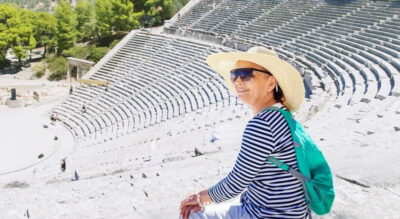
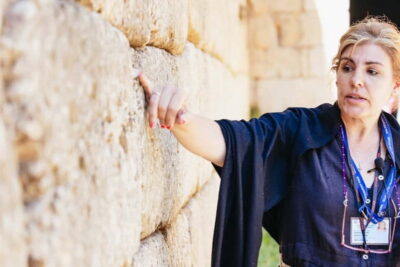
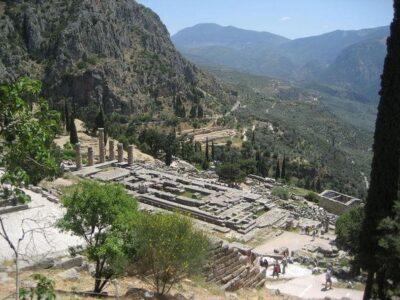
4-Day Classical Greece Tour: Epidaurus, Mycenae, Olympia, Delphi, Meteora
Read our review →
Ancient Corinth & Nafplio Full Day Trip with Swim
Read our review →
Mycenae and Nafplion Day Trip from Athens with Official guide
Read our review →
3-Day Classical Greece Tour: Epidaurus, Mycenae, Nafplion, Olympia, Delphi
Read our review →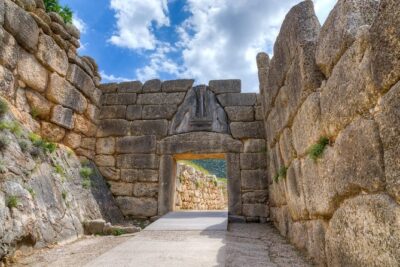
Mycenae, Epidaurus, Nafplio Full Day Private Tour from Athens
Read our review →Browse the lists this tour appears in