
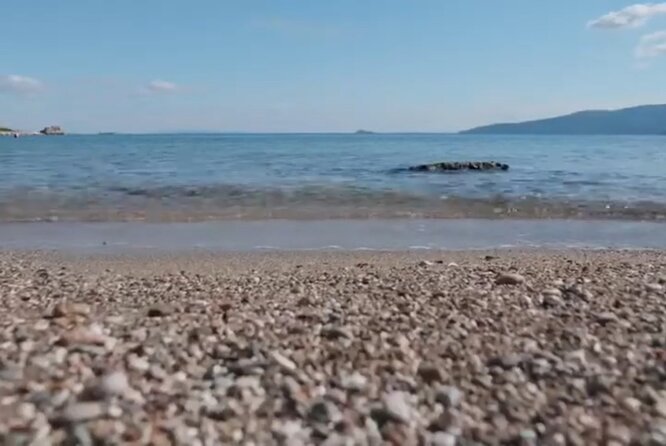
Reviewed · ANCIENT CORINTH TOURS
Private Biblical Apostle Paul steps in Ancient Corinth.
Ancient Corinth gives the Apostle Paul’s story a real place under your feet. Here, you can see the Bema, where Paul defended his faith before Roman officials, then walk among the Temple of Apollo, Roman Agora, and museum remains that bring 1st-century Corinth into focus. Paul’s letters feel more concrete when you see the city he knew.
I like the privacy and the flexible pace. Your group of up to four rides in an air-conditioned vehicle with water, WiFi, and a toilet, while guide Ilias Kanteres can give you time at each stop rather than herd you from one photo point to the next. I also like the range of stops, from the biblical setting at Kenchreai to the startling cut of the Corinth Canal.
The main drawback is cost control. At $417.57 per group, the tour can be good value for four people, but admission tickets and lunch are extra. The six-hour schedule also gives Ancient Corinth only about three hours, so you should not expect an exhaustive archaeological visit.
In This Review
- Key points to know before you go
- Why Ancient Corinth matters to a student of Paul
- Ancient Corinth, three hours among the ruins
- Kenchreai, Paul’s eastern port
- Acrocorinth and the fortress above the city
- The Corinth Canal, a dramatic one-hour stop
- How I judge the $417.57 group price
- What the private format adds to the day
- Who should book this Corinth experience
- Final call: a strong private day for Paul and Corinth
- FAQ
- How long does the private Corinth tour last?
- Where does the tour take place?
- Is hotel pickup available?
- What is included in the price?
- Are admission tickets included?
- How many people can join the private tour?
- What is the cancellation policy?
Key points to know before you go
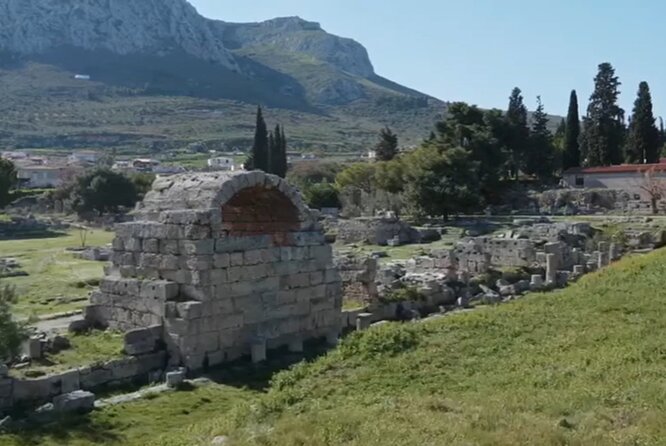
- Paul’s Corinth is the heart of the day: See the Bema, Temple of Apollo, Roman Agora, and Archaeological Museum.
- Kenchreai adds a direct biblical connection: The ancient eastern port is associated with Paul baptizing the first Christians.
- Acrocorinth gives you the big view: The fortress sits on a huge rock above the old city and the route through the isthmus.
- The Corinth Canal makes a strong final stop: You see the narrow waterway linking the Gulf of Corinth with the Saronic Gulf.
- Private transport keeps the day easy: Pickup, an air-conditioned vehicle, water, WiFi, and a toilet are included.
- The price works best for a small group: Four people can share the group rate, while tickets and lunch remain separate costs.
Why Ancient Corinth matters to a student of Paul
Paul did not belong to the close circle of the twelve disciples, yet his work helped carry Christianity far beyond its earliest base. Corinth was one of the key places in that effort. He preached here in the 1st century AD and helped establish one of the first Christian communities in the city.
That gives this visit two layers. You are not only looking at Greek and Roman ruins. You are also standing in a place tied to letters that remain central to Christian teaching. The setting helps explain why Paul addressed questions of worship, community life, disagreement, and belief to the Corinthians.
I find that connection more useful than simply being told that Corinth was important. At the site, the Bema gives the story a physical anchor. This raised platform was used for public speaking and legal proceedings, and it is identified as the place where Paul defended his faith before Roman officials.
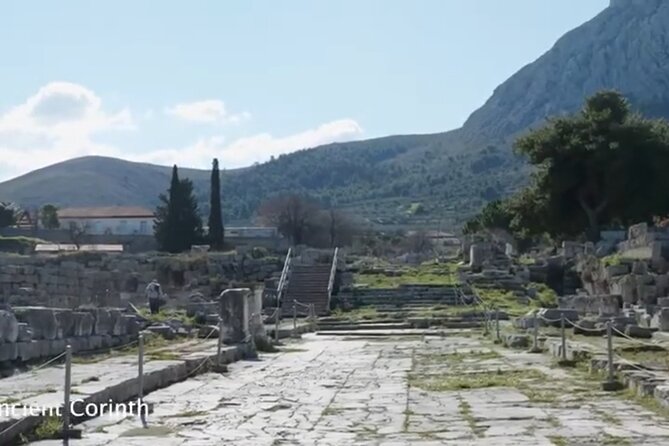
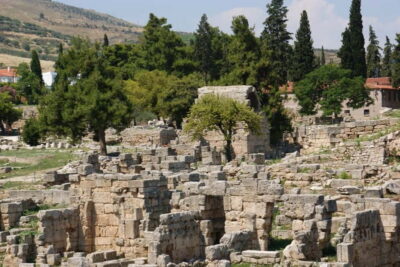
The ruins also show the city Paul entered. The Temple of Apollo, Roman Agora, and remains of the ancient settlement reveal Corinth as a major public and religious center. You get a sense of a city shaped by Greek tradition, Roman rule, trade, and competing beliefs.
More Ancient Corinth and canal stops:
- From Athens: Ancient Corinth Day Trip with Canal & VR Guide
★ 4.6 · 1,073 reviews - Private Biblical Tour Ancient Corinth & Isthmus Canal from Athens
★ 5.0 · 762 reviews - Athens: Ancient Corinth & Nafplio Full Day Trip with Swim
★ 4.8 · 523 reviews
Ancient Corinth, three hours among the ruins
The tour allows about three hours at Ancient Corinth, making this the main stop of the day. That is enough time for a meaningful look at the principal remains, but you will need to keep moving if you want to include the museum along with the outdoor ruins.
Begin with the public center, where the Roman Agora and Bema help you picture Corinth as a working city rather than a scatter of stones. The Bema is especially important for a faith-focused visit. It connects Paul’s preaching with Roman civic power and gives you a specific place to reflect on the events described in the New Testament era.
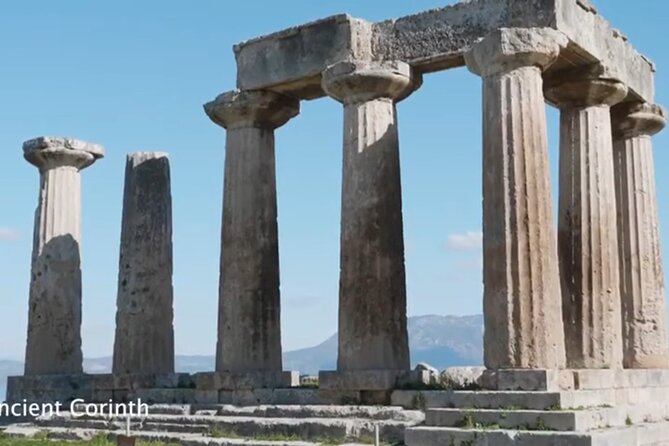
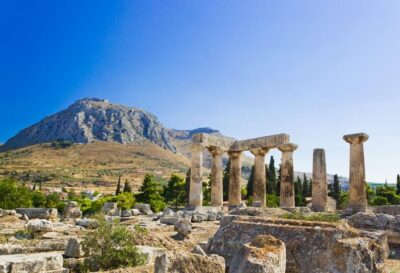
The Temple of Apollo is another essential sight. Its surviving columns are among the clearest reminders that this was an established ancient city long before Paul arrived. The contrast between the older Greek setting and the later Christian message makes Corinth more interesting than a site focused on just one period.
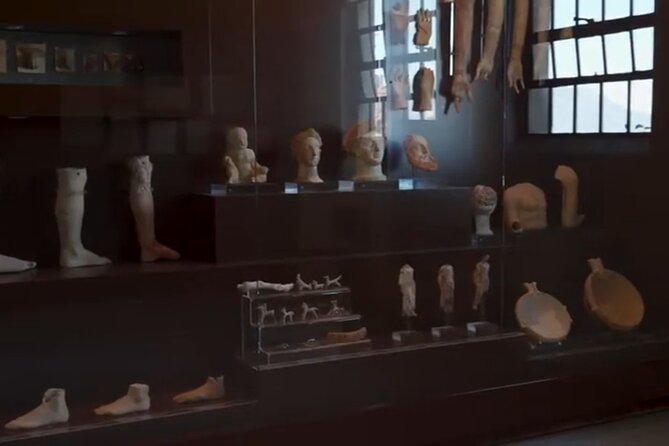
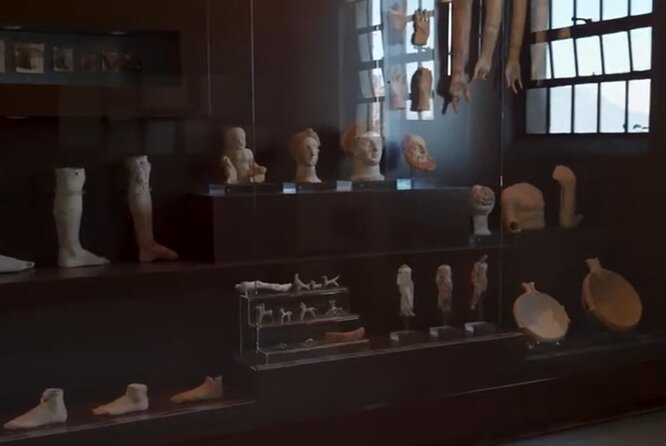
The Archaeological Museum adds objects and context that the open ruins cannot provide. If you want time for displays as well as outdoor photography, tell Ilias early in the visit. The supplied schedule gives you three hours, but the balance between the museum, ruins, and reflection is yours to manage within that window.
You should also expect the site to involve walking over ancient ground. The information provided does not specify the exact walking conditions or accessibility arrangements, so anyone with mobility concerns should ask before booking. Most people can participate, but the experience is still best for someone comfortable moving around an archaeological site.
I like that the private format should make this portion less rushed than a large coach outing. A private group can pause for questions and spend longer at the Bema, or move on when the main story is clear. The tradeoff is that the guide cannot turn three hours into a full-day excavation visit.
Admission to Ancient Corinth is not included. Set aside money for the ticket, and remember that lunch is also separate. That makes the advertised group price look more attractive for four people than for one or two.
Kenchreai, Paul’s eastern port
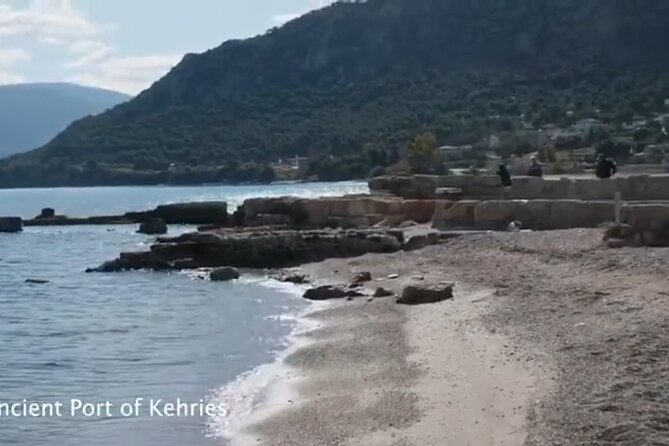
Kenchreai takes about 30 minutes and has no admission charge. It was one of Corinth’s two ancient ports, serving routes through the Saronic Gulf while Lechaion handled routes toward the Corinthian Gulf, Italy, and the rest of Europe.
For a biblical visit, Kenchreai has a special role. It is identified as the place where Paul baptized the first Christians. The stop is brief, but the connection is direct and easy to understand: Corinth was not isolated inland. Its ports helped connect the city to wider trade routes and the movement of people and ideas.
You should approach this stop as a short historical pause rather than a second major ruin complex. Thirty minutes is enough to hear the story, take in the setting, and connect the port to Corinth’s wider world. It is not enough for a long, detailed archaeological exploration.
This is one reason the private vehicle matters. You can use the short stop efficiently and return to the road without dealing with a large group. The tour’s faith focus also means Kenchreai is not just an extra coastal photo stop. It adds another location tied to Paul’s work.
The information does not say that admission to every particular feature at Kenchreai is required, and the stop is listed as free. That keeps this part of the day simple, though you should not expect extensive visitor facilities to be part of the experience.
Acrocorinth and the fortress above the city
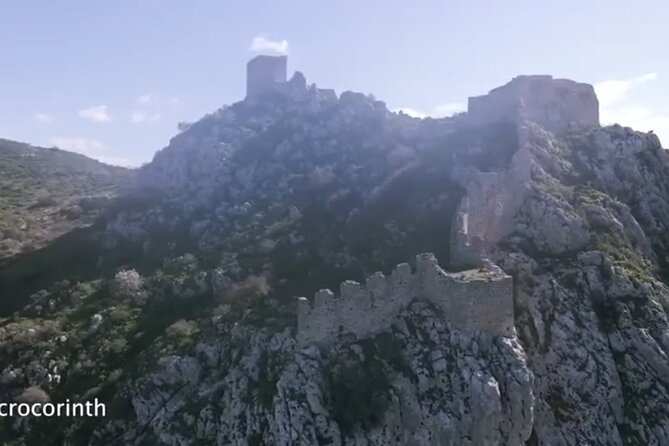
Acrocorinth is planned as a 30-minute stop, with no admission fee listed. The name means Upper Corinth, and the site is a massive rock rising above Ancient Corinth. Its height and position made it a natural defensive stronghold.
The fortress controlled the isthmus, the narrow land bridge linking the mainland with the Peloponnese. Whoever held Acrocorinth had a strong position for blocking movement into the peninsula. Its secure water supply also helped the fortress serve as a final line of defense over many periods.
Even with only half an hour, you should get a striking view of how geography shaped Corinth. The old city below, the isthmus, and the surrounding countryside make more sense from this high position. The rock is not a minor hilltop viewpoint. It is the reason Corinth could protect and control one of the most important routes in southern Greece.
There is an important practical limit here. Thirty minutes does not suggest a long climb or full fortress exploration. The tour may take you to a viewing area or accessible part of the site, but the provided information does not promise a complete walk through the fortress. Ask Ilias what level of access is planned if reaching the upper areas is a priority.
I would treat Acrocorinth as a visual and strategic complement to Ancient Corinth. At the lower site, you focus on Paul, public buildings, and city life. At the upper site, you see why this place mattered to rulers and armies long after Paul’s time.
More footsteps-of-Paul trips:
- Biblical Tour Letters ToThe Corinthians St Paul’s Footsteps 6Hour
★ 5.0 · 1,065 reviews - Private Tour of Apostle Paul’s Footsteps in Ancient Corinth
★ 5.0 · 275 reviews - Paul”s Footsteps Ancient Corinth Biblical Tour
★ 5.0 · 184 reviews - Private Luxury Biblical Tour: Apostle Paul in Athens & Corinth
★ 5.0 · 162 reviews
The Corinth Canal, a dramatic one-hour stop
The Corinth Canal receives about an hour, the longest stop after Ancient Corinth. It links the Gulf of Corinth in the Ionian Sea with the Saronic Gulf in the Aegean Sea, cutting through the Isthmus of Corinth and separating the Peloponnese from mainland Greece.
The canal is about 6.4 kilometers long and only 24.6 meters wide at sea level. It has no locks because it was cut at sea level. Modern ships often cannot use it because of the narrow width, so its main interest today is visual and historical rather than commercial.
From above, the canal’s scale is easy to grasp. The steep sides and narrow strip of water show how much earth had to be removed to create a direct passage between two seas. It also explains why Corinth mattered as a crossroads long before the modern canal was completed.
The tour description connects the canal area with ideas going back to around 700 BC. You should understand this as a long-standing plan to cross the isthmus, not as a claim that the modern cut existed in that period. The present canal is a later construction, but the location has held strategic importance for centuries.
An hour gives you time to take in the view without treating it as a quick roadside stop. I like the change of pace after the ruins. The canal is not another temple or Christian site, but it completes the geography lesson: Corinth sits where land, sea routes, and overland travel meet.
How I judge the $417.57 group price
The cost is $417.57 for a private group of up to four. Split four ways, that is about $104.39 per person before admission tickets and lunch. For two people, the per-person cost is much higher, but you are still paying for private transportation, a private guide, and a full six-hour outing from Athens.
The value depends on what you want from the day. If you want someone else to handle the driving and connect the biblical sites with Corinth’s Greek and Roman setting, the price can make sense. You also avoid sharing the day with a large group, which matters when you want to ask questions or spend extra time at the Bema.
The package includes private transportation, an air-conditioned vehicle, WiFi on board, water, and a toilet. Those are modest details, but they matter on a six-hour road outing. Pickup is offered, which makes the start easier, though the supplied details do not state the exact pickup area or time.
The missing costs are clear: lunch and ticket fees are not included. I would ask for the current Ancient Corinth admission price before setting your budget. You should also confirm the exact pickup point and how the three-hour Ancient Corinth visit will be divided between the ruins and museum.
The tour is booked, on average, 67 days ahead. That suggests you should reserve early if your Athens dates are fixed, especially if you need a particular day for a private group. Confirmation is received at booking, and free cancellation is available up to 24 hours before the start time. Inside that window, the payment is not refunded and changes are not accepted.
What the private format adds to the day
The private setup is the strongest practical feature. Only your group participates, so the day can feel more personal than a standard bus trip. You can ask Ilias Kanteres to explain Paul’s connection to Corinth in more detail, or to keep the commentary shorter and leave you more time to look around.
The available feedback gives Ilias unusually strong emphasis. He is described as personable, attentive, and careful to allow enough time at each site. One account notes that he covered Ancient Corinth, Acrocorinth, and the canal while making sure the group enjoyed every stop. That points to the kind of service you want on a day with several different locations.
Still, private does not mean unlimited. The schedule is six hours, and the four stops have fixed approximate durations. If you want a slow museum visit, a long Acrocorinth exploration, and a full walk through Ancient Corinth, you may need to choose priorities.
I would tell Ilias at the start that the Bema and the Paul connection are your main goals. If the canal or Acrocorinth matters more to you, say that too. A clear preference helps the guide use the private format well.
Who should book this Corinth experience
I would recommend it most strongly to Christians, readers of Paul, and anyone who wants religious history connected to real places. It also suits first-time visitors to Athens who want to add an important archaeological site without arranging transport on their own.
Families and small groups can benefit from the group pricing. Four people sharing the cost get a much better deal than a solo participant, and the private vehicle avoids the need to coordinate several separate bookings.
It is also a good fit if you prefer a guided overview to independent excavation work. You will see the key sites, learn why they matter, and visit the canal in one day. You will not get unlimited time at each location, and admission costs are separate.
I would be more cautious if your main aim is a long archaeological study. Three hours at Ancient Corinth is useful, but the whole day also includes Kenchreai, Acrocorinth, and the canal. Those additions broaden the experience while reducing the time available for detailed work at the central ruins.
Final call: a strong private day for Paul and Corinth
Book this tour if you want a focused, convenient connection to Apostle Paul’s Corinth, with enough extra scenery and history to make the drive worthwhile. The Bema, Temple of Apollo, Roman Agora, museum, Kenchreai, Acrocorinth, and canal create a satisfying six-hour arc from faith and city life to ports, fortifications, and modern engineering.
Before paying, confirm the pickup details, Ancient Corinth ticket cost, and how much time you will have inside the museum. If four people share the $417.57 rate, the value is persuasive. For a smaller group, the price is harder to justify, but the private vehicle and personal attention from Ilias may still make it the easiest way to see Corinth from Athens.
FAQ
How long does the private Corinth tour last?
The experience lasts approximately six hours.
Where does the tour take place?
The tour is based in Athens, Greece, with visits to Ancient Corinth, Kenchreai, Acrocorinth, and the Corinth Canal.
Is hotel pickup available?
Pickup is offered, but the provided information does not specify the exact pickup locations or times.
What is included in the price?
The price includes private transportation, an air-conditioned vehicle, WiFi on board, water, and a toilet.
Are admission tickets included?
No. Admission tickets are not included. Lunch is also not included.
How many people can join the private tour?
The price covers a private group of up to four people.
What is the cancellation policy?
You can cancel up to 24 hours before the experience start time for a full refund. Cancellations or changes made less than 24 hours before the start time are not refunded or accepted.
Freshly added Athens trips
- Athens and Ancient Corinth Private from Athens★ 5.0 · 3 reviews
- From Athens: Mycenae and Epidaurus Private Tour★ 4.8 · 3 reviews
- Full day Meteora private tour★ 5.0 · 3 reviews
- Double Shore Dive (certified divers)★ 4.5 · 3 reviews
- Athens Hills: Mythology Treasure Hunt★ 5.0 · 3 reviews
- Sunset & swimming at Cape Sounio, Poseidon temple★ 5.0 · 3 reviews
- Philosophy Experience at Plato’s Academy Park – basic version★ 5.0 · 3 reviews
- Private Acropolis Tour – Ticket Included★ 5.0 · 3 reviews
Ancient Corinth Tours, compared.
Ancient Corinth Day Trip with Canal & VR Guide
Read our review →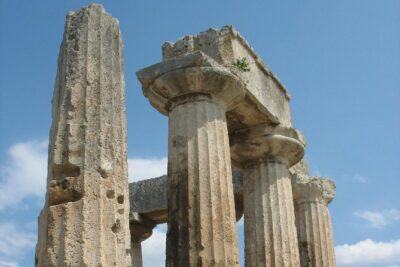
Private Biblical Tour Ancient Corinth & Isthmus Canal from Athens
Read our review →
Ancient Corinth & Nafplio Full Day Trip with Swim
Read our review →
Private Tour of Apostle Paul’s Footsteps in Ancient Corinth
Read our review →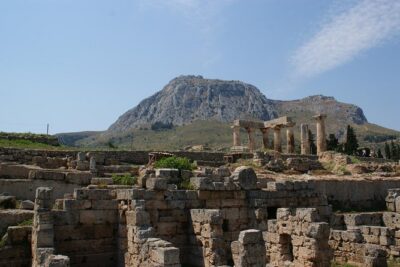
Corinth Half-Day Trip from Athens with Entrance Tickets
Read our review →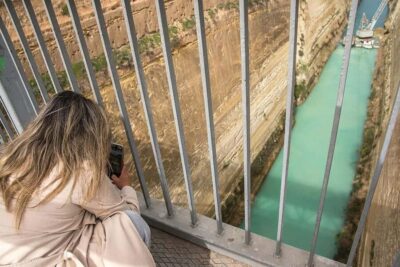
Browse the lists this tour appears in