
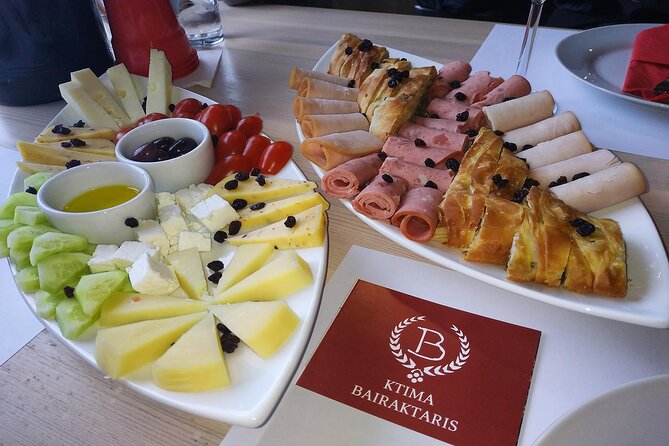
Reviewed · GUIDED
PARADISIAL PELOPONNESE | Semi-Private 8-Day Guided Tour
The best thing about this eight-day journey is its scale. With no more than six people in the private minivan, you can hear the guide clearly, stop without the usual bus-tour shuffle, and spend real time at places such as Mycenae, Ancient Olympia, and Ancient Messene. The guide may be George, Babis, Aristotle, or another certified archaeologist from the Pictours of Greece team.
I like the smart mix of famous ruins and less expected stops, especially Monemvasia and the Odontotos railway. I also like that food is part of the trip rather than an afterthought, with a seafood cooking lesson, wine tasting, and included meals. The main drawback is the price, $4,624.74 per person, and the pace: eight days cover a large part of the Peloponnese, so several days involve long drives and active sightseeing.
In This Review
- Key points to know before booking
- Why this small-group route works
- Day 1: Dinner beneath the Acropolis
- Day 2: Athens monuments, the Corinth Canal, and Nafplio
- Day 3: Epidaurus, Nemea, and the sound of ancient Greece
- Day 4: Mycenae, Sparta, and medieval Monemvasia
- Day 5: Ancient Messene and the coast at Pylos
- Day 6: Niokastro and the Palace of Nestor
- Day 7: Olympia, Planitero, and mountain Kalavryta
- Day 8: Memory, mountain rail, and Ancient Corinth
- What the $4,624.74 price includes
- Pace, comfort, and who should book
- Should you book the Paradisial Peloponnese tour?
- FAQ
- How long is the Paradisial Peloponnese tour?
- How many people can join the tour?
- What is the minimum age?
- Is a guide included?
- Are meals included?
- Where does the tour begin and end?
Key points to know before booking
- Maximum six people: This is a small private-style group, not a large coach tour.
- Archaeology with context: A certified English-speaking archaeologist guides the major ancient sites.
- Seven hotel nights: Accommodation is in 4-5 star hotels, with overnight stays in places such as Nafplio, Monemvasia, Pylos, and Kalavryta.
- Food has a real role: Wine tasting and cooking lessons are included, along with listed breakfasts, lunches, and dinners.
- A broad Peloponnese route: You visit Athens, Corinth, Epidaurus, Mycenae, Sparta, Olympia, Pylos, and more.
- Adults and older teens only: The minimum age is 16, and a moderate level of fitness is needed.
Why this small-group route works
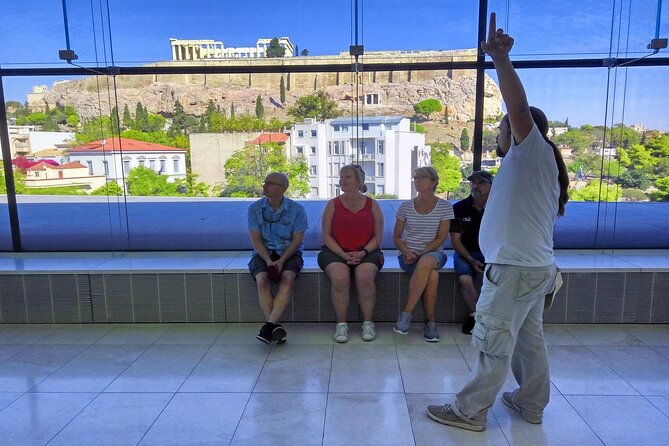
The Peloponnese is not a single-sightseeing destination. It is a large region filled with ancient sanctuaries, medieval towns, mountain roads, seaside villages, and archaeological sites that often sit far apart.
That makes a private minivan especially useful. You avoid driving yourself on unfamiliar roads, and the group is small enough to keep the day flexible within the planned route. You still need to accept plenty of road time, but the drives connect places that are difficult to combine by public transport.
The archaeology guide is central to the experience. Names associated with this tour include George, Babis, Aristotle, and Aristotle Koskinas. The strongest praise has focused on guides who explain Greek history in a way that helps you picture the people behind the stones, rather than simply listing dates and building names.
I would choose this trip if you want a guided overview with serious historical content but do not want to spend every day in a major city. It also suits couples and friends who prefer a polished trip with hotels and meals arranged in advance.
A few more Athens days worth a look
- Best of Athens Half Day Private Tour
★ 5.0 · 3,714 reviews - Athens Full Day Private Tour
★ 5.0 · 2,903 reviews - Athens Airport Private Arrival Transfer with Meet & Greet
★ 4.5 · 1,495 reviews
Day 1: Dinner beneath the Acropolis
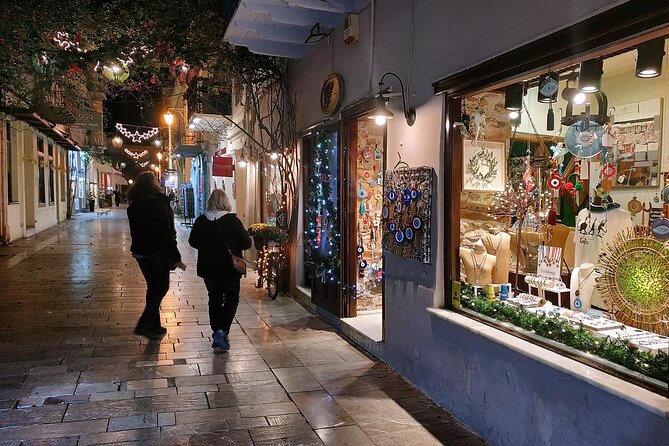
The tour begins in Athens with a gourmet dinner and views of the Acropolis. The listed start time is 8:00 p.m. at the Royal Olympic Hotel, so check this carefully when planning your arrival.
This first evening is more than a meal. It gives you a chance to meet the guide and the rest of the group before the site visits begin. Because the tour requires at least two people per booking and accepts no more than six, the opening dinner should feel more like a shared table than a formal group event.
The word gourmet tells you to expect a higher-end meal, but the exact restaurant and menu are not specified. Dietary needs should be provided when you book. Vegetarian meals are available, and alcohol is not included in the tour price.
Day 2: Athens monuments, the Corinth Canal, and Nafplio
Your Athens sightseeing begins at the Acropolis, where the guide adds meaning to the temples and surviving structures. Allow two hours for the visit, and expect uneven stone surfaces, steps, and time in the open air.
The Acropolis Museum follows. Its modern galleries explain the history of the Acropolis and display objects dating as far back as the sixth century BC. I like this pairing because the hill gives you the physical setting, while the museum helps explain what the site looked like and how it changed.
Short stops at the Herod Atticus Odeon, the Temple of Olympian Zeus, and the Panathenaic Stadium fill out the Athens portion. These are viewing stops rather than long visits, so do not expect a detailed tour of each one.
The Panathenaic Stadium has an important connection with the ancient city, having been originally built in 338 BC. The Herodion sits on the Acropolis slopes, while the Temple of Olympian Zeus shows the enormous scale of ancient temple building. Together, these stops give you a useful sense of Athens beyond the Acropolis itself.
The route then heads west toward the Corinth Canal. The canal cuts through the isthmus for 6.3 kilometers and separates the Peloponnese from mainland Greece. You spend only about 15 minutes here, but it is a worthwhile engineering stop and a clear geographic marker: from this point, you are entering the peninsula proper.
Nafplio is your base for the night. It was Greece’s first capital and is known for Venetian architecture, elegant lanes, and views across the Argolic Gulf. The itinerary allows an evening to walk through town, watch the sunset, and enjoy the harbor.
The cooking lesson here focuses on seafood and is led by a local chef. You then eat what you have helped prepare. This is one of the trip’s strongest touches because it connects the destination with everyday Greek food, not only monuments.
Day 3: Epidaurus, Nemea, and the sound of ancient Greece
The Ancient Theatre of Epidaurus gets two hours, enough time to appreciate its design and famous acoustics. The theater is celebrated for the way a voice carries across the seating area, and the guide can place it within the wider religious and cultural setting of the sanctuary.
Wear shoes with a steady sole. Ancient theaters and archaeological grounds usually involve stone paths and exposed surfaces, and this tour asks you to keep moving through several sites.
Nemea brings a change of pace. Here you taste Agiorgitiko wine, a red variety linked in local tradition with Hercules and the Nemean Lion. The tasting is included, but alcoholic beverages elsewhere are not automatically covered, so budget for extra drinks with meals if you want them.
Ancient Nemea is one of the more rewarding stops for people who like sites with room to wander. You see the Doric Temple of Zeus, which dates to the sixth century BC, and the Nemean Stadium. The original track is open for you to run, an amusing and memorable way to connect with the ancient athletic tradition.
The two-hour allocation at Ancient Nemea is generous compared with many quick photo stops. Still, the combination of ruins, wine, and open countryside makes this a full day rather than a simple sequence of monuments.
Same city, a completely different century:
- Athens: Acropolis & up to 5 Archaeological Sites Combo Pass
★ 4.4 · 12,619 reviews - Athens: Acropolis Ticket with Optional Audio or Live Guide
★ 4.2 · 11,055 reviews - Athens: Acropolis, Parthenon & Acropolis Museum Guided Tour
★ 4.8 · 9,316 reviews - Athens: Cape Sounion & Poseidon Temple Sunset Half-Day Trip
★ 4.8 · 8,241 reviews
Day 4: Mycenae, Sparta, and medieval Monemvasia
Mycenae is one of the tour’s major archaeological highlights. The Lion Gate is the image most people remember, but the site becomes more understandable when you also visit the Treasury of Atreus, a large beehive-shaped tomb traditionally associated with Agamemnon.
Mycenae belongs to the Bronze Age world of roughly 1600 to 1100 BC. An archaeologist guide is particularly useful here because the site can otherwise feel like a collection of impressive stones without a clear story. Two hours gives you time to focus on the main structures without turning the visit into an all-day excavation walk.
At Sparta, the stop is shorter, about 30 minutes at the Monument of Leonidas. This is a brief salute to the warrior-king connected with the 300 Spartans and the Battle of Thermopylae in 480 BC. If Sparta is high on your personal list, note that this itinerary does not devote a full day to the city.
Monemvasia supplies a dramatic contrast. This medieval castle town is cut off visually from the mainland and has a strong sense of place, with stone lanes and preserved architecture inside the fortified settlement. You spend the night here, which matters. A short photo stop would not do Monemvasia justice, while an evening stay lets you see the town after the day’s sightseeing traffic has eased.
The medieval setting also breaks up the ancient-world focus. I like this rhythm: Bronze Age citadel in the morning, Spartan memorial at midday, and a medieval town by night.
Day 5: Ancient Messene and the coast at Pylos
Ancient Messene is among the best reasons to choose this route over a standard Athens and Olympia package. The site covers a broad area in a quiet valley and includes a theater, stadium, large fortification walls, and other remains.
The setting gives Messene a different feel from the more famous sites. You see substantial architecture without spending the visit shoulder to shoulder with a large crowd. Two hours is enough for a strong introduction, although anyone with a serious interest in the site may wish for more time.
The road then continues to Pylos, a calm seaside town with strong historical associations. The schedule gives you the night there, allowing the trip to shift from inland archaeology to the coast.
Pylos is also a useful overnight location because the following day returns to nearby historical sites rather than forcing a long transfer immediately after Messene. The tour does not specify every hotel or restaurant, but the accommodation level is listed as 4-5 star, and food planning is part of the package.
Day 6: Niokastro and the Palace of Nestor
The New Castle of Pylos, also called Niokastro, guards the bay and reflects the later military history of the region. Its walls and position are as important as the buildings themselves. From a fortress, you can understand why this harbor mattered.
The Palace of Nestor takes you back to the Mycenaean period. You see the megaron hall, storerooms, and references to Linear B, an early form of Greek writing. The surrounding countryside adds to the appeal, but the palace is the main reason to make the stop.
This is another day when the guide’s archaeology background has practical value. Bronze Age palaces can be hard to read on your own, especially when you are looking at foundations and partial walls. A good explanation turns the floor plan into a picture of administration, storage, ceremony, and daily life.
Two hours at each site keeps the day focused. You will not inspect every corner at leisure, but you get a clear story without the exhausting pace of a site-a-day checklist.
Day 7: Olympia, Planitero, and mountain Kalavryta
Ancient Olympia receives three hours, the longest archaeological visit on the route. You walk through the sanctuary and the stadium where athletic contests took place more than 2,000 years ago.
The site is not only about sport. Olympia was a sacred center, and the missing Statue of Zeus once ranked among the Seven Wonders of the Ancient World. The guide can help connect the stadium with the temples, religious ceremonies, and political importance of the sanctuary.
After Olympia, the tour moves toward Planitero. The listed activity includes trout fishing in calm rivers and a walk along the riverbanks. This is a welcome change after several days of ruins and formal interpretation, though you should not assume a full fishing excursion with specialized instruction. The schedule allows two hours.
The overnight stop is Kalavryta, a mountain town surrounded by steep scenery. The appearance changes with the season: snow is possible in winter, while spring brings greener conditions. This is one of the trip’s more scenic transitions, but mountain roads and a full day of sightseeing may leave you ready for an early night.
Day 8: Memory, mountain rail, and Ancient Corinth
The final morning begins at the Municipal Museum of the Kalavryta Holocaust. The museum addresses the region’s World War II history and the suffering caused by the massacre remembered here.
This is a serious stop, not a light attraction to rush through. Give yourself space to listen and reflect. Its inclusion broadens the tour beyond classical Greece and shows how the region’s past reaches into the twentieth century.
The Odontotos Rack Railway follows, with a ride through the Vouraikos Gorge. The railway is a nineteenth-century engineering achievement, and the route adds motion and scenery after the quiet museum visit. The train portion lasts about an hour.
Ancient Corinth is the final major site. You see the Temple of Apollo, the Agora, and other remains in fertile plains supplied by natural springs. Corinth also brings the journey back toward Athens, making it a logical final archaeological stop before returning to the original meeting point.
Two hours here gives you a solid overview. If you are especially interested in the early Christian period or the Apostle Paul, ask the guide how those subjects fit into the visit, but the stated focus is the ancient city and its classical remains.
What the $4,624.74 price includes
At this price, you are paying for more than admission tickets. The package includes seven nights in 4-5 star hotels, a private minivan, a certified English-speaking archaeologist guide, private tours, travel insurance, wine tasting, cooking lessons, and listed breakfasts, lunches, and dinners.
The value depends on how much planning you would otherwise do yourself. Hotels in several different towns, long-distance transport, site admissions, and a specialist guide can add up quickly. You also receive the convenience of one company coordinating the route rather than arranging separate stays and transfers.
The cost is still high. It does not include alcoholic beverages, and the exact number of included lunches and dinners is shown as variable, with five lunches and three dinners listed. Before paying, I would ask for the final meal schedule and hotel names. That is sensible planning for any premium trip.
The small group is a major part of the value. Six people in a minivan is far easier for conversation and site visits than a full coach. It also helps explain why this trip costs more than a basic group excursion.
Pace, comfort, and who should book
You need moderate physical fitness. The tour includes archaeological sites with uneven ground, ancient stones, steps, outdoor exposure, and several hours of walking. The railway and minivan provide variety, but this is not a low-effort sightseeing holiday.
The minimum age is 16. That makes the group more adult-focused and better suited to people who want long explanations about archaeology, mythology, warfare, religion, and Greek cultural traditions.
I would book this if you want:
- A strong first look at the Peloponnese
- A small group instead of a large coach
- Comfortable hotels and planned meals
- Historical explanation from an archaeologist
- A mix of major ruins, medieval towns, food, wine, and scenery
- Someone else to handle the driving between widely scattered sites
I would hesitate if you prefer slow travel, independent meals, or several free afternoons. The route is full, and the price assumes you want a guided package rather than a self-planned road trip.
Booking confirmation is issued within 48 hours, subject to availability. Specific dietary requirements should be given at booking, and a minimum of two people is required. The experience is non-refundable and cannot be changed after purchase, so make sure your dates and party details are settled first.
Should you book the Paradisial Peloponnese tour?
For the right person, yes. This is a polished, history-first tour with unusually varied stops. You get the Acropolis and Olympia, but also Ancient Messene, the Palace of Nestor, Monemvasia, Planitero, and the Kalavryta railway.
I especially like the combination of an expert guide, a six-person limit, and carefully chosen overnight towns. If you want to understand what you are seeing and prefer a comfortable trip with food and hotels arranged, the cost can be justified.
Before booking, confirm the exact guide, hotel list, included meals, and final departure details. If those match your expectations and you are comfortable with the active pace, this is a strong choice for seeing the Peloponnese in depth without handling the logistics yourself.
FAQ
How long is the Paradisial Peloponnese tour?
The tour lasts approximately eight days and includes seven nights in 4-5 star hotels.
How many people can join the tour?
The maximum group size is six people. A minimum of two people per booking is required.
What is the minimum age?
The minimum age is 16.
Is a guide included?
Yes. The tour includes a certified English-speaking archaeologist guide and private tours. Guides associated with the experience include George, Babis, and Aristotle.
Are meals included?
Listed inclusions include breakfast for seven days, up to five lunches, and up to three dinners. A seafood cooking lesson and wine tasting are also included. Alcoholic beverages are not included.
Where does the tour begin and end?
The tour begins at the Royal Olympic Hotel, Athanasiou Diakou 28 in Athens, with an 8:00 p.m. start time. It ends back at the meeting point.
Freshly added Athens trips
- Athens and Ancient Corinth Private from Athens★ 5.0 · 3 reviews
- From Athens: Mycenae and Epidaurus Private Tour★ 4.8 · 3 reviews
- Full day Meteora private tour★ 5.0 · 3 reviews
- Double Shore Dive (certified divers)★ 4.5 · 3 reviews
- Philosophy Experience at Plato’s Academy Park – basic version★ 5.0 · 3 reviews
- Athens Hills: Mythology Treasure Hunt★ 5.0 · 3 reviews
- Sunset & swimming at Cape Sounio, Poseidon temple★ 5.0 · 3 reviews
- Private Acropolis Tour – Ticket Included★ 5.0 · 3 reviews
Guided, compared.


Acropolis, Parthenon & Acropolis Museum Guided Tour
Read our review →
Cape Sounio & Poseidon Temple Trip with Audio Guide
Read our review →
Mythology of Delphi, Museum and Arachova Guided Tour
Read our review →Acropolis, Parthenon & Acropolis Museum Guided Tour
Read our review →
