
Reviewed · APOSTLE PAUL & BIBLICAL TOURS
Biblical Tour Letters to The Corinthians – St Paul’s Footsteps
Paul’s connection with Corinth gives this day trip real purpose. You are not simply ticking off Greek ruins. You are following the route of a man who spent about 18 months here, preached to a mixed pagan and commercial population, and later wrote the letters known as First and Second Corinthians. The most moving moments come at Areopagus Hill, the Bema, and the quiet port of Kechries.
I like the private format, since you can skip places you have already seen and spend more time where your interest is strongest. I also like the mix of famous sights and less familiar stops, including the Diolkos and Isthmia. The main caution is that your driver is not licensed to guide inside the archaeological sites, so you should request a licensed guide if you want detailed explanations on the ground.
In This Review
- Key points before you book
- Why Paul’s Corinth is worth a full day
- Mars Hill and the speech about the Unknown God
- The Corinth Canal and the ancient Diolkos
- Isthmia, where sport and worship met
- The Archaeological Museum of Isthmia
- Ancient Corinth and the stone Bema
- The Temple of Apollo and the old pagan city
- Kechries, Paul’s eastern port
- Apostolou Pavlou and lunch by the sea
- Akrokorinthos and the final view
- What the $386.18 private price really buys
- The best way to manage the eight hours
- Who should book this Corinth tour
- Should you book it?
- FAQ
- How long does the St. Paul Corinth tour last?
- Where does pickup take place?
- How many people can join the private tour?
- Is the tour offered in English?
- Is a licensed tour guide included?
- What is included in the tour price?
- Are entrance fees included?
- Is lunch included?
- Can the itinerary be changed?
- Can I cancel for a full refund?
Key points before you book
- Paul’s Corinth comes alive at the Bema: See the stone platform linked with Paul’s hearing before the Roman proconsul Gallio.
- A private car gives you control: Your group of up to four can adjust the route and pace.
- The tour reaches beyond Ancient Corinth: Isthmia, Kechries, the Diolkos, and the Corinth Canal add useful context.
- The driver guides from outside: Drivers speak English and provide commentary, but they do not enter sites as official guides.
- The price works best for a small group: At $386.18 per group, four people share the cost rather than paying four separate tour fares.
- Allow for site entrance fees: Ancient Corinth and the Archaeological Museum of Corinth cost €15 per person, purchased separately.
Why Paul’s Corinth is worth a full day
Corinth was an ideal place for Paul to work. It sat on the narrow isthmus joining mainland Greece to the Peloponnese, with routes and ports linking the Aegean and Ionian seas. Trade, politics, religious practice, sport, and travel all met here.
That setting helps explain the tone of Paul’s letters. The Corinthian church was not formed in a quiet village. It grew in a busy city shaped by commerce and many competing beliefs. As you move between temples, ports, athletic grounds, and Roman civic buildings, you get a clearer sense of the world Paul faced.
The day begins in Athens, with pickup from your accommodation. The private vehicle is air-conditioned and includes bottled water, WiFi, and private transport. Several vehicle types are available, but confirm your selection carefully. One unhappy booking involved a sedan when the customer expected a larger vehicle, although the company stated that the sedan matched the reservation.
The drive and the number of stops make this a long day. That is part of the appeal, but it also means you need to manage your pace. The route can be shortened or adjusted, as happened when one group skipped Mars Hill because they had already seen it. If you prefer to linger at every ruin, tell the driver at the start.
More footsteps-of-Paul trips:
- Biblical Tour Letters ToThe Corinthians St Paul’s Footsteps 6Hour
★ 5.0 · 1,065 reviews - Private Biblical Tour Ancient Corinth & Isthmus Canal from Athens
★ 5.0 · 762 reviews - Private Tour of Apostle Paul’s Footsteps in Ancient Corinth
★ 5.0 · 275 reviews
Mars Hill and the speech about the Unknown God
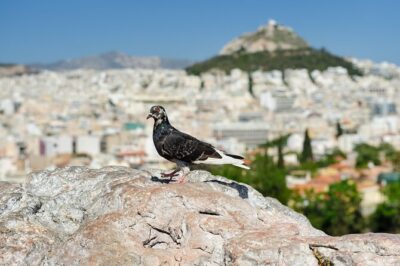
Areopagus Hill, also called Mars Hill, is the Athens starting point. The rocky outcrop sits beside the Acropolis area and is linked with Paul’s address to the Athenian council.
The stop is brief, about 20 minutes, and admission is free. You will not have a long guided visit here unless you arrange a licensed guide. Still, the setting does much of the work. From the hill, you can connect the biblical account with the intellectual and religious center of ancient Athens.
Wear shoes with a firm grip. The rock and steps can be uneven, and this is a place for careful footing rather than a hurried photo. If you have already visited Mars Hill and the Parthenon, ask to use that time in Corinth instead.
The Corinth Canal and the ancient Diolkos
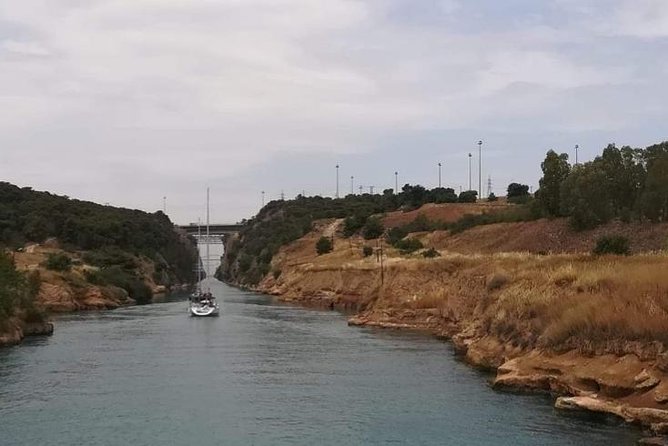
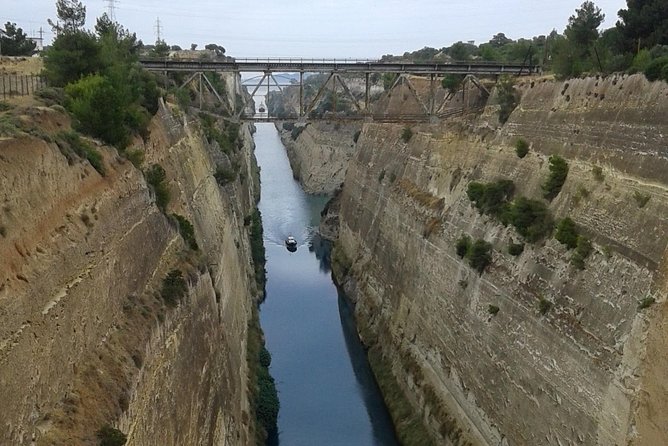
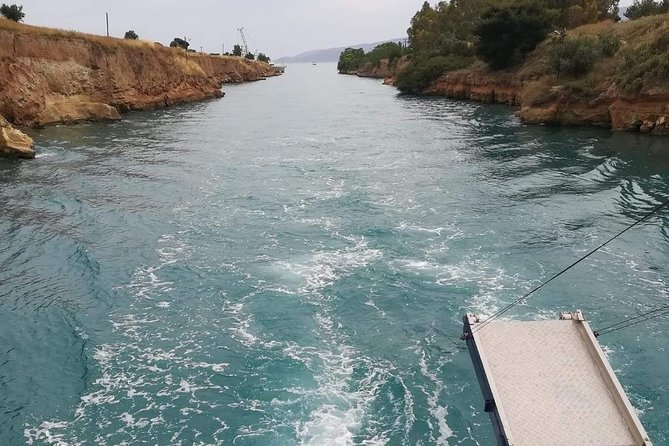
The Corinth Canal is a quick but worthwhile stop. Completed in the 19th century, it cuts through the isthmus and links the Gulf of Corinth with the Saronic Gulf. Its narrow channel makes the scale of the engineering easy to appreciate from above.
The idea was far older. Periander, ruler of ancient Corinth, reportedly considered the shortcut more than 2,000 years ago. Before the canal, ships sailing around the Peloponnese faced roughly 185 extra nautical miles.
The stop lasts about 30 minutes and costs nothing to enter. It is a modern sight, so it does not directly show what Paul saw. Its value is geographical: you understand why Corinth mattered and why control of this narrow strip of land brought wealth and influence.
Nearby, the Diolkos gives you an older answer to the same transport problem. In antiquity, ships or their cargo were moved across the isthmus between the two seas. The remains are more modest than the canal, but they help you picture merchants, sailors, and goods crossing by land rather than taking the long route around the peninsula.
You get about 20 minutes here. Do not expect a large museum or a fully reconstructed ancient port. This is a short interpretive stop, best appreciated when your driver explains how the route fit into Corinth’s commercial role.
Isthmia, where sport and worship met
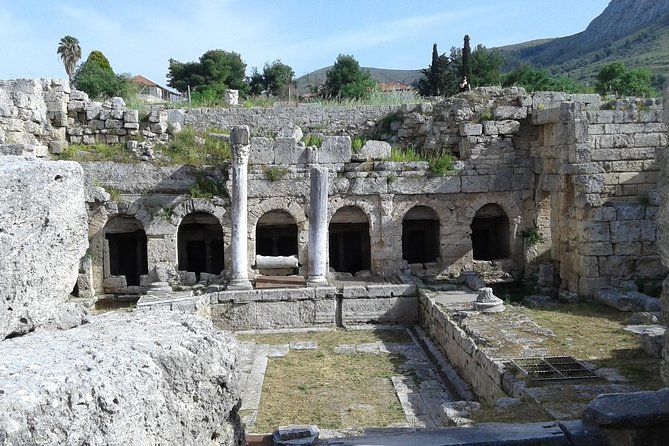
Isthmia adds a different side of Paul’s world. The area was known for the Isthmian Games, one of the most important athletic contests in the Greek world after the Olympics. The games honored Poseidon and drew athletes and spectators from far beyond Corinth.
The tour presents Paul as working nearby as a tentmaker, serving athletes and people attending the games. The connection is especially interesting because Paul often used athletic images in his letters. At Isthmia, those images feel less abstract. You are looking at the kind of public event that could have shaped his everyday observations.
The broader archaeological site includes the Temple of Poseidon, the ancient stadium, and the Sanctuary of Palaimon, a protector of sailors. These remains show how religion, sport, and travel were linked. You also visit an ancient theater used for musical events connected with the games, along with Roman mosaics featuring sea creatures and Dionysian scenes.
The listed time for the archaeological site is about 40 minutes, with another stop of roughly 30 minutes at the museum. Entrance fees are not included. Since the site and museum are separate paid attractions, check the total cost before setting out.
There is also a political side to Isthmia. Its position made it a place for major meetings and decisions in ancient Greece. That makes Paul’s setting more striking. His message was delivered in an area already used by athletes, religious officials, political leaders, and delegates from different communities.
Same city, a completely different century:
- Athens: Acropolis & up to 5 Archaeological Sites Combo Pass
★ 4.4 · 12,619 reviews - Athens: Acropolis Ticket with Optional Audio or Live Guide
★ 4.2 · 11,055 reviews - Athens: Acropolis, Parthenon & Acropolis Museum Guided Tour
★ 4.8 · 9,316 reviews - Athens: Cape Sounion & Poseidon Temple Sunset Half-Day Trip
★ 4.8 · 8,241 reviews
The Archaeological Museum of Isthmia
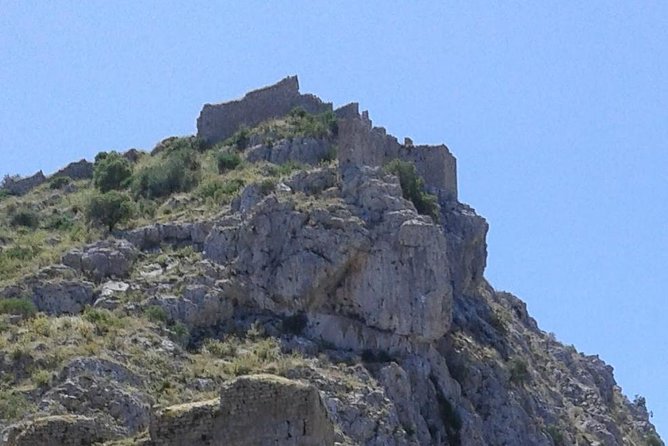
The museum is a useful pause between outdoor ruins. It contains objects from the Sanctuary of Poseidon, including statues, offerings, burial finds, and glass panels from Kenchreai.
The Kenchreai glass is particularly relevant. Cenchreae was the eastern port of Corinth, and Paul is associated with departing from there for Syria with Priscilla and Aquila. The objects connect the port’s commercial life with the religious and artistic world of the region.
Plan on about 30 minutes. This is not a substitute for the larger museums of Athens, but it gives you artifacts that belong to the exact area you are exploring. A driver can point out the significance on the way, but a licensed guide will make more sense of the displays once inside.
Ancient Corinth and the stone Bema
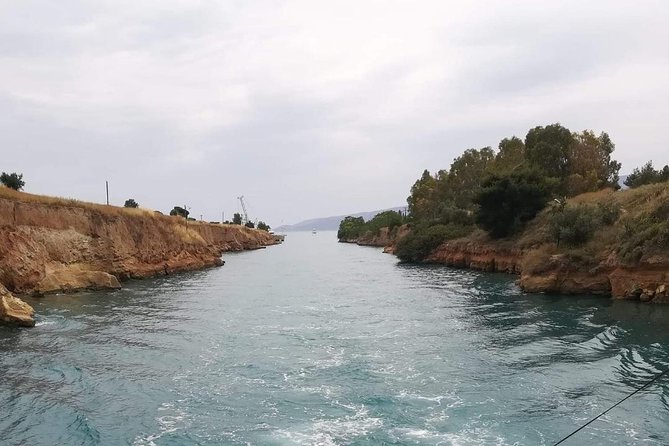
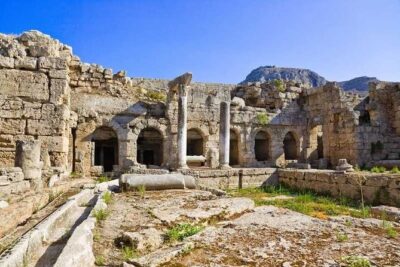
Ancient Corinth is the heart of the day. Paul lived and preached here for about 18 months, around AD 51 to 52. The city was a major Roman center, and the site today lets you walk through the public spaces where his ministry unfolded.
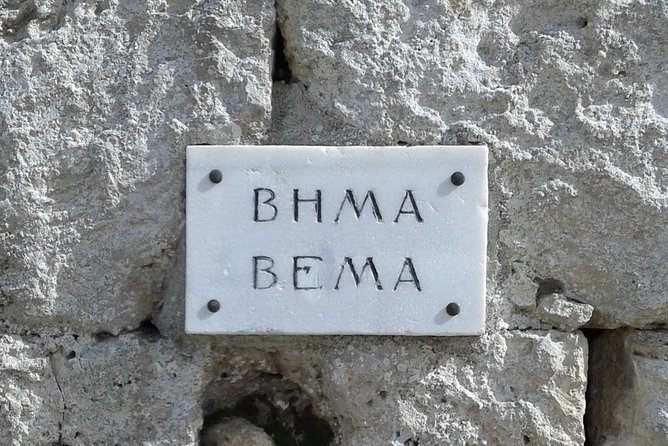
The Roman Forum, temples, streets, and civic buildings require some imagination. The most important stop for many Christian visitors is the Bema, the raised stone platform associated with Paul’s appearance before Gallio, the Roman proconsul.
According to Acts, Paul was accused of unlawful teaching, but Gallio treated the matter as a dispute within Jewish religious practice and refused to intervene. That decision allowed Paul to continue his work without Roman action against him.
The Bema is more than a biblical photo stop. It gives physical shape to a moment of legal danger and public debate. You can picture Paul standing before Roman authority in a city where religious ideas had civic consequences.
Ancient Corinth requires an entrance fee, listed as €15 per person for Ancient Corinth and the Archaeological Museum of Corinth. The fee is separate from the tour price. Ask whether the ticket covers the museum you plan to visit, since the tour information identifies Ancient Corinth and the Archaeological Museum of Corinth as paid attractions.
You receive about an hour at the site. That is enough for the main areas, but it may feel short if you read every sign or want to photograph each column. A licensed guide can enter with you and explain the forum, Bema, temples, and Paul’s place in the city’s story.
The Temple of Apollo and the old pagan city
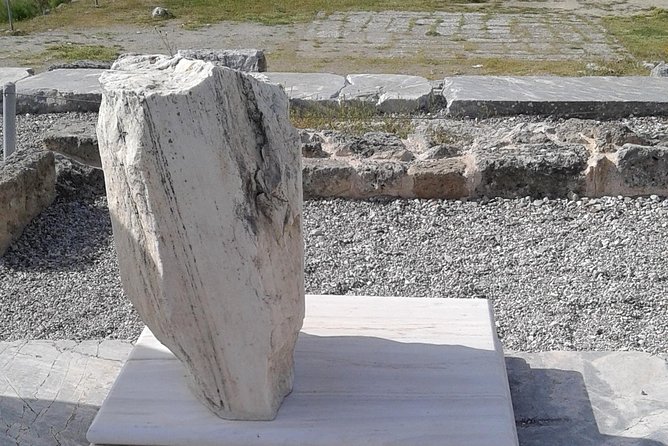
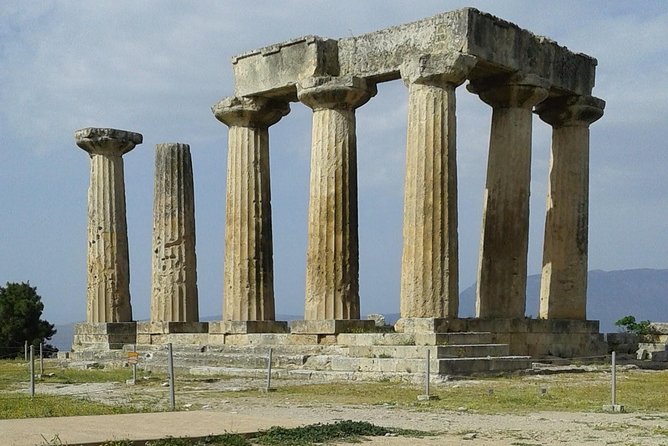
The Temple of Apollo is one of Ancient Corinth’s clearest visual markers. Built around 560 BC, it is an early Doric temple with large limestone columns. Only part of the building survives, but the remaining columns are powerful reminders of the city Paul entered.
Apollo was associated with music, prophecy, and light. His temple represented the religious environment Paul challenged when he preached one God and Jesus Christ. The contrast is easy to grasp here: an imposing pagan sanctuary beside the civic center of a city where a small Christian community was taking shape.
You have about 30 minutes at the temple, and no separate admission is listed for this stop. Combine it with your time at the forum rather than treating it as a completely separate visit. The site is open and exposed, so water and sun protection matter, even though bottled water is provided in the car.
Kechries, Paul’s eastern port
Kechries, ancient Cenchreae, is quieter than Ancient Corinth. That quiet is part of its appeal. The site is associated with Acts 18:18, when Paul stopped here before sailing for Syria with Priscilla and Aquila.
The account connects Paul with cutting his hair to fulfill a vow, likely a Nazirite vow. Cenchreae also had an early Christian community. Paul’s letter to the Romans commends Phoebe, a church servant from Cenchreae, giving this port an important place in the story of early Christian leadership.
The stop takes about 30 minutes and is free. It may not satisfy you if you want extensive ruins or a large visitor center. It does offer a calm coastal setting where the practical side of Paul’s work becomes clear: he traveled by ship, worked among ordinary people, and carried his message from one port to another.
Apostolou Pavlou and lunch by the sea
The Church of Apostolou Pavlou honors Paul’s work in Corinth. It is a short stop, about 20 minutes, and provides a place for reflection after the archaeological sites.
Lunch follows in Corinth at a traditional seaside Greek taverna. Lunch is not included, so budget separately. The meal is a welcome break after several hours of ruins, museums, and outdoor walking. The restaurant is described as a traditional local stop, but the exact menu and price are not specified, so ask your driver before ordering if you are watching your budget.
The day’s flexible nature works well here. Some groups have used the lunch stop as a relaxed pause, while others have preferred to keep moving in order to spend more time at the main ruins.
Akrokorinthos and the final view
Akrokorinthos is the fortified height above Ancient Corinth. The tour allows about 40 minutes and treats it as the final place to connect Paul’s mission with the wider geography of the city.
From this high position, you can look over the plain and understand Corinth’s strategic value. The fortress itself is associated with later periods, so it is not simply a preserved scene from Paul’s lifetime. Its importance here is the view and the sense of control that the height offered over the city and routes below.
The stop may involve an uphill walk and uneven ground. If you have limited time or mobility, discuss whether you want to include it. For many people, the panorama is worth the effort. For others, the extra climb is less useful than more time at Ancient Corinth or Isthmia.
What the $386.18 private price really buys
The price is $386.18 per group of up to four, not per person. For four people, that works out to about $96.55 each before entrance fees and lunch. For two people, the individual cost is much higher, but you still receive private transportation for the day rather than joining a large coach group.
Included are an air-conditioned vehicle, WiFi, bottled water, private pickup, and a professional English-speaking driver with strong knowledge of local history. The driver is not licensed to accompany you inside archaeological sites. That distinction matters.
You can ask for a licensed guide, subject to availability. If biblical detail and ancient architecture are central to your trip, I would strongly consider adding one. If you mainly want transport, orientation, and the freedom to set your own pace, the driver-only arrangement may be enough.
The tour is often reserved well ahead, with an average booking window of about 90 days. It is available in English and has free cancellation up to 24 hours before the start time. Changes or cancellations inside that window are not refunded.
The best way to manage the eight hours
An eight-hour estimate sounds generous, but the route covers Athens, the canal, Isthmia, Ancient Corinth, Kechries, lunch, and Akrokorinthos. You cannot give every site the same attention.
Before departure, decide what matters most:
- Spend more time at Ancient Corinth and the Bema if Paul’s ministry is your main interest.
- Keep Isthmia and its museum if you want athletic, religious, and political context.
- Skip Mars Hill if you have already seen it.
- Treat the canal and Diolkos as short geographical explanations rather than major sightseeing stops.
- Ask for a slower pace if you want time for photographs and inscriptions.
Most people can participate, but the outdoor sites include uneven ancient ground and, at Akrokorinthos, an uphill section. Comfortable shoes will help. Extreme sports and third-party activities are not permitted during the tour.
Who should book this Corinth tour
I recommend it most to Christian visitors, Bible-study groups, families, and small groups who want a private day built around Paul rather than a general Greek ruins tour. It also suits anyone who wants to combine major Corinth with smaller places that are difficult to reach without a car.
It is less suitable if you want a fully guided archaeological experience at every stop. In that case, arrange the licensed guide in advance and confirm that the guide will accompany you through the paid sites.
The strongest part of the experience is the human service. Drivers including Alex, Michael, Pantelis, Spyros, Kostas, Constantine, Pericles, and Vicky are praised for clear English, patience, local knowledge, flexibility, and an ability to connect biblical events with the places around you. One particularly useful pattern is the driver-guide partnership: Michael handled the road while Pantelis provided detailed site interpretation.
Still, service can vary by driver and vehicle. Confirm the car type, ask who will accompany you, and make your preferred pace clear. One poor experience involved political conversation and an early return, while most of the supplied ratings were highly positive. That contrast is a good reason to set expectations before the car leaves Athens.
Should you book it?
Book this private St. Paul tour if you want to see Corinth through scripture, geography, and local sites rather than only visiting the famous ruins. The Bema, Kechries, Isthmia, and the Temple of Apollo create a strong sequence, and a private car makes the long route practical.
For the best day, add a licensed guide, confirm the vehicle, and choose two or three priorities instead of trying to study every stop in equal detail. If four people share the $386.18 group price, the value is solid. If you are a couple on a tight budget, compare it with a group excursion, but know that you will give up the quiet flexibility that makes this trip work.
FAQ
How long does the St. Paul Corinth tour last?
The experience lasts approximately eight hours.
Where does pickup take place?
Pickup is offered from your place in Athens or the designated pickup location arranged for your private group.
How many people can join the private tour?
The price covers one private group of up to four people.
Is the tour offered in English?
Yes. The tour is offered in English, and the drivers can provide commentary in fluent English.
Is a licensed tour guide included?
No. The included drivers are not licensed to guide inside archaeological sites. A licensed guide can be requested, depending on availability.
What is included in the tour price?
The price includes private transportation, an air-conditioned vehicle, bottled water, WiFi on board, and a professional driver with local historical knowledge.
Are entrance fees included?
No. Ancient Corinth and the Archaeological Museum of Corinth require an entrance fee listed as €15 per person, payable on site.
Is lunch included?
No. Lunch is separate, with time set aside for a meal at a traditional seaside Greek taverna in Corinth.
Can the itinerary be changed?
Yes. The private format allows you to customize the itinerary. You can ask to skip a stop you have already visited and use the time elsewhere.
Can I cancel for a full refund?
Yes, if you cancel at least 24 hours before the experience start time. Cancellations or changes made less than 24 hours before the start time are not refunded.
Freshly added Athens trips
- Athens and Ancient Corinth Private from Athens★ 5.0 · 3 reviews
- From Athens: Mycenae and Epidaurus Private Tour★ 4.8 · 3 reviews
- Full day Meteora private tour★ 5.0 · 3 reviews
- Double Shore Dive (certified divers)★ 4.5 · 3 reviews
- Athens Hills: Mythology Treasure Hunt★ 5.0 · 3 reviews
- Sunset & swimming at Cape Sounio, Poseidon temple★ 5.0 · 3 reviews
- Philosophy Experience at Plato’s Academy Park – basic version★ 5.0 · 3 reviews
- Private Acropolis Tour – Ticket Included★ 5.0 · 3 reviews
Apostle Paul & Biblical Tours, compared.
Biblical Tour Letters ToThe Corinthians St Paul’s Footsteps 6Hour
Read our review →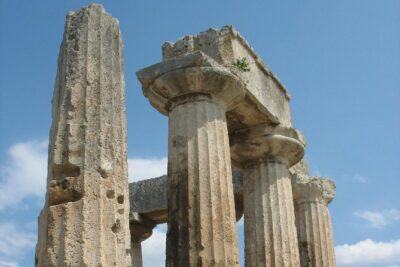
Private Biblical Tour Ancient Corinth & Isthmus Canal from Athens
Read our review →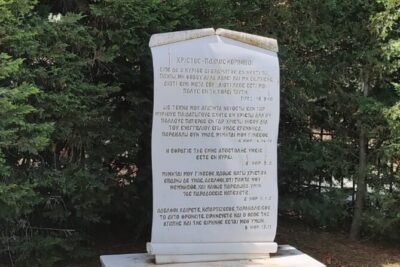
Private Tour of Apostle Paul’s Footsteps in Ancient Corinth
Read our review →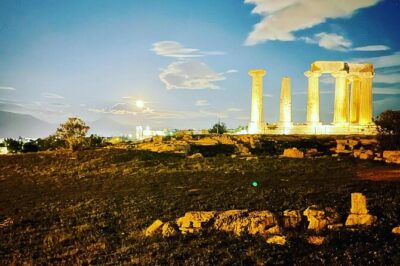
Private Luxury Biblical Tour: Apostle Paul in Athens & Corinth
Read our review →
Private Luxury Biblical Tour: Apostle Paul’s Footsteps – Corinth
Read our review →
Ancient Athens Corinth Biblical Tour Following Paul 51.A.D
Read our review →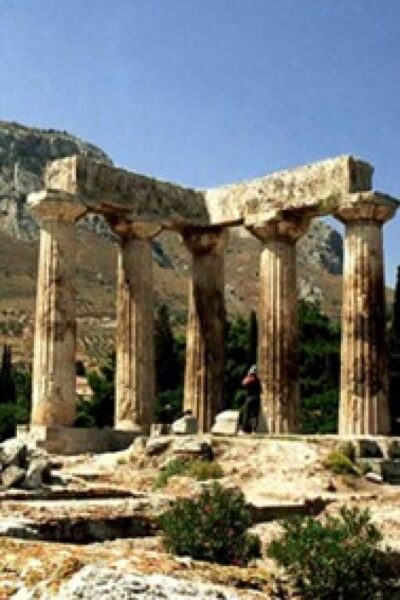
Browse the lists this tour appears in