
Reviewed · DELPHI TOURS
Awe-inspiring 2-days private tour to Delphi and Olympia
The real appeal here is simple: in two long days, you reach Delphi and Olympia, Greece’s great sanctuaries of prophecy and sport, without changing buses or sorting out rural driving. You also cross Central Greece, pass Arachova, spend a night near Olympia, and return through the Corinth Canal.
I like the private hotel or port pickup, especially if you are arriving by cruise ship or want the trip shaped around your own pace. I also like having a local English-speaking driver who can explain the places on the road and get you to each archaeological site without the stress of Greek highways.
The catch is value. At $1,808.71 for up to two people, the package costs about $904 per person before entrance fees, meals, and any licensed guide inside the sites. The overnight hotel has also been described as disappointing, so this suits people who prize private transport and convenience more than an all-inclusive package.
In This Review
- Key points to know before booking
- Why this route makes sense from Athens
- Day one: Central Greece and the road to Delphi
- Delphi: the oracle beneath Mount Parnassos
- The Tholos of Athena Pronaia
- The Temple of Apollo and the limits of a driver-led visit
- The overnight stay near Olympia
- Day two: Olympia and the birthplace of the Olympic Games
- Olympia’s Archaeological Museum
- The Corinth Canal on the way back
- What the $1,808.71 price really buys
- Who will get the most from this tour
- Practical details that can prevent trouble
- Should you book it?
- FAQ
- Is hotel pickup included?
- Can I be picked up at a cruise port?
- Is the tour private?
- Are entrance fees included?
- Is a licensed tour guide included?
- What accommodation is included?
- What should I bring?
Key points to know before booking
- Two major UNESCO sites in two days: See Delphi’s Temple of Apollo and Olympia’s stadium, temples, and museums in one compact trip.
- A private car from Athens: Pickup and return are arranged at your hotel or cruise port, with bottled water and air conditioning included.
- The driver is not a site guide: You receive historical context on the road and guidance to the entrances, but a licensed guide inside costs extra.
- An overnight stop in Olympia: The package includes one night in 3-star accommodation with breakfast, though hotel quality may be basic.
- A long, road-heavy schedule: You spend substantial time crossing Central Greece and the Peloponnese, so comfortable shoes and patience matter.
- Entrance tickets are extra: Pre-purchase tickets or ask the operator to arrange them for a small service fee.
Why this route makes sense from Athens
Delphi and Olympia are not quick side trips from Athens. Delphi lies northwest of the capital on the slopes of Mount Parnassos, while Olympia sits in the western Peloponnese. Reaching both by public transport in two days would require careful connections and little room for delay.
This private tour solves that problem with one vehicle and a driver who stays with you through the journey. You leave Athens from your hotel or cruise port, travel through Central Greece to Delphi, continue toward Olympia for the night, then visit Olympia the next day before returning through Corinth.
That convenience is the heart of the experience. You are paying for time saved, door-to-door transport, and a route that would be awkward to arrange alone. You are not paying for an all-inclusive guided tour, since admission, food, drinks, and a licensed guide inside the sites are separate costs.
The schedule is ambitious. The published timing adds up to several hours at Delphi, Olympia, and the Corinth Canal, before counting the road journey. Treat this as a serious sightseeing drive with major archaeological stops, not as a relaxed two-day countryside holiday.
More Delphi day trips:
- Athens: Mythology of Delphi, Museum and Arachova Guided Tour
★ 4.6 · 4,008 reviews - From Athens: Delphi Full Day V.R. Audio Guided Tour
★ 4.6 · 3,028 reviews - From Athens: Small-Group Delphi, Museum & Arachova Day Trip
★ 4.8 · 2,476 reviews
Day one: Central Greece and the road to Delphi
Pickup begins at your Athens hotel entrance. At a small hotel, you should alert the receptionist. At a cruise port, leave the terminal through the exit door and look for the driver holding a sign with your name.
The drive takes you through Sterea Ellada, the broad region of Central Greece. You pass near Thebes and Livadia before reaching Arachova, a mountain town known as the approach to Delphi. The road gives you a useful sense of how sharply Greece changes outside Athens, from urban Attica to open country and mountain routes.
This part of the day is not a guided attraction in the usual sense. Its value comes from the driver’s commentary and from seeing the setting that made Delphi feel remote, elevated, and sacred to the ancient Greeks. Ask questions as you go. The driver is described as an English-speaking professional with a good grasp of Greek history and culture, but not a state-licensed guide permitted to lead you through the monuments.
That distinction matters. You can expect help getting to the archaeological site and explanations during the drive. Once you enter, you will generally explore independently unless you pay for a licensed guide. If ancient architecture is your main interest, I would budget for that extra service rather than assume the driver will walk every path with you.
Delphi: the oracle beneath Mount Parnassos
Delphi was the most famous oracle of ancient Greece and was treated by the Greeks as the center of the world. The story says that Zeus released two eagles from opposite ends of the universe, and they met at Delphi, marking the site as the world’s navel.
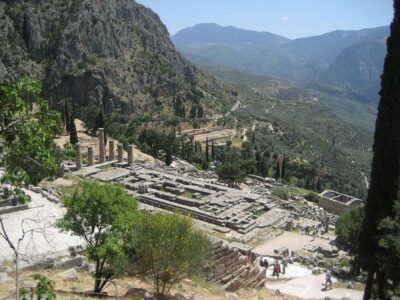
The setting does much of the work. The sanctuary sits on the southern slopes of Mount Parnassos, and the ruins are spread along rising ground. You should expect walking on uneven surfaces and some uphill movement. Wear shoes with a firm sole, carry water, and use sunscreen and a hat in summer.
The ancient sanctuary was sacred before Apollo arrived in its mythology. It was first linked with Mother Earth and guarded by Python, the serpent later killed by Apollo. The sanctuary then became a religious and cultural meeting point for the Greek world, hosting festivals that combined music, athletic contests, and religious ceremony.
You have about two hours listed for the main Delphi visit, with additional time associated with the Tholos and Temple of Apollo stops. That can be enough for the essential ruins, but it is not an unlimited archaeological study. Keep an eye on the clock, especially if your group likes to read every sign or stop for photographs.
The Tholos of Athena Pronaia
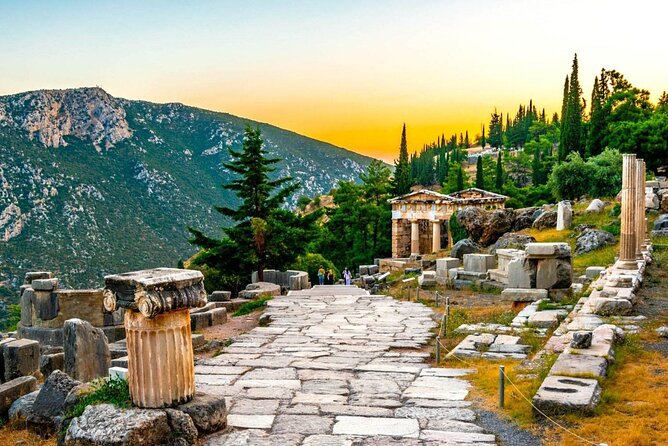
The Tholos of Athena Pronaia is one of Delphi’s most recognizable buildings. Its circular design and surviving columns make it easy to picture as a complete structure, even though only part of the monument remains.
Built around 380 BC, the tholos combined several elements of Classical design. Its outer ring had twenty Doric columns, while the inner cella included engaged Corinthian columns. Its exact purpose remains uncertain, and the ancient writer Pausanias did not identify it clearly as a temple.
The monument is often viewed from above, which gives you a strong sense of its geometric plan. It is also a good reminder that Delphi was not just one temple, but a series of sanctuaries and buildings serving different religious and civic purposes.
The stop is listed with free admission, but you should confirm current access arrangements when booking. Archaeological sites can close temporarily, and opening conditions can change.
More Ancient Olympia trips:
- 4-Day Classical Greece Tour: Epidaurus, Mycenae, Olympia, Delphi, Meteora
★ 4.5 · 732 reviews - 3-Day Classical Greece Tour: Epidaurus, Mycenae, Nafplion, Olympia, Delphi
★ 4.5 · 342 reviews - 4-Day Tour of Mycenae, Epidaurus, Olympia, Delphi & Meteora
★ 4.8 · 168 reviews - 4-Day Greece Highlights Tour: Epidaurus, Mycenae, Olympia, Delphi and Meteora
★ 5.0 · 79 reviews
The Temple of Apollo and the limits of a driver-led visit
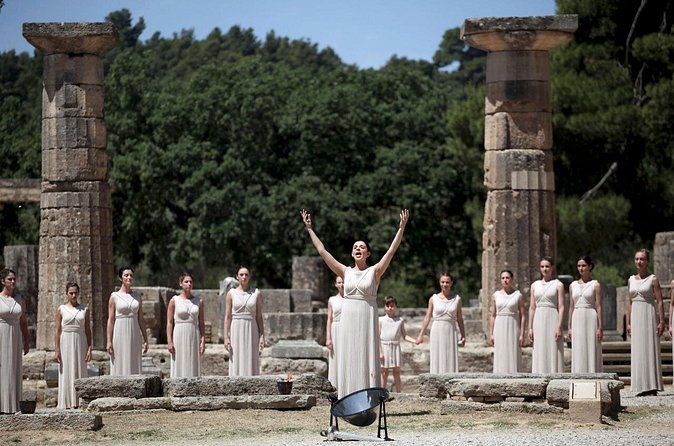
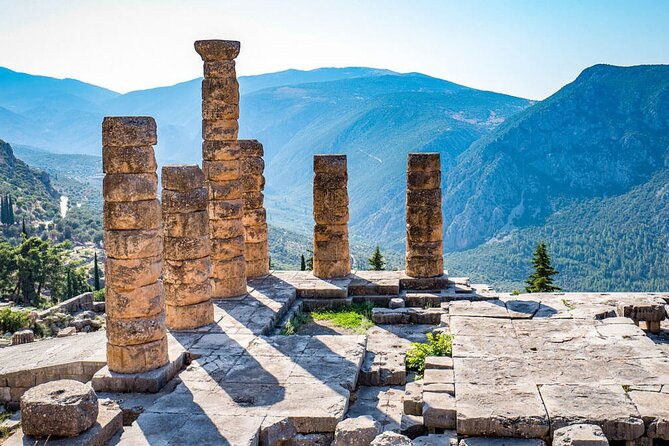
The Temple of Apollo was the center of the Delphic sanctuary. Apollo was associated with music, harmony, light, healing, and prophecy, and his temple occupied the most important position on the site.
The remains you see today belong to the temple rebuilt in the fourth century BC. The building had earlier versions, including one destroyed by fire and another lost in an earthquake in 373 BC. Rebuilding took place more than once, a pattern that tells you how important Delphi remained even after repeated disasters.
The listed visit to the Temple of Apollo is short, about 15 minutes. That is enough to orient yourself and see the major remains, but it may feel rushed if you want a detailed explanation of the columns, foundations, and sanctuary layout.
The entrance fee is not included. This is one of the main costs to plan before departure. The operator suggests buying tickets ahead of time because availability may be limited, and can arrange them for a small service fee. If you want a state-licensed guide inside the archaeological site and museums, ask for one early. Availability is not guaranteed on the day.
The overnight stay near Olympia
After Delphi, the tour continues toward the Peloponnese and Olympia. This is the most demanding driving stretch of the trip, and the overnight stop breaks up what would otherwise be a punishing return journey from western Greece to Athens.
The package includes one night in 3-star accommodation and breakfast. The exact hotel is not identified in the supplied details, so you should ask before booking if room standards matter to you.
The practical warning is clear: one account described unreliable internet, lukewarm shower water, and a poor breakfast. That does not mean every stay will have the same problems, but it does mean you should treat the lodging as a functional overnight stop rather than a reason to book the tour.
Bring what you need for the evening and do not count on the hotel as part of the trip’s luxury value. The strongest parts of the package are the transport and route planning, not the accommodation.
Day two: Olympia and the birthplace of the Olympic Games
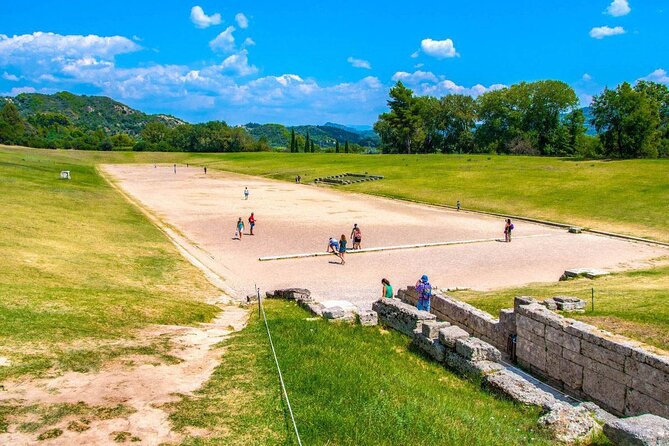
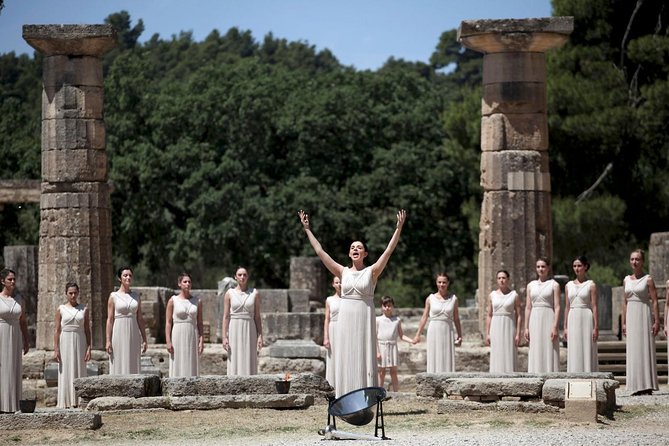
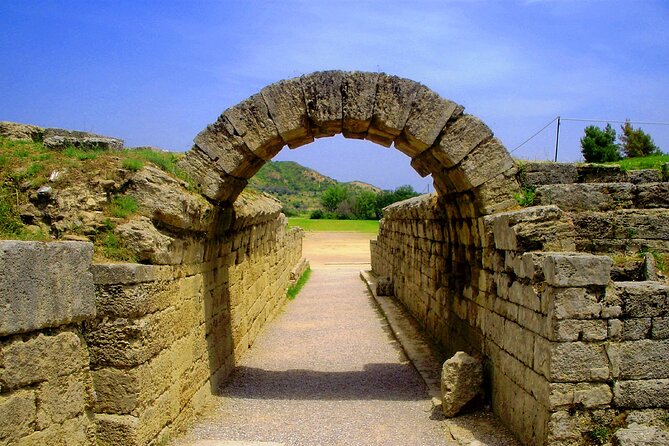
Olympia lies in the western Peloponnese, in the valley of the Alpheios River near the foot of Mount Kronios. The sanctuary was dedicated to Zeus and became the setting for the ancient Olympic Games, held every four years beginning in 776 BC.
The games were religious as well as athletic. Competitors gathered to honor Zeus, and the event helped create a shared Greek identity across communities that were otherwise often in conflict. The tradition also included a suspension of hostilities so participants could reach the games safely.
The archaeological site spreads through a green valley and includes temples, athletic facilities, training areas, and a stadium. You can walk through the remains and then picture the site filled with athletes, officials, spectators, and religious ceremonies.
Olympia is less about one dramatic building than about understanding how the whole sanctuary worked. The gymnasium and training areas show the preparation behind the contests. The stadium gives the games a physical scale. The temples explain the religious purpose that stood behind the sport.
Allow about two hours for the main site. The ruins cover enough ground that you should not rush your footwear choice. Sandals may be fine for some people, but comfortable walking shoes are the safer option.
Olympia’s Archaeological Museum
The Archaeological Museum of Olympia is within a short walk of the ruins and deserves serious time. Its collections cover more than 3,500 years, from early settlement at Olympia through the later centuries of the sanctuary.
The museum is known for its Greek sculpture and ancient bronze collection. One noted work is a statue of Hermes attributed to Praxiteles. Seeing the objects indoors helps fill in the gaps left by the open-air ruins, where many buildings survive only as foundations or scattered stones.
There are also two other museums nearby: the Museum of the Ancient Olympic Games and the Museum of the History of the Excavations at Olympia. The schedule specifically includes the Archaeological Museum, not necessarily all three, so ask your driver how much time is available if you hope to see more.
Museum admission is extra. That can add up quickly when combined with the archaeological site fees at Delphi and Olympia. Still, I would not skip the museum simply to keep the package price down. It gives you the clearest view of the sanctuary’s art and daily purpose.
The Corinth Canal on the way back
The return route includes a short stop at the Corinth Canal. You get about 15 minutes, enough to look down into the narrow waterway, take photographs, and understand its role in modern Greek transport.
The canal cuts through the Isthmus of Corinth, linking the Gulf of Corinth with the Saronic Gulf. It separates the Peloponnese from mainland Greece and avoids the need for ships to circle the peninsula.
The idea is ancient. The Corinthian ruler Periander considered a canal as early as 602 BC, but the project was not completed until modern times. The canal is a fine final stop because it connects ancient engineering ambitions with a later feat of construction.
Do not expect a full Corinth visit. This is a brief viewpoint stop, not a tour of ancient Corinth or an extended harbor outing.
What the $1,808.71 price really buys
For up to two people, the price is $1,808.71. That works out to about $904 each if two people share the booking. The package includes private air-conditioned transport, hotel pickup and return, bottled water, one night of 3-star accommodation, and breakfast.
The price can make sense if you place a high value on privacy and door-to-door service. You avoid rental-car planning, navigation, long-distance bus connections, and the challenge of finding a hotel between Delphi and Olympia. Cruise passengers may find the port pickup especially useful.
The value is weaker if you expect a traditional guided tour with admissions and meals bundled in. You must pay for the archaeological sites and museums, buy food and drinks yourself, and pay extra for a licensed English-speaking guide inside the monuments.
The driver was the strongest part of the experience described in the supplied feedback. His perspective and explanations added interest to the road journey, and that is important on a route with many hours in the car. But you should clarify exactly what commentary is included and what the driver can do at each site.
I would compare the total cost against a private car-only service plus hotels and tickets booked separately. The tour may still win for convenience, but the difference should be clear before you pay.
Who will get the most from this tour
This trip suits a couple or small private group that wants to see both major sanctuaries without renting a car. It is also useful for people with limited time in Greece who prefer a fixed route and a driver waiting at every stage.
It works best if you are comfortable with long drives, moderate walking, and independent sightseeing inside the ruins. You should enjoy listening to road commentary but not require a guide beside you for every column and inscription.
Families may appreciate the private vehicle and flexible setting, though the long schedule could test younger children. The operator says the activity involves a moderate amount of walking and calls for moderate physical fitness.
This is less suitable if you want slow meals, boutique hotels, or long afternoons in one town. It is also not ideal if your main aim is a fully guided archaeology lesson, unless you arrange the licensed guide in advance.
Practical details that can prevent trouble
The driver meets you at the main entrance of your hotel. At a cruise port, walk outside the terminal exit and look for your name on a sign. Airport transfers can be arranged on request.
The return is to the same pickup point. Confirm the timing carefully, since the stated duration is approximate and traffic or local conditions can change the day.
Book entrance tickets before departure if possible. The operator can purchase them for you for a small service fee, but you should not assume admission is included simply because the sites are listed in the schedule.
Pack water, sunscreen, a hat, and comfortable shoes. Bottled water is included, but food and other drinks are not. Cancellation terms are strict close to departure: a full refund requires cancellation at least six full days ahead, while cancellations less than two days before the start receive no refund.
Should you book it?
Book this tour if private transport and a difficult route made manageable matter more to you than a low package price. Delphi and Olympia are major destinations, and reaching both with one driver and one overnight stop is convenient.
Before booking, ask three direct questions: Which hotel will be used? Can a licensed guide be secured for both archaeological sites? What will the final price be after admissions and guide fees?
If the answers are satisfactory, this is a useful two-day circuit for a time-conscious couple. If the hotel, tickets, and guide all remain uncertain, you may find the price hard to justify. The route is excellent, the driver service can be a real strength, and the ancient sites are worth the effort. Just understand that you are buying transport and structure first, not a fully escorted luxury tour.
FAQ
Is hotel pickup included?
Yes. Pickup is offered from Athens hotels, with the driver meeting you at the main entrance. Airport transfers can be arranged on request.
Can I be picked up at a cruise port?
Yes. After leaving the terminal through the exit door, you should look for the driver holding a sign with your name.
Is the tour private?
The package includes a private vehicle and is priced for a group of up to two people. The operator also states that the activity can have a maximum of 15 travelers.
Are entrance fees included?
No. Entrance fees for the archaeological sites and museums are not included. You can pre-purchase tickets, and the operator can arrange them for a small service fee.
Is a licensed tour guide included?
No. The English-speaking driver provides information and takes you to the site entrances, but drivers are not licensed to accompany you inside archaeological sites and museums. A licensed guide can be arranged for an additional cost, subject to availability.
What accommodation is included?
The tour includes one night in 3-star accommodation in Olympia and breakfast. The specific hotel is not identified in the provided details.
What should I bring?
Comfortable shoes, sunscreen, and a hat are recommended. Moderate walking is involved, and bottled water is included. Food and drinks beyond breakfast are not included.
More 2-Day Experiences in Athens
- From Athens: Delphi and Meteora 2-Day Guided Tour
★ 4.5 · 825 reviews - 2-Day Tour to Delphi & Meteora with Guide and Tickets From Athens
★ 4.0 · 692 reviews - From Athens: Delphi and Meteora 2-Day Tour with Hotel
★ 4.4 · 392 reviews - Athens: 2 Days in Meteora with 2 Guided Tours and Hotel Stay
★ 4.7 · 376 reviews
Freshly added Athens trips
- Athens and Ancient Corinth Private from Athens★ 5.0 · 3 reviews
- From Athens: Mycenae and Epidaurus Private Tour★ 4.8 · 3 reviews
- Full day Meteora private tour★ 5.0 · 3 reviews
- Double Shore Dive (certified divers)★ 4.5 · 3 reviews
- Athens Hills: Mythology Treasure Hunt★ 5.0 · 3 reviews
- Sunset & swimming at Cape Sounio, Poseidon temple★ 5.0 · 3 reviews
- Philosophy Experience at Plato’s Academy Park – basic version★ 5.0 · 3 reviews
- Private Acropolis Tour – Ticket Included★ 5.0 · 3 reviews
Delphi Tours, compared.

Mythology of Delphi, Museum and Arachova Guided Tour
Read our review →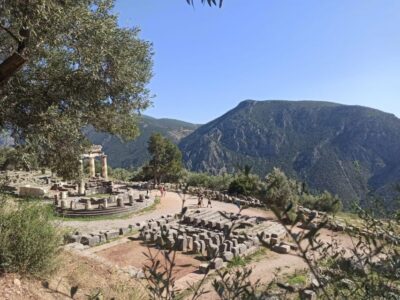
Small-Group Delphi, Museum & Arachova Day Trip
Read our review →
Delphi English Day Trip from Athens with Official Guide
Read our review →
Delphi Guided Trip with Optional Lunch and Entry
Read our review →
Historical Delphi One Day Tour with Arachova Stop & Expert Guide
Read our review →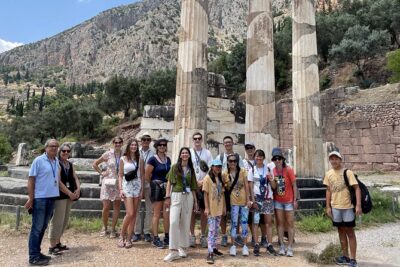
Premium Delphi Day Trip with an Expert Guide, Museum & Lunch
Read our review →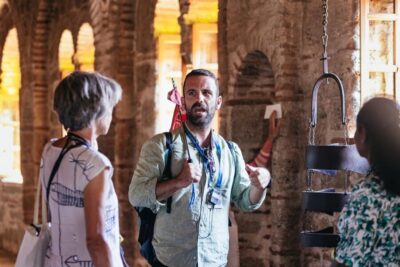
Browse the lists this tour appears in