

Reviewed · ACROPOLIS TOURS
Athens: City & Acropolis Walking Tour without Entry Tickets
The most useful thing about this 3.5-hour Athens walking tour is its route. You begin at Syntagma Square, cross the National Garden, pass the Temple of Olympian Zeus and Hadrian’s Arch, then continue through Plaka to the Acropolis. It gives you a clear first look at both modern Athens and its ancient core without adding a bus ride or a long transfer.
I like the compact price of $46 per person, especially if you want a guide for the major sights without paying for a full-day tour. I also like the way the walk connects several important places in a sensible order. The main drawback is simple but important: entrance fees are not included, and the guide quality may vary. One account describes an excellent guide with a great store of ancient stories, while another found the early commentary thin and the guide dismissive of the guard ceremony.
In This Review
- Key points to know before booking
- Starting at Syntagma Square with Athens in plain view
- A calmer walk through the National Garden
- Hadrian’s Arch and the Temple of Olympian Zeus
- Through Plaka toward the Acropolis
- Entering the Acropolis: the Propylaia and Temple of Nike
- The views from the summit and the monuments below
- What the guide adds, and where the tour may fall short
- Is $46 a fair price for this Athens walk?
- Who should book this 3.5-hour route?
- Should you book this Acropolis walking tour?
- FAQ
- Where does the tour meet?
- How long does the walking tour last?
- Is the Acropolis entrance ticket included?
- Does the tour include hotel pickup?
- What language is the tour in?
- Can I visit the Acropolis Museum afterward?
Key points to know before booking
- Syntagma Square start: See the Greek Parliament, the Monument of the Unknown Soldier, and the Evzone guards.
- A well-planned central route: Walk through the National Garden, Zappeion Hall, Hadrian’s Arch, and Plaka before reaching the Acropolis.
- Acropolis monuments covered: The guided visit focuses on the Propylaia, Temple of Nike, and Parthenon.
- Ticket cost is extra: The advertised price does not include entry fees, although the activity says ticket-line skipping is available.
- English only: The tour includes a live English-speaking guide.
- Plan extra time afterward: The new Acropolis Museum is close enough to visit on your own after the walk.
Starting at Syntagma Square with Athens in plain view
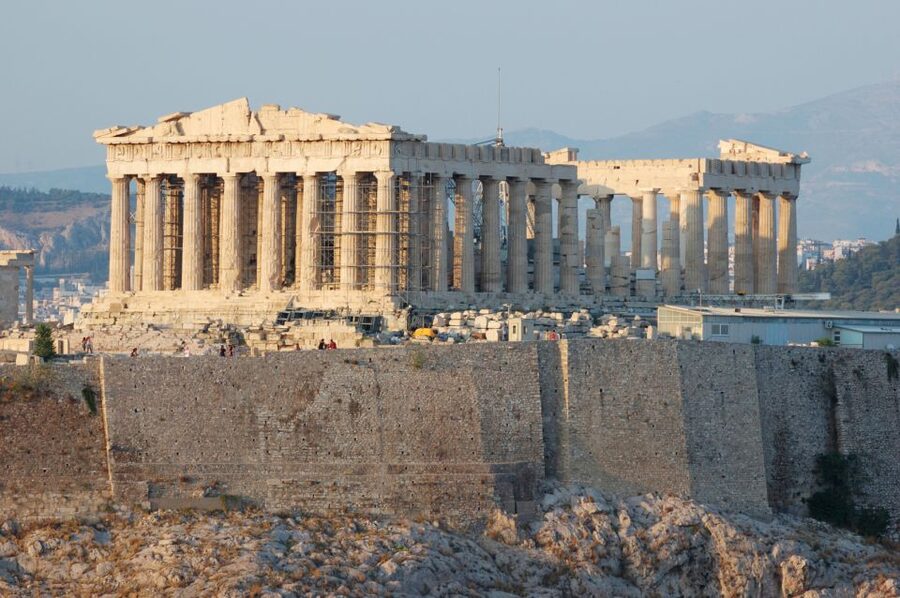
The meeting point is Hotel AMALIA Athens, beside Syntagma Square. This is a practical place to begin because you are right in the middle of central Athens, near the Greek Parliament and the city’s main ceremonial center.
The first stop is the Monument of the Unknown Soldier. It sits in front of the Parliament and is guarded by the Evzones, Greece’s ceremonial soldiers. Their uniforms, slow movements, and formal routine are among the most recognizable sights in Athens.
The changing of the guard is part of the route, but it is worth setting your expectations correctly. It is a visual ceremony rather than a long historical presentation. If your guide gives it only a brief explanation, you may feel the stop is more about watching than learning. One account of this tour specifically found the guard change dull and felt the guide did not offer much commentary at the beginning.
That makes this opening section a useful test of the tour’s guiding style. A strong guide can explain why the ceremony matters and place modern Greek identity beside the country’s ancient past. A less engaging guide may simply point out the soldiers and move on.
More Acropolis and Parthenon visits:
- Athens: Acropolis & up to 5 Archaeological Sites Combo Pass
★ 4.4 · 12,619 reviews - Athens: Acropolis Ticket with Optional Audio or Live Guide
★ 4.2 · 11,055 reviews - Athens: Acropolis, Parthenon & Acropolis Museum Guided Tour
★ 4.8 · 9,316 reviews
A calmer walk through the National Garden

From Syntagma Square, the tour heads into the National Garden. This change of pace is welcome. Instead of staying on busy central streets, you get a quieter stretch before the ancient monuments begin.
The garden also helps the itinerary feel like a walk through the city rather than a fast checklist of ruins. You can expect a pleasant passage toward Zappeion Hall, a grand neoclassical building linked to Athens’s public and ceremonial life.
The value here is not a single blockbuster sight. It is the contrast. You move from Parliament and the formal guard ceremony into greenery, then back toward the monumental remains of ancient Athens. That rhythm gives you a better sense of how the modern city is arranged around its older landmarks.
Because the tour lasts only 3.5 hours, the stops in the garden and around Zappeion Hall are likely part of the walking connection as much as full guided visits. If you want long pauses at every location, this may feel brisk. If you want a well-shaped introduction to central Athens, the pace should make sense.
Hadrian’s Arch and the Temple of Olympian Zeus
The next important section brings you to the Temple of Olympian Zeus and Hadrian’s Arch. The temple was one of the great monumental projects of ancient Athens, and even its surviving columns give you a strong idea of the scale once intended.
Hadrian’s Arch is especially useful as a visual marker. It was built to signal the relationship between the older Greek city and the Roman-era expansion associated with Emperor Hadrian. From here, the city’s layers become easy to read: ancient monuments, Roman construction, neoclassical buildings, and modern Athens all occupy the same central district.
I like this part of the route because it gives you context before the Acropolis. You are not thrown straight into the Parthenon with no sense of what surrounds it. You also get to see major remains from outside rather than spending the whole tour inside one archaeological site.
Do keep the ticket issue in mind. Entrance fees are not included in the $46 price. The activity also advertises skipping the ticket line, but you should still check exactly what is covered when booking, since line access and admission are not the same thing. Your total cost will be higher than the headline price if you need to buy the required Acropolis entry separately.
Through Plaka toward the Acropolis
From Hadrian’s Arch, the walk enters Plaka, one of the best-known old districts in central Athens. The route gives you a transition from large archaeological sites to narrower city streets and everyday urban life.
Plaka is not presented as a separate food or shopping tour, so do not book this expecting extended restaurant stops or free time. Here, it functions as the approach to the Acropolis. That is still useful. The district helps you understand how close the ancient hill is to the modern center, and it gives the walk a more local street feel than a route made only of ruins.
This is also the point where good guiding becomes more valuable. The monuments are impressive on their own, but a guide can help connect the streets below with the sites above. The best feedback about this tour describes a private guide who explained ancient mythology, Greece, and the ancient world with great skill. That kind of storytelling is exactly what can turn a pleasant walk into a memorable one.
The group size is not fixed in the information provided. One outing happened to have only two people, which allowed easy questions and some adjustment to individual needs. You should not assume every departure will be private, but a small group can make the Acropolis portion much easier to follow.
More Athens walking tours:
- Athens: Acropolis and Parthenon Guided Walking Tour
★ 4.6 · 5,882 reviews - Greek Food Walking Tour in Athens
★ 5.0 · 4,740 reviews - Acropolis: Acropolis and Parthenon Guided Walking Tour
★ 4.7 · 3,442 reviews - Acropolis monuments & Parthenon Walking Tour with Optional Acropolis Museum
★ 5.0 · 2,678 reviews
Entering the Acropolis: the Propylaia and Temple of Nike
The Acropolis section is the heart of the tour. The route covers the Propylaia, the Temple of Nike, and the Parthenon, with views toward several surrounding monuments.
The Propylaia forms the monumental entrance to the Acropolis. It is not just a gateway in the ordinary sense. Its scale prepares you for the buildings on the summit and shows how carefully ancient Athens framed the approach to its sacred center.
The Temple of Nike is smaller than the Parthenon, but it has an important position near the entrance. Its setting makes it easy to overlook if you are moving quickly. This is one place where a guide can add real value by explaining what you are seeing rather than leaving you with a series of famous names.
The tour then reaches the Parthenon, the monument most people picture when they think of Athens. Your guide will place it within the age of Pericles and the city’s period of political and artistic power. The structure is impressive, but it is also crowded, exposed, and partly restored. You will get more from the visit if you focus on the building’s design, setting, and purpose rather than expecting an untouched ancient temple.
The supplied details do not give a precise amount of time inside the Acropolis. The itinerary includes several major monuments and a long approach walk, so the visit may feel focused rather than leisurely. If you want to examine every column, take many photographs, and stop for long views, plan additional Acropolis time on another day.
The views from the summit and the monuments below
One strength of this route is the number of places it points out from the Acropolis. You will see the Athenian Agora, the Observatories, the Pnyx, Mars Hill, Philopappos Hill, the Odeon of Herodes Atticus, and the Theater of Dionysus.
Not all of these are described as separate stops, so think of them as part of the wider view and explanation from the Acropolis. Their importance is clear, though. The Acropolis is not an isolated hill. It sits above a network of political, religious, theatrical, and civic sites that shaped ancient Athens.
The Pnyx, also called the Hill of Democracy in the tour description, connects the scenery to the city’s political story. The Theater of Dionysus and the Odeon of Herodes Atticus show the importance of performance and public gatherings. The Agora points to the practical and civic life below the sacred hill.
Mars Hill and Philopappos Hill add more visual orientation. Looking outward from the Acropolis, you can see how Athens spreads around its central monuments. That broader view is one reason a guided visit is worthwhile. A list of buildings tells you what they are, but a good explanation shows how the parts fit together.
What the guide adds, and where the tour may fall short
The guide is the biggest variable here. The tour is in English, and the strongest description of the experience praises an excellent guide who was both personable and full of stories about mythology, Greece, and the ancient world. Another account found the guide’s knowledge especially helpful and appreciated being able to ask questions during a very small group visit.
At the same time, the opening portion may not always be equally strong. One account describes a guide who expressed strong opinions about Greece’s former royal family and said the changing of the guard was boring. That is not ideal when the ceremony is a stated part of the itinerary. Political opinions can also distract from the practical historical explanation you need at the start.
I would book this tour for the route and the chance of a strong Acropolis explanation, not because every guide will deliver the same level of commentary. If the early city walk matters greatly to you, ask questions as you go. The itinerary gives you plenty to discuss, from the Parliament and modern Greece to Roman Athens and Periclean Athens.
The overall rating is 3.9 from only three reviews, so treat it as a small and mixed sample rather than a firm verdict. The pattern is clear enough to be useful: the route is well assembled, and the guide can be excellent, but the quality of the commentary is not certain.
Is $46 a fair price for this Athens walk?
At $46 per person, the tour sits in a reasonable range for a 3.5-hour guided walk, but the value depends on what you want included. You are paying for a professional English-speaking guide and a route that links several major Athens sights. You are not paying for entrance fees, hotel pickup, or a full-day guided program.
The price works best if you want an introduction on your first day. You can get your bearings around Syntagma Square, learn how the center connects to Plaka and the Acropolis, and hear the main stories before exploring more on your own.
The value is weaker if you already know the city or only want to see the Parthenon. In that case, you may prefer to arrange Acropolis admission yourself and spend your time inside the site at your own pace. The tour makes more sense for someone who wants the city approach, the Roman remains, and the Acropolis in one continuous outing.
The activity allows cancellation up to 24 hours before the start for a full refund, and you can reserve now and pay later. Those terms are helpful if your Athens plans are still shifting, but they do not change the separate cost of admission.
Who should book this 3.5-hour route?
I see this as a good fit for a first visit to Athens, especially if you want a guided introduction without giving up a whole day. It suits you if you enjoy walking, want the main monuments explained, and prefer a route that mixes city streets, gardens, Roman remains, and ancient Greek sites.
It also suits couples or small groups who like asking questions. A very small departure can make the experience feel almost private, though group size is not guaranteed.
You should think twice if you dislike walking between sights, want a slow visit with long photo stops, or expect admission to be included in the advertised price. You should also leave room for the possibility that the early city commentary will be less engaging than the Acropolis portion.
At the end, the new Acropolis Museum is close by and makes a sensible follow-up. It is not included in the tour, but visiting on your own lets you continue the ancient Athens story while the monuments are still fresh in your mind.
Should you book this Acropolis walking tour?
Book it if you want a sensible first-day route and an English-speaking guide to explain the Acropolis along with the surrounding city. The strongest version of this tour offers excellent ancient-world stories, easy questions, and a useful overview of Athens’s most important monuments.
Before paying, confirm the separate entry cost and what skip-the-line access covers. If the guard ceremony and modern Athens matter as much to you as the Parthenon, keep your expectations measured because the opening commentary may be uneven.
For $46, this is a fair introduction rather than a complete Athens experience. It is best used as a guided orientation, followed by your own time at the Acropolis Museum and any monuments you want to study more closely.
FAQ
Where does the tour meet?
The meeting point is Hotel AMALIA Athens in central Athens.
How long does the walking tour last?
The tour lasts 3.5 hours.
Is the Acropolis entrance ticket included?
No. Entrance fees are not included in the tour price.
Does the tour include hotel pickup?
No. Hotel pickup is not included.
What language is the tour in?
The tour has a live English-speaking guide.
Can I visit the Acropolis Museum afterward?
Yes. The Acropolis Museum is close to the end of the tour, and you can visit it on your own.
Freshly added Athens trips
- Athens E-Bike Guided Tour on Hymettus Mountain★ 5.0 · 3 reviews
- Athens: Acropolis Museum Tour with Skip-the-Line Entry★ 4.8 · 3 reviews
- Private Acropolis and Athens City Tour★ 5.0 · 3 reviews
- Private Daytrip for Truffle Mushroom Foraging and Wine Tasting★ 5.0 · 3 reviews
- Meteora Private Full Day Tour from Athens & Free Audio Tour★ 5.0 · 3 reviews
- Temple of the Poseidon/Cape Sounio and Vouliagmeni lake Private Tour★ 5.0 · 3 reviews
- Food Tour★ 5.0 · 3 reviews
- Cape Sounio and Temple of Poseidon Half Day Private Tour★ 5.0 · 3 reviews
Acropolis Tours, compared.
Acropolis & up to 5 Archaeological Sites Combo Pass
Read our review →

Acropolis, Parthenon & Acropolis Museum Guided Tour
Read our review →
Acropolis, Parthenon & Acropolis Museum Guided Tour
Read our review →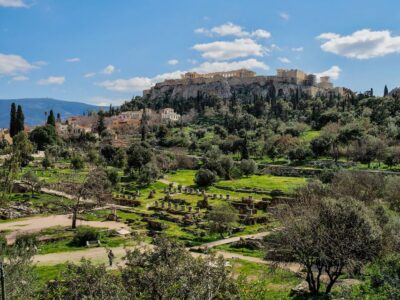


Acropolis monuments & Parthenon Walking Tour with Optional Acropolis Museum
Read our review →Browse the lists this tour appears in