
Reviewed · MYCENAE & EPIDAURUS TOURS
An exciting exploration of Peloponnese at ancient Corinth, Mycenae and Nafplio
Ancient Corinth, Mycenae, and Nafplio pack a remarkable sweep of Greek history into one long day. You begin with the Corinth Canal, walk among the remains of a major Roman-era city, climb into the legendary world of Mycenae, then finish in Nafplio, Greece’s first modern capital.
I like the private car and flexible pickup, especially if you are coming from a cruise ship at Piraeus. I also like the chance to see four very different places without changing buses or trying to piece together regional transport.
The main catch is the pace. This is an eight-hour road day with roughly four hours of driving, and entrance fees are extra. Your driver can explain the sites and take you to the entrances, but a licensed guide inside the archaeological areas costs more.
In This Review
- Key points at a glance
- Why this Peloponnese day trip works
- From Piraeus through Attica
- The Corinth Canal in 15 minutes
- Ancient Corinth and the Temple of Apollo
- Mycenae, the citadel of Agamemnon
- Nafplio for lunch and a slower hour
- The long return to Athens or Piraeus
- Your driver and the guide question
- Who should book this private day?
- Practical details before booking
- Should you book it?
- FAQ
- How long is the tour?
- Where can pickup take place?
- Is transportation private?
- How many people can join for the listed price?
- Are entrance fees included?
- Is a licensed guide included?
- Is lunch included?
- Can the tour be canceled for a refund?
Key points at a glance
- Four major stops in one day: See the Corinth Canal, Ancient Corinth, Mycenae, and Nafplio without arranging separate transport.
- Private pickup from Athens or Piraeus: Meet the driver at your hotel entrance or outside the cruise terminal.
- A driver, not an included site guide: Historical commentary is provided on the road, while licensed guiding inside the sites must be arranged separately.
- A useful cruise-day option: The direct route helps you use limited time in Greece without depending on public transport.
- Lunch in Nafplio is flexible: Food is not included, so you can choose where and what to eat.
- Best value for a small group: The $504.10 rate covers up to three people, making the per-person cost more reasonable when shared.
Why this Peloponnese day trip works
This tour is built around one simple idea: use a private vehicle to reach several important sites that are spread across the northeastern Peloponnese. From Athens or Piraeus, you head west through Attica, cross toward the Peloponnese, and follow a route that links ancient engineering, classical archaeology, Bronze Age Greece, and a handsome harbor town.
I find the route especially useful for first-time visitors who want more than Athens but do not have time for an overnight stay. You get a taste of the region rather than a slow, local visit. That trade-off matters. You will see a lot, but you will not have hours to linger at every stop.
The private format also changes the feel of the day. You travel only with your own group, in an air-conditioned vehicle suited to the group size. Pickup and drop-off are included from Athens hotels and the cruise pier at Piraeus, and the return is to the same place.
The published price is $504.10 per group of up to three. For one person, that is expensive. For three people, it works out to about $168 per person before entrance fees, food, and any extra licensed guide. Compared with organizing a private car, fuel, parking, and multiple regional connections yourself, the price can be fair. The value comes mainly from saved time and door-to-door transport.
More Ancient Corinth and canal stops:
- From Athens: Ancient Corinth Day Trip with Canal & VR Guide
★ 4.6 · 1,073 reviews - Private Biblical Tour Ancient Corinth & Isthmus Canal from Athens
★ 5.0 · 762 reviews - Athens: Ancient Corinth & Nafplio Full Day Trip with Swim
★ 4.8 · 523 reviews
From Piraeus through Attica
If you arrive by ship, the meeting point is outside the terminal exit. The driver waits with a sign bearing your name. From an Athens hotel, meet at the main entrance and tell the porter or receptionist that you are expecting the driver.
Piraeus is about 12 kilometers from central Athens, though road time can vary. The tour description mentions driving directly toward the Acropolis, but the actual Peloponnese route centers on the western side of Athens and does not include an Acropolis visit as a scheduled stop. Treat the Acropolis reference as background about Athens, not as an included sightseeing visit.
The early drive through Attica gives you a broad sense of the setting around the capital. This is the part of Greece associated with Athens, the Acropolis, major museums, ancient drama, and the political and artistic ideas that shaped the classical world. You will not stop for a full Attica tour, but the driver can provide context as you leave the city.
That background is useful because the day soon shifts from Attica to the Peloponnese. The route crosses the narrow Isthmus of Corinth, the natural link between mainland Greece and the peninsula.
The Corinth Canal in 15 minutes
The Corinth Canal is a quick stop, but it gives you one of the day’s clearest visual moments. The waterway cuts through the Isthmus of Corinth and connects the Gulf of Corinth with the Saronic Gulf. At about 6.4 kilometers long and only 25 meters wide, it is a strikingly narrow passage.
From the bridge, look down into the channel and along the steep cut through the land. The canal was completed in the late nineteenth century, but the idea is far older. Ancient ships had to sail around the Peloponnese, adding roughly 185 nautical miles to a voyage. Periander, the ruler of Corinth in the sixth century BC, is credited with considering a canal, though the engineering was beyond the tools of his time.
Instead, ancient builders created the diolkos, a stone roadway used to move ships across the isthmus on wheeled platforms. That detail helps explain why Corinth became so important. The canal is not just a modern construction project. It marks a place where people have long tried to shorten the sea route between two gulfs.
You get about 15 minutes here. That is enough for photographs and a quick look, but not enough for a slow visit or a long waterfront break. I would keep your expectations clear: this is a scenic and historical pause, not a major tour in itself.
Ancient Corinth and the Temple of Apollo
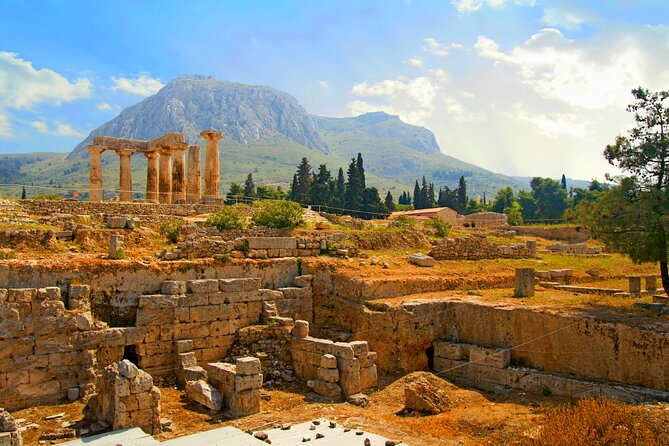
After about 20 minutes on the road, you reach Ancient Corinth. The archaeological site has very old roots, with settlement in the area going back to the Neolithic period, around 6500 to 3250 BC. Its location helped make it powerful: land routes crossed here, and sea routes connected the western Mediterranean with the eastern Mediterranean and Asia Minor.
Corinth grew wealthy through farming, trade, and shipping. In the eighth century BC, Corinth founded colonies including Corfu and Syracuse, giving it a role far beyond the local region. The city’s position allowed it to look in two directions at once, toward mainland Greece and toward the sea routes around the Peloponnese.
Allow about 1 hour and 20 minutes for the stop. The admission fee is not included. You should also know that the English-speaking driver can escort you to the site and explain the setting, but cannot accompany you inside as a licensed archaeological guide.
That distinction is important. If you want detailed interpretation of the ruins, arrange a state-licensed guide in advance. The extra cost may be worthwhile for visitors who want help identifying buildings, understanding the city’s political role, or placing Corinth in the wider Greek and Roman world.
Without an inside guide, you can still get a meaningful visit by taking time to look at the remains and using any available site information. I would not rush this stop. Ancient Corinth is more than a pile of stones beside the road. Its location, commercial power, and links with the wider Mediterranean are what make the ruins worth seeing.
Entrance tickets should ideally be arranged ahead of time. The tour provider can buy them in advance for a small service fee, and advance purchase is suggested because availability may be limited.
More Mycenae and Epidaurus days:
- From Athens: Mycenae, Epidaurus & Nafplio Full Day Trip
★ 4.8 · 2,438 reviews - From Athens: Mycenae, Epidaurus & Nafplio Full-Day Tour
★ 4.5 · 1,580 reviews - 4-Day Classical Greece Tour: Epidaurus, Mycenae, Olympia, Delphi, Meteora
★ 4.5 · 732 reviews - Mycenae and Nafplion Day Trip from Athens with Official guide
★ 4.5 · 501 reviews
Mycenae, the citadel of Agamemnon
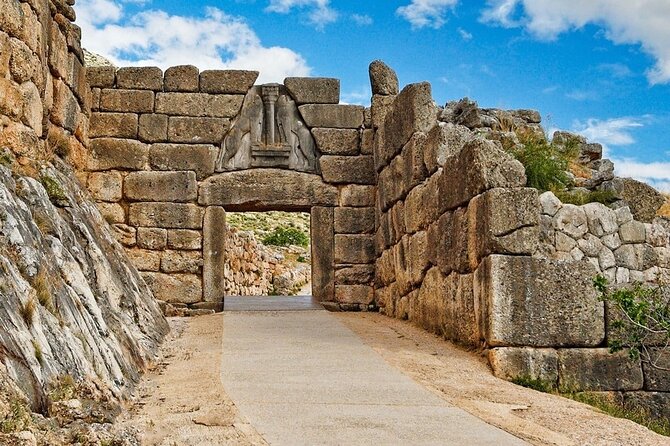
From Ancient Corinth, the drive to Mycenae takes about 35 minutes. This is the day’s oldest and most myth-filled stop, though its importance is not only literary.
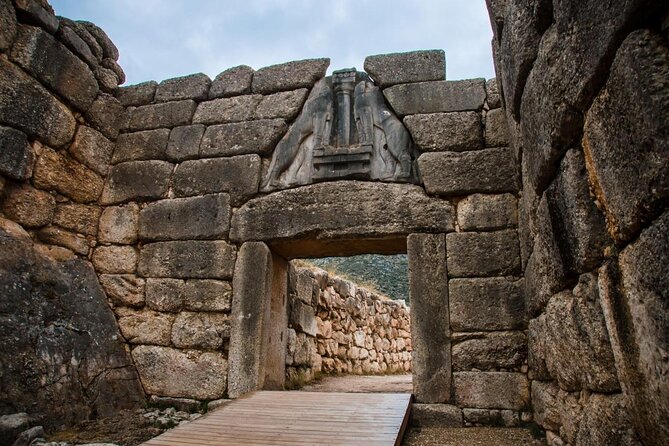
Mycenae was the leading palatial center of Late Bronze Age Greece. Its name was later used for the Mycenaean civilization, which flourished before classical Athens and Sparta became the best-known Greek powers. Homer connected the city with Agamemnon, the king who led the Greek forces in the Trojan War. Later Greek writers and artists kept those stories alive.
The site also carries older legends about Perseus, the son of Zeus and Danaë, who is traditionally said to have founded Mycenae. Ancient explanations for the name connect it with the pommel of a sword or with a spring found near a mushroom root. These myths can make the place more memorable, but the archaeological remains show a real political center with impressive defensive walls and royal associations.
You have about 1 hour and 55 minutes here, the longest stop on the route. That gives you time to explore at a more reasonable pace, though the ground is uneven and you should expect steps and exposed walking. A moderate level of fitness is recommended for the full day.
The extra time matters. Mycenae is not a stop to view only from the parking area. You want time to pass through the famous entrance, study the massive stonework, and take in the hilltop setting. The site’s position helps explain its power, with the citadel commanding the surrounding area.
The entrance fee and museum admission are not included. As at Ancient Corinth, your driver can offer information and point you in the right direction, but an official guide inside is an additional service. I would consider the guide here if Bronze Age Greece is a major reason for booking the tour. Mycenae has a dense mix of archaeology and legend, and good explanation can help separate what is known from what later storytellers added.
Nafplio for lunch and a slower hour
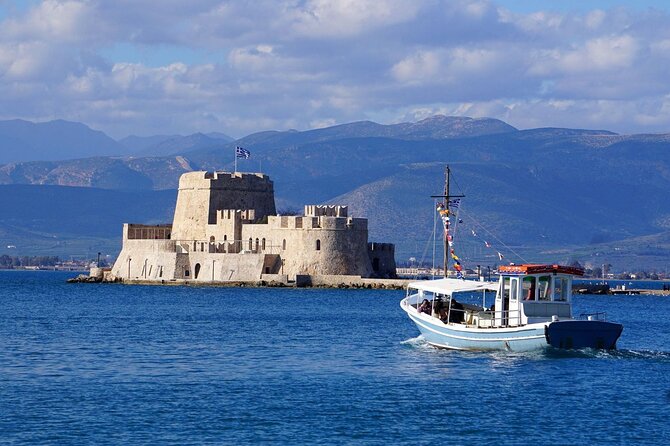
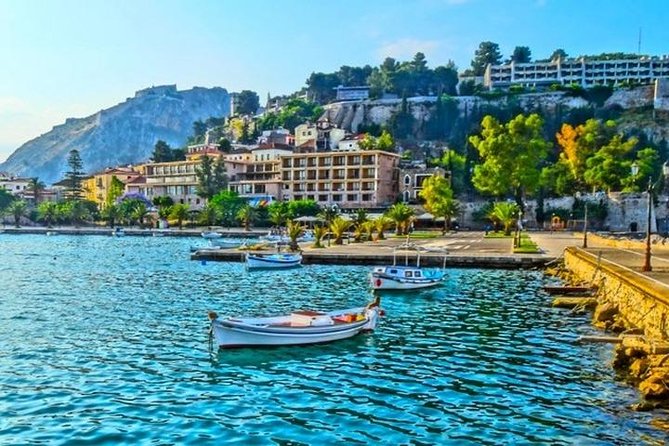
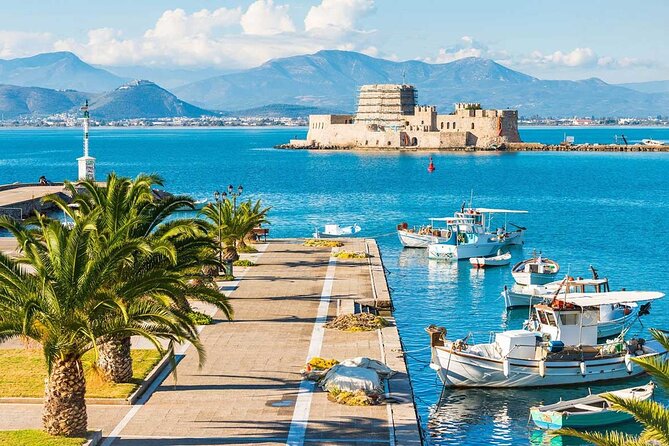
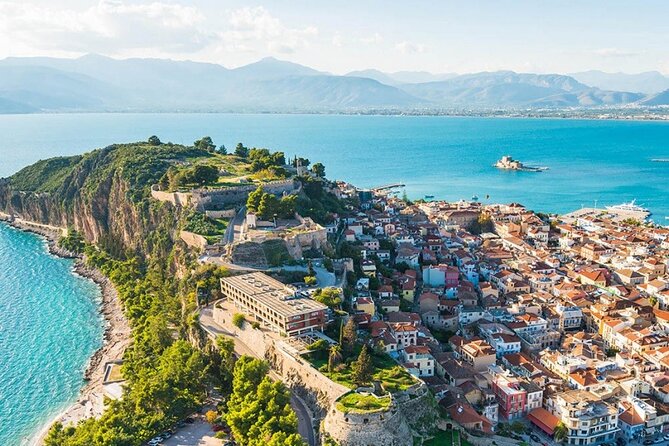
After Mycenae, you drive about 20 minutes to Nafplio. The shift is welcome. After two archaeological sites, Nafplio gives you streets, harbor views, neoclassical buildings, Venetian traces, monuments, and time to eat.
Nafplio served as the first capital of the newly formed Greek state from 1823 to 1834. Its story reaches back to ancient mythology, but its strongest character comes from the layers added by Byzantine, Frankish, Venetian, and later Greek rule. Those influences appear in the architecture and give the town a different feel from the open archaeological sites earlier in the day.
You have about 1 hour and 30 minutes here. Lunch is not included, so the choice is yours, but the limited time means you should not plan an elaborate meal. A sensible approach is to eat promptly, then reserve part of the stop for a walk.
I like this pause because it keeps the tour from becoming one long sequence of ruins. You can stretch your legs, browse the central streets, and enjoy a more ordinary town setting. The drawback is that 90 minutes is enough for a taste, not a full visit. You will not have time to explore every corner or treat Nafplio as a separate day.
The long return to Athens or Piraeus
The drive back takes about two hours. This is where the private vehicle earns its keep. After nearly eight hours on the road and at archaeological sites, you can sit back rather than deal with a train, bus connection, or rental-car directions.
The return is to the original pickup point, either your Athens accommodation or the same Piraeus cruise terminal area. If you are sailing later that day, confirm the timing carefully before booking. The tour is approximately eight hours, but road conditions and time spent at stops can affect the schedule.
The provider offers airport transfers on request for an additional charge. That option may help with planning, but the standard tour does not include airport transportation.
Your driver and the guide question
The included professional driver speaks English and has good knowledge of Greek history and culture. One driver named in the available tour information is Alex, who provided historical commentary during the countryside drives and helped keep the day moving while allowing time in Corinth and Nafplio.
The distinction between driver and guide deserves attention. Your driver is there to transport you, explain the route, and guide you up to the archaeological sites and museums. State-licensed guides are freelance, subject to availability, and cost extra. They are the people authorized to accompany you inside the sites.
For casual sightseeing, the included driver may be enough. For serious interest in archaeology, I would pay for a licensed guide, particularly at Mycenae and Ancient Corinth. Ask about availability when booking rather than waiting until the day itself.
Who should book this private day?
I would recommend this tour to a small group that wants to cover several major sights in one day and values a private vehicle. It is particularly practical for cruise passengers at Piraeus, families or friends splitting the group price, and visitors with only a short stay in Athens.
You will also like it if you want some control over the day. The itinerary can be customized within its listed stops, so you can discuss how much time to spend at the sites and in Nafplio.
I would hesitate if you prefer slow travel. The route is ambitious, and the return drive is long. It is also not the best choice if you expect a full guided archaeological experience at the base price, since entrance tickets and licensed guiding are separate.
The physical demands are moderate rather than extreme, but the combination of walking, uneven ground, stairs, heat, and a long day in the car can be tiring. Wear practical shoes and keep your schedule after the tour fairly open.
Practical details before booking
Confirmation is provided at booking, and the activity is offered in English. Pickup is available from Athens hotels and the Piraeus cruise pier, with return to the same location.
Food and drinks are not included. Entrance fees to the archaeological sites and museum are also extra. Ask about pre-purchased tickets, since the provider can arrange them for a small service fee and availability may not be guaranteed on the day.
The tour has free cancellation if you cancel at least 24 hours before the start time. Cancellations or changes made within 24 hours are not refunded or accepted.
Should you book it?
Book this tour if your priority is efficient private transport and a broad introduction to the northeastern Peloponnese. The combination of Corinth Canal, Ancient Corinth, Mycenae, and Nafplio is strong, and the small-group price becomes more reasonable when shared by three people.
Choose the added licensed guide if you want serious historical explanation inside the ruins. Skip the tour in favor of a longer Peloponnese stay if you want relaxed meals, extensive museum time, or several hours in Nafplio.
For a one-day outing from Athens or Piraeus, this is a practical route with real variety. Just budget for tickets, lunch, and possibly a guide, and remember that the strength of the experience is seeing a lot comfortably, not lingering everywhere.
FAQ
How long is the tour?
The tour lasts approximately eight hours, including the drives between Athens or Piraeus and the Peloponnese stops.
Where can pickup take place?
Pickup is available from your Athens hotel or from the cruise ship pier at Piraeus port. Hotel pickup takes place at the main entrance. Cruise passengers meet outside the terminal exit, where the driver waits with a sign bearing the passenger’s name.
Is transportation private?
Yes. The tour is private, and only your group participates. Transportation is provided in an air-conditioned vehicle suited to the size of your group.
How many people can join for the listed price?
The price of $504.10 covers a group of up to three people.
Are entrance fees included?
No. Entrance fees to the archaeological sites and museum are not included. Tickets can be purchased in advance by the provider for a small service fee.
Is a licensed guide included?
No. The included English-speaking driver provides historical and cultural information and accompanies you to the site entrances. A state-licensed guide who can enter the archaeological sites and museums with you must be arranged at an extra cost.
Is lunch included?
No. Lunch in Nafplio is not included. You have about 1 hour and 30 minutes there to choose a meal and explore the town.
Can the tour be canceled for a refund?
Yes. You can cancel for a full refund if you cancel at least 24 hours before the experience start time. Cancellations or changes made less than 24 hours before the start time are not refunded or accepted.
Freshly added Athens trips
- Athens and Ancient Corinth Private from Athens★ 5.0 · 3 reviews
- From Athens: Mycenae and Epidaurus Private Tour★ 4.8 · 3 reviews
- Full day Meteora private tour★ 5.0 · 3 reviews
- Double Shore Dive (certified divers)★ 4.5 · 3 reviews
- Athens Hills: Mythology Treasure Hunt★ 5.0 · 3 reviews
- Sunset & swimming at Cape Sounio, Poseidon temple★ 5.0 · 3 reviews
- Philosophy Experience at Plato’s Academy Park – basic version★ 5.0 · 3 reviews
- Private Acropolis Tour – Ticket Included★ 5.0 · 3 reviews
Mycenae & Epidaurus Tours, compared.

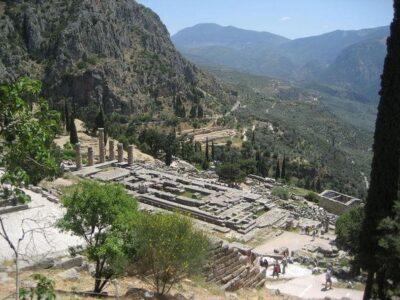
4-Day Classical Greece Tour: Epidaurus, Mycenae, Olympia, Delphi, Meteora
Read our review →
Ancient Corinth & Nafplio Full Day Trip with Swim
Read our review →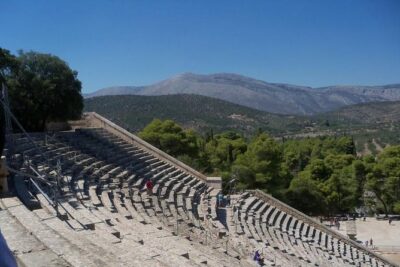
Mycenae and Nafplion Day Trip from Athens with Official guide
Read our review →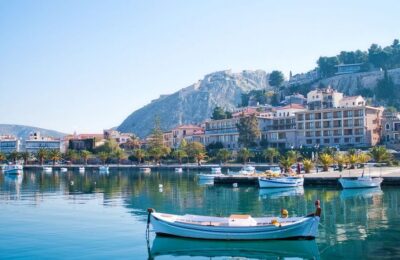
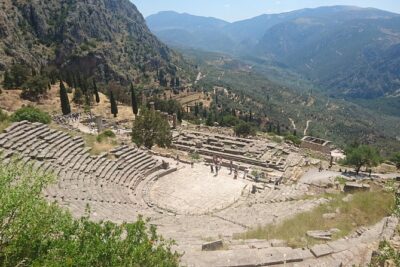
3-Day Classical Greece Tour: Epidaurus, Mycenae, Nafplion, Olympia, Delphi
Read our review →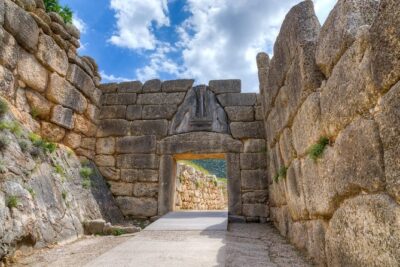
Mycenae, Epidaurus, Nafplio Full Day Private Tour from Athens
Read our review →Browse the lists this tour appears in