
Reviewed · ANCIENT CORINTH TOURS
“All Day Tour Athens & Corinth:Highlights & Path of Apostle Paul”
The best thing about this day is its sweep: you move from the Acropolis and modern Athens to the Corinth Canal and the ancient city where Apostle Paul addressed the Corinthians. It is a lot of Greece in one private vehicle, with hotel, Airbnb, or Piraeus pickup included.
I like the freedom of a private tour and the practical comfort of an air-conditioned Mercedes with WiFi, bottled water, chargers, and child seats. I also like the chance to see both famous Athens sights and Ancient Corinth without arranging separate transport. The catch is important: admission tickets are extra, and your English-speaking driver cannot guide you inside archaeological sites or museums.
In This Review
- Key points to know before booking
- The big picture: Athens, the Apostle Paul, and Corinth
- Starting on the Acropolis
- From Kallimarmaro to the pillars of Zeus
- Seeing modern Greece at Syntagma Square
- Plaka and the old center
- Crossing the Corinth Canal
- Ancient Corinth and the Temple of Apollo
- The Archaeological Museum of Ancient Corinth
- What the private vehicle adds
- Price, guide limits, and real value
- Who should choose this Athens and Corinth day
- Should you book it?
- FAQ
- How long does the Athens and Corinth tour last?
- Is this a private tour?
- Where can pickup take place?
- Are entrance tickets included?
- Is the driver a licensed tour guide?
- Does the tour include airport pickup and drop-off?
- Can I cancel for a full refund?
Key points to know before booking
- Private vehicle for your group: You do not share the Mercedes with other participants, and pickup times can be adjusted to your schedule.
- Athens and Corinth in one long day: Plan on roughly 10 to 11 hours, with substantial time on the road between the capital and the Peloponnese.
- The driver is not a licensed site guide: The driver knows the history and can help with skip-the-line ticket purchases, but cannot accompany you inside monuments.
- Acropolis time is limited: The planned visit is about 1 hour and 15 minutes, so bring a clear list of priorities.
- Tickets add to the advertised price: The Acropolis is listed at €30 per person and the Archaeological Museum of Ancient Corinth at €20, with seasonal variation possible.
- A good fit for cruise passengers: Pickup and return can be arranged at the Port of Piraeus, with luggage kept in the vehicle during sightseeing stops.
The big picture: Athens, the Apostle Paul, and Corinth
This is not a slow archaeological tour. It is a private driving day that links three different stories: Classical Athens, modern Greek civic life, and Ancient Corinth.
In Athens, you see the Acropolis, the Panathenaic Stadium, the Temple of Olympian Zeus, Syntagma Square, Plaka, and several neoclassical buildings. Then you leave the city for the Corinth Canal and the ruins of Ancient Corinth, including the Temple of Apollo and the place traditionally associated with Apostle Paul.
That range is the main reason to choose this outing. You get a strong first look at the region without learning the local roads, arranging a rental car, or figuring out how to reach Corinth by public transport.
The tradeoff is pace. Ten or eleven hours sounds generous, but Athens has traffic, the Acropolis requires uphill walking, and Corinth is about 80 kilometers from central Athens. Some stops are photo pauses of only 10 or 15 minutes. If you want a careful museum visit, a long lunch, or detailed time at every ruin, this schedule will feel crowded.
More Ancient Corinth and canal stops:
- From Athens: Ancient Corinth Day Trip with Canal & VR Guide
★ 4.6 · 1,073 reviews - Private Biblical Tour Ancient Corinth & Isthmus Canal from Athens
★ 5.0 · 762 reviews - Athens: Ancient Corinth & Nafplio Full Day Trip with Swim
★ 4.8 · 523 reviews
Starting on the Acropolis
The Acropolis is the centerpiece of the Athens portion. The rocky hill rises about 156 meters above sea level and roughly 70 meters above the city, so you get both ancient monuments and wide views across Athens.
The planned Acropolis visit lasts about 1 hour and 15 minutes. That is enough to see the principal buildings, but not enough for a leisurely examination of every detail. I would decide in advance that the Parthenon, Erechtheion, Propylaea, and Temple of Athena Nike are your priorities.
The Parthenon was built between 447 and 438 BC for Athena, the city’s patron goddess. Its Doric design and carved decoration helped define the high point of Classical Greek architecture. From the outside, pay attention to its proportions and the way it dominates the hill rather than expecting a complete, untouched temple.
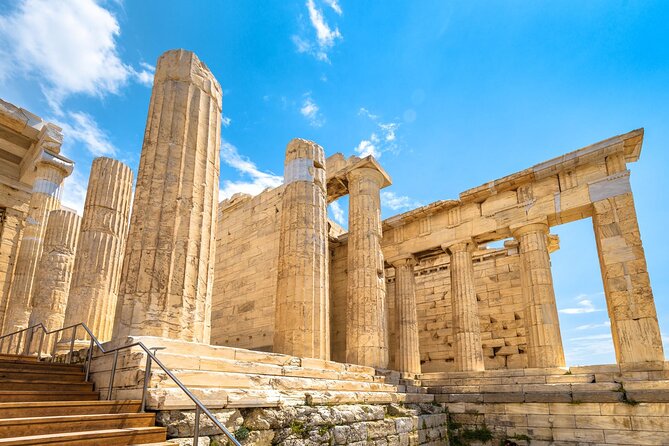
The Temple of Athena Nike is smaller, but its position near the entrance makes it easy to appreciate as you approach the summit. The Erechtheion is famous for its Caryatid figures, the sculpted female forms that serve as architectural supports. The Propylaea gives the approach a formal entrance worthy of the sacred hill.
Below the summit, the itinerary also identifies the Odeon of Herodes Atticus and the Theatre of Dionysus. The Odeon is a Roman-era stone theatre on the southwest slope. The Theatre of Dionysus is older and is linked to the sanctuary of Dionysus, the god associated with theatre and performance.
Admission is not included. The listed Acropolis price is €30 per person, though ticket rates can change with the season. The driver can assist with purchasing skip-the-line tickets, but you will explore the site on your own unless you arrange a licensed guide separately.
Wear shoes with a firm grip. The Acropolis has uneven stone surfaces, and the climb matters more than the short description of the stop may suggest.
From Kallimarmaro to the pillars of Zeus
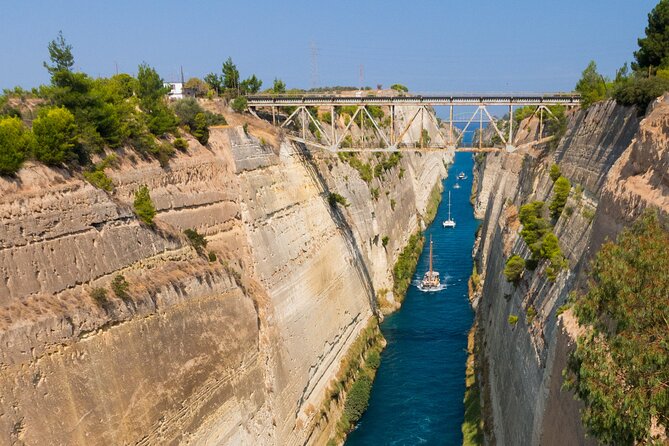
The Panathenaic Stadium, also called Kallimarmaro, receives about 10 minutes. It is made entirely of white marble and is described here as the oldest operating stadium in the world. The modern Olympic connection makes it an appealing stop, but ten minutes is mainly enough for photographs and a quick look from outside.
The Temple of Olympian Zeus gets about 15 minutes. Its remaining columns show the enormous scale of a temple dedicated to Zeus, chief of the Olympian gods. The site is near Hadrian’s Arch, the Zappeion, and the Panathenaic Stadium, so these monuments make sense as a single central Athens sequence.
Hadrian’s Arch marked the route between older Athens and the Roman-era complex around the Temple of Olympian Zeus. The Zappeion is a grand neoclassical building still used for meetings and ceremonies. You may not enter either one during this tour, but both help you read the city as a place where Greek, Roman, royal, and modern civic layers sit close together.
These short stops are useful for orientation. They are not designed for long study. If you are especially interested in Roman Athens, ask before departure how much time can be shifted toward the Temple of Olympian Zeus.
Seeing modern Greece at Syntagma Square
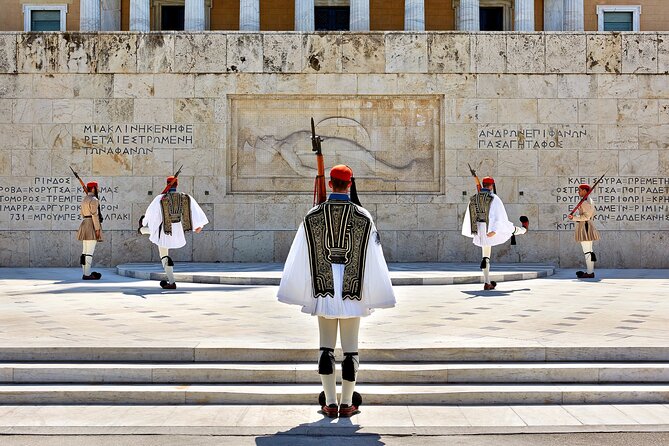
The Monument to the Unknown Soldier sits in front of the old royal palace, now the Hellenic Parliament. The scheduled visit lasts about 10 minutes and includes the changing of the guard by the Euzones, the ceremonial presidential guard.
The timing matters. A regular guard change may not be the larger ceremonial event you have seen in photographs, so ask your driver what is scheduled on your day. The monument is guarded around the clock, and its position above Syntagma Square places you at the center of modern Greek politics.
The square itself takes its name from the constitution granted after the uprising of September 3, 1843. That detail gives the stop more weight than a quick photo opportunity. You are looking at the center of the country’s political life, not simply a handsome public plaza.
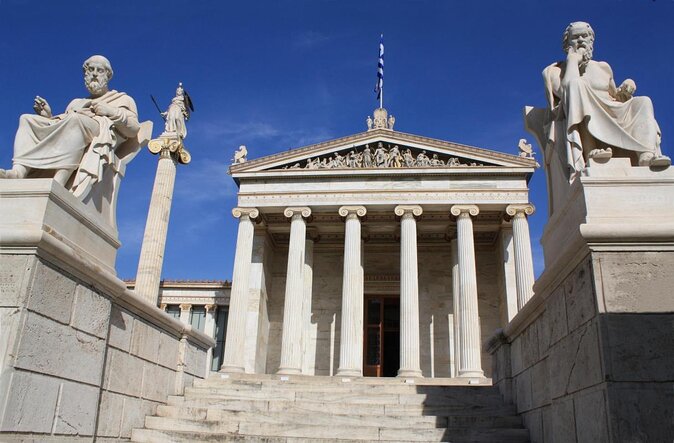
The route may also pass the National Library, the University of Athens, and the Academy of Athens. The National Library’s neoclassical reading room once held more than two million books and manuscripts, including Greek New Testament manuscripts and handwritten works associated with Aristotle, Plato, and Homer. The University of Athens was founded in 1837 as the country’s first university. The Academy of Athens, founded in 1926, recalls the older philosophical academy associated with Plato.
You may view these buildings from outside, so treat this section as an architectural drive and walking circuit rather than a series of interior visits.
More footsteps-of-Paul trips:
- Biblical Tour Letters ToThe Corinthians St Paul’s Footsteps 6Hour
★ 5.0 · 1,065 reviews - Private Tour of Apostle Paul’s Footsteps in Ancient Corinth
★ 5.0 · 275 reviews - Paul”s Footsteps Ancient Corinth Biblical Tour
★ 5.0 · 184 reviews - Private Luxury Biblical Tour: Apostle Paul in Athens & Corinth
★ 5.0 · 162 reviews
Plaka and the old center
Plaka receives about an hour, making it one of the more relaxed Athens stops. The district sits below the Acropolis and is known for narrow lanes, steps, neoclassical homes, red-tiled roofs, flower-filled balconies, tavernas, and cafés serving frappé.
This is the place to slow down. I would use the hour for a short walk, a coffee, or a simple snack rather than trying to cover every nearby monument. The old streets are more enjoyable when you stop chasing a checklist.
The itinerary also includes Monastiraki, the Ancient Agora, the Stoa of Attalos, and Hadrian’s Library. These places help explain how Athens worked as a city.
The agora was the gathering place of the ancient polis, where commercial, social, and political life came together. The Stoa of Attalos was built by King Attalos II of Pergamon between 159 and 138 BC and has been reconstructed with a museum displaying Athenian objects. Hadrian’s Library, built around AD 132, once contained an internal courtyard and pool surrounded by 100 columns.
Because the overall day is long, confirm which of these sites you will enter and which you will view from the vehicle or street. The schedule names many landmarks, but not every one has a separate entrance visit.
Crossing the Corinth Canal
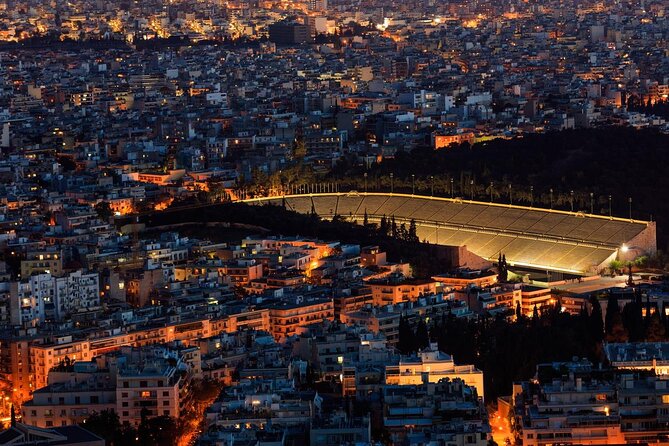
The drive to Corinth changes the day from city sightseeing to a broader regional trip. At the Corinth Canal, you stop for about 10 minutes.
The canal cuts through the narrow Isthmus of Corinth, linking the Saronic Gulf with the Gulf of Corinth. It is about six kilometers long, and construction took place from 1880 to 1893. The isthmus was important long before the modern canal. A defensive wall known as the Hexamilion once guarded the route between central Greece and the Peloponnese.
Ten minutes is enough to look down into the cut and take photographs. It is not enough for a full canal visit or a leisurely walk. Still, the stop gives you a clear physical sense of why Corinth mattered: this narrow strip of land controlled movement between mainland Greece and the Peloponnese.
Ancient Corinth and the Temple of Apollo
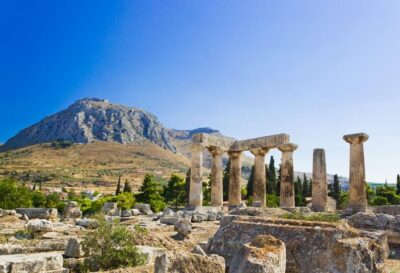
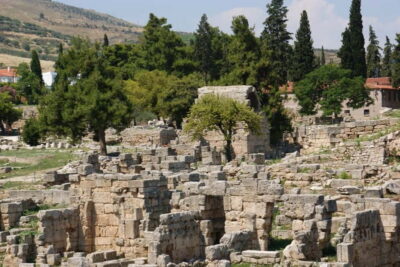
Ancient Corinth is the historical heart of the second half of the tour. The area includes the ancient marketplace, theatre, amphitheatre, fountains, sanctuaries, basilicas, and the remains of the Temple of Apollo.
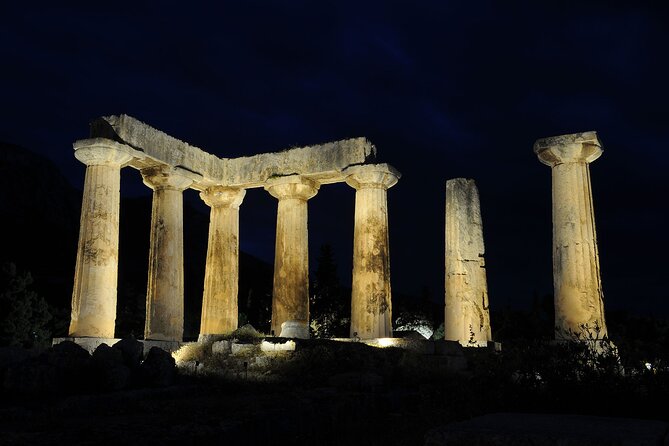
The Temple of Apollo is the key sight. It was built with monolithic Doric columns, and seven remain over the ruins of the ancient market. The earliest version dates to the early seventh or early sixth century BC. Even in its damaged state, the surviving columns make the site easy to understand at a glance.
The itinerary also identifies Apostle Paul’s step. Corinth is linked to Paul’s work and to the Christian community addressed in the New Testament, so this stop has special meaning for visitors following his route. The ancient setting is not a staged religious attraction. You are looking at a Greek and Roman city where religious, commercial, political, and Christian stories overlap.
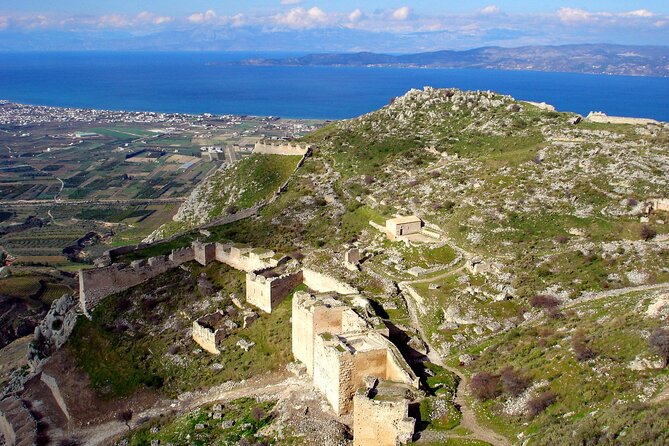
Acrocorinth rises above the ancient city on a steep rock about 575 meters high. Its height and secure water supply made it a powerful defensive position. The tour mentions Acrocorinth, but do not assume the schedule includes a climb to the fortress. The main archaeological visit and the upper citadel are different experiences, and the day’s timing may not allow both.
Other remains include the Sanctuary of Asclepius, dedicated to healing; the Sanctuary of Demeter and Kore; the Fountain of Glauke; the Temple of Octavia; the Early Christian Basilica of the Skull; the Basilica of Lechaion; the Peirene Fountain; and the conservatory. Your driver can explain the broad setting, but the driver cannot lead you through the ruins as a licensed guide.
The Archaeological Museum of Ancient Corinth

The Archaeological Museum of Ancient Corinth receives about one hour. It was built in 1932 by the American School of Classical Studies and sits within the archaeological site.
Its collections cover the prehistoric period through the Byzantine era. You can see finds from the Asklepieion, objects from the Geometric period, and the Twin Kouros statues from Ancient Tenea, noted for their importance in Archaic Greek sculpture.
The museum is valuable because the open ruins can leave you guessing about daily life and artistic practice. Objects inside give the stones a human scale. I would protect this hour rather than treating the museum as an optional extra, especially if you want more than photographs.
Admission is not included. The stated entrance fee is €20 per person, with seasonal ticket rules possible. The museum and Acropolis close on January 1, March 25, May 1, Easter Sunday, and December 25 and 26. Check your date before paying for the tour.
What the private vehicle adds
The private format is the strongest practical feature. Only your group participates, and pickup can be arranged at a hotel, Airbnb, Piraeus, a metro station, or a bus station. At Piraeus, the driver meets you outside the ship with a sign showing your name.
You travel in an air-conditioned Mercedes vehicle with WiFi, bottled water, mobile chargers, and child seats. These are small comforts, but they matter on a 10 to 11 hour day. A driver named Bledi has been noted for prompt airport pickup, careful handling of luggage, safe driving on narrow and crowded Athens roads, and adjusting the route around a cruise departure.
That flexibility is especially useful for cruise passengers and people connecting from a flight. Still, be exact about your available time. A shorter transfer window can mean missing stops, and the day cannot offer every listed sight in depth.
The company offers flexible pickup times and paid hourly extensions. It also says that an extra charge may apply if you finish somewhere other than the agreed meeting point. Confirm the return location before departure.
Price, guide limits, and real value
At $307.39 per person, this is not a budget sightseeing ride. Its value depends on group size and your need for private transport.
For two people, the per-person cost is high once you add the Acropolis and Corinth museum tickets. For a larger group, the private vehicle becomes easier to justify because the base price covers the group experience rather than a separate public tour seat for each person.
The cost also buys convenience: pickup, return transportation, air conditioning, onboard WiFi, water, chargers, and a driver who can help with ticket purchases. Airport pickup and drop-off are not included, though airport transfers may be arranged separately.
The main point to understand is the guide arrangement. Your driver speaks English and has historical knowledge, but is not licensed to accompany you inside any site or museum. A licensed tour guide can be requested, depending on availability, and may involve an additional charge.
I would book this for transport and route planning first, and for guided interpretation second. If detailed explanations inside the Acropolis and Corinth are essential to you, arrange the licensed guide in advance and get confirmation in writing.
Who should choose this Athens and Corinth day
I see this tour working best for:
- A first-time visitor who wants major Athens sights plus Corinth in one day
- A private group that values flexible pickup and return
- Cruise passengers using Piraeus as their base
- Families who need child seats and a vehicle of their own
- People following the route connected with Apostle Paul
- Visitors who prefer a driver and independent site visits to a large guided group
I would choose something slower if your main goal is museum study, detailed archaeology, or a relaxed Athens neighborhood walk. You also need enough stamina for an early start, uphill Acropolis walking, and a full day in a vehicle.
Should you book it?
Book this tour if you want breadth, privacy, and dependable transportation more than long guided visits. The Athens highlights, Corinth Canal, Ancient Corinth, and Apostle Paul connection form a memorable route, and the private format gives you more control than a standard group excursion.
Before paying, confirm three details: the exact pickup time, the expected return time, and whether a licensed guide is included or must be added. Also budget separately for admission, including the stated €30 Acropolis ticket and €20 Corinth museum ticket.
If you accept the brisk pace and driver-only format, this is an efficient way to connect Athens with Corinth. If you want every monument explained in depth, book a licensed guide or choose a tour with fewer stops.
FAQ
How long does the Athens and Corinth tour last?
The experience lasts approximately 10 to 11 hours. Traffic, pickup arrangements, site queues, and your chosen stop times can affect the final length.
Is this a private tour?
Yes. Only your group participates, and private transportation is provided.
Where can pickup take place?
Pickup can be arranged at a hotel, Airbnb, Port of Piraeus, metro station, or bus station. Provide the exact address or meeting point when booking.
Are entrance tickets included?
No. Archaeological site and museum tickets are not included. The stated prices are €30 per person for the Acropolis and €20 per person for the Archaeological Museum of Ancient Corinth, with seasonal variation possible.
Is the driver a licensed tour guide?
No. The English-speaking driver has historical knowledge but is not licensed to accompany you inside sites or museums. A licensed guide may be requested, subject to availability.
Does the tour include airport pickup and drop-off?
Private airport transportation is not included. Hotel, Airbnb, and Piraeus pickup and drop-off are included without an extra charge.
Can I cancel for a full refund?
Yes, if you cancel at least 24 hours before the experience start time. Cancellations or changes made less than 24 hours before the start are not accepted for a refund.
More Full-Day in Athens
- All Day Cruise -3 Islands to Agistri,Moni, Aegina with lunch and drinks included
★ 5.0 · 4,958 reviews - From Athens: Delphi Full Day V.R. Audio Guided Tour
★ 4.6 · 3,028 reviews - Athens Full Day Private Tour
★ 5.0 · 2,903 reviews - From Athens: Mycenae, Epidaurus & Nafplio Full Day Trip
★ 4.8 · 2,438 reviews
Freshly added Athens trips
- Athens and Ancient Corinth Private from Athens★ 5.0 · 3 reviews
- From Athens: Mycenae and Epidaurus Private Tour★ 4.8 · 3 reviews
- Full day Meteora private tour★ 5.0 · 3 reviews
- Double Shore Dive (certified divers)★ 4.5 · 3 reviews
- Athens Hills: Mythology Treasure Hunt★ 5.0 · 3 reviews
- Sunset & swimming at Cape Sounio, Poseidon temple★ 5.0 · 3 reviews
- Philosophy Experience at Plato’s Academy Park – basic version★ 5.0 · 3 reviews
- Private Acropolis Tour – Ticket Included★ 5.0 · 3 reviews
Ancient Corinth Tours, compared.
Ancient Corinth Day Trip with Canal & VR Guide
Read our review →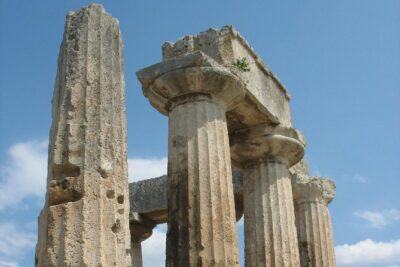
Private Biblical Tour Ancient Corinth & Isthmus Canal from Athens
Read our review →
Ancient Corinth & Nafplio Full Day Trip with Swim
Read our review →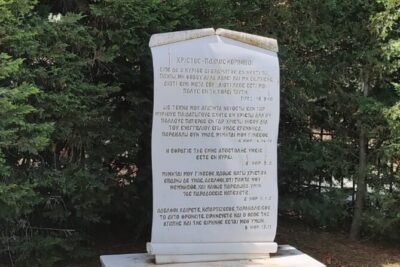
Private Tour of Apostle Paul’s Footsteps in Ancient Corinth
Read our review →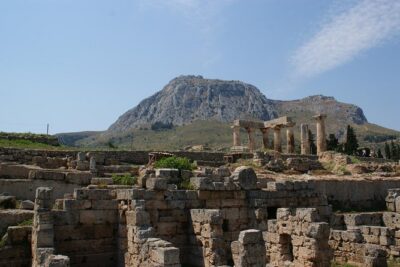
Corinth Half-Day Trip from Athens with Entrance Tickets
Read our review →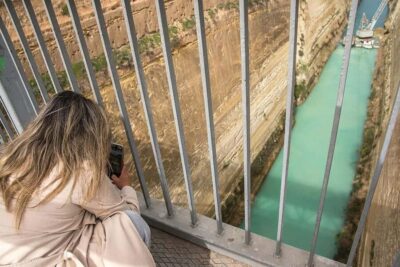
Browse the lists this tour appears in