
Reviewed · ATHENS
Steps to tradition: Greek Traditional Dances in Athens
Dancing beside the Acropolis is the main event here. On Philopappou Hill, Tania and Kostas teach you the linked steps of Greek folk dances while ancient stones, trees, and Athens views set the scene. You do not need dance skills. You learn by watching, repeating, and joining the circle.
I like the small maximum group of 12, which gives the instructors room to help each person. I also like the cultural layer: you learn where dances come from, what the music means, and how the steps change from island to island. The main consideration is practical: this is an outdoor activity requiring good weather, and the meeting time listed is an unusually early 6:00 am.
In This Review
- Key points to know before booking
- Greek dancing with the Acropolis as your backdrop
- The 10-minute walk up Philopappou Hill
- Tania’s teaching style keeps beginners moving
- From Crete to the islands, the class covers Greek regions
- Music, stories, and the meaning of the circle
- A scenic outdoor class has limits
- What you may receive beyond the dance lesson
- Is $41.52 a fair price?
- Who will enjoy this most?
- Should you book Steps to Tradition?
- FAQ
- Where does the Greek traditional dance experience begin?
- What time does the activity start?
- How long does the experience last?
- How far do you walk before the dance class?
- Where does the activity end?
- How many people can join the class?
- Do I need previous dance experience?
- What happens if bad weather cancels the class?
Key points to know before booking
- Acropolis views from Philopappou Hill: The class takes place in a quiet outdoor setting with ancient ruins and broad views toward Athens landmarks.
- Six or seven dances in one class: You may learn dances from several Greek regions, including faster Cretan steps and kicks.
- Tania and Kostas lead the session: Tania is the main dance teacher, with Kostas helping create a friendly, supportive class.
- A short uphill walk comes first: Allow for about 10 minutes on foot from the meeting point to the dance area.
- A cultural lesson as well as exercise: Stories about music, regions, festivals, and Greek community life are built into the instruction.
- Useful extras may be included: Past sessions have offered water, photos or videos, a participation certificate, and a Greek music playlist.
Greek dancing with the Acropolis as your backdrop
Many Athens activities put you behind a rope or in front of a monument. This one asks you to take part. You hold hands in a circle, follow the leader, and slowly turn a string of unfamiliar movements into something you can actually dance.
That setting matters. Greek traditional dancing is not presented as a museum display here. It is a social practice, built around people moving together. The circle makes the class less intimidating because you are not performing alone in front of an audience. If you miss a step, you simply keep moving and pick it up again.
The experience also gives you a different view of Philopappou Hill. The hill is known for paths, old ruins, and views of the Acropolis, but it can feel more personal when you walk into a quiet area and use it as a temporary village square. The dance spot has been described as being near a church and park, with few people around during some sessions.
I particularly like the contrast between the ancient surroundings and the active lesson. The ruins are not just scenery for a photograph. They frame an activity tied to Greek life across generations.
Other days out people book around Athens:
- Athens: Acropolis & up to 5 Archaeological Sites Combo Pass
★ 4.4 · 12,619 reviews - Athens: Acropolis Ticket with Optional Audio or Live Guide
★ 4.2 · 11,055 reviews - Athens: Acropolis, Parthenon & Acropolis Museum Guided Tour
★ 4.8 · 9,316 reviews
The 10-minute walk up Philopappou Hill
You meet Tania at the main entrance near the junction of Dionysiou Areopagitou and Apostolou Pavlou, close to the Acropolis pedestrian zone. Once the group gathers, she leads you on a walk of about 10 minutes to the class location.
This is not a long hike, but it is worth treating it as a short uphill walk rather than a flat meeting transfer. Wear comfortable shoes. You will need them for the path and for standing and dancing outdoors for much of the two-and-a-half-hour session.
The walk adds useful context. Along the way, Tania may point out notable places on the hill, including Socrates’ Prison, and explain the role of traditional dance festivals in Greece. That small introduction helps connect the lesson to the place around you.
The route also gives you a chance to see the Acropolis from another angle. You may want to arrive a little early so you are not rushing to the meeting point. Since the published start time is 6:00 am, check the exact time carefully when booking. An early start can mean cooler air and softer light, but it may not suit anyone hoping for a relaxed holiday morning.
The activity ends back at the original meeting point. There is no separate return transfer to arrange.
Tania’s teaching style keeps beginners moving
Tania is an experienced traditional dance teacher, and the instruction is built for people who may have never danced Greek steps before. She breaks down each pattern, repeats it, and lets you build confidence before moving on.
That patient approach is important. Greek dances can look simple when a skilled circle moves together, but the footwork, rhythm, and changes in direction take practice. You are not expected to master everything at once. The class focuses on clear progress, with encouragement along the way.
Kostas helps with the group and adds to the relaxed tone. The teaching team is described as warm, friendly, and easy to approach, which matters when you are trying to remember a sequence while also listening to music and keeping pace.
I would not book this expecting a formal dance performance or a technical workshop for advanced dancers. The real goal is participation. You learn enough to join a Greek dance at a taverna or festival with less hesitation. One of the most appealing outcomes is that the lesson can give you the confidence to recognize and follow dances later during your trip.
From Crete to the islands, the class covers Greek regions
The lesson introduces dances associated with different parts of Greece. Sessions have included around five to seven dances, depending on the group and pace. You might learn simpler patterns first, then move into quicker or more demanding movements.
Cretan dances are one example. They can include kicks and fast steps, so the class may adjust the difficulty to match the group. If you have a particular island or region on your Greek itinerary, it is worth asking if the instructors can include a related dance. A past private session was adapted to the places the participants planned to visit later.
This regional range is one of the strongest reasons to choose the class. Greek dance is not one single style. Each region has its own rhythms, movements, and social setting. Learning several forms in one session helps you see those differences instead of leaving with a vague idea of Greek dancing as only one repeated step.
The class also explains the history behind the dances. Circular dances are linked to ancient Greek traditions and are said to reach back roughly 2,000 years before Christ, including connections with Minoan Crete. The important point for you is not memorizing a date. It is understanding that these dances have continued through families, villages, and regions, changing as they passed from one generation to the next.
That makes the lesson feel alive. You are learning a practice that has adapted over time, not a fixed routine created for tourists.
Same city, a completely different century:
- Athens: Cape Sounion & Poseidon Temple Sunset Half-Day Trip
★ 4.8 · 8,241 reviews - Athens: Acropolis and Parthenon Guided Walking Tour
★ 4.6 · 5,882 reviews - All Day Cruise -3 Islands to Agistri,Moni, Aegina with lunch and drinks included
★ 5.0 · 4,958 reviews - Athens, Piraeus, and Coastline: Blue Hop-On Hop-Off Bus
★ 3.9 · 4,849 reviews
Music, stories, and the meaning of the circle
The music gives the class its energy, but the stories give it shape. Tania explains the connection between music, place, and community while you learn the steps. This helps you remember the dances because the movements are attached to a region or a social tradition.
The circle itself has meaning. You dance hand in hand, sharing the rhythm instead of competing for attention. The structure naturally creates a sense of teamwork. You may begin as a group of strangers and finish feeling like a small community, especially in a class with only a few participants.
That social side is the best answer for anyone wondering if the experience will feel awkward. It can still feel strange during the first few minutes, particularly if you are shy or have poor rhythm. But the format gives you support. The teachers lead, the group repeats, and nobody needs to dance alone.
The session can also be a decent workout. You will be standing, stepping, turning, and repeating movements for a long stretch. It is not a gym class, but you should expect to use your legs and stay active. Bring water, especially in warmer weather. Water has been provided during past sessions, but you should not rely on that alone.
A scenic outdoor class has limits
The location is a major strength, but it also creates a few conditions. The activity depends on good weather. If rain or other poor conditions cause a cancellation, you are offered another date or a full refund, but the change can still affect your plans.
Outdoor conditions can also shape your comfort. The class takes place in nature on a hill, not in an air-conditioned studio. Wear clothing that allows easy movement and shoes suitable for uneven paths. You may want sun protection if your session is held in strong daylight.
The published description calls the class a chance to dance under the sun, while the listed start time is 6:00 am. This apparent mismatch is a reason to confirm the meeting details before you go. If you prefer an evening class, do not assume that is the schedule shown for your booking.
The group limit of 12 is a real advantage, though the actual number can vary. Some sessions may be small enough to feel almost private. A past booking for two people became a private lesson, with the instructors tailoring the dances and pace to the pair.
That flexibility is useful, but it is not guaranteed. Book the class for the setting and instruction, not on the assumption that you will receive a private session.
What you may receive beyond the dance lesson
The core experience is the walk, cultural introduction, dance instruction, and return to the meeting point. Some sessions have also included helpful extras.
You may receive plenty of water during the class. Photos and videos have been taken by an assistant or friend during some sessions, giving you a record of the group dancing with the Acropolis behind you. Confirm what is included for your date if these extras matter to you, since the available details do not promise them for every booking.
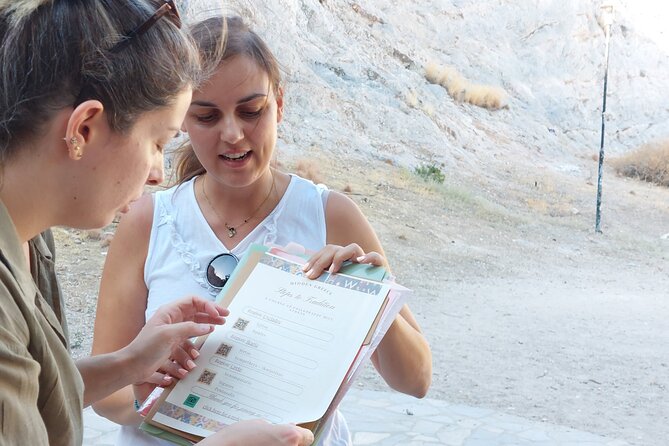
A participation certificate has also been provided in at least one session, along with a QR code for a Greek traditional music playlist and a guide to the dances learned and the regions where they are commonly performed. That is a thoughtful follow-up. It gives you a way to keep listening and practicing after you leave Athens.
Food and ouzo have been mentioned as a welcome touch in one session. Since this is not clearly listed as a standard inclusion, treat it as a possible extra rather than a guaranteed part of the package.
Is $41.52 a fair price?
At $41.52 per person, the price is reasonable if you want more than a demonstration. You are paying for about two and a half hours, a small group setting, an experienced teacher, regional background, outdoor instruction, and the special Philopappou Hill location.
The value improves if you would like to dance at a taverna later in your trip. A short lesson can change how you experience an evening out. Instead of watching a local dance from the edge of the room, you may recognize the rhythm and feel comfortable joining in.
The price is less compelling if you only want photographs of the Acropolis or a quick cultural show. There are cheaper ways to see the hill, and this activity demands active participation. You need to be willing to learn, repeat, sweat a little, and accept that your first steps may be clumsy.
For families, the experience can be a good shared activity. Children aged 11 and 13 have taken part successfully, according to the supplied information. The teachers appear willing to encourage different ability levels, but every participant should be comfortable with the walking and physical activity.
The small cap also gives the fee more value than a large group demonstration. You have a better chance of hearing instructions, seeing the footwork, and receiving corrections when the group is limited to 12.
Who will enjoy this most?
I would choose this for you if you want a hands-on way to understand Greek culture. It suits first-time visitors who plan to spend several days in Athens, families seeking an activity everyone can share, and anyone curious about music, movement, and regional traditions.
It is also a good fit if you are visiting other parts of Greece. You can ask about dances from the islands or regions on your route, and the instructors may be able to shape the session around those plans.
You do not need to be athletic or coordinated. Patience matters more than skill. The teaching is designed to help you feel successful, not to test whether you can perform like a professional.
I would be more cautious if you dislike group activities, have difficulty standing for extended periods, or want a fully indoor experience. Service animals are allowed, public transportation is nearby, and most people can participate, but the hill walk and outdoor format are still part of the deal.
Confirmation arrives within 48 hours, subject to availability. You can cancel for a full refund up to 24 hours before the start time. Changes or cancellations inside that window are not accepted for a refund. The activity also requires a minimum number of participants, so a cancellation for low enrollment is possible, with another date, another experience, or a full refund offered.
Should you book Steps to Tradition?
Book it if you want to do something distinctly Greek rather than simply look at another monument. The Acropolis view is wonderful, but the lasting value comes from learning the dances, hearing the stories, and discovering how a circle of strangers can begin to move as one.
The strongest parts are Tania’s patient teaching, Kostas’s support, the small group size, and the location on Philopappou Hill. The main cautions are the early listed start time, the outdoor setting, and the need for good weather.
At $41.52, I think it is a good buy for active, culture-focused visitors. You may leave with sore legs, a certificate or playlist, and enough confidence to say yes when Greek music starts at dinner.
FAQ
Where does the Greek traditional dance experience begin?
It begins at the main entrance of Philopappou Hill, near Dionysiou Areopagitou and Apostolou Pavlou in Athens.
What time does the activity start?
The listed start time is 6:00 am. Check the exact meeting details when you book.
How long does the experience last?
The experience lasts approximately two hours and 30 minutes.
How far do you walk before the dance class?
After meeting the group, you walk for about 10 minutes to the outdoor class location on Philopappou Hill.
Where does the activity end?
The activity ends back at the original meeting point.
How many people can join the class?
The maximum group size is 12 participants.
Do I need previous dance experience?
The provided information says most people can participate, and the instructors teach the steps gradually. Previous dance experience is not listed as a requirement.
What happens if bad weather cancels the class?
If poor weather causes a cancellation, you are offered a different date or a full refund.
Freshly added Athens trips
- Athens and Ancient Corinth Private from Athens★ 5.0 · 3 reviews
- From Athens: Mycenae and Epidaurus Private Tour★ 4.8 · 3 reviews
- Full day Meteora private tour★ 5.0 · 3 reviews
- Double Shore Dive (certified divers)★ 4.5 · 3 reviews
- Athens Hills: Mythology Treasure Hunt★ 5.0 · 3 reviews
- Sunset & swimming at Cape Sounio, Poseidon temple★ 5.0 · 3 reviews
- Philosophy Experience at Plato’s Academy Park – basic version★ 5.0 · 3 reviews
- Private Acropolis Tour – Ticket Included★ 5.0 · 3 reviews