
Reviewed · APOSTLE PAUL & BIBLICAL TOURS
Footsteps Of Paul, Letters to Corinthians, Private Biblical Tour
Paul’s Corinth comes alive on this private day trip from Athens. You’ll see the canal that cuts through the Isthmus, the ancient road used to move boats overland, the city where Paul worked for 18 months, and the port where he sailed toward Ephesus. The Bible becomes tied to real roads, harbors, courts, and hills.
I like the private format, which lets your guide adjust the pace for your group, and I like the guides’ personal touch. Peter is praised for watching the small details, such as water, snacks, and bathroom stops, while Tas is known for making Paul’s story lively and choosing a good place for lunch. The main drawback is cost: at $312.83 per person, this is a serious outlay, and the Ancient Corinth entrance fee and lunch are extra.
In This Review
- Key points at a glance
- Why Corinth gives Paul’s letters a physical setting
- From Athens to the Isthmus and Corinth Canal
- The Diolkos, where boats crossed the Isthmus
- Acrocorinth, fortress above the ancient city
- Ancient Corinth, Paul’s city and Christian art
- The museum and Roman marketplace
- Lunch in Ancient Corinth or by the sea
- Kenchreai and Paul’s departure for Ephesus
- What the $312.83 price includes
- Who will get the most from this day
- Practical details before you reserve
- Should you book this Corinth tour?
- FAQ
- How long does the private Corinth tour last?
- Where can pickup take place?
- Is the tour private?
- Is lunch included in the price?
- Is the Ancient Corinth entrance fee included?
- Is a licensed guide included inside the museum and archaeological site?
- Can I cancel for a full refund?
Key points at a glance
- Paul’s Corinth in real places: Connect First and Second Corinthians with the ancient city, its marketplace, and the port of Kenchreai.
- A private eight-hour outing: Your group travels alone in an air-conditioned vehicle with hotel, apartment, Airbnb, or port pickup.
- The Corinth Canal: Spend about 50 minutes at the modern waterway, a major engineering project and trade route.
- Acrocorinth’s wide views: See the fortress, churches, mosques, cisterns, Frankish tower, and the spring linked to Pegasus.
- Time for the museum and ruins: Allow about 1 hour and 40 minutes for the Archaeological Museum and Ancient Corinth site.
- Biblical guidance matters: Guides such as Peter and Tas add Scripture, Greek history, and practical care to the day.
Why Corinth gives Paul’s letters a physical setting
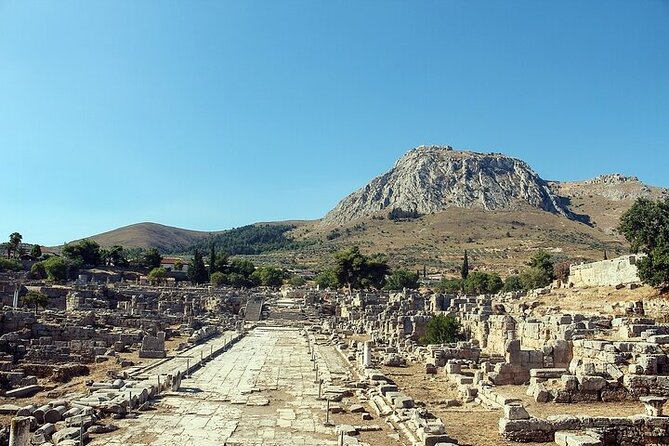
I find Corinth especially rewarding because it is not just a place named in the New Testament. It was a major crossroads, linked to two seas and positioned between mainland Greece and the Peloponnese. Its trade, wealth, movement, and competing beliefs help explain why Paul spent about 18 months there and worked so hard to establish a Christian community.
You will not simply hear First and Second Corinthians recited in a vehicle. The guide connects Paul’s work to the streets, market buildings, ports, and political setting around you. First Corinthians 13 also receives special attention at the Neo Byzantine church of the Virgin Mary, where marble plaques carry lines about love and its lasting importance.
The biblical focus is strongest when paired with the physical remains. You can picture Paul moving through a busy commercial city, dealing with disputes, teaching converts, and facing a legal hearing before Gallio. The experience is designed for people who want history and faith treated together, not as separate subjects.
That focus also shapes the day. If your main goal is a broad survey of Greek archaeology, a standard Corinth excursion may give you more time for ruins and museum displays. This tour spends time on Scripture, Paul’s movements, and Christian art, so it suits a more specific interest.
More footsteps-of-Paul trips:
- Biblical Tour Letters ToThe Corinthians St Paul’s Footsteps 6Hour
★ 5.0 · 1,065 reviews - Private Biblical Tour Ancient Corinth & Isthmus Canal from Athens
★ 5.0 · 762 reviews - Private Tour of Apostle Paul’s Footsteps in Ancient Corinth
★ 5.0 · 275 reviews
From Athens to the Isthmus and Corinth Canal
Pickup is offered from your Athens hotel, Airbnb, apartment, or port. The drive toward the Isthmus takes you out of the capital and toward the gateway to the Peloponnese. Private transport is a real advantage here because the day includes several sites spread across the Corinth region, followed by the return drive to Athens.
The Corinth Canal receives about 50 minutes. The modern cut is one of Greece’s major nineteenth-century engineering projects, linking the Corinthian Gulf with the Saronic Gulf. It helped ships avoid the long route around the Peloponnese and played an important role in Mediterranean trade.
I would treat this stop as a useful opening rather than the spiritual center of the tour. The canal is impressive because of its scale and steep cut, but it belongs to the modern period, not Paul’s world. Your guide uses it to explain why the Isthmus has mattered for movement and commerce for centuries.
The timetable includes a short drive segment of about 10 minutes before the canal visit. Since the full outing lasts about eight hours, the schedule is active. Ask your guide early about the order of stops and lunch timing if you want to manage energy carefully.
The Diolkos, where boats crossed the Isthmus
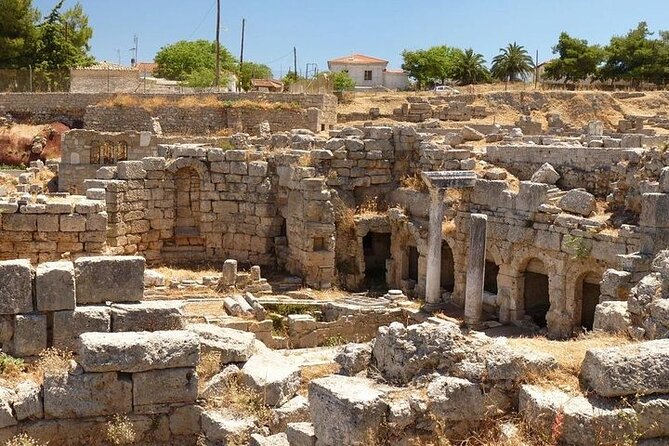
The ancient Diolkos is one of the more unusual stops. Here you see limestone tracks associated with the overland movement of boats between the Corinthian Gulf and the Saronic Sea. Before the canal, boats could be hauled across the Isthmus using people, oxen, and other animals.
This is where Corinth’s power becomes easier to understand. Control of the crossing gave the city influence over sea traffic and helped it dominate a large network of Greek colonies. The guide connects that commercial position to Paul’s decision to remain in Corinth for 18 months.
The Diolkos does not offer the same grand ruins as Ancient Corinth. Its importance is more practical and historical. You are looking at infrastructure, the kind of working route that explains why people, goods, and ideas passed through Corinth.
I like this stop because it avoids a familiar ancient-world routine of temples and statues alone. It shows the machinery of trade. If you have limited mobility, ask about the exact walking conditions before booking, since the supplied information describes the historic road but does not give detailed accessibility notes.
Acrocorinth, fortress above the ancient city
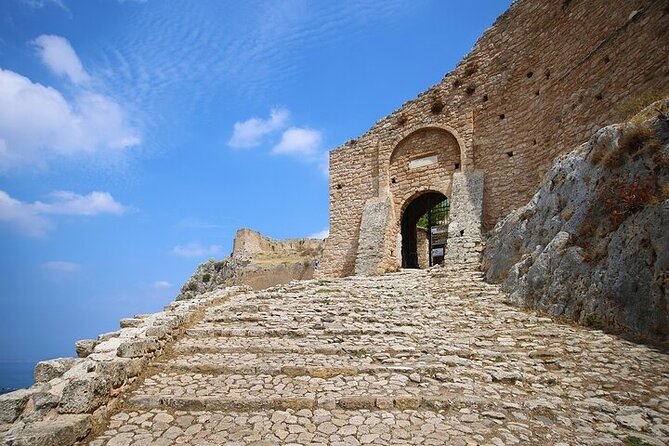
Acrocorinth rises high above the plain, on a monolithic rock listed at 1,886 feet above sea level. Its walls run for about 4.9 miles, and its position made it a formidable defensive site. The visit lasts about an hour and brings together Greek, Roman, Byzantine, Ottoman, Frankish, and Christian remains.
You can see the fortress keep and three gates, along with remains of churches, mosques, houses, and cisterns. A Frankish tower adds another layer to the site. The remains of the Temple of Aphrodite are also discussed, as are the old stories of Pegasus and Bellerophon.
The views are a major reason to come. From the height, you can look toward the valley, the Corinthian Gulf, and the Saronic Sea. This is one of the moments when the geography explains the history better than a paragraph in a guidebook.
The Hadgimoustafa spring adds an unusual detail. The fountain was built during the Ottoman period in 1555, and water from the Upper Peirene spring still flows there. The site’s mythology links the spring to Pegasus striking the ground with his hoof while trying to escape Bellerophon and the goddess Athena.
Acrocorinth may be the day’s most demanding stop. The height, fortifications, and varied remains suggest uneven ground and walking, although the tour information does not specify a difficulty rating. Wear sensible shoes, and tell the guide if you need a slower pace. The private vehicle and flexible format make that conversation easier than on a large group excursion.
A few more Athens days worth a look
- Best of Athens Half Day Private Tour
★ 5.0 · 3,714 reviews - Athens Full Day Private Tour
★ 5.0 · 2,903 reviews - Athens Airport Private Arrival Transfer with Meet & Greet
★ 4.5 · 1,495 reviews - Athens Airport to Athens Hotels Private Arrival Transfer
★ 5.0 · 947 reviews
Ancient Corinth, Paul’s city and Christian art
The next portion centers on Ancient Corinth, also called Archaia Korinthos. This is where the tour puts Paul’s life alongside the later Christian memory of him.
At the Neo Byzantine church of the Virgin Mary, you will see marble plaques referring to First Corinthians 13, including the teaching that love is the greatest virtue. The setting gives the familiar passage a physical anchor. I find this particularly meaningful if you know the chapter from worship or personal study.
A second Neo Byzantine church is dedicated to Paul. Inside, the guide discusses Paul’s life in Corinth and the Vision of the Apostle Paul. A mosaic by Vlasis Tsotsonis shows Saul on the road to Damascus in 34 AD, before his conversion. The discussion continues through the light and voice that changed Saul’s path, his baptism by Ananias, and the hardships that followed.
The guide also addresses the episode before Gallio, described in Acts 18:12 to 17. This helps place Paul’s ministry inside the civic and legal life of Corinth. You are not only hearing about a preacher in a distant age. You are considering how his work met local officials, trade networks, religious practices, and social pressure.
This church visit lasts about 40 minutes. Its appeal depends on your interests. If you prefer untouched ancient remains, the Neo Byzantine interiors may feel less essential. If you want a Christian interpretation of the site, the churches and mosaics provide a clear link between the ancient city and later faith.
The museum and Roman marketplace
The Archaeological Museum of Corinth and the nearby archaeological site receive about 1 hour and 40 minutes. The museum holds objects from Corinth and smaller nearby sites, with material from Greek, Roman, Byzantine, and Ottoman periods.
The museum is useful because it gives you objects to match the stones outside. It also broadens the story beyond Paul. Corinth did not belong to a single era, and the layers on display help you see how the city changed over time.
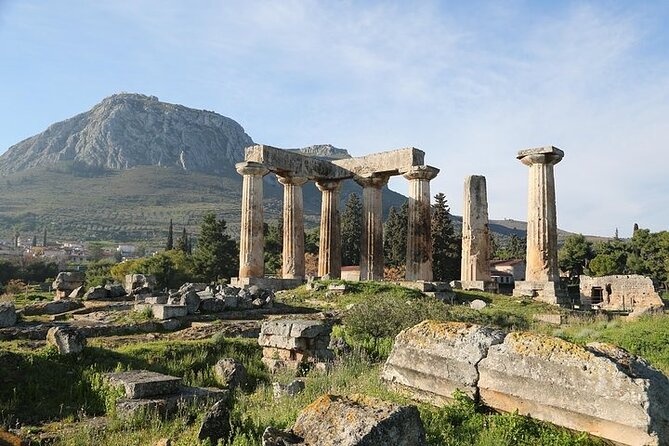
Outside, the Temple of Apollo is an early Doric temple, built around 560 BCE. Its monolithic Doric columns are unusual and give the site a strong visual center. The temple is older than Paul, but it helps establish the religious world into which Christianity entered.
The Roman Agora shows Corinth in its later commercial form. You can see central shops, small temples and altars, Roman buildings, the ancient amphitheater, the Roman Odeon, the Glaukus Fountain, Roman baths, the Lechaion Road, and the Roman forum.
The Roman Agora is especially important for understanding Paul’s setting. This was a public and commercial city, not an isolated religious retreat. A guide who knows both the archaeology and the biblical text can explain why a marketplace, court, road, or harbor mattered to Paul’s work.
The entrance fee to the Ancient Corinth archaeological site is not included. The tour information also says that a licensed guide to accompany you into the site and museum is not included. Your professional driver-guide provides the main interpretation, but you should understand that this may not be the same service as a separately licensed archaeological guide. If formal archaeological commentary matters to you, ask the operator before paying.
Lunch in Ancient Corinth or by the sea
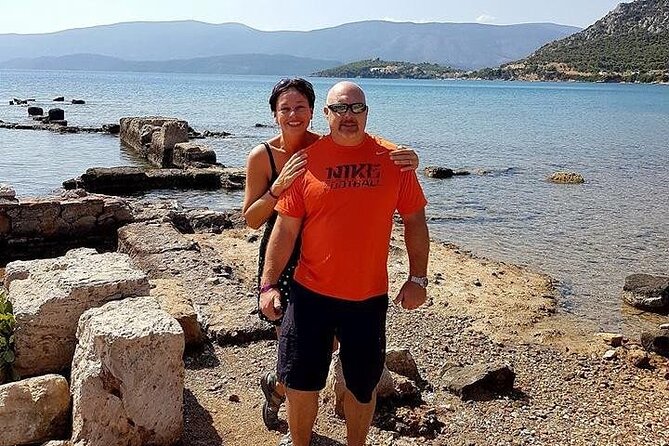
Lunch is scheduled for about 1 hour and 20 minutes, with a choice between a village-style meal in Ancient Corinth or a seaside meal at the Baths of Helen of Troy. Food and drinks are extra.
I like having this choice because it lets you set the mood. A village meal keeps you close to the archaeological area and may suit a day focused on Corinth. The seaside option gives you a quieter break after the museum and ruins.
Tas is specifically praised for his restaurant choice, and Peter is described as attentive to practical needs such as snacks, water, and bathroom stops. Those details matter on a long private outing. You can ask for help with timing and local choices instead of losing time trying to solve lunch on your own.
Since the tour price does not include food, budget for the meal separately. The long lunch stop also means this is not a rushed archaeological dash. You get time to sit down, eat, and process what you have seen.
Kenchreai and Paul’s departure for Ephesus
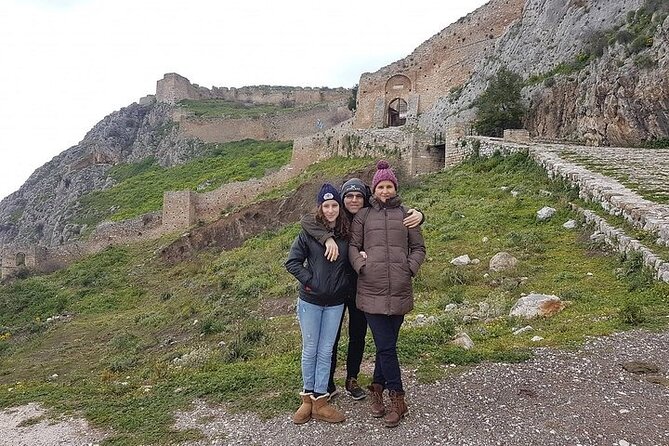
The final Corinth stop is the ancient port of Kenchreai, also called Cenchreae, on the Saronic Sea. It was one of Corinth’s two ports and gives the day a fitting close.
Here the guide traces Paul’s departure from Corinth in 53 AD as he sailed toward Ephesus with Aquila and Priscilla. The discussion includes the Nazarite vow and the cutting of Paul’s hair, connected with Acts 18:18.
Kenchreai is valuable because it completes the route. You have seen the road that helped Corinth control movement, the city where Paul worked, and the harbor through which he left. The port also gives you a calmer coastal setting after the fortress and crowded urban remains.
The stop lasts about 30 minutes, followed by a return drive to Athens of roughly 70 minutes. By then, you will have spent a full day moving through several periods and themes. The private vehicle is most useful on the way home, when a group can rest instead of managing a public connection.
What the $312.83 price includes
At $312.83 per person, the tour costs more than a basic shared excursion. The value rests in what the private setup gives you: hotel or port pickup and drop-off, a private air-conditioned premium vehicle, WiFi, bottled water, and a full day with a professional driver-guide.
You are also paying for a focused route that would be awkward to arrange independently in one day. The Diolkos, Acrocorinth, Ancient Corinth, museum, lunch area, and Kenchreai are not one compact monument. Private transport saves the trouble of coordinating each leg.
The price makes the most sense for a family, church group, couple, or small party that wants biblical context and personal attention. Group discounts may improve the value for larger private parties. For one person or a pair on a tight budget, the cost may feel high, especially after adding lunch and the archaeological entrance fee.
The main omission is the Ancient Corinth admission ticket. Food, drinks, tips, and gratuities are also extra. Confirm the current entrance cost and ask what exact guiding is provided inside the museum and site before booking.
Who will get the most from this day
I would choose this tour if Paul’s letters and the early Christian church are central to your trip. It works especially well for pastors, church groups, Bible-study groups, and families who want to discuss the New Testament in the places where its events unfolded.
It also suits history-minded visitors who enjoy connecting trade, geography, politics, and religion. The Diolkos and Corinth Canal give useful context, while Acrocorinth and the Roman Agora provide a broad run through the region’s past.
The private format helps families and mixed-age groups. Peter’s careful attention to water, snacks, and bathroom needs is a useful example of the kind of practical care you can expect from a guide who takes the group’s comfort seriously. Still, you should be ready for a long day with several stops and likely walking over historic ground.
The tour is less suitable if you want only Athens highlights, a short excursion, or a purely archaeological visit led by a licensed specialist. It is built around Paul and Christian interpretation, with archaeology supporting that main purpose.
Practical details before you reserve
The experience lasts about eight hours and includes pickup from an Athens hotel, Airbnb, apartment, or port. It is private, so only your group participates, and group discounts are available.
Confirmation is provided at booking, and most people can take part. The tour offers free cancellation up to 24 hours before the start time for a full refund. Changes or cancellations inside that 24-hour window are not accepted for a refund.
Bring comfortable shoes, water-friendly planning for a warm day, and room in your budget for lunch and admission. Bottled water and WiFi are included in the vehicle, but food and drinks are not.
Because the named guides praised for this experience are Peter and Tas, you can ask Ancient Greece Tours & Transfers whether one of them will lead your date. The company provides a professional driver-guide versed in ancient, biblical, and modern Greek history, but a specific guide is not guaranteed in the information available.
Should you book this Corinth tour?
Book it if you want more than a quick photograph at Corinth. The strongest feature is the way the day joins Paul’s movements to actual roads, churches, ruins, court life, and a harbor. Guides such as Peter and Tas add warmth and practical care, which matters during a long private outing.
I would skip it if the $312.83 price per person strains your budget or if you want a formal archaeological guide included. You also need to pay separately for lunch, drinks, gratuities, and the Ancient Corinth entrance fee.
For the right audience, this is a meaningful and well-planned day from Athens. You return with more than a list of ruins. You can picture why Corinth mattered, why Paul stayed, and how his work reached beyond one city.
FAQ
How long does the private Corinth tour last?
The experience lasts approximately eight hours, including the journey from Athens, the Corinth-area stops, lunch, and the return drive.
Where can pickup take place?
Pickup and drop-off are offered from your chosen hotel, Airbnb, apartment, or port in Athens.
Is the tour private?
Yes. Only your group participates in this private activity.
Is lunch included in the price?
No. Food and drinks are not included. Lunch is scheduled for about 1 hour and 20 minutes, with a choice between Ancient Corinth and the Baths of Helen of Troy.
Is the Ancient Corinth entrance fee included?
No. The entrance fee for the Ancient Corinth archaeological site is extra.
Is a licensed guide included inside the museum and archaeological site?
No licensed tour guide accompanying guests into the site and museum is included. The experience does include a professional driver-guide with knowledge of ancient, biblical, and modern Greek history.
Can I cancel for a full refund?
You can cancel at least 24 hours before the experience start time for a full refund. Cancellations or changes made less than 24 hours before the start time are not accepted for a refund.
Freshly added Athens trips
- Private Half Day to Ancient Corinth★ 5.0 · 3 reviews
- Full day Mycenae – Nafplio – Epidavros private tour★ 5.0 · 3 reviews
- From Athens: 2-Day Meteora Trip with Tansportation & Hotel★ 5.0 · 3 reviews
- Athens Half Day Small Group Shopping Tour★ 5.0 · 3 reviews
- Athens & Corinth: Guided Christian Tour in Paul’s Footsteps★ 4.0 · 3 reviews
- Nemea wine roads, The most famous wine tour in Greece★ 4.5 · 3 reviews
- Athens: Greek Wine & Olive Oil Tasting at Brettos Plaka★ 4.5 · 3 reviews
- Santorini Dinner Class with Margarita in Athens★ 5.0 · 3 reviews
Apostle Paul & Biblical Tours, compared.
Biblical Tour Letters ToThe Corinthians St Paul’s Footsteps 6Hour
Read our review →
Private Biblical Tour Ancient Corinth & Isthmus Canal from Athens
Read our review →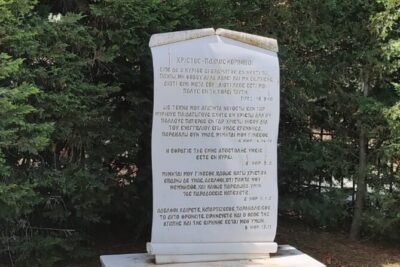
Private Tour of Apostle Paul’s Footsteps in Ancient Corinth
Read our review →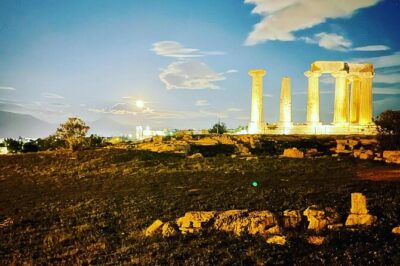
Private Luxury Biblical Tour: Apostle Paul in Athens & Corinth
Read our review →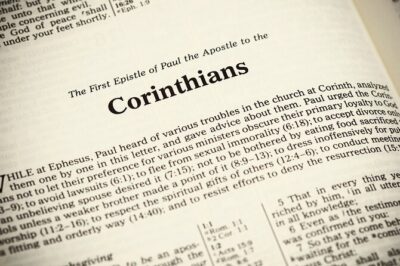
Private Luxury Biblical Tour: Apostle Paul’s Footsteps – Corinth
Read our review →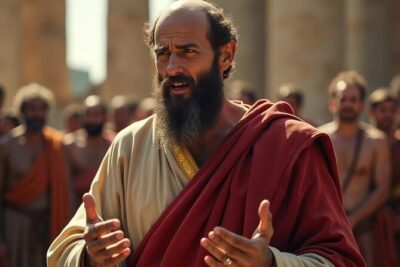
Ancient Athens Corinth Biblical Tour Following Paul 51.A.D
Read our review →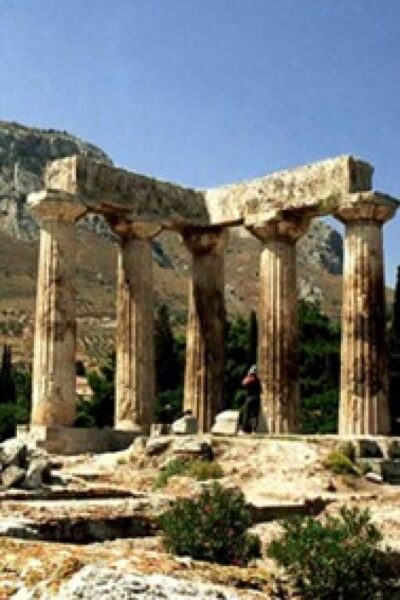
Browse the lists this tour appears in