
Reviewed · METEORA TOURS
Explore Central Greece with an affordable 2 days tour to Meteora
The best part of this two-day trip is the contrast. You move from the battlefield at Thermopylae to the ancient sanctuary of Delphi, then wake near the astonishing rock pillars of Meteora and visit centuries-old monasteries perched above the Thessalian plain. It is a lot of Greece in a short time, but the route has real variety.
I like the private vehicle and door-to-door pickup most. Your group of up to three does not have to wait for a large coach, and the driver can adjust stops for food, photographs, or a needed break. I also like the one-night stay near Meteora, which gives you a better chance to see the rocks in changing light instead of rushing back to Athens the same day.
The main drawback is the pace. Delphi, Thermopylae, and Meteora are spread across Central Greece, so you will spend many hours on the road. Entrance fees are extra, and the driver cannot enter archaeological sites or museums as a licensed guide unless you pay for that service separately.
In This Review
- Key points to know before booking
- What the two-day route really covers
- Thermopylae and the Leonidas monument
- Delphi requires proper shoes and extra time
- Your night near Meteora
- Meteora: the reason to make this trip
- Great Meteoron Monastery
- Saint Stephen Monastery
- Saint Nicholas Anapafsas
- Varlaam Monastery
- Holy Trinity Monastery
- Rousanou, Saint Barbara
- Private car value versus a large bus
- Fitness, clothing, and practical planning
- Who should book this Central Greece tour?
- Should you book it?
- FAQ
- Where does this tour begin?
- Can cruise passengers join the tour?
- Is Athens Airport pickup available?
- How many people can join the private tour?
- What language does the driver speak?
- Is a licensed guide included inside Delphi and the museums?
- Is accommodation included?
- Are entrance fees included?
- Is food included besides breakfast?
- How much walking is involved?
Key points to know before booking
- Private travel for up to three: You get a dedicated, air-conditioned vehicle rather than a seat on a large group bus.
- Three major historic settings: Delphi, Thermopylae, and Meteora each offer a very different experience.
- One night near Meteora: Accommodation includes bed and breakfast in a 3-star or family-style boutique hotel.
- Driver-led touring: Your English-speaking driver shares history and local context outside the archaeological sites and museums.
- Several Meteora monasteries: The planned visits include Great Meteoron, Saint Stephen, Saint Nicholas Anapafsas, Varlaam, Holy Trinity, and Rousanou.
- Physical effort matters: Steps, slopes, and walking paths make comfortable shoes essential, especially at Meteora and Delphi.
What the two-day route really covers
This is not a slow village tour. It is a private road journey through Attica, Sterea Ellada, and Thessaly, linking some of mainland Greece’s best-known ancient and religious sites.
The opening drive takes you out of Athens through Attica, the region around the capital. The route places the city in a wider setting: Athens was not an isolated classical center, but part of a region shaped by thousands of years of settlement, art, religion, and political change. You will pass through Central Greece toward places such as Thebes, Livadia, and Arachova before reaching Delphi.
That geography is part of the appeal. From the car, you see Greece change from the dense capital area to mountain roads, farming country, and highland towns. The driver is also useful here. Panos, named in several accounts of this experience, was especially praised for explaining local history, handling stops, and helping a family keep the day moving. Your driver may be someone else, but the format is the same: an English-speaking professional who can explain the route and help with practical decisions.
More Meteora trips from Athens:
- Athens: Meteora Monasteries Day Trip with Caves and Lunch
★ 4.7 · 2,964 reviews - Athens: Meteora Monasteries Day Tour with Lunch
★ 4.8 · 2,196 reviews - Athens: Meteora Tour with Local Guide and Greek Lunch
★ 4.8 · 1,561 reviews
Thermopylae and the Leonidas monument
Thermopylae is a short but worthwhile stop, usually about 20 minutes at the historic area, followed by around 10 minutes at the Leonidas monument. The name means Hot Gates, referring to the sulfur springs that once marked the narrow coastal passage.
The famous battle took place in 480 BC, when Greek forces attempted to block the much larger Persian army led by Xerxes. King Leonidas and his Spartans have become the best-known figures in the story, but the final defense also included Thespian and Theban soldiers. The site is remembered for discipline, sacrifice, and the use of difficult ground to strengthen a smaller force.
There is an important geographic detail here. The ancient pass is no longer as narrow as it was in antiquity because deposits from the Spercheios River pushed the shoreline several kilometers away. The monument beside the modern road therefore requires a little imagination. You are not looking at the exact battlefield in its original form, but you are visiting the place associated with one of the ancient world’s most famous military stands.
The stop works best as a history lesson rather than a full archaeological visit. There is no entrance fee listed for the monument, and the visit is brief. If you enjoy Greek history, it gives the long drive a strong sense of place. If you want a major ruin complex, Thermopylae may feel modest.
Delphi requires proper shoes and extra time
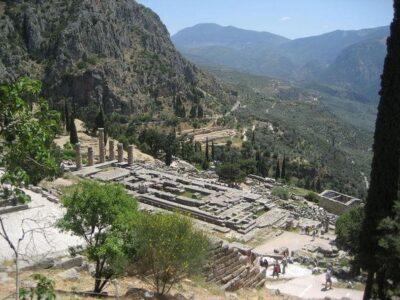
The route continues through Central Greece toward Delphi, passing near Thebes, Livadia, and Arachova. Delphi was one of the ancient Greek world’s most important religious centers, and the archaeological site includes temples, treasuries, a theater, and a stadium set on sloping ground.
The schedule identifies a visit to the archaeological site, but it does not give a fixed duration. That matters because Delphi is not a quick roadside photo stop. You need time to walk uphill and downhill between the remains, and the museum adds another layer of context through its sculpture and architectural pieces.
Wear proper walking shoes. A review of the experience specifically pointed out that the Temple of Athena Pronaia is reached down sloping paths, and platform sandals made the visit harder. The ancient stadium also requires effort, but the climb is described as worthwhile. Bring water, sun protection, and a hat in summer.
The driver can explain the story of Delphi before you enter, but drivers are not licensed to accompany you inside archaeological sites or museums. If you want a full interpretation of the ruins while walking among them, arrange a licensed guide for an additional fee. This is one of the tour’s most important distinctions. You receive useful orientation, not a formal guided museum visit.
Arachova is part of the drive rather than a separately timed attraction in the supplied schedule. The mountain town is a pleasant name to hear along the route, but do not assume you will have a long independent visit there unless your operator confirms it.
Your night near Meteora
After Delphi and Thermopylae, you continue north toward Kalabaka, the town at the foot of Meteora. The overnight stay is in a 3-star or family-style boutique hotel and includes breakfast.
This overnight stop is a major reason to choose the private two-day format. A same-day Athens to Meteora trip can show you the rocks, but it leaves little room for a relaxed evening or early start. Here, you can settle into Kalabaka or nearby Kastraki, eat a traditional Greek dinner, and see the rocks in evening light if conditions and timing allow.
The accommodation is described as comfortable, with one account noting nicely furnished rooms and a hearty breakfast. The driver can also help you choose a restaurant. In one case, Panos took a family to a local place for a traditional dinner and even helped arrange a memorable drink. That sort of personal assistance is useful after a long day on the road, though restaurant choice and hotel style can vary.
Kastraki is the smaller village among the Meteora rocks. It has tavernas, guesthouses, and a strong connection to climbers and the monastic area. Kalabaka is the larger base. Ask at booking which town your accommodation will be in, since that affects the feel of your evening.
A few more Athens days worth a look
- From Athens: Delphi and Meteora 2-Day Guided Tour
★ 4.5 · 825 reviews - 2-Day Tour to Delphi & Meteora with Guide and Tickets From Athens
★ 4.0 · 692 reviews - From Athens: Delphi and Meteora 2-Day Tour with Hotel
★ 4.4 · 392 reviews - Athens: 2 Days in Meteora with 2 Guided Tours and Hotel Stay
★ 4.7 · 376 reviews
Meteora: the reason to make this trip
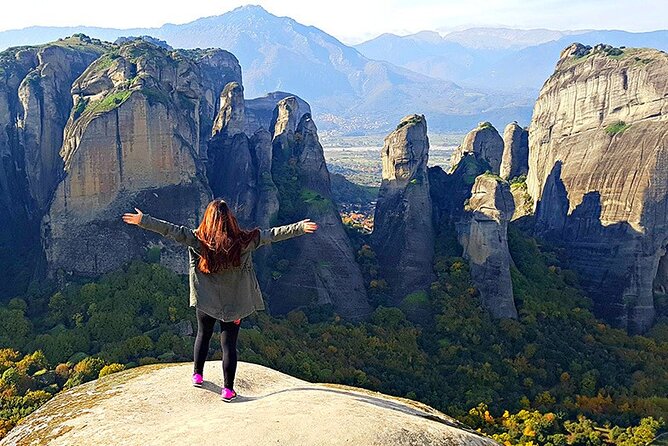
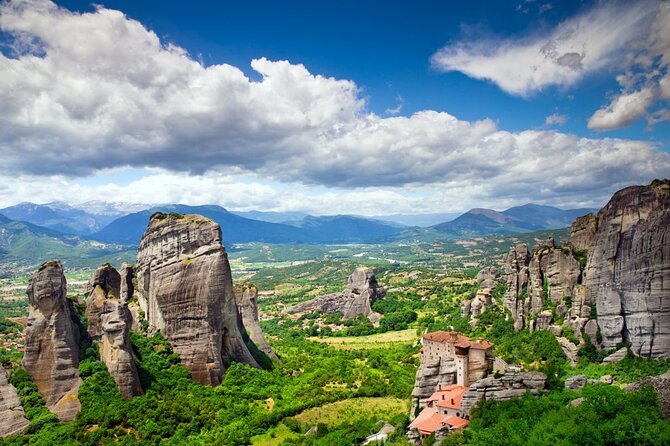
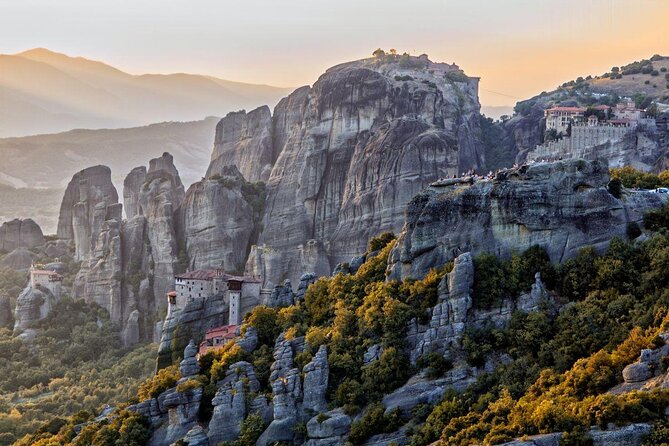
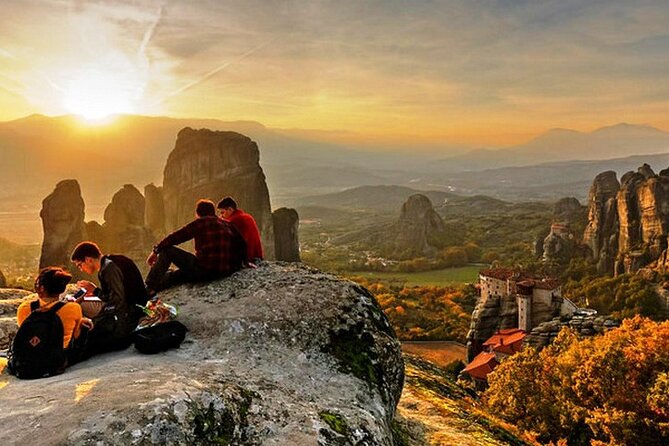
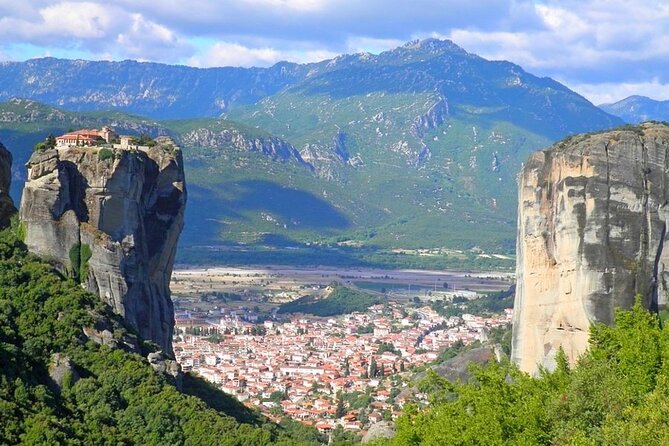
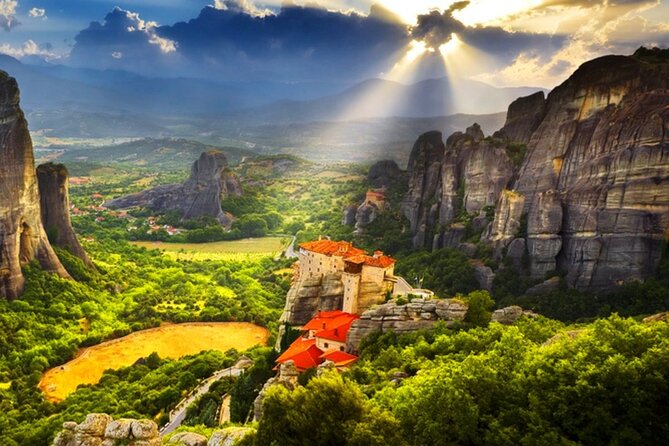
Meteora is a collection of enormous rock pillars rising above the Thessalian plain. Monks built monasteries on these hard-to-reach formations from the medieval period onward, creating one of Greece’s most striking religious centers.
Six monasteries remain active or visitable as part of the main complex. The entire area was added to the UNESCO World Heritage List in 1988. The rocks are not meteorites, despite the similar sound of the name. Meteora refers to something suspended in the air, a fitting description for monasteries perched high above the surrounding country.
The road between the monasteries is one of the strongest parts of this private tour. Your driver can stop at safe roadside viewpoints for photographs and help you avoid wasting time. The schedule lists visits to six monasteries, but opening days and hours can change, and you should not assume every monastery will be open during your visit.
Great Meteoron Monastery
Great Meteoron is the oldest and largest of the Meteora monasteries. Founded in the 14th century by Saint Athanasios the Meteorite, it became the center of organized monastic life on the most imposing rock.
Allow about 90 minutes for this visit, not counting the drive. The monastery has the grandest scale in the complex, and its commanding position helps you understand how the community developed in such an isolated place. The entrance fee is not included.
Saint Stephen Monastery
Saint Stephen is a useful choice for anyone concerned about difficult climbs. It has a bridge leading to the monastery, unlike several sites that require long stairways from the road.
The monastery’s origins reach back to the late 12th century, with later construction in the 14th through 16th centuries. Its church is dedicated to Saint Charalambos, and the complex took much of its present form through later building work. Plan around 40 minutes, with entrance fees extra.
Saint Nicholas Anapafsas
Saint Nicholas Anapafsas is compact and vertically arranged because it occupies a small rock plateau. Its buildings rise in successive levels, giving the visit a very different character from the larger Great Meteoron.
The monastery’s monastic life began in the 14th century, and it was renewed in the early 16th century. You will find a small chapel, a crypt, a church, former dining spaces, and frescoes. The planned stop is about 40 minutes, and admission is not included.
Varlaam Monastery
Varlaam takes its name from the hermit who first lived on the rock in the 14th century. The present monastery developed in the 16th century under the brothers Theophanes and Nektarios Apsaras.
The complex includes the Church of All Saints, the Chapel of the Three Hierarchs, and a winch tower that recalls the practical challenge of building and supplying a monastery in this location. The stop is scheduled for about 40 minutes. As at the other monasteries, you pay the entrance fee separately.
Holy Trinity Monastery
Holy Trinity is among the most dramatic sites in Meteora, but it demands more from your legs. You first follow a pedestrian path downhill toward the cliff, then climb 145 carved steps.
The reward is a high viewpoint with broad views toward the other monasteries and rock formations. The monastery’s oldest building phase dates to the 15th century, with later frescoes and chapels added over time. Allow about 40 minutes, but give yourself extra time if you walk slowly or want photographs.
Rousanou, Saint Barbara
Rousanou is now a nunnery and occupies a smaller rock linked by a bridge and steps. The present complex took shape in the 16th century, although the rock had been used by monastics earlier.
The main church is dedicated to the Transfiguration and also honors Saint Barbara. Restoration work in the 20th century helped return the monastery to use. The planned stop is about 40 minutes, with admission extra.
You may not enter all six monasteries in one day. Opening schedules, religious observances, seasonal hours, and short-term closures can affect the plan. The private car still helps because you can see the exterior viewpoints and move efficiently between open sites.
Private car value versus a large bus
The cost is $1,781.17 per group of up to three, which works out to about $593.72 per person if three people share the vehicle. That is not a low-cost choice for one person or a couple. It becomes easier to justify when three people split the price and value time, privacy, and door-to-door service.
The included package covers an English-speaking driver, a private air-conditioned vehicle, bottled water, breakfast, and the overnight accommodation. It does not cover archaeological entrance fees, museum tickets, lunches, dinners, drinks, or a licensed guide inside the sites.
The strongest value is flexibility. On a large bus, you follow the group’s clock and may wait while others return from a monastery. With a private driver, you can ask for a bathroom break, a food stop, or a safe photograph stop. One account described moving in and out of the monasteries while large groups were still waiting in the heat. That advantage matters at busy Meteora, where stairs and crowded entrances can slow a group.
The tradeoff is that the driver is not a licensed guide. If you want detailed explanations at Delphi and inside each monastery, budget for a separate guide. The driver can explain Greek history and culture until you enter the archaeological areas and museums, then you explore independently unless a licensed guide has been arranged.
Fitness, clothing, and practical planning
This tour suits you best if you can handle long car journeys and moderate walking. The provider advises a strong level of physical fitness, and that is especially relevant at Delphi and Holy Trinity.
Pack:
- Comfortable walking shoes with a firm sole
- A hat and sunscreen for summer
- Water, although bottled water is included
- Clothing suitable for Orthodox monasteries
- A phone or camera for the many viewpoints
The supplied information recommends comfortable shoes, sunscreen, and hats. It does not state the exact dress rules for each monastery, so confirm current requirements before departure. Religious sites may restrict bare shoulders or very short clothing.
Pickup is offered from your hotel, with the meeting point at the main entrance. Cruise passengers meet outside the terminal exit, where the driver waits with a sign. Athens Airport transfers can be arranged on request. The return is to the same pickup location unless another arrangement is confirmed.
Traffic and local conditions can change the timing. Site closures can also happen at short notice, even when the operator checks ahead. Build a little patience into your plans and avoid booking a tight connection immediately after the return.
Who should book this Central Greece tour?
I would choose this trip for a small family, three friends, or a couple who want to cover major mainland sights without joining a bus group. It works especially well if you care about personal service, photography stops, and avoiding wasted time at busy sites.
It is also a good match for anyone interested in ancient Greek history and Orthodox monasteries. Delphi and Thermopylae provide the historical foundation, while Meteora supplies the visual drama. The overnight stay prevents Meteora from becoming a rushed photo call.
I would think twice if your ideal holiday means slow mornings, long meals, or deep time at one archaeological site. Two days is enough for highlights, not a full study of Delphi or every corner of Meteora. Solo visitors may also find the price hard to justify.
Should you book it?
Book this tour if you want maximum coverage with minimum group hassle, and if three people can share the cost. The private vehicle, hotel pickup, overnight stay, and driver assistance make the route more comfortable than a standard coach excursion.
Before paying, confirm the hotel location, the likely monastery opening schedule, the exact entrance costs, and the fee for a licensed guide. If those details suit your budget, this is an efficient and memorable way to connect Athens with Delphi, Thermopylae, and Meteora in just two days.
Cancellation terms are strict close to departure: a full refund requires cancellation at least six full days ahead, with a 50 percent refund available two to six days before departure. Cancellations less than two days before the start are not refunded.
FAQ
Where does this tour begin?
The tour begins with pickup from your hotel in Athens. You meet the driver at the main entrance.
Can cruise passengers join the tour?
Yes. Cruise passengers should walk outside the terminal exit, where the driver waits with a sign bearing the passenger’s name.
Is Athens Airport pickup available?
Airport transfers can be arranged on request.
How many people can join the private tour?
The listed price covers a group of up to three people.
What language does the driver speak?
The tour is offered in English, and the package includes a professional English-speaking driver.
Is a licensed guide included inside Delphi and the museums?
No. The driver can explain the history and culture before you enter, but drivers are not licensed to accompany you inside archaeological sites and museums. A licensed guide can be arranged for an additional cost, subject to availability.
Is accommodation included?
Yes. The tour includes one night of bed-and-breakfast accommodation in a 3-star or family-style boutique hotel.
Are entrance fees included?
No. Entrance fees for archaeological sites, museums, and the Meteora monasteries are not included.
Is food included besides breakfast?
No. Breakfast is included, but other food and drinks are not.
How much walking is involved?
A moderate amount of walking is involved, and the provider advises a strong physical fitness level. Holy Trinity requires a downhill path and 145 carved steps, while Delphi also includes sloped paths and uphill walking.
Freshly added Athens trips
- Athens and Ancient Corinth Private from Athens★ 5.0 · 3 reviews
- From Athens: Mycenae and Epidaurus Private Tour★ 4.8 · 3 reviews
- Full day Meteora private tour★ 5.0 · 3 reviews
- Double Shore Dive (certified divers)★ 4.5 · 3 reviews
- Athens Hills: Mythology Treasure Hunt★ 5.0 · 3 reviews
- Sunset & swimming at Cape Sounio, Poseidon temple★ 5.0 · 3 reviews
- Philosophy Experience at Plato’s Academy Park – basic version★ 5.0 · 3 reviews
- Private Acropolis Tour – Ticket Included★ 5.0 · 3 reviews
Meteora Tours, compared.
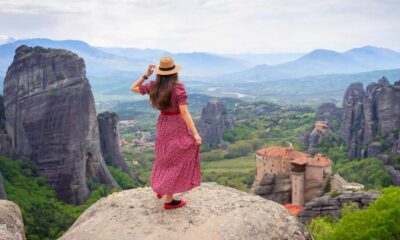
Meteora Monasteries Day Trip with Caves and Lunch
Read our review →

Meteora Tour with Local Guide and Greek Lunch
Read our review →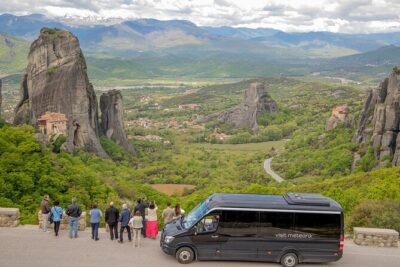
Meteora Monasteries, Caves & Coastal Stopovers with Lunch
Read our review →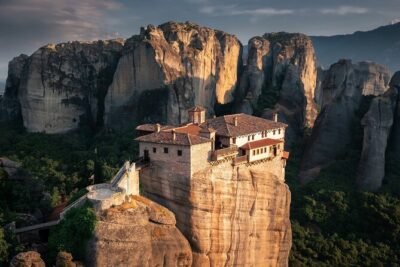
Meteora Monasteries & Caves DayTrip from Athens with Greek Lunch
Read our review →
4-Day Classical Greece Tour: Epidaurus, Mycenae, Olympia, Delphi, Meteora
Read our review →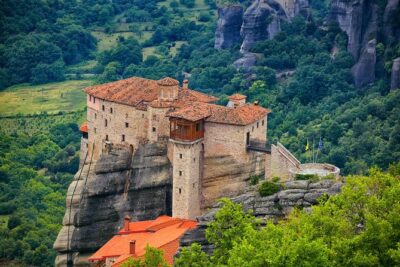
Meteora Monasteries, Hermit Caves Tour with Pickup
Read our review →Browse the lists this tour appears in