
Reviewed · DELPHI TOURS
Best of Greece: 7-Day Tour to Real Greece of the Peloponnese, Delphi and Meteora
The best part of this seven-day trip is its sweep. You go from Mycenaean ruins and Venetian castles to wild Mani villages, Byzantine monasteries, Delphi, and the cliff-top monasteries of Meteora. This is mainland Greece at full scale, not a quick island sampler.
I like the thoughtful food stops, where your driver-guide can steer you toward local dishes instead of standard tourist menus. I also like the private format, which lets you adjust the pace and make room for places such as Vathia, Nafpaktos, or a sunset view at Meteora. The main drawback is the amount of time in the vehicle. Seven days cover a lot of ground, and some days are long.
In This Review
- Key points at a glance
- Why this route shows you a broader Greece
- Day one: canal views, Mycenae, and Nafplio
- Day two: the coastal road to Monemvasia
- Day three: the wild Mani Peninsula
- Day four: Olympia and the stone villages of Arcadia
- Day five: the Cave of the Lakes and the Odontotos railway
- Day six: Delphi, Amfissa, and first views of Meteora
- Day seven: Meteora and Thermopylae
- What the $5,046.26 price means
- Who should book it
- Should you book this Greece tour?
- FAQ
- How long does the tour last?
- Is this a private tour?
- Where can pickup take place?
- Are entrance fees included?
- Is a professional licensed guide included?
- Which monasteries at Meteora will you visit?
- What is the cancellation policy?
Key points at a glance
- Seven major Greek regions in one trip: Corinth, Argolis, Mani, Arcadia, Delphi, Meteora, and Thermopylae all fit into the route.
- Private touring with a personal driver-guide: Theo, Panayiotis, or another Eudaimonia guide handles the roads, timing, and local meal choices.
- Seven included lunches: Food is not an afterthought, with stops built around Greek coffee, mountain villages, seaside towns, and regional cooking.
- Accommodation is part of the package: Six breakfasts and six hotel nights are included, with the operator promising its best available accommodation, including a distinctive five-star hotel.
- Ancient sites cost extra: Budget about €120 per person for entrance fees, plus any optional professional guide.
- A demanding but rewarding route: Expect moderate physical activity, stairs at Palamidi and Meteora, and long drives through mountainous country.
Why this route shows you a broader Greece
Many first trips to Greece concentrate on Athens and the islands. This tour takes a different approach. It begins in Athens, then crosses the Corinth Canal and works through the Peloponnese before turning north toward Delphi and Meteora.
That matters because the Peloponnese is not one single kind of place. You get orange groves and olive trees, seaside ports, mountain villages, stone-built settlements, medieval fortresses, and some of the country’s most important archaeological sites. The route also gives you a useful sense of distance. Ancient Greece was not just temples in sunny fields. It was a world of mountain passes, fortified towns, ports, farming villages, and hard roads.
The private setup is especially useful here. Roads in the Peloponnese and central Greece can be winding, and the schedule has several possible changes. A driver-guide can decide when a short stop is worthwhile and when it is better to keep moving. Previous trips with Theo and Panayiotis were praised for safe driving, good timing, food choices, and a knack for knowing when to talk and when to let the scenery speak.
You should still understand what this is: a sightseeing circuit, not a slow village holiday. You change hotels each night or nearly every night, and the route covers a great deal of territory.
More Delphi day trips:
- Athens: Mythology of Delphi, Museum and Arachova Guided Tour
★ 4.6 · 4,008 reviews - From Athens: Delphi Full Day V.R. Audio Guided Tour
★ 4.6 · 3,028 reviews - From Athens: Small-Group Delphi, Museum & Arachova Day Trip
★ 4.8 · 2,476 reviews
Day one: canal views, Mycenae, and Nafplio
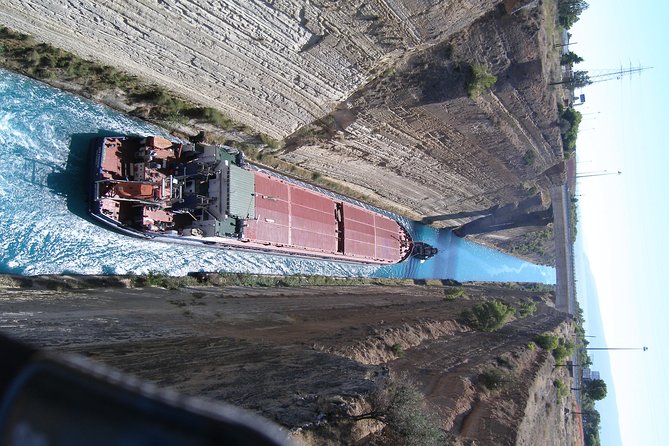
The Corinth Canal is a brief opening stop, only about 15 minutes. It is free and easy to see, but do not expect a full visit. You get a quick look at the narrow cut that separates the Peloponnese from mainland Greece and links the Gulf of Corinth with the Saronic Gulf.
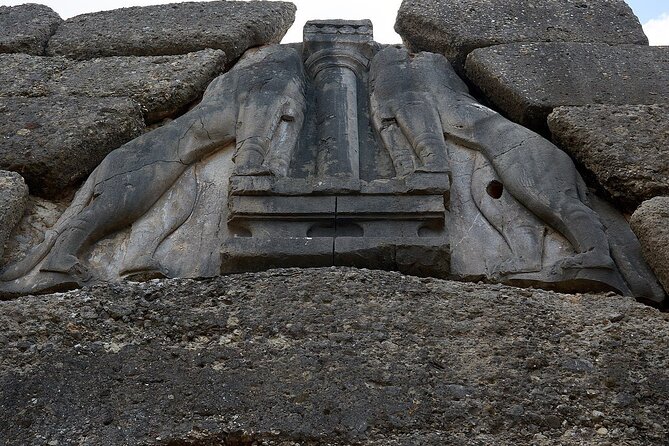
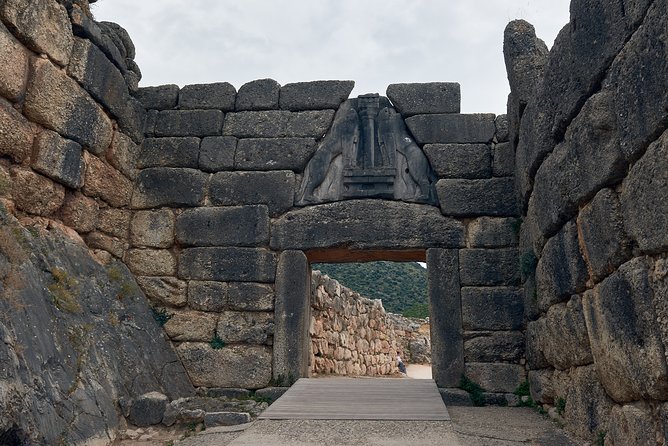
Mycenae deserves the first serious block of time, about two hours. This UNESCO-listed site was tied to the Mycenaean civilization and the legendary King Agamemnon. The setting is stark and powerful, with massive stonework and broad views across Argolis. The archaeological museum helps put the ruins into context, so I would not treat the site as a quick photo stop.
Entrance is not included, and you will need decent footwear. The ground is uneven, and the site involves walking in open sun.
Nafplio is a welcome change of mood. Its old town, waterfront, and romantic streets make it one of the prettiest stops on the route. You have about two hours to explore, followed by a visit to Palamidi Castle.
Palamidi is the more physical part of the afternoon. The itinerary allows about 40 minutes, and the famous descent toward the old town includes the often-cited 999 steps. Even if you do not walk every step, the fortress has fine views and a strong Venetian character. People with knee problems should ask about the exact plan before setting out.
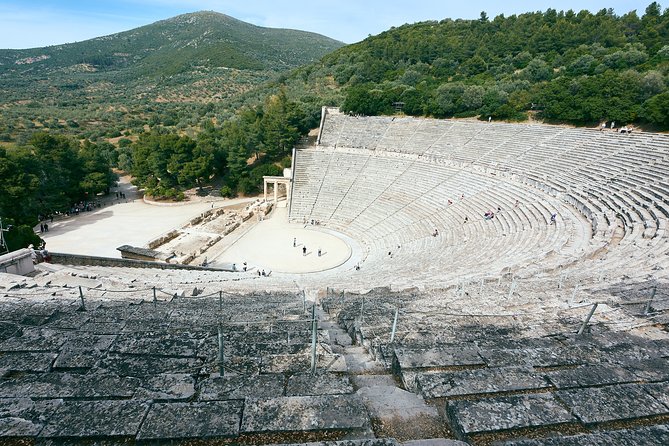
The ancient theater at Epidaurus receives another two hours. Its preservation and acoustics make it one of Greece’s most satisfying ancient monuments. You can understand the theater’s design without needing much imagination. Ancient Corinth is listed as an optional stop, and an evening ride to Nafplio port and old town is also available for dinner and a stroll.
Day two: the coastal road to Monemvasia
Day two leaves the main motorway and follows the coast toward Tyros. That choice is important. You trade speed for sea views, small settlements, and a better feel for the eastern Peloponnese.
Tyros is a short coffee break by the water. Then the road climbs into the Parnon range, where Leonidio brings a sharp change in scenery. Red rock walls and the Dafonas Gorge give the town a dramatic setting. Leonidio is also known in Greece for its sweet eggplant, a useful reminder that regional food is part of the trip’s design.
The cliff-hanging Monastery of Panagia Elona gets about 30 minutes. The stop is short, but the red rock views are the main reason to pause. Roads through this area are mountainous, so anyone prone to motion sickness should plan accordingly.
Kosmas is one of the route’s strongest food and village stops. Lunch takes place under large plane trees in the traditional main square. This is the sort of pause that turns a transfer day into a real encounter with rural Greece. Kosmas sits high in the mountains, among chestnut and pine trees, and can be noticeably cooler than the coast.
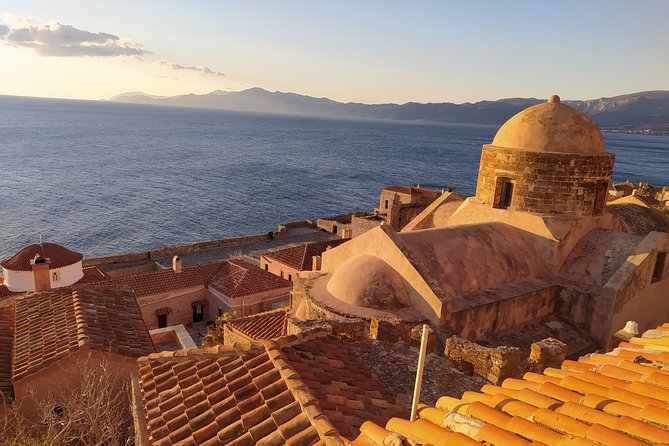
The schedule lists 15 hours at Monemvasia Castle, which clearly signals an extended stay and overnight rather than a brief visit. Monemvasia is a medieval castle town carved into the rear of a sea rock. Its enclosed stone lanes and sea-facing position make it one of the most memorable places on the route.
The long stay is welcome. Monemvasia is not best treated as a quick stop between archaeological sites. You want time to walk its lanes, take in the views, and enjoy the town after the day’s driving is done.
Day three: the wild Mani Peninsula
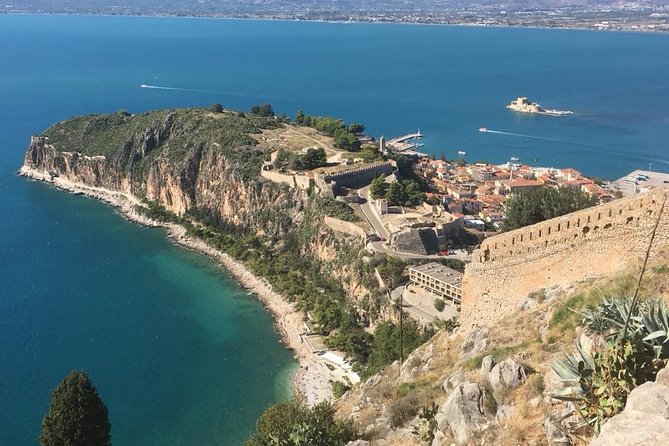
Mani is the rugged heart of the trip. The peninsula is known for stone towers, dry hills, isolated settlements, and a long history of clan feuds and pirate threats. The itinerary gives you about an hour for the region before moving to the Caves of Diros.
The caves are visited by guided boat. Inside, lighting reveals stalactites, stalagmites, and unusual rock formations along the water route. The cave visit lasts about an hour, and admission costs extra. This is a good contrast with the outdoor ruins, though the boat experience may not suit everyone.
Areopoli gives you another hour in one of Mani’s typical stone-built towns. It is a useful place to slow down and look at the local building style rather than rushing from monument to monument.
Mystras is the historical anchor of the day. This Byzantine castle town sits above Sparta, with views over the Laconic olive groves. Two hours allows time for a meaningful walk, but the site is hilly and includes uneven ground. Wear shoes with grip and do not underestimate the heat.
Vathia is listed as an alternative to Diros. It is an abandoned castle village and one of the most photographed spots in Mani. If you prefer architecture, open views, and a quieter stop, Vathia may be the better choice. If underground scenery appeals to you, keep Diros. Ask your guide early, since this is one of the route’s useful decision points.
The Leonidas Monument is a short stop tied to the Battle of Thermopylae. It also prepares you for the final day, when the route returns to the battlefield itself.
More Meteora trips from Athens:
- Athens: Meteora Monasteries Day Trip with Caves and Lunch
★ 4.7 · 2,964 reviews - Athens: Meteora Monasteries Day Tour with Lunch
★ 4.8 · 2,196 reviews - Athens: Meteora Tour with Local Guide and Greek Lunch
★ 4.8 · 1,561 reviews - Athens: Meteora Monasteries, Caves & Coastal Stopovers with Lunch
★ 4.5 · 1,432 reviews
Day four: Olympia and the stone villages of Arcadia
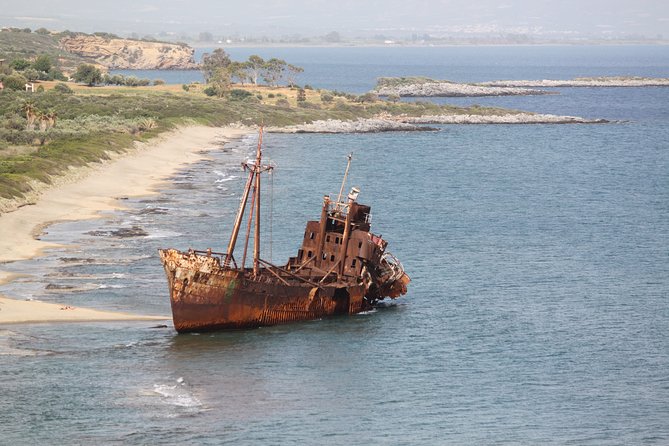
Olympia is one of the essential ancient sites in Greece. The original Olympic Games began here in the eighth century BC, and the ruins include the stadium, training areas, and temples to Zeus and Hera.
You have about 90 minutes at the archaeological site, followed by an hour in the museum. The museum contains important sculptures, including the Hermes attributed to Praxiteles and architectural decoration from the Temple of Zeus. The two-part visit works well. The open ruins show how the sanctuary functioned, while the museum gives you the surviving art at close range.
Entrance fees are separate, and you should budget for them across the entire week. The total stated cost is about €120 per person, which is substantial but predictable.
After Olympia, the road heads into Arcadia. The change is dramatic. Instead of open archaeological ground, you get mountain roads and stone-built villages. Dimitsana is the evening stop, with about an hour to explore. Nearby Stemnitsa is also noted as a popular destination, but the exact time available depends on the day’s driving.
This is one of the tour’s better pacing choices. After several ancient sites and long transfers, a village evening gives you a chance to experience Greece as a lived-in place rather than a series of monuments.
Day five: the Cave of the Lakes and the Odontotos railway
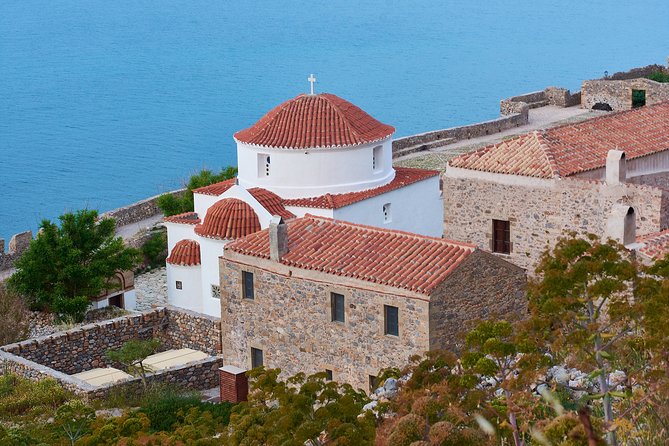
Kastria Cave of the Lakes is unusual because of its lakes and distinctive galleries. The visit lasts about an hour and costs extra. It gives the week another change of subject, with natural formations replacing temples and fortresses.
Kalavrita is the lunch town. You get about 90 minutes to walk through the center and eat. The town is described as a resort for all seasons, so it serves as both a meal stop and a practical break from the road.
The Odontotos rack railway is the day’s special feature. The railway runs from Diakopto toward Kalavrita through bridges and tunnels beside the river. The scheduled visit is about an hour, and the train ticket is not included.
This stop deserves careful attention when booking. The route description presents the railway as a major part of the experience, but it does not state whether the full train journey is always operated as part of this private circuit. Ask how the railway fits into your departure and return times, especially if weather or service changes could affect the day.
Nafpaktos is an optional short coffee stop if time allows. Its waterfront and Venetian castle make it a pleasant leg stretch, but 15 minutes is only enough for a quick look. Galaxidi is the evening arrival, where you can spend time beside the water with local residents and enjoy a slower end to a busy day.
Day six: Delphi, Amfissa, and first views of Meteora
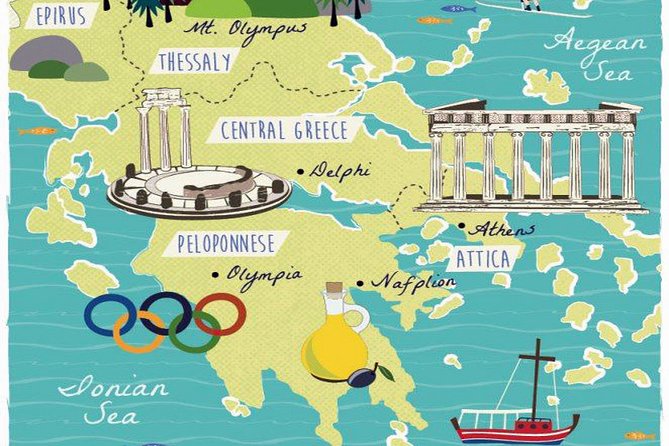
Delphi is one of Greece’s great mountain sanctuaries. The ancient site was linked to Apollo’s oracle and was regarded as the navel of the ancient Greek world. Its position on the slopes, with mountain scenery around it, is part of the experience.
The archaeological museum comes first, with about 45 minutes. Its best-known objects include the Charioteer and the Sphinx of the Naxians. The ancient town receives about 90 minutes, and the Tholos of Athena Pronaia gets another half hour.
Do not skip the Tholos. It is often the first image people associate with Delphi, yet many quick visits leave it out. The stop is short, but it adds an important visual piece to the sanctuary.
Lunch in Amfissa is intended as a less touristy break. The tour includes seven lunches overall, and this is where the private format can pay off. Guides such as Theo have been praised for ordering local dishes and adapting meals to preferences. You should still tell the company about dietary needs before departure.
Meteora may receive a sunset preview if there are no delays. This visit is optional and may include St. Stephen’s Monastery if time permits. The evening light gives you a different view from the next morning, but do not count on it as a guaranteed monastery visit. It is an added possibility, not a fixed part of the day.
Day seven: Meteora and Thermopylae
Meteora is the visual climax. Huge rock pillars rise above Kalambaka, carrying monasteries built by Orthodox monks in places that seem almost impossible to reach.
The day includes visits to two monasteries open on that specific day, with the Great Meteoron, Varlaam, and Holy Trinity listed in the route. The Great Meteoron is the oldest, largest, and most important of the preserved monasteries. Varlaam was named for the ascetic who first climbed its rock in the 14th century, while Holy Trinity is among the most photographed.
Opening days matter here. You may not enter all three monasteries, and the exact pair depends on which are open. Admission is extra. Expect stairs and uneven approaches, and dress respectfully for Orthodox religious sites.
The monastery visits are not only about photographs. They show how faith, isolation, and engineering shaped this part of Greece. Take your time with the views, but remember that the return to Athens is still ahead.
Thermopylae is a 30-minute break at the battlefield associated with Leonidas and the Persian invasion of 480 BC. The statue and location give the ancient story a physical setting before the final drive back to Syntagma in Athens.
What the $5,046.26 price means
At $5,046.26 per person, this is an expensive trip. The price makes more sense if you are traveling as a private group and want hotels, a driver, daily lunches, breakfasts, bottled water, and planning handled in one package.
Seven lunches are included, which has real value in Greece. The guides have been praised for choosing traditional meals, finding good local restaurants, and even arranging drinks or food suited to individual tastes. Six breakfasts and six hotel nights are also included, with accommodation described as the best available at each location and including one distinctive five-star hotel.
You still need to add about €120 per person for entrance fees. A professional licensed guide is optional, so clarify how much interpretation your driver-guide will provide and what a separate guide would add at the major archaeological sites.
For a solo person, the cost is difficult to justify unless convenience and private service are your top priorities. For a small group that would otherwise rent a car, arrange six hotels, plan restaurants, navigate mountain roads, and coordinate tickets, the package can offer solid value.
Who should book it
I would choose this for you if you want ancient sites but also care about food, small towns, and changing scenery. It suits people who prefer a private car to a large coach and who enjoy asking questions along the way.
It is also a good fit if you want help with the practical details. Nikos, the company owner, has handled planning, hotel arrangements, ferry questions, flights, and car hire advice for clients before and during trips. Theo and Panayiotis have both been praised for their care, conversation, local food knowledge, and safe driving.
I would hesitate if you want long stays in each town, beach time, or a relaxed schedule. The route is full, and the physical demands include stairs, hills, caves, and monastery approaches. You should have a moderate fitness level and be comfortable spending many hours on the road.
Pickup is available from an Athens hotel or Airbnb, Athens airport, Piraeus, Nafplio port, or Hydra, with possible extra charges for some locations. The activity is private and offered in English. Group discounts may be available, so the per-person price could work better for several people traveling together.
Should you book this Greece tour?
Book it if you want a carefully organized introduction to mainland Greece and you value local meals, flexible stops, and personal service more than a low price. The strongest parts are the breadth of the route, the food planning, the hotel arrangements, and the chance to see places that are easy to miss on a standard coach tour.
Before paying, confirm the hotel names, the exact guide, the monastery pair at Meteora, how the Odontotos railway is handled, and which entrance fees apply. If you accept the long driving days and plan for the extra admissions, this is a strong choice for seeing the Peloponnese, Delphi, and Meteora in one substantial week.
FAQ
How long does the tour last?
The tour lasts approximately seven days, with six hotel nights, six breakfasts, and seven included lunches.
Is this a private tour?
Yes. Only your group participates in the activity.
Where can pickup take place?
Pickup is offered from any Athens hotel or Airbnb, Athens airport, Piraeus and Nafplio ports, or Hydra island. Some locations may involve an extra cost.
Are entrance fees included?
No. Entrance fees are not included. The stated estimated total is €120 per person.
Is a professional licensed guide included?
No. A professional licensed guide is optional. The tour uses a driver-guide, with Theo and Panayiotis among the guides associated with these trips.
Which monasteries at Meteora will you visit?
The plan is to visit two monasteries that are open on the scheduled day. The Great Meteoron, Varlaam, and Holy Trinity are listed as possible visits, but the exact pair depends on opening days.
What is the cancellation policy?
You receive a full refund if you cancel at least six full days before the experience begins. Cancellation two to six full days before the start receives a 50 percent refund, while cancellation less than two full days before the start is nonrefundable.
More 7-Day Experiences in Athens
- 7-Day Northern Greece Tour – Meteora, Kastoria & Thessaloniki
★ 5.0 · 14 reviews - 7-Day Grand Tour: Olympia, Delphi, Meteora, Thessaloniki
★ 4.5 · 12 reviews - 7 days Journey to Vikos-Aoos National Park from Athens
★ 5.0 · 8 reviews - BEST 7-Day CLASSICAL GREECE: Corinth Olympia Delphi Meteora more!
★ 5.0 · 3 reviews
Freshly added Athens trips
- Athens and Ancient Corinth Private from Athens★ 5.0 · 3 reviews
- From Athens: Mycenae and Epidaurus Private Tour★ 4.8 · 3 reviews
- Full day Meteora private tour★ 5.0 · 3 reviews
- Double Shore Dive (certified divers)★ 4.5 · 3 reviews
- Athens Hills: Mythology Treasure Hunt★ 5.0 · 3 reviews
- Sunset & swimming at Cape Sounio, Poseidon temple★ 5.0 · 3 reviews
- Philosophy Experience at Plato’s Academy Park – basic version★ 5.0 · 3 reviews
- Private Acropolis Tour – Ticket Included★ 5.0 · 3 reviews
Delphi Tours, compared.

Mythology of Delphi, Museum and Arachova Guided Tour
Read our review →
Small-Group Delphi, Museum & Arachova Day Trip
Read our review →
Delphi English Day Trip from Athens with Official Guide
Read our review →
Delphi Guided Trip with Optional Lunch and Entry
Read our review →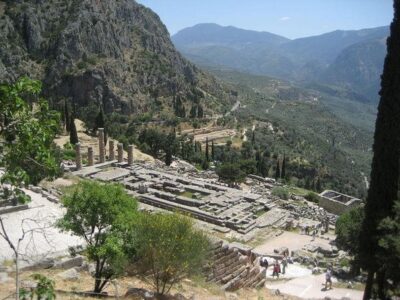
Historical Delphi One Day Tour with Arachova Stop & Expert Guide
Read our review →
Premium Delphi Day Trip with an Expert Guide, Museum & Lunch
Read our review →
Browse the lists this tour appears in