
Reviewed · ATHENS
Athens Riverside: A Journey in Mythical Athens
Athens has more than marble temples and crowded viewpoints. Beneath the streets run the traces of two old rivers, the Eridanos and Ilissos, and this three-hour walk follows their paths through the modern city. You’ll connect Greek myths, Roman ruins, Christian remnants, and the rise of democracy in one long urban story.
I like the buried river angle, especially the exposed section of the Eridanos near Monastiraki Square. I also like the hilltop route, which takes you to the Pynx and Philopappos Hills for broad views of the Acropolis and Athens.
The main caution is the heat and uphill walking. A past participant found the spring walk lovely but warned that summer could be brutally hot. Bring water, wear firm shoes, and choose a morning or late-day departure if you can.
In This Review
- Key points to know before booking
- Athens told through two vanished rivers
- Monastiraki and the first glimpse beneath the city
- The Ancient Agora and the city of public life
- Ares Rock, the Hill of Nymphs, and the Athenian Assembly
- Pynx and Philopappos Hills bring the best views
- Roman ruins, old churches, and a city under the city
- What the $83.77 price gets you
- Timing, meeting point, and practical planning
- Who will get the most from this walk
- Should you book Athens Riverside?
- FAQ
- How long is Athens Riverside?
- Where does the tour start?
- Where does the tour end?
- Is the tour offered in English?
- Is this a private tour?
- What is included in the price?
- Are food and drinks included?
- Does the tour operate in bad weather?
- Can most people participate?
- Can I cancel for a refund?
Key points to know before booking
- See a piece of the Eridanos near the metro: This small exposed river channel offers a rare look at water infrastructure buried beneath central Athens.
- Follow the Ilissos through myth: The river once linked to stories of Socrates, gods, sanctuaries, and life outside the city center.
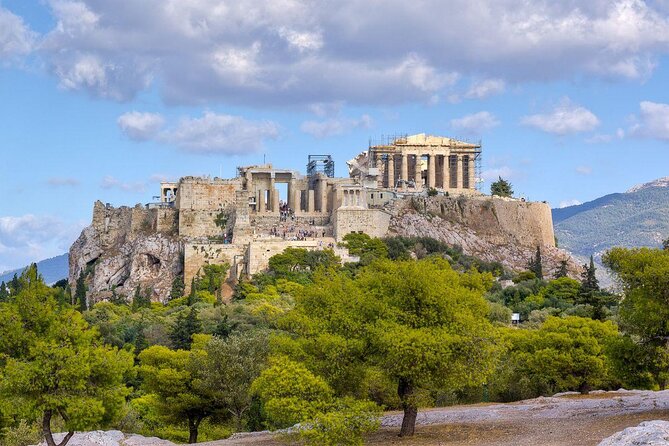
- Reach the Pynx and Philopappos Hills: You get some of the best open views toward the Acropolis and its slopes.
- Visit places many standard tours skip: Roman baths, mystical caves, old church remains, the Ancient Agora, and the Roman Conservatory all fit into the route.
- Expect a private walk: Only your group participates, with several daily departure times and an English-speaking local guide.
- Finish by the Acropolis Museum: The route ends at Str. Makryianni 1, a useful spot for continuing your sightseeing.
Athens told through two vanished rivers
The clever idea behind this walk is simple: ancient Athens was shaped by water, even though modern Athens hides most of it.
You begin near central Athens, with a meeting point listed at Ermou 111 and commonly described as Monastiraki Square. Confirm the exact spot when you book, since the area is busy and the tour description uses both names. Nearby, a section of the Eridanos is visible beneath the modern city.
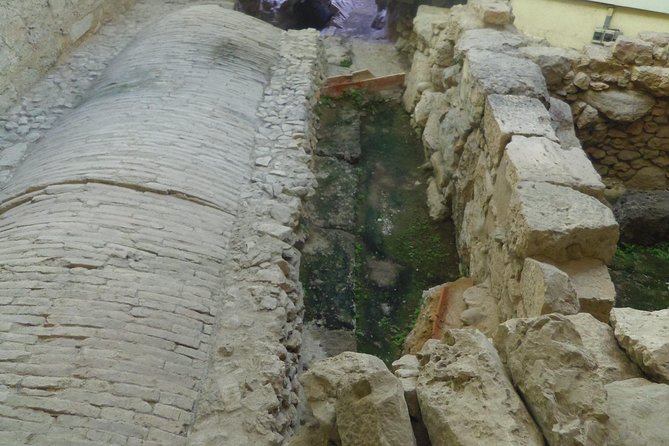
The Eridanos began near Mount Lycabettos and once flowed toward Kerameikos. It was named for a river god, and its buried channel offers a direct link between myth and city building. You are not looking at a grand river. That is part of the point. Ancient life often depended on modest streams, channels, springs, and drainage systems that disappear easily under later streets.
The walk then traces the old course of the Ilissos. Much of this river now runs underground, but its place in ancient writing and myth was important. It was associated with sanctuaries and with the setting where Socrates taught. Your guide uses the river route to explain how Athenians understood their surroundings, their gods, and their civic life.
I like this approach because it gives you a reason to notice parts of Athens that can otherwise feel like simple roads or open ground. You are not just moving from monument to monument. You are following the city’s old lines, including the places where water, worship, education, and politics once met.
Other days out people book around Athens:
- Athens: Acropolis & up to 5 Archaeological Sites Combo Pass
★ 4.4 · 12,619 reviews - Athens: Acropolis Ticket with Optional Audio or Live Guide
★ 4.2 · 11,055 reviews - Athens: Acropolis, Parthenon & Acropolis Museum Guided Tour
★ 4.8 · 9,316 reviews
Monastiraki and the first glimpse beneath the city
Monastiraki Square is one of Athens’ busiest starting points, but the Eridanos display shifts your attention below street level. Construction for the city metro in the 1990s revealed part of the ancient waterway, which had been covered for centuries.
This is a small archaeological sight, not a grand opening scene. The value comes from what it explains. Ancient Athens was not a clean museum isolated from modern life. Its old channels lie below shops, transit routes, apartment blocks, and busy squares.
Your guide sets the mythological frame here, then leads you away from the commercial center. The route crosses places where classical Athens, Roman Athens, Christian Athens, and present-day Athens overlap. That mixture is one of the strongest parts of the outing.
You should expect plenty of standing and walking while the guide explains each place. Since food and drinks are not included, have water before you meet the group. There is no meal break built into the three-hour plan.
The Ancient Agora and the city of public life
The Ancient Agora helps turn the walk from mythology toward daily life and politics. This was not only a collection of ruins. It was a working civic center tied to public decisions, trade, courts, religion, and the habits of ordinary Athenians.
The route includes the Agora along with the Acropolis area, but the tour is not presented as a full archaeological-site visit with long indoor stops. Instead, the sites form part of a broader walking story. Ask your guide how the rivers related to the city’s growth and how people moved between religious, civic, and residential areas.
This tour can work especially well if you have already seen the headline monuments. One seasoned Athens visitor found the less familiar archaeological parks worthwhile precisely because they offered places not covered by other outings. If this is your first hour in Athens, the Agora and Acropolis views will still give you useful orientation. If you have visited several times, the river theme adds a fresh reason to return to familiar ground.
Ares Rock, the Hill of Nymphs, and the Athenian Assembly
The itinerary includes a stop at the small rocky outcrop associated with Ares, known as Ares Rock. It is not a large hill or a lengthy visit, but it carries mythic weight and helps explain how ancient Athenians attached stories to natural features.
From there, the route heads through the Hill of Nymphs toward the Athenian Assembly. This is where the tour’s civic theme becomes clearer. Athens is often presented through temples and statues, but its political identity also grew from open meeting places, debate, and public participation.
You will hear legends as you walk, but the better guides also connect those legends to how the city functioned. Eleni, one of the guides named in the tour’s feedback, was praised for linking ancient culture with Athens’ later development and modern identity. That kind of connection matters here. Without it, the route could become a string of ruins. With it, you can see how the city changed while keeping old stories alive.
The walk is described as suitable for most participants, but hills and uneven ground are part of the setting. If you have trouble with slopes, ask the operator about the route before booking.
Same city, a completely different century:
- Athens: Cape Sounion & Poseidon Temple Sunset Half-Day Trip
★ 4.8 · 8,241 reviews - Athens: Acropolis and Parthenon Guided Walking Tour
★ 4.6 · 5,882 reviews - All Day Cruise -3 Islands to Agistri,Moni, Aegina with lunch and drinks included
★ 5.0 · 4,958 reviews - Athens, Piraeus, and Coastline: Blue Hop-On Hop-Off Bus
★ 3.9 · 4,849 reviews
Pynx and Philopappos Hills bring the best views
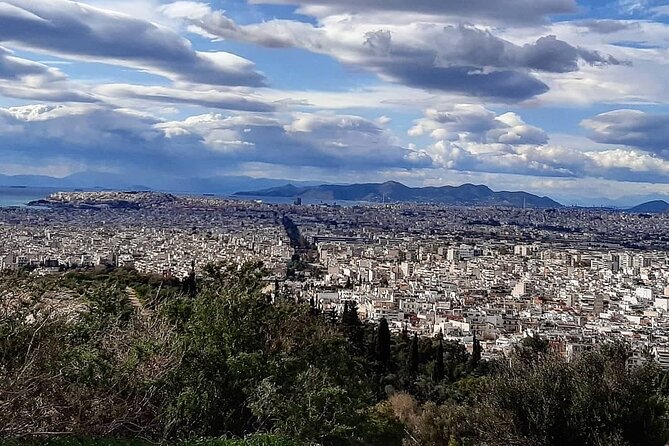
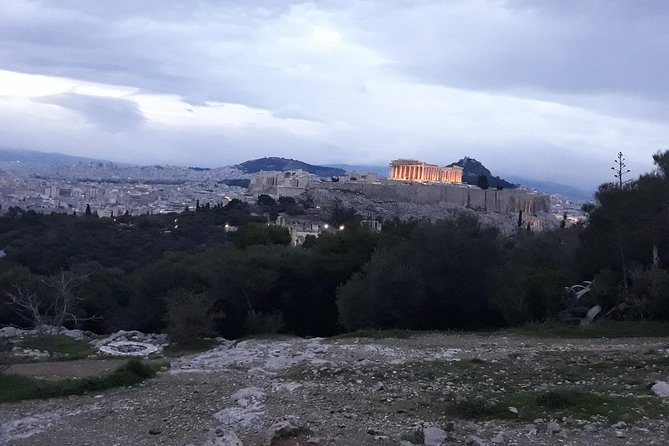
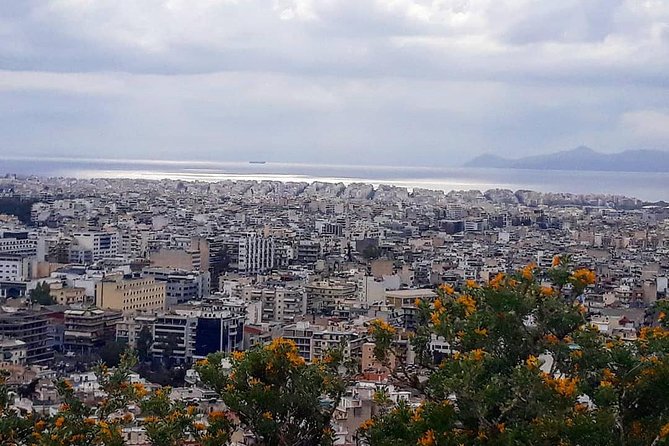
The high point of the walk is the route over the Pynx and Philopappos Hills. From these slopes, you get a different view of the Acropolis than the one from the crowded streets below. The sacred hill and its surrounding ruins spread out in front of you, while Athens fills the wider view.
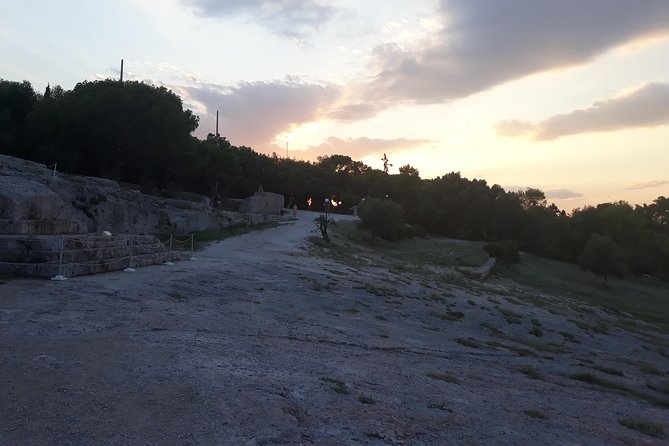
The Pynx has a special place in the story of democracy. It was linked to the Athenian Assembly, making the hill more than a scenic overlook. You are looking at a place tied to public speech and civic decisions, not simply a photo stop.
Philopappos Hill adds quieter paths, archaeological remains, and views toward the Acropolis. The route also passes through what is described as the Hill of Muses. Depending on your departure time, you might catch sunset from the slopes. Several daily start times make it possible to choose between stronger daylight for seeing details and softer evening light for the views.
The hills are also where the physical demands become most noticeable. Wear casual clothing and supportive walking shoes. In summer, the exposed slopes can be punishing, so an early or late departure is the sensible choice. In cooler months, the same route should feel more comfortable, but the tour operates in all weather, so bring suitable clothing.
Roman ruins, old churches, and a city under the city
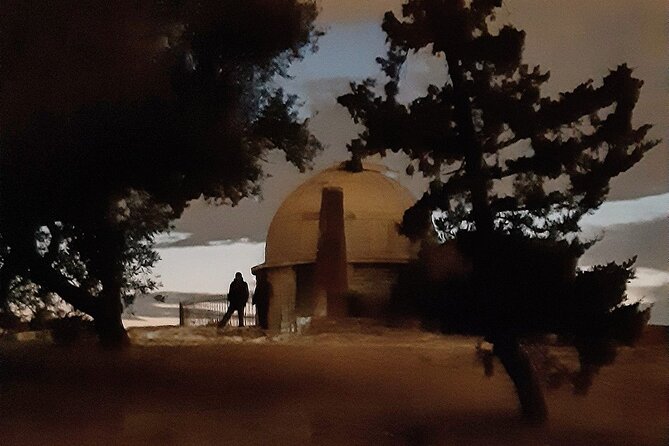
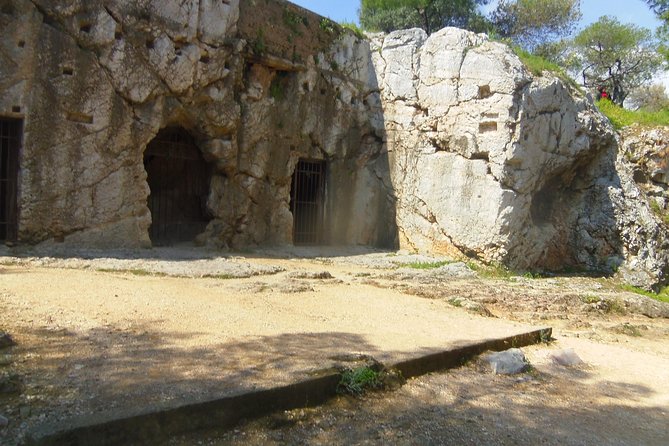
Along the route, you pass sanctuaries dedicated to Greek gods, remains of Christian churches, caves linked with local mystery, and ruins of Roman baths. These are not all grand monuments with intact walls. Their importance is cumulative.
Athens did not stop being important when classical Greece ended. Roman builders changed the city. Christian communities reused and altered earlier spaces. Modern streets later covered much of what came before. This walk helps you read those layers without pretending that every ruin is complete.
One listed stop is the Roman Conservatory of Athens, a distinctive performance building from the Roman period. Its presence adds another chapter to the route. You see how entertainment, public gathering, religion, and politics all occupied the same broad urban setting over time.
This is also where the guide’s skill matters most. Helena, Dionysus, Eleni, and Arthur are among the guides associated with particularly strong experiences. Their strengths differed, but the useful pattern is clear: you want a guide who can explain the setting, answer questions, and tell the myths without turning the entire walk into a lecture.
One participant described a slightly awkward late start, followed by a much better experience once the walk got moving. That is a fair reminder to allow a little flexibility at the meeting point. The guide may set the tone, and the quality can depend on how well the storytelling matches your interests.
What the $83.77 price gets you
At $83.77 per person, this is not the cheapest way to walk around Athens. The price makes more sense if you value a private guide and a focused theme rather than a simple self-guided route.
Only your group participates, according to the tour details. That can be useful if you want to ask questions, adjust the pace within reason, or keep young people engaged. Group discounts are also offered, which may improve the value for families, school groups, or friends booking together.
You are paying for about three hours of guiding, not for food, drinks, or a separate promise of admission to every archaeological site. Check exactly what access is included when booking, since the description focuses on walking past and visiting several areas rather than listing entrance tickets.
I see the best value for repeat visitors, curious first-time visitors who want context, and anyone interested in mythology beyond the standard Acropolis story. If you want a fast checklist of Athens’ biggest monuments, a more direct Acropolis tour may suit you better.
Timing, meeting point, and practical planning
Several daily departure times are available, so you can fit the walk around an Acropolis visit or an evening meal. A late departure may offer sunset from the hills, but light levels can affect how clearly you see smaller ruins. A morning start should be easier in warm weather.
The listed start address is Ermou 111, Athens 105 55, while the meeting description points to Monastiraki Square. Because those are close but not identical descriptions, check the confirmation carefully and arrive with time to spare.
The walk ends at Str. Makryianni 1, in front of the Acropolis Museum. That is a practical finish. You can continue to the museum if you have a ticket and time, pause for food, or make your way toward the Acropolis entrance area.
The tour is offered in English and includes a local guide. Casual dress is fine, but the practical dress code is sturdy shoes, sun protection, and clothing suited to the forecast. The activity runs in all weather. Public transportation is nearby, and the operator says most people can take part.
Free cancellation is available if you cancel at least 24 hours before the start time. Changes or cancellations inside that window are not accepted for a refund.
Who will get the most from this walk
I would choose this tour if you have already seen the Acropolis and want Athens to make more sense as a living city. The unusual focus on the Eridanos and Ilissos gives you a fresh thread to follow, while the Agora, Assembly, hills, and Roman remains supply plenty of recognizable landmarks.
It also suits families and school groups when the guide is comfortable adapting the stories. Eleni, for example, brought koulouri for a group that included teenagers and worked to keep younger participants interested. That is a small detail, but it shows the kind of personal attention a private outing can allow.
You should think twice if you dislike hills, walking in full sun, or tours that spend time on modest archaeological remains. The route is not built around entering every major monument, and the myths may take as much space as the architecture.
Should you book Athens Riverside?
Book it if you want a private, story-led walk that connects Athens’ buried rivers with democracy, mythology, Roman life, and modern streets. The Pynx and Philopappos viewpoints are the strongest visual reward, while the Eridanos and Ilissos give the tour its unusual purpose.
I would choose a cooler season or a morning or late-day departure in summer. Bring water, wear good shoes, and confirm the exact Monastiraki meeting spot. For repeat visitors and anyone who wants Athens beyond the standard postcard route, $83.77 can be fair value. For a first-time visitor with only a few hours and no Acropolis ticket, prioritize the major sites first, then use this walk to add context.
FAQ
How long is Athens Riverside?
The walk lasts approximately three hours.
Where does the tour start?
The listed starting address is Ermou 111, Athens 105 55, Greece. The meeting description refers to Monastiraki Square, so confirm the precise meeting spot after booking.
Where does the tour end?
It ends at Str. Makryianni 1, Athens 117 42, in front of the Acropolis Museum.
Is the tour offered in English?
Yes. The experience is offered in English.
Is this a private tour?
Yes. Only your group participates in the activity.
What is included in the price?
A local guide is included.
Are food and drinks included?
No. Food and drinks are not included.
Does the tour operate in bad weather?
Yes. It operates in all weather conditions, so dress for the forecast.
Can most people participate?
The operator states that most participants can take part. The route includes walking over hills, so ask about the terrain if you have mobility concerns.
Can I cancel for a refund?
Yes. You can cancel at least 24 hours before the experience starts for a full refund. Cancellations or changes made less than 24 hours before the start time are not accepted for a refund.
Freshly added Athens trips
- Athens and Ancient Corinth Private from Athens★ 5.0 · 3 reviews
- From Athens: Mycenae and Epidaurus Private Tour★ 4.8 · 3 reviews
- Full day Meteora private tour★ 5.0 · 3 reviews
- Double Shore Dive (certified divers)★ 4.5 · 3 reviews
- Athens Hills: Mythology Treasure Hunt★ 5.0 · 3 reviews
- Sunset & swimming at Cape Sounio, Poseidon temple★ 5.0 · 3 reviews
- Philosophy Experience at Plato’s Academy Park – basic version★ 5.0 · 3 reviews
- Private Acropolis Tour – Ticket Included★ 5.0 · 3 reviews