
Reviewed · ATHENS
Athens: Philosophy Experience at Plato’s Academy Park
Plato’s Academy Park gives this experience its real force. You are not sitting in a classroom hearing a lecture about ancient philosophy. You are discussing Plato’s ideas where his Academy once operated, then testing those ideas against modern life. The setting makes abstract questions feel more immediate.
I especially like the small-group format, which gives you room to speak rather than simply listen. I also like the mix of the free Digital Museum, the archaeological park, and a hands-on debate. The main consideration is that the museum may be closed or operating on a changed schedule, and excavation work can limit how closely you see the ancient Gymnasium.
The workshop costs $90 per person for two hours. That is not a bargain if you want a standard sightseeing tour, but it can be fair value if you want a guided intellectual activity, an English-speaking facilitator, and a genuine chance to discuss ideas with your group.
In This Review
- Key points at a glance
- Why Plato’s Academy Park is the right classroom
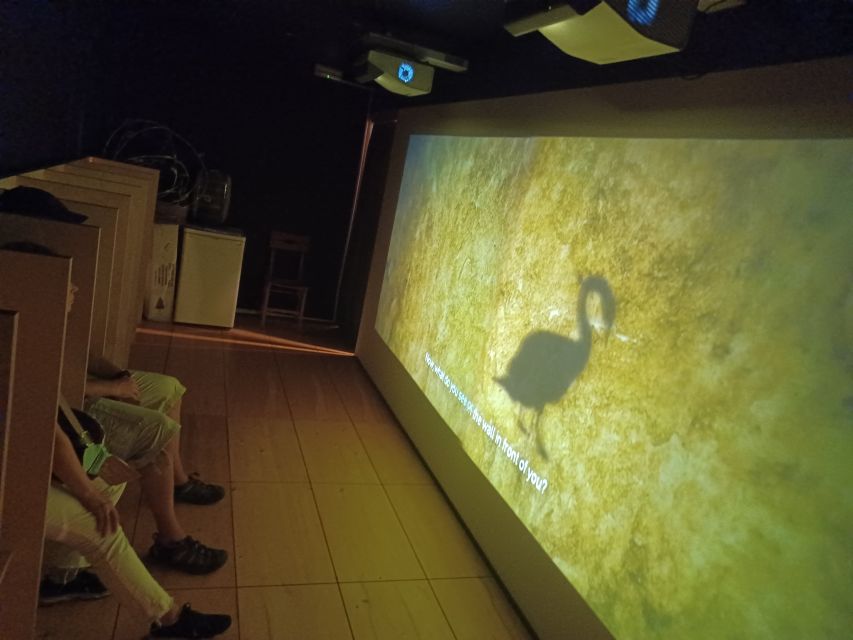
- Starting at the Digital Museum
- Walking among the Gymnasium ruins
- Turning Plato’s Allegory of the Cave into a group discussion
- The final debate and the philosopher’s role today
- What the $90 price really covers
- Who will enjoy this experience most
- Practical details that can shape your visit
- Should you book Plato’s Academy philosophy workshop?
- FAQ
- Where does the Plato’s Academy workshop begin?
- Where does the activity end?
- How long does the experience last?
- Is the Digital Museum entrance included?
- What happens if the Digital Museum is closed?
- Will I see the ancient Gymnasium ruins up close?
- Do I need previous knowledge of philosophy?
- What language is the workshop in?
- Is the experience wheelchair accessible?
- What should I bring?
- Can I cancel for a refund?
- Can I reserve without paying immediately?
Key points at a glance
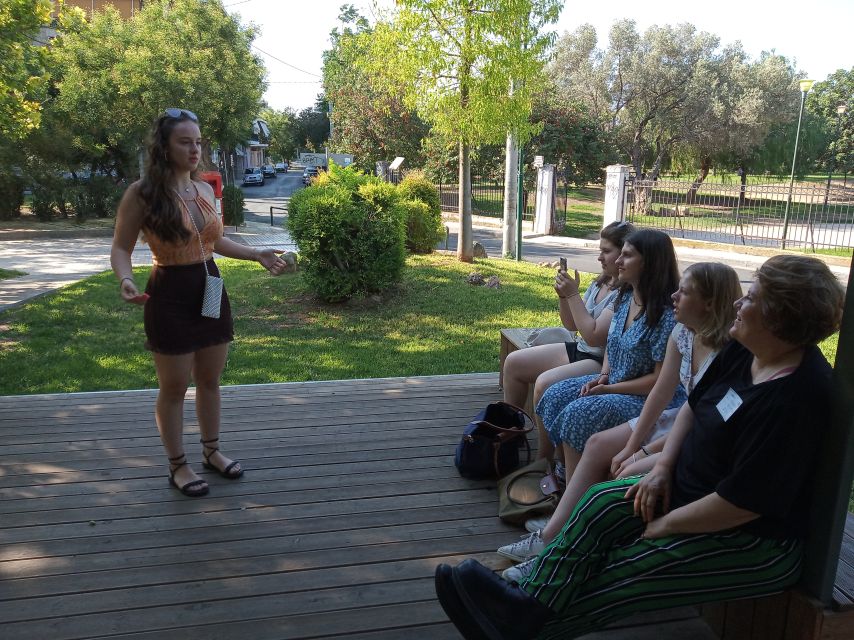
- Plato’s Academy Park: Explore the site associated with the world’s first Academy and see the ruins of the ancient Gymnasium.
- Socratic workshop: Use questioning and dialogue to examine Plato’s ideas instead of memorizing facts.
- The Allegory of the Cave: Connect one of Plato’s best-known works to choices and problems in modern life.
- Free Digital Museum visit: Gather information about Plato, his works, and the Academy if the museum is open and operating.
- Beginner-friendly English: The workshop uses plain English and does not require previous philosophy study.
- Short, active format: Two hours combines walking, discussion, games, and a final debate without taking up a full day.
Why Plato’s Academy Park is the right classroom
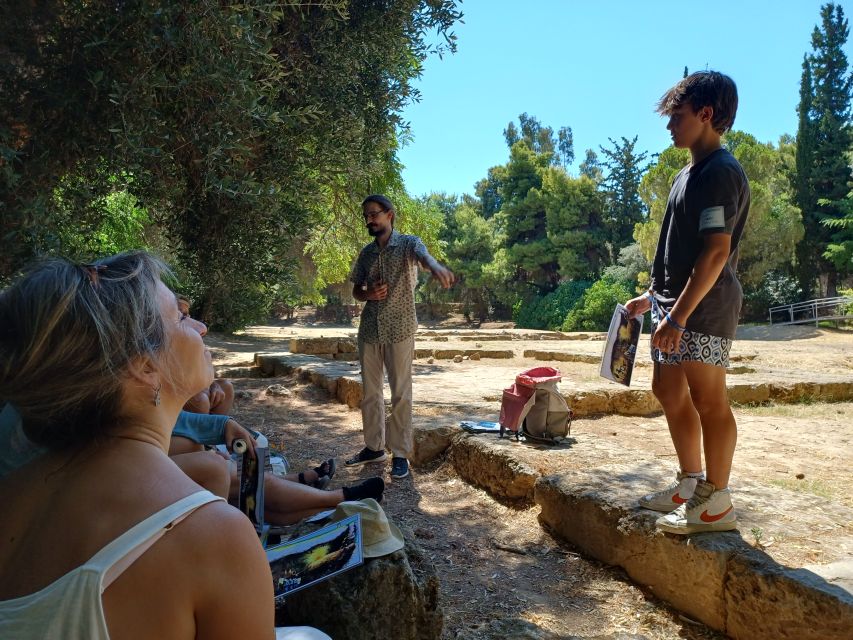
Athens has no shortage of ancient sites, but Plato’s Academy Park asks you to do something different. Instead of moving from one monument to the next while a guide recites dates, you are encouraged to question, respond, and form your own view.
The park is the setting linked with Plato’s Academy, described here as the world’s first Academy. You also visit the area of the ancient Gymnasium, where the workshop shifts from site visit to group conversation. That physical connection matters. Philosophy is easier to picture when you are standing among archaeological remains rather than reading about it in a hotel room.
I would not book this expecting a traditional guided tour. The activity is an educational interactive workshop, and the facilitator’s job is to lead discussion, not provide a complete archaeological tour of every feature. You will learn about Plato and his Academy, but the main goal is to think through his ideas.
The small-group design is important. In a large group, a philosophical discussion can become a lecture with a few questions at the end. Here, the format is meant to give you a productive role. You can share an opinion, challenge an idea, or change your mind as the conversation develops.
Other days out people book around Athens:
- Athens: Acropolis & up to 5 Archaeological Sites Combo Pass
★ 4.4 · 12,619 reviews - Athens: Acropolis Ticket with Optional Audio or Live Guide
★ 4.2 · 11,055 reviews - Athens: Acropolis, Parthenon & Acropolis Museum Guided Tour
★ 4.8 · 9,316 reviews
Starting at the Digital Museum
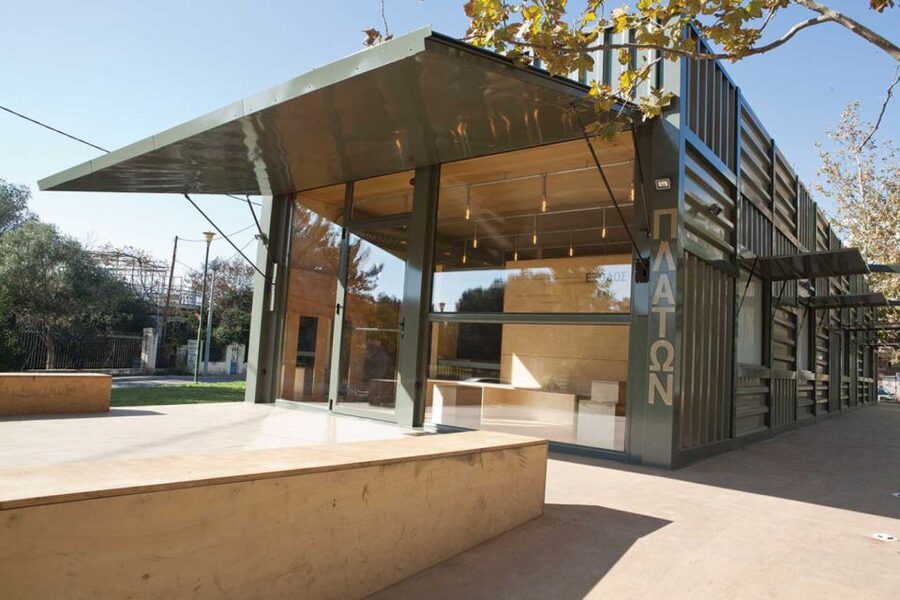
You meet the instructor outside Plato’s Digital Museum at the entrance. Look for the Hellas Revival sign. The museum visit is free, and the workshop begins with a short exploration if the museum is open and operating.
The facilitator gives you specific information to find about Plato’s life, his works, and the Academy. That small task changes the way you approach the museum. You are not expected to absorb every display. Instead, you gather material that will feed the discussion later.
This is a useful approach for beginners. You get basic facts first, then use them rather than trying to remember a long talk. The museum is also described as a strong part of the experience, but you should plan for uncertainty. Its schedule changes often, and it can close without notice. If that happens, the workshop still continues with the park-based activities, but the opening museum segment will not be available.
Do not build your entire day around a long museum visit. This is a short orientation within a larger workshop. The main value comes from what happens after you leave the displays.
Walking among the Gymnasium ruins
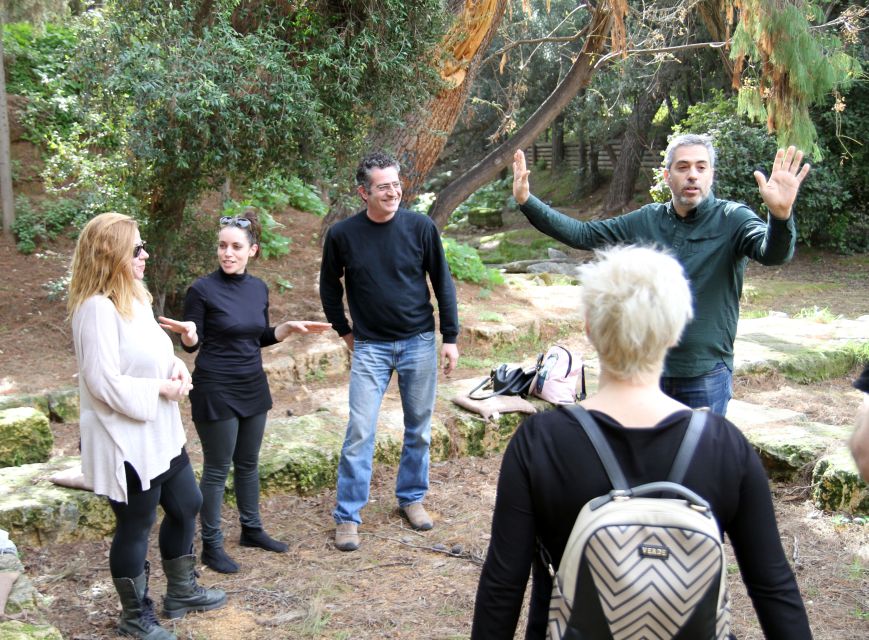
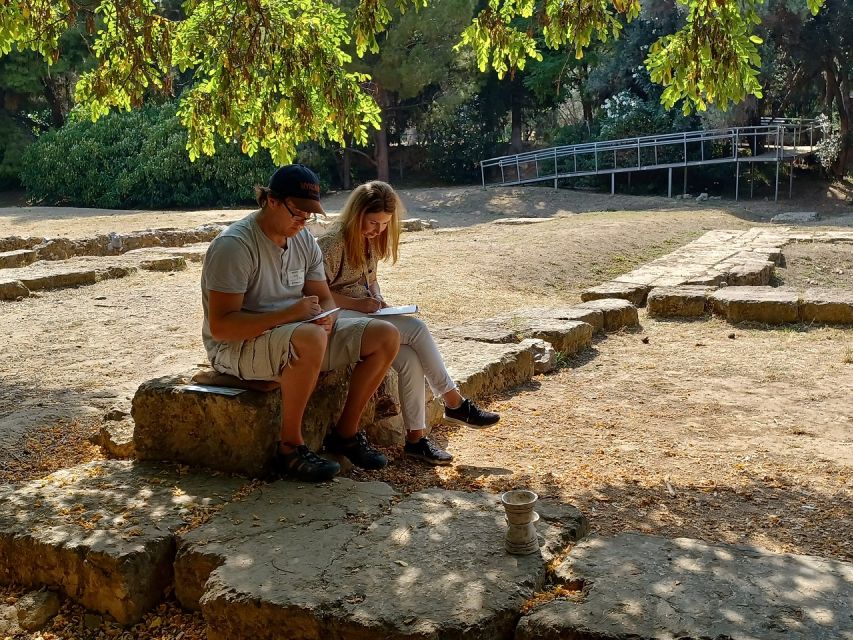
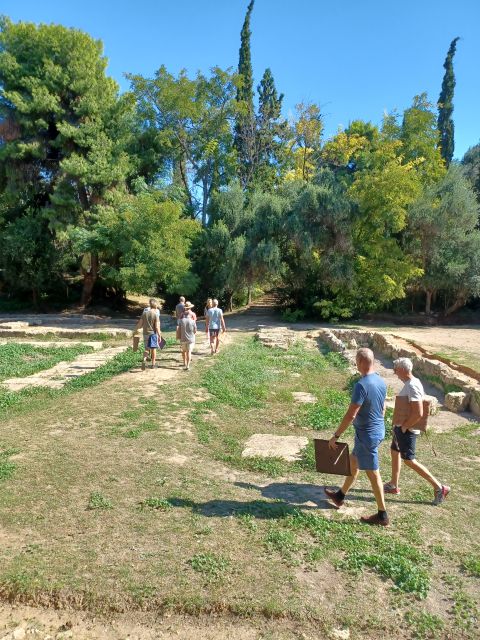
After the museum portion, you walk through Plato’s Academy Park to the archaeological remains of the ancient Gymnasium. The activity uses the park as an open-air classroom, so comfortable shoes, water, a sun hat, and light, comfortable clothing are sensible choices.
The ruins are important, but this is not presented as a standard archaeological tour. You may see the ancient Gymnasium from a short distance if excavation work is taking place. The group may also settle in another part of the park. That is worth knowing in advance if you want close views of ruins or a detailed explanation of the site itself.
What you gain instead is a sense of place. The park provides the backdrop for a conversation about what it meant to be a philosopher in ancient Athens. You bring the information gathered at the museum into the open, then consider how Plato’s school might have approached learning and public life.
The setting also keeps the workshop from feeling too formal. You are moving between the museum and the park, then taking part in conversation and activities outdoors. For many people, that is easier than sitting indoors for two straight hours discussing difficult ideas.
Turning Plato’s Allegory of the Cave into a group discussion
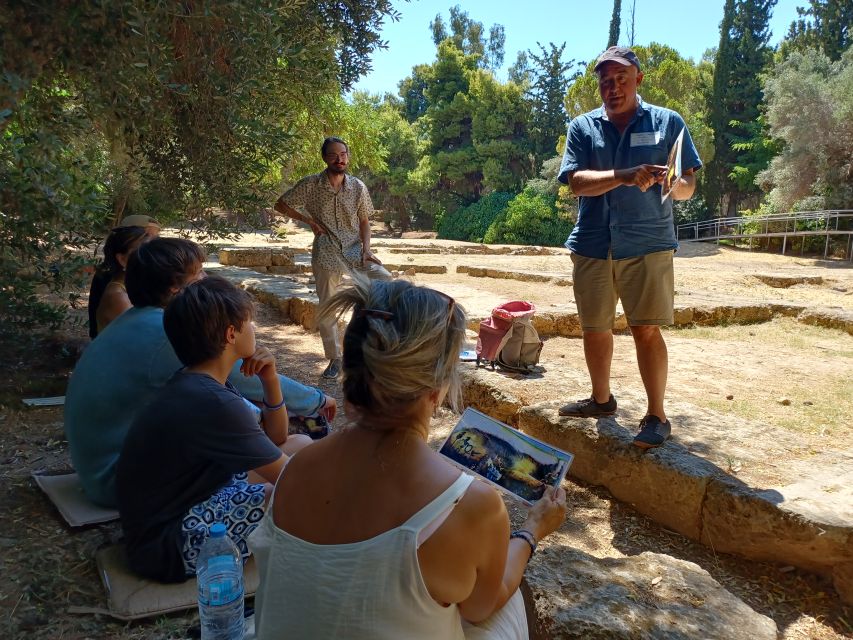
The heart of the workshop is Plato’s Allegory of the Cave. You do not need prior philosophy study. The facilitator explains the ideas in plain English, without relying on difficult terminology.
The allegory is explored through dialogue rather than a one-way explanation. You are invited to consider what the cave, the shadows, and the movement toward understanding might mean in present-day life. The activity does not simply ask you to repeat Plato’s interpretation. It asks you to examine your own assumptions and listen to how other people understand the same story.
That makes the session useful even if you arrive as a Plato novice. You can begin with a basic response and build from there. If someone in your group already knows the subject, the format also gives that person a chance to test familiar ideas instead of taking over the discussion.
The best part of this structure is that it treats philosophy as a practical habit. You are not studying Plato only as a historical figure. You are using his work to ask how people form beliefs, how they respond to new information, and how they decide what is true or worthwhile.
The facilitator uses Socrates’ maieutic art, often described as a midwife method of questioning. The idea is to draw thoughts out of you through careful questions rather than hand you a finished answer. The facilitator also uses Platonic dialogue techniques, encouraging the group to exchange views, experiences, and beliefs.
Expect to be asked questions. Expect your first answer to be examined. That is part of the design, not a sign that you are doing something wrong.
Same city, a completely different century:
- Athens: Cape Sounion & Poseidon Temple Sunset Half-Day Trip
★ 4.8 · 8,241 reviews - Athens: Acropolis and Parthenon Guided Walking Tour
★ 4.6 · 5,882 reviews - All Day Cruise -3 Islands to Agistri,Moni, Aegina with lunch and drinks included
★ 5.0 · 4,958 reviews - Athens, Piraeus, and Coastline: Blue Hop-On Hop-Off Bus
★ 3.9 · 4,849 reviews
The final debate and the philosopher’s role today
The workshop ends with a short debate game based on a modern-life case study. The question is linked to Plato’s view of how a philosopher should act.
This closing activity gives the session a clear finish. You have gathered facts, discussed the park and the Academy, examined the Allegory of the Cave, and then put your thinking into action. The debate is not meant to turn you into a professional public speaker. It gives you a simple way to practice making a claim, supporting it, and responding to another position.
I like this final step because it keeps the workshop from becoming passive. You do not leave with only notes about Plato. You leave having taken a position and heard other ways of looking at the same modern issue.
The debate may feel less comfortable than a conventional tour, especially if you prefer to observe quietly. Still, the activity is designed for exchange, and the small-group setting should make participation more manageable. You are joining a guided discussion, not taking an exam.
What the $90 price really covers
At $90 per person, this is a specialized Athens experience. The fee includes an expert facilitator, all materials, and local taxes at 24 percent. Entrance to the Digital Museum is free when that portion can take place.
You are paying mainly for the structure and the facilitator. The park itself is not the costly part. The value comes from having someone shape a philosophical discussion, keep it understandable, and connect ancient ideas with a modern case study.
I would compare the price with your interests, not with the cost of a standard site visit. If you want to see ruins quickly and move on, $90 for two hours will feel high. If you enjoy discussion, want a more personal activity, or have already seen Athens’ major monuments, the price can make sense.
The five-star rating from seven reviews points to strong satisfaction, but it is still a small sample. The clearest strengths are the friendly, engaging instruction, the quality of the discussion, and the unusual combination of museum, ruins, and games. One especially useful detail is that a group containing both Plato beginners and people with more background could take part together. That suggests the workshop is built to adjust to different levels.
There is no separate guided tour included. Keep that distinction clear when you book. You receive an educational workshop, not a full archaeological presentation.
Who will enjoy this experience most
I would recommend this to you if you want to do more than photograph ancient ruins. It suits curious beginners, readers of philosophy, students, educators, and anyone who enjoys discussing big questions in a relaxed setting.
It is also a good choice for a private group or a small group that wants an activity with a clear theme. The private or small-group option can make a difference when the subject depends on everyone having time to speak.
Families may find the interactive format more engaging than a long lecture, though the suitability of younger children is not specified. I would use your judgment based on whether they can follow and join a basic discussion in English.
You should think twice if you want a quiet, scripted tour with fixed facts and little participation. You should also be comfortable spending time outdoors in the sun and following respectful conduct rules at a historical site.
The activity is wheelchair accessible. The instructor speaks English, and the workshop is specifically designed for people without previous philosophy knowledge.
Practical details that can shape your visit
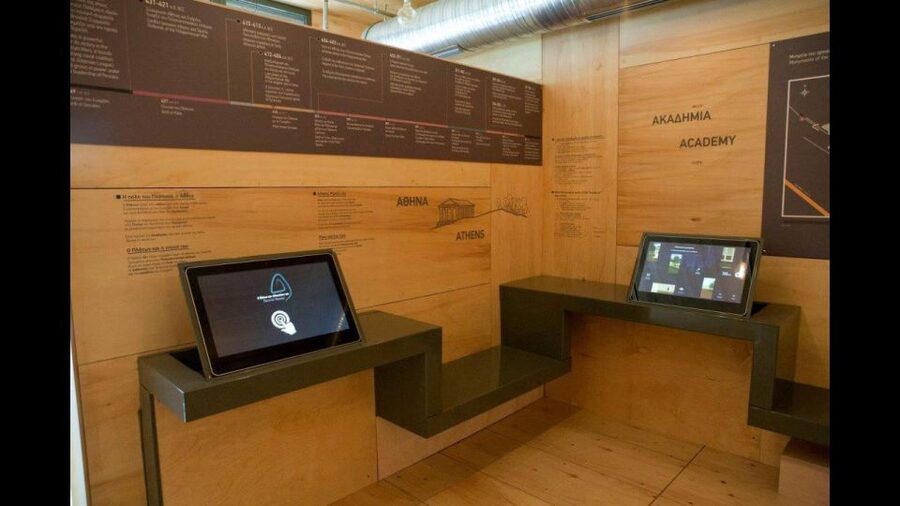
The experience lasts two hours, with starting times shown according to availability. It begins and ends outside the Digital Museum, so you return to the same meeting point at the finish.
Wear comfortable shoes. Bring water and a sun hat, and choose comfortable clothing. The park setting means weather and outdoor comfort matter more here than they would on an indoor museum visit.
The museum schedule is the biggest practical uncertainty. It can change or the museum can close without notice. Archaeological excavation can also affect the route and viewing point around the Gymnasium. These are not reasons to avoid the activity, but they are reasons to book it for the discussion rather than for guaranteed museum access or close-up ruins.
You must follow the rules for a historical site. The activity asks for sober, clean, polite, and respectful conduct, including appropriate dress, reasonable noise, and proper behavior with photography and video. The facilitator can end your participation without a refund if you ignore these requirements.
Because the workshop takes place in a public space, photo or video recording may occur, with possible future publication. You can withdraw your consent before the workshop by contacting the provider in writing.
Free cancellation is available up to 24 hours in advance for a full refund. You can also reserve now and pay later, which helps if your Athens schedule is still shifting.
Should you book Plato’s Academy philosophy workshop?
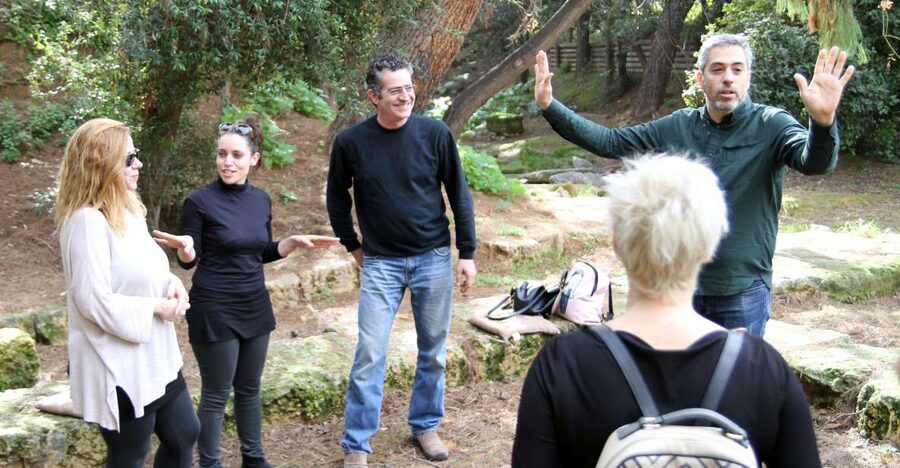
Book it if you want an active, thoughtful experience that connects an ancient site with questions you still face today. The strongest reasons are the small-group conversation, the beginner-friendly English, the use of Socratic questioning, and the chance to discuss the Allegory of the Cave at Plato’s Academy Park.
Do not book it if your priority is a detailed archaeological tour, guaranteed museum access, or a quick stop with no group participation. The museum may be closed, excavation may change the park portion, and the $90 price is easier to justify for people who value discussion as much as sightseeing.
For the right audience, this is a memorable way to approach Athens. You see the place linked with Plato’s Academy, but the real souvenir is a set of new questions about how you decide what you believe.
FAQ
Where does the Plato’s Academy workshop begin?
Meet the instructor outside Plato’s Digital Museum at the entrance. The instructor will hold a Hellas Revival sign.
Where does the activity end?
The workshop ends back at the meeting point outside the Digital Museum.
How long does the experience last?
The activity lasts two hours. Starting times depend on availability.
Is the Digital Museum entrance included?
Entrance to the Digital Museum is free as part of the activity if the museum is open and operating.
What happens if the Digital Museum is closed?
The museum schedule changes often, and it can close without notice. The workshop still focuses on Plato, the archaeological park, discussion, and activities, but the museum portion may not be available.
Will I see the ancient Gymnasium ruins up close?
Not always. Archaeological excavation may require the group to view the ruins from a short distance and use another location in the park.
Do I need previous knowledge of philosophy?
No. The workshop is designed for beginners and uses plain English without difficult terminology.
What language is the workshop in?
The instructor leads the activity in English.
Is the experience wheelchair accessible?
Yes, the activity is wheelchair accessible.
What should I bring?
Bring comfortable shoes, a sun hat, water, and comfortable clothes.
Can I cancel for a refund?
Yes. You can cancel up to 24 hours in advance for a full refund.
Can I reserve without paying immediately?
Yes. The reserve-now, pay-later option lets you hold your plans and pay nothing at the time of booking.
Freshly added Athens trips
- Athens and Ancient Corinth Private from Athens★ 5.0 · 3 reviews
- From Athens: Mycenae and Epidaurus Private Tour★ 4.8 · 3 reviews
- Full day Meteora private tour★ 5.0 · 3 reviews
- Double Shore Dive (certified divers)★ 4.5 · 3 reviews
- Athens Hills: Mythology Treasure Hunt★ 5.0 · 3 reviews
- Sunset & swimming at Cape Sounio, Poseidon temple★ 5.0 · 3 reviews
- Philosophy Experience at Plato’s Academy Park – basic version★ 5.0 · 3 reviews
- Private Acropolis Tour – Ticket Included★ 5.0 · 3 reviews