

Reviewed · ATHENS
Athens Highlights: Urban Run experience with a Local
Athens reveals itself differently at running speed, especially early in the morning. With local runner George, you move through Plaka and the historic center by foot, linking famous sights with quieter streets and viewpoints that are easy to miss from a vehicle. The Panathenaic Stadium is a memorable stop, and the route also reaches Pnyx and Philopappos Hill.
I like the small group limit of 10, which makes it easier to adjust the pace and ask questions. I also like the practical focus: George can show you where to run during the rest of your stay, and runners describe the pace as flexible for different abilities. The main consideration is simple: this is an outdoor sport activity, so you need to be comfortable running for about 90 minutes and accepting the usual risk of fatigue or injury.
In This Review
- Key points at a glance
- Why a morning run works so well in Athens
- From the Unknown Soldier to the Acropolis
- The Olympic side of Athens
- Parliament, the National Garden, and a change of pace
- Roman Agora, Ancient Agora, and Plaka
- How the pace works for different runners
- What $33.79 means in practical value
- Who should book this run
- Booking, weather, and timing details
- Should you book this Athens run?
- FAQ
- Where does the Athens urban run start?
- What time does the run begin?
- How long does the experience last?
- Where does the activity end?
- How many people can join the run?
- Is bottled water provided?
- Can I cancel for a full refund?
Key points at a glance
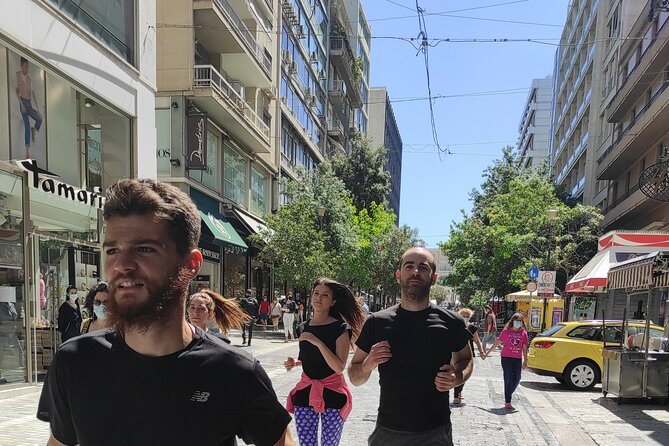
- A 7:00 am start: You see central Athens before the day’s heat and crowds build.
- A local runner as guide: George is CPR-certified and can adjust the pace to your ability and interests.
- Ten stops in 90 minutes: The route covers major ancient sites, Olympic landmarks, gardens, hills, and old neighborhoods.
- A useful first-day activity: You get your bearings and receive advice about good places to run later.
- A small, flexible group: The maximum is 10 people, making it easier to stay together.
- Simple practical extras: Bottled water is included, and the experience is offered in English.
Why a morning run works so well in Athens
Athens can feel demanding on foot later in the day. Pavements heat up, popular sights fill with people, and a long sightseeing list can leave you tired before lunch. This run begins at 7:00 am, giving you a cooler and quieter start than a midday walking tour.
The early hour also suits the city’s landmarks. You can pass the Acropolis, ancient ruins, gardens, and public squares without spending the whole morning stopping for traffic or waiting for a clear view. You will not be entering the monuments as part of this activity, but you will see them as part of a moving city route.
The pace is not presented as a race. That matters. George is a long-distance runner, yet the experience is designed for people who want to jog, run, or simply take an active tour at a manageable speed. You can expect the route and pace to be adjusted for ability and interests, based on the information available about the experience.
A runner who wants a serious workout may find the pace too gentle. A casual jogger, however, should appreciate the balance between exercise and sightseeing. The experience is especially useful if you want to keep active while still seeing the major sights.
Other days out people book around Athens:
- Athens: Acropolis & up to 5 Archaeological Sites Combo Pass
★ 4.4 · 12,619 reviews - Athens: Acropolis Ticket with Optional Audio or Live Guide
★ 4.2 · 11,055 reviews - Athens: Acropolis, Parthenon & Acropolis Museum Guided Tour
★ 4.8 · 9,316 reviews
From the Unknown Soldier to the Acropolis
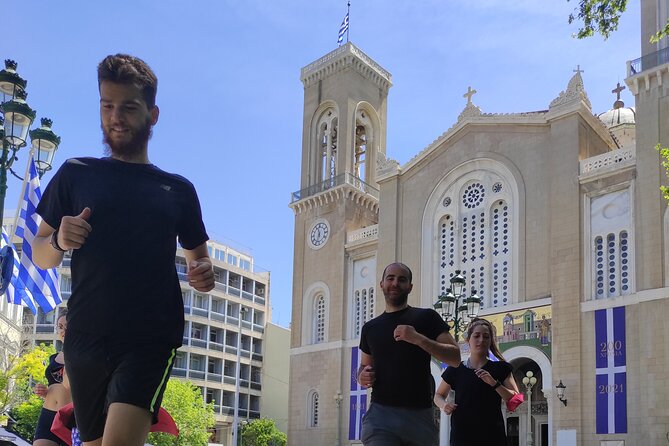
The meeting point is the Monument to the Unknown Soldier, on Leof. Vasilisis Amalias, near central Athens. This is a practical starting place because the route quickly reaches several of the city’s best-known sights, and the activity ends back at the same point.
The Acropolis is listed as the first stop. Even without entering the archaeological site, seeing the rock and its monuments from the surrounding streets gives the run an immediate sense of place. You are not just jogging through a modern city park. Ancient Athens is part of the setting from the first part of the route.
The route then continues to Pnyx. This hill is closely tied to public life in ancient Athens and offers a change from ordinary city streets. Pnyx is one of the places where the run feels more like an exploration of the city’s past than a standard fitness outing.
Philopappos Hill follows. Hills bring an important practical issue: this is not a completely flat urban jog. If you are used to level pavement, you should expect the terrain and effort to vary. The route’s appeal comes partly from these changes, but they also make comfortable shoes and sensible pacing important.
The available information does not provide exact distances or a detailed elevation profile. Do not book this expecting a measured training session with split times. Book it as a sightseeing run with hills, pauses, and a guide who can adapt the outing.
The Olympic side of Athens
One of the strongest parts of the route is the connection between ancient Athens and the modern Olympic story. The Temple of Olympian Zeus comes next, followed by the Panathenaic Stadium.
The Temple of Olympian Zeus is an impressive ancient setting, even viewed briefly during a running route. Its scale helps you understand how ambitious Athens was in the ancient world. It also gives the run a useful visual break from the narrower streets around Plaka.
The Panathenaic Stadium is likely the high point for many runners. Built in white marble and linked to the modern Olympic Games, it is one of Athens’s most distinctive sights. The route includes a run around the top of the stadium, according to the experience details shared by past participants. That is a rare sightseeing moment: you are not only looking at an Olympic venue, you are moving through it as a runner.
This stop also shows why a local guide adds value. A normal sightseeing route may bring you to the stadium entrance, but a runner can frame it as part of the city’s running culture and point out useful places for future exercise. If the stadium is the sight you most want to enjoy, tell George early so he can take your interests into account.
Keep in mind that the run does not replace a dedicated visit inside each attraction. The focus is on seeing and connecting the places from an active route. If you want long stops, detailed archaeology, or time inside the Acropolis, you will need a separate visit.
Parliament, the National Garden, and a change of pace
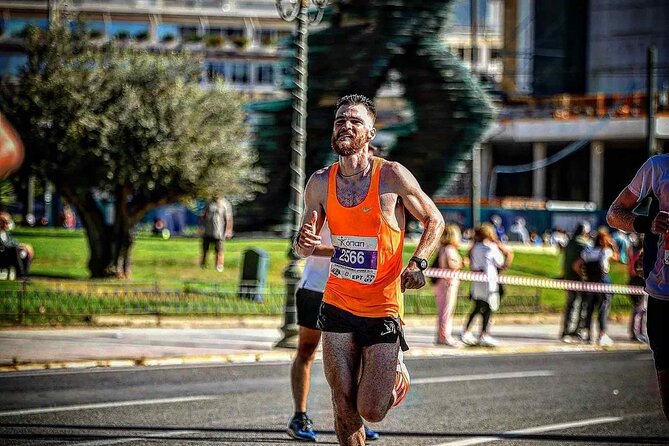
The route reaches the Hellenic Parliament and the National Garden after the Olympic sites. Parliament gives you a look at modern Greek civic life, while the National Garden offers a quieter green section in the middle of central Athens.
This part of the route can help break up the hills and ancient sites. A garden setting is useful during a run because it gives you a calmer stretch and a chance to absorb the city without focusing only on ruins and monuments. The experience information does not promise a long stop or a formal garden tour, so think of it as part of the running route rather than a separate attraction visit.
The route’s variety is one of its best qualities. In roughly 90 minutes, you move between ancient monuments, open hills, Olympic architecture, government buildings, gardens, and old city streets. That variety keeps the activity from feeling like a repetitive circuit.
George’s role is also flexible. The guide is described as happy to answer questions and share information along the way, while also allowing quiet stretches for runners who prefer to focus on the activity. That is a useful balance. Some people want a running partner, not a nonstop lecture.
Same city, a completely different century:
- Athens: Cape Sounion & Poseidon Temple Sunset Half-Day Trip
★ 4.8 · 8,241 reviews - Athens: Acropolis and Parthenon Guided Walking Tour
★ 4.6 · 5,882 reviews - All Day Cruise -3 Islands to Agistri,Moni, Aegina with lunch and drinks included
★ 5.0 · 4,958 reviews - Athens, Piraeus, and Coastline: Blue Hop-On Hop-Off Bus
★ 3.9 · 4,849 reviews
Roman Agora, Ancient Agora, and Plaka

The final listed stops are the Roman Agora, the Ancient Agora of Athens, and Tzisdarakis Mosque. Together, they bring the route back toward the old center and Plaka.
The Roman Agora reflects the later Roman period of Athens. The Ancient Agora covers an even broader idea of the city as a place of commerce, politics, and daily life. Seeing both on the same outing helps you understand that Athens was not a single-period city. Different eras overlap within a short distance.
Tzisdarakis Mosque adds another layer to the route. It is a reminder that Athens’s central districts include more than the classical Greek story usually presented to visitors. Including it makes the final section feel less predictable than a simple route from one famous classical monument to another.
Plaka is the setting for the local, street-level side of the run. Its lanes and older buildings offer a contrast with the large archaeological sites. The route is intended to show you places and corners you might not choose on a standard sightseeing walk, though the exact streets can vary with the guide’s judgment and the group’s pace.
Because the itinerary includes ten named stops in 90 minutes, you should expect brief sightseeing moments rather than extended visits. That is not a weakness if you want an overview and a workout. It is a limitation if you prefer to read every sign, take long photographs, or hear a full explanation at each site.
How the pace works for different runners
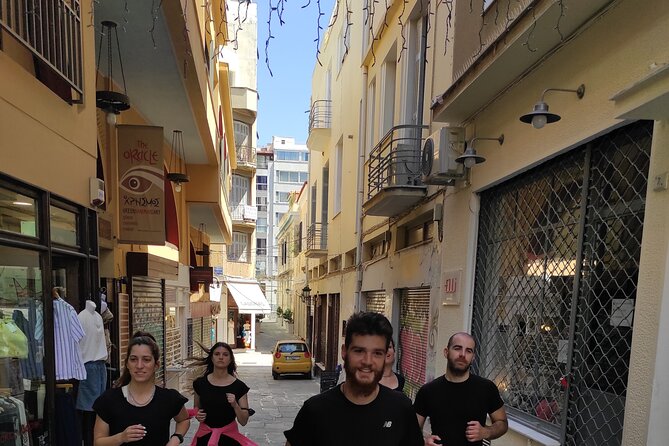
The strongest practical feature is the flexible pace. George can adjust the run to the group, and the experience is described as suitable for different running levels. That makes it more welcoming than a fixed-speed club run.
Still, flexible does not mean effortless. The activity is an outdoor sport experience, and the route includes hills and city streets. You are expected to have no health problems involving your anatomy, breathing, heart, or other conditions that could cause difficulty during the run. You also accept the normal outdoor risks, including injury and extreme fatigue.
If you run often, this could be a pleasant way to maintain your routine while learning the city. If you jog only occasionally, use the booking notes honestly and tell George about your ability at the start. The guide can adapt, but he cannot remove every physical demand from a route that includes Pnyx, Philopappos Hill, and a substantial sightseeing circuit.
Service animals are allowed, and the activity is near public transportation. Most people can participate, but the outdoor sporting nature matters more than the general participation statement. Choose light, comfortable running clothing and shoes suited to uneven urban surfaces, though the supplied information does not specify a dress code or equipment list.
Bottled water is provided. That is helpful, but it does not turn the run into a fully supported athletic event. The listing does not mention changing rooms, showers, storage, snacks, or pace groups, so plan around the meeting point accordingly.
What $33.79 means in practical value
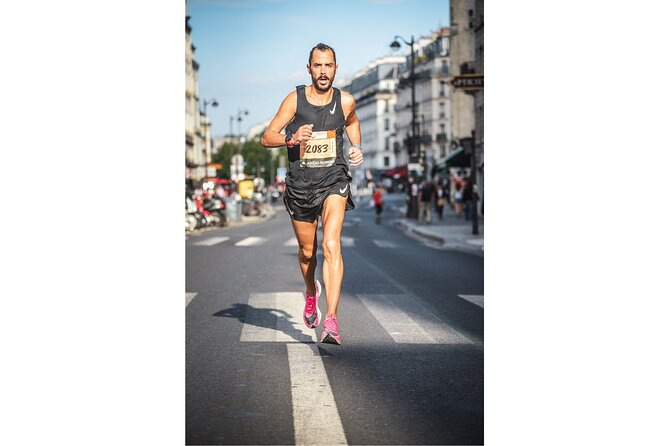
At $33.79 per person, this is priced closer to a short guided city activity than a full sightseeing tour. The value comes from combining three things: local orientation, exercise, and access to a route that would be easy to mishandle on your own.
Running alone in an unfamiliar city can be awkward. You may stop often to check directions, miss the best connections between sights, or spend too much time crossing busy roads. A local runner removes much of that uncertainty and lets you concentrate on the city around you.
The small group limit strengthens the value. With no more than 10 people, the guide has a realistic chance to keep the group together and respond to different speeds. Group discounts may make the cost more attractive if you are booking with companions.
The price is less compelling if you only want sightseeing. A walking tour usually gives you more time at each monument, and this activity does not include entry to the Acropolis, the stadium, or the archaeological sites. You are paying for an active route and local running support, not an all-purpose historical tour.
For a runner, the cost is reasonable if you would otherwise spend time planning a safe and interesting route yourself. It is also a good first-morning choice for a short Athens stay, especially if you have a conference or a packed sightseeing schedule later in the day.
Who should book this run
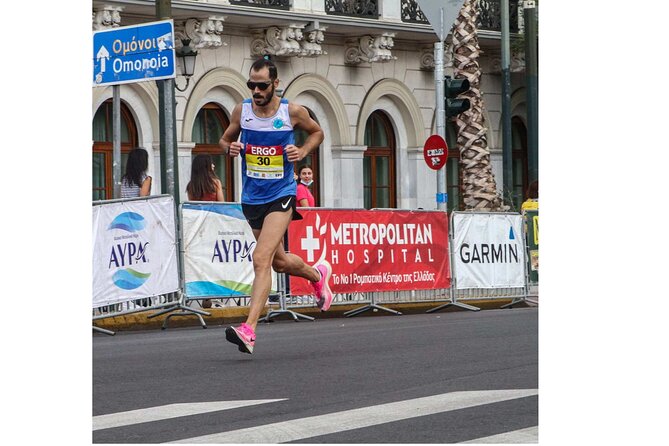
I would point this experience toward several kinds of visitors:
- Runners on a short Athens visit: You get a city overview without giving up your exercise routine.
- People who dislike large tours: The maximum of 10 keeps the group manageable.
- Returning Athens visitors: The route offers a different way to see familiar sights and old neighborhoods.
- Active couples and friends: Group discounts may help, and the run can become a shared morning outing.
- People who want local running advice: George can suggest places to run during the rest of your stay.
- Sightseers with limited time: The 90-minute route reaches many central highlights before the main sightseeing day begins.
I would hesitate to recommend it to anyone unable to run or jog for an extended outdoor session, or to someone seeking a quiet, slow historical tour. It is also not ideal if your main goal is going inside the monuments.
The strongest praise attached to this experience concerns the guide’s attitude. George is described as good company, attentive to pace, willing to answer questions, and comfortable with quiet when a runner simply wants to enjoy the route. That combination is worth noting. A running guide who talks constantly can become tiring, while one who says too little can make the route feel impersonal.
Booking, weather, and timing details
The run starts at 7:00 am and returns to the Monument to the Unknown Soldier. It lasts about one hour and 30 minutes. Confirmation is provided when you book, mobile tickets are accepted, and the activity is offered in English.
The experience is often booked well ahead, with an average booking time of 37 days before the date. That suggests you should not leave it until the last minute if the early morning slot is important to your plans.
You can cancel for a full refund up to 24 hours before the start time. Changes or cancellations inside that 24-hour window are not accepted for a refund. The cut-off uses local Athens time.
Weather matters. If poor weather forces cancellation, you are offered another date or a full refund. The activity also requires a minimum number of participants, so a cancellation for that reason brings the choice of another date or experience, or a full refund.
Should you book this Athens run?
Book it if you want to see central Athens through movement, enjoy a flexible pace, and like the idea of starting your sightseeing day before the streets fill up. The Acropolis, Pnyx, Philopappos Hill, the Panathenaic Stadium, Parliament, the gardens, and ancient sites create a varied route rather than a simple jog around one neighborhood.
The Panathenaic Stadium is the special payoff, while George’s ability to adjust the route and pace makes the experience more useful than a generic group run. At $33.79, it offers fair value for runners who would otherwise spend time planning a route alone.
Skip it if you want detailed monument visits, a flat athletic workout, or a fully supported training session. For the right person, though, this is a smart way to get your bearings, meet a local runner, and see Athens before breakfast.
FAQ
Where does the Athens urban run start?
It starts at the Monument to the Unknown Soldier, at Leof. Vasilisis Amalias 133, Athens 105 57, Greece.
What time does the run begin?
The start time is 7:00 am.
How long does the experience last?
The run lasts approximately one hour and 30 minutes.
Where does the activity end?
It ends back at the meeting point, the Monument to the Unknown Soldier.
How many people can join the run?
The group is limited to a maximum of 10 travelers.
Is bottled water provided?
Yes. Bottled water is provided during the run.
Can I cancel for a full refund?
Yes. You can cancel at least 24 hours before the start time for a full refund. Cancellations or changes made less than 24 hours before the start time are not refunded.
Freshly added Athens trips
- Athens and Ancient Corinth Private from Athens★ 5.0 · 3 reviews
- From Athens: Mycenae and Epidaurus Private Tour★ 4.8 · 3 reviews
- Full day Meteora private tour★ 5.0 · 3 reviews
- Double Shore Dive (certified divers)★ 4.5 · 3 reviews
- Philosophy Experience at Plato’s Academy Park – basic version★ 5.0 · 3 reviews
- Athens Hills: Mythology Treasure Hunt★ 5.0 · 3 reviews
- Sunset & swimming at Cape Sounio, Poseidon temple★ 5.0 · 3 reviews
- Private Acropolis Tour – Ticket Included★ 5.0 · 3 reviews