
Reviewed · CITY TOURS
Athens City of Rebellion Private Walking Tour
Athens’ past is not only marble temples and ancient philosophers. This private walking tour follows the city’s long record of resistance, from Ottoman rule and the Greek Revolution to Nazi occupation, student protests, police violence, and present-day activism in Exarchia. Guide Maëlle brings the subject to life with a clear, personal approach.
I like two things right away. First, the route connects famous central sights, such as Syntagma Square and the Hellenic Parliament, with less conventional places and stories. Second, the private format gives you room to ask questions and talk through difficult subjects. The main drawback is that this is a serious, walking-heavy experience, not a light introduction to Athens, and it is not recommended if you have walking difficulties.
In This Review
- Key points to know before booking
- Why this Athens tour takes a different route
- Monastiraki begins the story
- Ottoman Athens at Tzisdarakis Mosque
- A small church with a resistance story
- Syntagma Square, where power meets protest
- The Grande Bretagne and the darker side of luxury
- The Tomb of the Unknown Soldier and the Evzones
- The old palace and the Hellenic Parliament
- Students, universities, and civil liberties
- Navarinou Park and citizen action
- Exarchia, Athens’ modern center of dissent
- Price, private format, and what you receive
- Who should book this walk?
- Should you book the City of Rebellion tour?
- FAQ
- Where does the Athens City of Rebellion tour start?
- Where does the tour end?
- How long does the walking tour last?
- Is this a private tour?
- What is the price?
- Is transportation included?
- What age group can take the tour?
- Is the tour suitable for people with walking difficulties?
- Are service animals allowed?
- What happens if the weather is poor?
- Can I cancel for a full refund?
Key points to know before booking

- A route from Monastiraki to Exarchia: You begin in one of central Athens’ best-known squares and finish in a neighborhood associated with activism, street art, and social movements.
- History beyond the usual highlights: The tour covers Ottoman rule, the Greek resistance, Nazi occupation, student activism, and current struggles over policing, gentrification, and social justice.
- A private experience with Maëlle: Your group participates on its own, creating a more conversational setting than a large city walk.
- Several meaningful outdoor stops: Syntagma Square, the Tomb of the Unknown Soldier, the university, Navarinou Park, and Exarchia all help explain modern Athens.
- A 2.5-hour commitment: The tour costs $86.82 per person and includes fees and taxes, but not transportation.
- Best for curious, mobile visitors: The content suits adults and children over 10 who want political and social context rather than a standard sightseeing circuit.
Why this Athens tour takes a different route
Many first visits to Athens focus on the Acropolis, the Ancient Agora, and neoclassical buildings. Those places matter, but they do not tell the whole story of the city. This tour asks a different question: how did ordinary Athenians resist power, and how does that tradition still shape daily life?
That question gives the walk a strong through-line. You are not simply moving from one landmark to another. You are looking at public squares, churches, government buildings, and neighborhoods as places where people gathered, organized, fought, or tried to claim a voice.
The subject can be heavy. You will hear about occupation, fascism, violence, oppression, police action, and social inequality. Still, the tour is not presented as a dry lecture. The guide links political events to visible places and personal stories, which makes the material easier to follow.
I would choose this as an early Athens activity if you want context for the city you will see during the rest of your trip. One past participant booked it as a first activity and found that it helped make modern Athens easier to understand. That is a useful clue: this walk works best when you want to read the city around you, not just photograph it.
More Athens walking tours:
- Athens: Acropolis and Parthenon Guided Walking Tour
★ 4.6 · 5,882 reviews - Greek Food Walking Tour in Athens
★ 5.0 · 4,740 reviews - Acropolis: Acropolis and Parthenon Guided Walking Tour
★ 4.7 · 3,442 reviews
Monastiraki begins the story
The meeting point is Pl. Monastirakiou 2, in the center of Athens. Your guide welcomes you at Monastiraki Square, a familiar and easy-to-find starting point near public transportation.
The opening stop lasts about 10 minutes. It is short, but useful. Monastiraki is a natural place to begin because it sits at the meeting point of several layers of Athens. From here, you can move quickly from the tourist center into stories about occupation, rebellion, and the political changes that shaped the modern Greek state.
Do not expect a long architectural briefing at this point. The value lies in setting the theme and giving you a frame for the walk ahead. Since the tour is private, you can use these first minutes to tell Maëlle what interests you most, especially if you want more attention on wartime resistance, student movements, or current Exarchia.
Ottoman Athens at Tzisdarakis Mosque
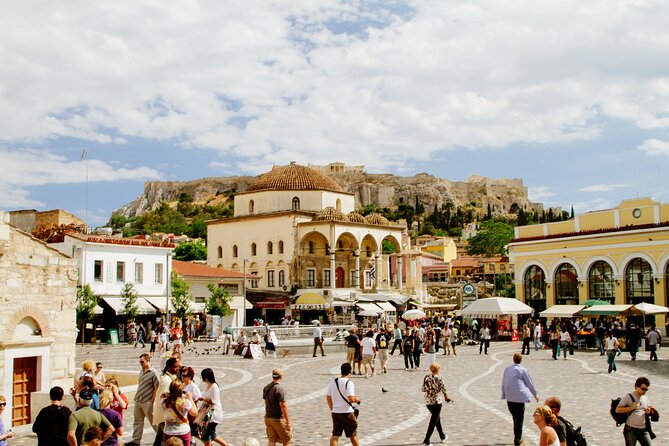
The next stop is Tzisdarakis Mosque, also known as the Mosque of the Lower Fountain. You will spend around 10 minutes learning about the Ottoman period and the beginning of the Greek revolt against Ottoman rule.
This stop helps correct a common picture of Athens. It is easy to imagine the city as a place that moved directly from classical Greece to the modern nation. The mosque points to the centuries in between and helps you picture an Athens with a different political and religious identity.
The guide also asks you to imagine the Acropolis with a minaret on top. That mental picture is simple, but effective. It shows how much the city’s appearance and power structure have changed.
The mosque is viewed as part of the walking route, and admission is free. The stop is brief, so you will not receive a full study of Ottoman Greece. Instead, it works as a compact introduction to the political setting that produced the Greek Revolution.
A small church with a resistance story
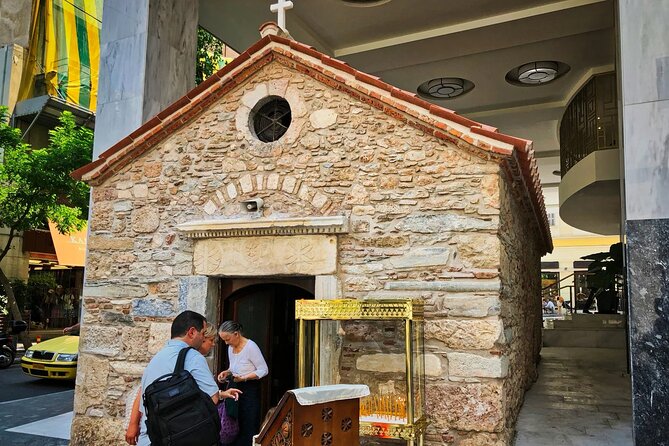
At the Holy Church of the Sacred Power, or Ayìa Dynami, the tour turns to a place connected with resistance during Ottoman occupation. You will spend about 10 minutes here.
Small religious buildings can be easy to pass without a second look. This stop gives you a reason to pause. The church becomes part of a larger story about how people protected traditions, formed networks, and resisted outside control.
I like this kind of stop because it keeps the tour from becoming a parade of grand monuments. The point is not the size of the building. It is the human story attached to it.
As with the other central stops, you do not need to pay an entry fee. The walk continues on foot, so comfortable shoes matter from the beginning.
A few more Athens days worth a look
- Best of Athens Half Day Private Tour
★ 5.0 · 3,714 reviews - Athens Full Day Private Tour
★ 5.0 · 2,903 reviews - Athens Airport Private Arrival Transfer with Meet & Greet
★ 4.5 · 1,495 reviews - Athens Airport to Athens Hotels Private Arrival Transfer
★ 5.0 · 947 reviews
Syntagma Square, where power meets protest
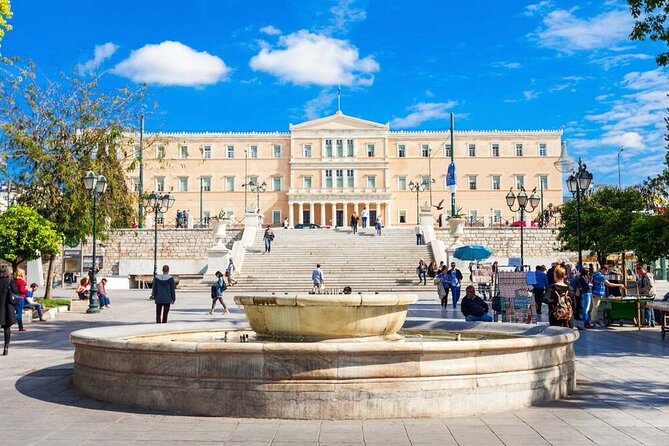
Syntagma Square receives about 15 minutes, making it one of the most important stops on the route. It is the symbolic center of political resistance in Athens, and the guide uses the square to connect several periods of conflict.
Here you will learn about the former royal palace, the Tomb of the Unknown Soldier, the Nazi headquarters, and other moments of resistance. The square is not treated only as a ceremonial space. You will see it as a place where the state presents its authority and where citizens have repeatedly challenged it.
The advantage of this stop is its range. In one open space, you can consider monarchy, military power, wartime occupation, national memory, and public protest. It gives you a useful way to read the buildings around the square.
The limitation is that 15 minutes goes quickly. If Syntagma is especially important to you, ask questions as you walk. The private format makes that possible, but the route still has a fixed length.
The Grande Bretagne and the darker side of luxury

The Hotel Grande Bretagne is now one of Athens’ most prestigious hotels. On this tour, you look past its polished image and hear about the darker period when the Nazis held power in Athens.
That contrast is the point. A luxury hotel can appear disconnected from political history, yet important buildings often change meaning as governments and armies change. The guide uses the hotel to show how occupation was not an abstract event somewhere else. It affected the center of the city and the buildings people saw every day.
There is no admission charge for the stop. You should think of it as an exterior historical visit rather than a hotel tour. The value comes from the explanation, not from entering the property.
The Tomb of the Unknown Soldier and the Evzones

At the Tomb of the Unknown Soldier, you will spend about five minutes watching the Evzones, the ceremonial soldiers who guard the monument. The tour explains their distinctive uniforms and the meaning behind this highly formal duty.
This is a short stop, but it adds a visual change to the walk. After stories of protest and occupation, you see a carefully preserved national ceremony. The tomb represents public memory, sacrifice, and the Greek state’s effort to honor its fallen soldiers.
Five minutes is enough for a brief explanation and observation. If you want to watch a longer guard ceremony, this tour does not promise that. The focus remains on the monument and its place in the wider story of resistance.
The old palace and the Hellenic Parliament
The Hellenic Parliament occupies the Old Palace built for the first king of Athens after the Greek Revolution. The stop gives you a chance to connect the revolution’s victory with the creation of the modern Greek state.
That distinction matters. Winning independence was not the end of the story. Greece then had to build institutions, establish authority, and define what citizenship would mean. The former palace represents that next chapter.
Because the building is still an important political site, the tour treats it as part of the city’s living present rather than as a frozen monument. You will hear how its role changed over time and how national power has been displayed in this part of Athens.
Students, universities, and civil liberties
The National and Kapodistrian University of Athens receives about 10 minutes. The focus shifts to students and universities as forces in the fight for civil liberties.
This is one of the tour’s most useful links between the past and present. A university is more than a place for classes and exams. In Athens, it also connects to public debate, political action, and movements demanding rights.
The stop may appeal especially to anyone interested in education, protest movements, or the role of young people in political change. Maëlle’s approach combines historical explanation with an interest in how these events continue to affect Athens.
Again, the visit is external and free. You should not expect a campus tour or a long institutional history. The building serves as a doorway into the wider subject of student activism.
Navarinou Park and citizen action
As the walk reaches Exarchia, Navarinou Park offers a different kind of resistance story. This small park grew from a citizen initiative in the middle of the neighborhood.
The importance here is practical. Resistance is not always a dramatic uprising or a famous individual. It can also mean local people changing how a neglected or contested space is used. Navarinou helps you think about community control, public land, and the right to shape your own neighborhood.
The stop lasts around 10 minutes. It is also a good point to notice the change in atmosphere as the route leaves the formal center of Athens. The focus moves from royal buildings and national monuments to local projects and neighborhood politics.
Exarchia, Athens’ modern center of dissent
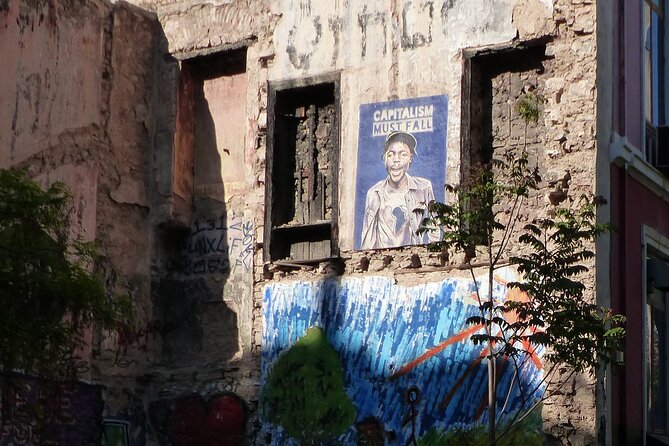
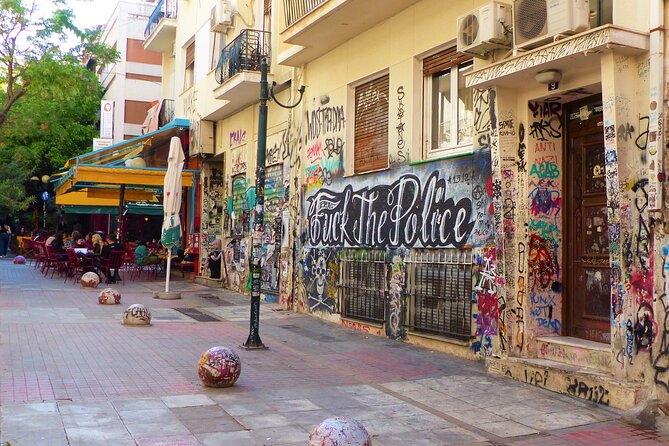
The final part takes place at several stops in Exarchia and lasts about 20 minutes, with additional time spent walking between locations. Exarchia is known for anarchists, refugees, queer communities, artists, activists, and residents involved in local initiatives.
The guide addresses the neighborhood’s role in current debates about the economic crisis, police violence, gentrification, and social justice. You will also see expressive street art and signs of community action.
This is where the tour’s historical argument reaches the present. The resistance described earlier is not treated as finished. Exarchia shows how conflict over power, public space, housing, policing, and identity remains part of Athens today.
You should approach this section with an open mind. Exarchia is not presented as a simple attraction, and the tour does not turn difficult issues into entertainment. The value comes from listening, observing, and asking respectful questions.
The end point is Themistokleous 68, near Exarchia Square. That makes the walk convenient if you plan to continue exploring the neighborhood afterward, although no private transportation is included.
Price, private format, and what you receive
The price is $86.82 per person. For a 2-hour-30-minute private experience, that is more expensive than joining a large general city walk, but the comparison is not quite fair.
You are paying for a focused theme, a private group, and the ability to shape the conversation. Six or more people can make the per-person price more attractive if group discounts apply. The tour also includes all fees and taxes, with no museum admission charges listed along the way.
I see the value most clearly for a small group that wants political and social context. If you only want major monuments or ancient sites, another tour will probably serve you better. If you want to understand why central Athens looks and feels the way it does, the price can make sense.
The tour is often reserved well ahead of time, with an average booking lead time of 88 days. That suggests you should not assume you can always find a last-minute place, especially if your dates are fixed.
Who should book this walk?
I would recommend it to adults, older teenagers, students, history fans, and anyone interested in social movements. It is adapted for people over 10, but the subject matter may be better suited to children who can follow serious discussions about occupation, violence, and civil rights.
It also suits visitors who prefer conversation to spectacle. Past participants valued Maëlle’s enthusiasm, personal attention, and ability to make a difficult history entertaining without stripping away its meaning.
I would skip it if you have limited mobility, dislike walking, or want a relaxed introduction built around food, mythology, or ancient ruins. The tour requires steady movement through central Athens and Exarchia, and it depends on good weather.
Confirmation arrives at booking. Service animals are allowed, and the route is near public transportation. You can cancel for a full refund up to 24 hours before the start time. If bad weather forces cancellation, you are offered another date or a full refund.
Should you book the City of Rebellion tour?
Book it if you want Athens to make sense beyond the Acropolis. The route gives you a useful chain of connections: Ottoman rule, revolution, occupation, monarchy, national memory, student action, and present-day neighborhood politics.
I especially like it as a first or second Athens activity, when you still have time to notice the city through this new lens. The private setting and Maëlle’s engaging style make it easier to ask questions and focus on the subjects that matter most to you.
Do not book it simply because you want to see famous sights. Several landmarks appear along the way, but the real purpose is understanding resistance and social change. For a mobile visitor who welcomes a serious, thoughtful walk, this is one of the more distinctive ways to meet modern Athens.
FAQ
Where does the Athens City of Rebellion tour start?
The tour starts at Pl. Monastirakiou 2, Athina 105 55, Greece, in Monastiraki Square.
Where does the tour end?
It ends at Themistokleous 68, Athina 106 81, Greece, near Exarchia Square.
How long does the walking tour last?
The experience lasts approximately 2 hours and 30 minutes, including walking time between stops.
Is this a private tour?
Yes. Only your group participates in the activity.
What is the price?
The listed price is $86.82 per person. Group discounts are available.
Is transportation included?
No. Private transportation is not included. The route takes place on foot and is near public transportation.
What age group can take the tour?
The experience is adapted for anyone over 10 years old.
Is the tour suitable for people with walking difficulties?
It is not recommended for travelers with walking difficulties because the experience involves walking between several stops.
Are service animals allowed?
Yes. Service animals are allowed.
What happens if the weather is poor?
The experience requires good weather. If it is canceled because of poor weather, you will be offered another date or a full refund.
Can I cancel for a full refund?
Yes. You must cancel at least 24 hours before the experience start time to receive a full refund.
Freshly added Athens trips
- Athens and Ancient Corinth Private from Athens★ 5.0 · 3 reviews
- From Athens: Mycenae and Epidaurus Private Tour★ 4.8 · 3 reviews
- Full day Meteora private tour★ 5.0 · 3 reviews
- Double Shore Dive (certified divers)★ 4.5 · 3 reviews
- Athens Hills: Mythology Treasure Hunt★ 5.0 · 3 reviews
- Sunset & swimming at Cape Sounio, Poseidon temple★ 5.0 · 3 reviews
- Philosophy Experience at Plato’s Academy Park – basic version★ 5.0 · 3 reviews
- Corinth Canal, Ancient Corinth, Mycenae, Nafplio & Epidaurus Private Sightseeing★ 5.0 · 3 reviews
City Tours, compared.
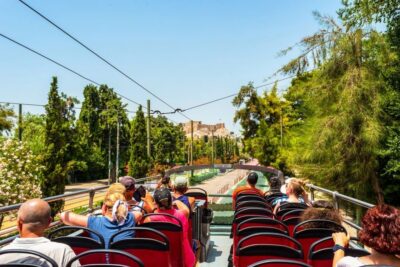

City Sightseeing Athens, Piraeus & Beach Riviera Hop-On Hop-Off Bus Tours
Read our review →
City Pass with Acropolis, Museums, Hop-On Hop-Off Bus
Read our review →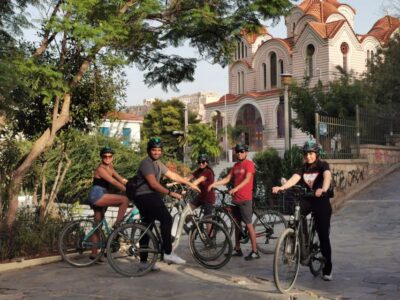
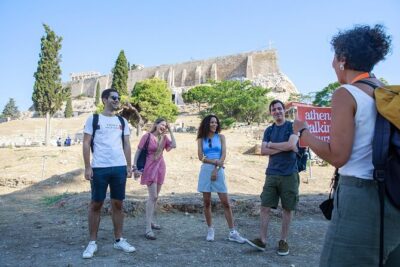
The Acropolis, Athens Walking City Tour and Acropolis Museum
Read our review →
Acropolis Walking Tour, Including Syntagma Square & City Center
Read our review →
Athens Off the Beaten Track Private City Walking Tour
Read our review →Browse the lists this tour appears in