
Reviewed · ANCIENT CORINTH TOURS
Ancient Corinth Half Day Tour
The best part of this private Ancient Corinth tour is how much ground you cover in about five hours. From Athens, you reach the Corinth Canal, the ruins of a major Greek and Roman city, a hilltop fortress, and an ancient harbor tied to eastern trade routes. It is a smart way to see the Corinth area when a full-day Peloponnese trip will not fit your schedule.
I like the easy door-to-door ride and the fact that no strangers join your group. I also like the mix of famous sights and quieter ones, especially Kechries, where you can pause at the remains of Corinth’s eastern port. The main drawback is that your English-speaking driver cannot enter the archaeological sites with you by law. A licensed guide is optional, but costs an additional 260 euros in cash.
In This Review
- Key points to know before booking
- Why this short Corinth trip works from Athens
- The Corinth Canal, a 20-minute engineering stop
- Ancient Corinth and the Temple of Apollo
- Acrocorinth, the fortress above the ruins
- Kechries, a brief look at Corinth’s eastern harbor
- What the driver can and cannot do
- The practical value of a private five-hour outing
- Who should book the Ancient Corinth tour
- FAQ
- How long is the Ancient Corinth tour?
- What sights are included?
- Is transportation included?
- Can I be picked up at Athens International Airport?
- Is the tour private?
- Is a licensed tour guide included?
- How much is admission to Ancient Corinth?
- What is the cancellation policy?
Key points to know before booking
- Four distinct Corinth sights in five hours: See the canal, Ancient Corinth, Acrocorinth, and Kechries in one compact outing.
- Private transport for up to two people: The $363.71 price covers the group, not each passenger, which makes the math better for couples.
- The driver gives context outside the sites: Drivers explain the monuments, myths, and Greek history, but they do not provide guided walks inside.
- Acrocorinth adds a dramatic medieval stop: The fortress sits on a huge rock above Ancient Corinth and gives the trip a different feel from the Roman ruins.
- Site admission is extra: Ancient Corinth costs 15 euros per adult, and the optional licensed guide costs 260 euros.
- Pickup works well for cruise passengers: Collection and return are available from Athens hotels and Piraeus Port, with airport pickup possible for an extra fee.
Why this short Corinth trip works from Athens
Corinth lies west of Athens, beyond the narrow isthmus that joins mainland Greece to the Peloponnese. The drive follows the national highway for about 45 miles, so the tour spends a useful part of its five-hour window on the road. Round-trip transport in an air-conditioned vehicle keeps the outing simple, especially if you do not want to rent a car.
The tour is fully private. That matters here because Ancient Corinth and Acrocorinth reward different amounts of time for different people. You can linger over the Temple of Apollo, move quickly through the museum, or spend extra attention on the fortress without waiting for a large group.
The price is $363.71 for up to two people. For a couple, that works out to about $182 per person before entrance fees and any guide supplement. It is not a cheap half-day outing, but the private vehicle, pickup, flexible pace, bottled water, onboard WiFi, and direct return to Athens give it reasonable value if convenience matters more than finding the lowest-cost bus or group excursion.
The tour is also useful for a short Athens stay or a cruise stop. Pickup and drop-off are included at Athens hotels and Piraeus Port. Airport pickup can be arranged, but it costs extra and varies by vehicle type.
More Ancient Corinth and canal stops:
- From Athens: Ancient Corinth Day Trip with Canal & VR Guide
★ 4.6 · 1,073 reviews - Private Biblical Tour Ancient Corinth & Isthmus Canal from Athens
★ 5.0 · 762 reviews - Athens: Ancient Corinth & Nafplio Full Day Trip with Swim
★ 4.8 · 523 reviews
The Corinth Canal, a 20-minute engineering stop
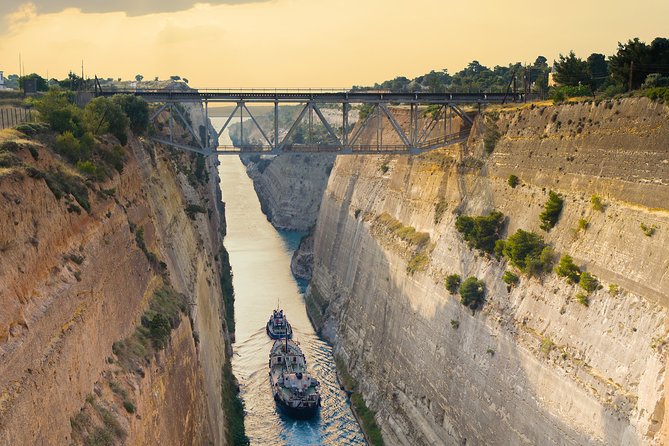
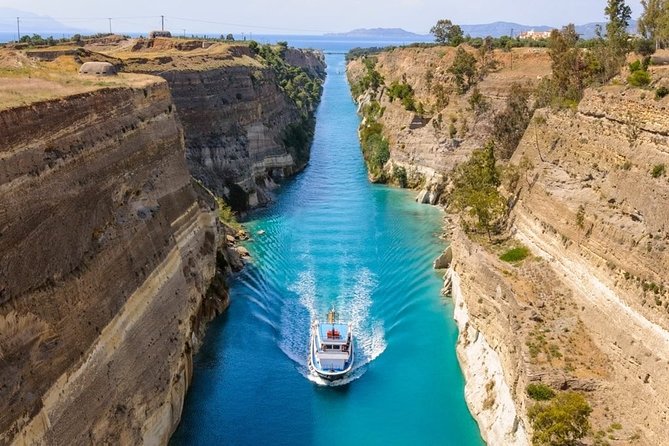
Your first stop is the Corinth Canal, also called the Isthmus Canal. It links the Saronic Sea with the Gulf of Corinth, cutting across the isthmus that ships once had to circle.
The canal was completed in the late 19th century, but the idea is far older. Ancient ships traveling between the Aegean and Adriatic routes could avoid an extra 185 nautical miles by crossing the isthmus. Periander, the tyrant of Corinth, is credited with considering a canal in the early sixth century BC, though the technology of the time was not up to the job.
Instead, the ancient Corinthians built the diolkos, a stone track used to move ships overland on wheeled platforms. The canal project was tried again under Emperor Nero in AD 67, when 6,000 enslaved people were put to work. Nero was killed before the plan was completed, and the modern canal finally reached completion almost 1,800 years later.
You have about 20 minutes here, with no admission fee. That is enough for a look, photographs, and a quick explanation from your driver. It is not enough for a long walk or a detailed engineering visit, so think of the canal as a sharp opening scene rather than the main event.
Ancient Corinth and the Temple of Apollo
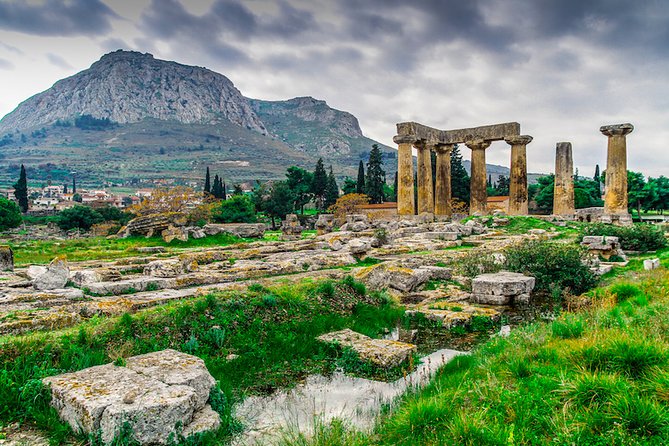
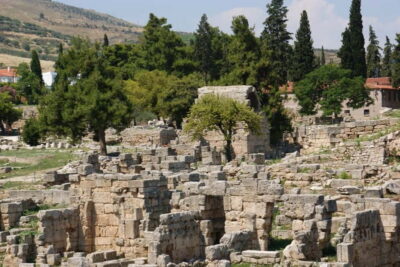
Ancient Corinth is the heart of the tour. The archaeological site spreads across the remains of a city that became wealthy through trade and its position beside the isthmus. Its story stretches from the 10th century BC through Greek, Roman, Byzantine, Ottoman, and modern periods.
The city had strong links to colonization. Corinth founded or controlled colonies including Corfu and Syracuse, and it played a major part in naval and political struggles across the Greek world. Its wealth came not only from shipping but also from craft production, including the black-figured pottery that traveled widely in the ancient Mediterranean.
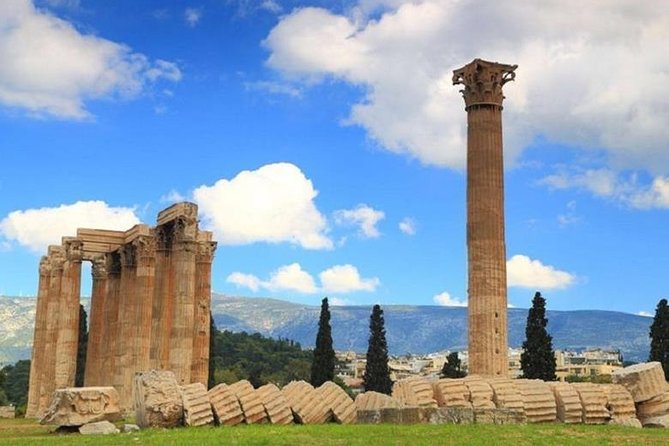
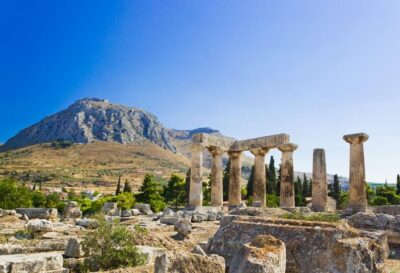
The most recognizable ruin is the Temple of Apollo, built in the middle of the sixth century BC. Seven columns remain standing. Their monolithic construction is unusual because many Greek temples used columns assembled from separate drums. Even in partial form, the temple helps you picture the scale and status of ancient Corinth.
The city was destroyed by the Romans in 146 BC after Corinth joined the Achaean League and opposed Roman power. Its inhabitants were killed or enslaved, and the area was treated as public Roman land. Julius Caesar refounded Corinth in 44 BC as a Roman colony, and it later became the administrative center of the Roman province of Achaea.
That second life is visible across the site. The agora, or public marketplace, dates largely to the fourth century BC but continued in use under Roman rule. The bema, a platform in the agora, is traditionally linked with the biblical account of Paul being questioned by Gallio, the Roman proconsul. That identification has been challenged by archaeological and historical research, so your driver or a licensed guide may give you a more careful explanation than the familiar simple version.
The Lechaion Road is one of the most satisfying parts of the visit. This paved street once led from the agora toward Corinth’s western harbor. Shops lined it, and public life took place along its galleries. Walking on the old paving gives you a more direct sense of the city than viewing isolated columns from a distance.
Look also for the Fountain of Peirene, a water source famous for its clear water and elaborate decoration. Ancient poets connected it with Pegasus and inspiration. The spring house is beside the gateway leading to Lechaion Road, so it fits naturally into your walk.
The site includes a Roman odeion, or concert hall, first built in the first century AD and later enlarged by Herodes Atticus. There is also a large theater with Greek origins and later Roman alterations. The Roman version could even host staged naval battles, known as naumachiai.
Admission to Ancient Corinth is not included. The stated entrance fee is 15 euros per adult. Allow about one hour for the archaeological site, though the amount of time you get may depend on traffic, your interest in the museum, and how much time is reserved for Acrocorinth.
Acrocorinth, the fortress above the ruins
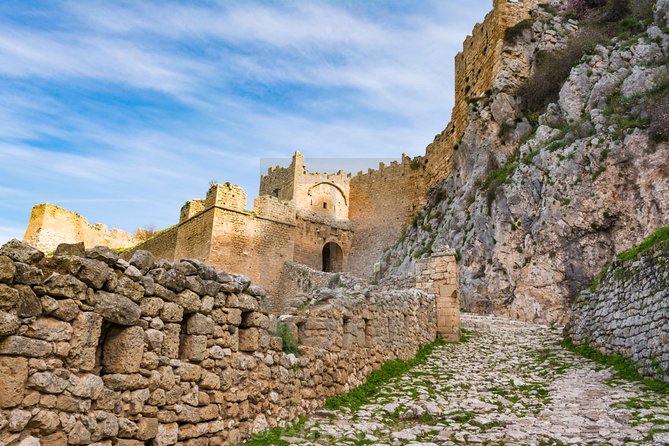
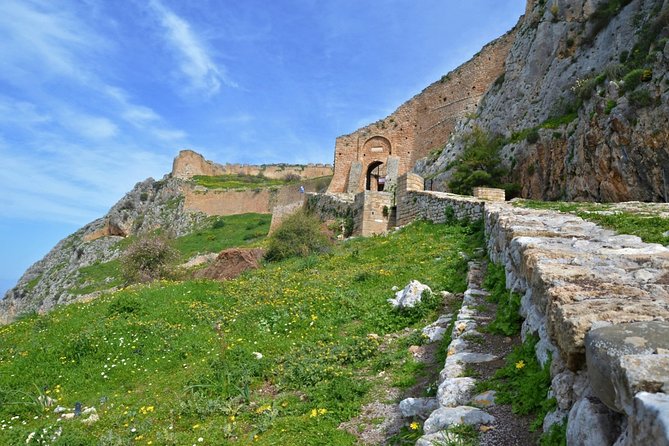
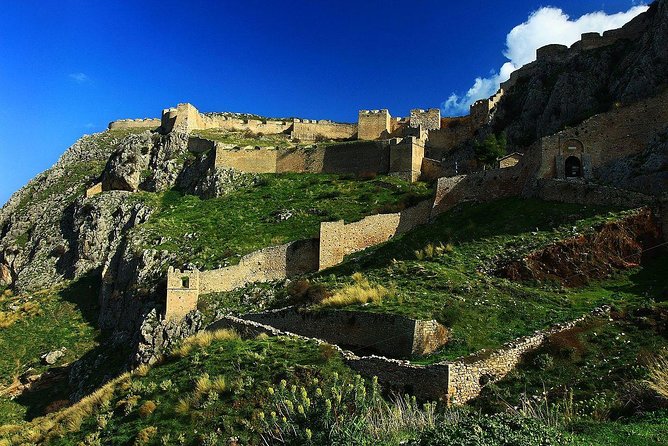
Acrocorinth is the high point of the day in more ways than one. The monolithic rock rises above Ancient Corinth and carries the remains of the city’s acropolis. The site was occupied from archaic times until the early 19th century and is now one of Greece’s major medieval castle sites.
The contrast with the lower archaeological site is excellent. At Ancient Corinth, you focus on streets, temples, fountains, and public buildings. At Acrocorinth, you see how military power used height, walls, and natural rock to control the surrounding region.
You have about one hour here, and admission is not included. The castle site is extensive, so wear practical shoes and expect uneven ground. The tour information does not promise a particular amount of walking inside the fortress, so anyone who has difficulty with slopes or rough surfaces should ask the operator about current conditions before booking.
The setting is a major reason to include Acrocorinth. From the rock, you can look down toward the ancient city and across the surrounding area. Even if you are more interested in history than ruins, the scale of the fortifications makes the visit worthwhile.
This stop does require a little discipline with time. Acrocorinth can easily absorb more than an hour, especially if you want to explore every wall and gate. On a five-hour tour, lingering here may reduce your time at Kechries or Ancient Corinth.
Same city, a completely different century:
- Athens: Acropolis & up to 5 Archaeological Sites Combo Pass
★ 4.4 · 12,619 reviews - Athens: Acropolis Ticket with Optional Audio or Live Guide
★ 4.2 · 11,055 reviews - Athens: Acropolis, Parthenon & Acropolis Museum Guided Tour
★ 4.8 · 9,316 reviews - Athens: Cape Sounion & Poseidon Temple Sunset Half-Day Trip
★ 4.8 · 8,241 reviews
Kechries, a brief look at Corinth’s eastern harbor
After Ancient Corinth, the route can include a short stop at Kechries, the ancient port on the Saronic Gulf. Corinth had two major ports, and Kechries served trade moving eastward through the Saronic Gulf.
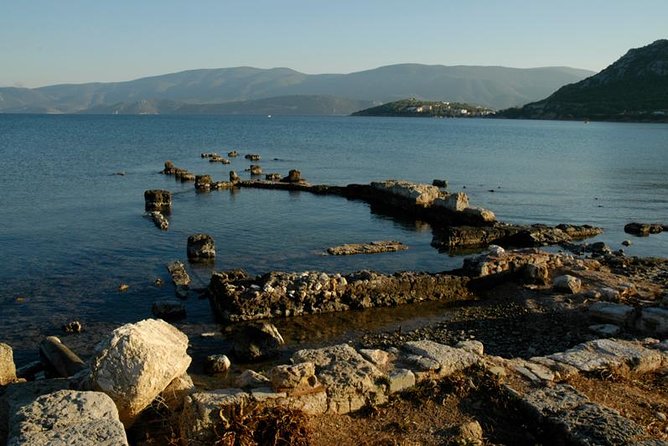
The stop lasts about 15 minutes and has no admission fee. You will see remains rather than a large, fully reconstructed harbor district, so keep your expectations in check. Its value is in connecting the city’s power to the sea. Corinth was not wealthy simply because it sat on a useful strip of land. It also controlled access to important maritime routes.
Kechries is linked with the Apostle Paul’s second missionary journey. That connection adds religious interest, though the stop itself is brief. If you want extended archaeological interpretation, the optional licensed guide would be more useful than relying only on a quick explanation from the driver.
The schedule refers to visiting Kechries after lunch, but lunch is not included. Snacks are also excluded. Ask your operator how the meal break will fit into the day, since the exact timing matters on a five-hour tour.
What the driver can and cannot do
Your English-speaking driver explains the monuments before you enter, along with myths, ancient history, and points about modern Greece. The driver can make the road time more useful, as the drive from Athens is a substantial part of the outing.
There is an important legal limit: the driver is not a licensed guide and cannot accompany you inside the archaeological sites. That means you will walk through Ancient Corinth and Acrocorinth without a guide unless you pay for the optional supplement.
The licensed English-speaking guide costs 260 euros, payable in cash, and is subject to availability. For two people who want serious historical explanation, that cost is significant. For a first-time visitor who mainly wants the setting, monuments, and a clear overview, the driver’s explanations may be enough.
Past drivers have included Planos, who explained Greek gods and local myths, and company owner Frank Kotsiopoulos, who was described as punctual and helpful. Frank also arranged a rapid antigen test for one couple, a useful sign that the company may help with practical problems when schedules change. That assistance is not advertised as a standard part of the tour, so do not book on the assumption that testing will be included.
The practical value of a private five-hour outing
The private format gives you control, but the short duration sets limits. The listed stop times total about two hours and 15 minutes, before the drive, lunch, and transitions. You are not getting a relaxed day at every site. You are getting a carefully packed introduction to Corinth.
I would choose this format if you are staying in Athens, have already seen the main city sights, and want an important ancient site without giving up a full day. It also suits cruise passengers with a port pickup and return plan, provided your ship schedule leaves enough margin.
The tour includes bottled water, an air-conditioned vehicle, private transportation, and WiFi onboard. Professional drivers are included, but not a site guide. Entrance to Ancient Corinth is 15 euros per adult, and airport transfers cost extra if requested.
The experience is offered in English and receives a five-star rating from 20 published ratings, with 100 percent recommending it. The strongest praise centers on punctual pickup, friendly service, clear explanations during the drive, and the combination of Ancient Corinth with the impressive fortress. Those are exactly the areas where this tour earns its keep.
Free cancellation is available if you cancel at least 24 hours before the local start time. Changes or cancellations inside that window are not accepted for a refund.
Who should book the Ancient Corinth tour
Book this tour if you want private transport and a broad Corinth sampler rather than a slow archaeological study. Couples will get the best price per person, and the no-strangers format is useful if you value a flexible pace.
It is a good match for first-time visitors who want more than the canal alone. The Temple of Apollo, Lechaion Road, Fountain of Peirene, Acrocorinth fortress, and Kechries harbor give you several distinct views of the region.
You may prefer a longer tour if you want to read every museum display, explore the fortress at leisure, or spend extended time at the harbor. You should also budget for the licensed guide if historical interpretation inside the ruins is important to you.
For a short Athens stay, a port day, or a couple who wants a private introduction to the Corinth region, I would book it. Just treat the day as a brisk overview, confirm the lunch plan, and decide in advance if the 260-euro guide supplement fits your priorities.
FAQ
How long is the Ancient Corinth tour?
The tour lasts approximately five hours, including round-trip transportation from Athens.
What sights are included?
The route includes the Corinth Canal, Ancient Corinth, Acrocorinth, and the remains of the ancient port of Kechries.
Is transportation included?
Yes. Private transportation in an air-conditioned vehicle is included, with pickup and drop-off at Athens hotels and Piraeus Port.
Can I be picked up at Athens International Airport?
Airport pickup and drop-off can be arranged on request for an additional fee that varies by vehicle type.
Is the tour private?
Yes. Only your own group participates, with no unknown passengers joining the vehicle.
Is a licensed tour guide included?
No. An English-speaking driver explains the sites from outside, but the driver cannot accompany you inside by law. A licensed guide can be arranged for an additional 260 euros in cash, subject to availability.
How much is admission to Ancient Corinth?
Admission is 15 euros per adult and is not included in the tour price. The tour information also lists no admission fee for the Corinth Canal and Kechries.
What is the cancellation policy?
You can cancel for a full refund at least 24 hours before the experience start time. Cancellations or changes made less than 24 hours before the start are not accepted for a refund.
Freshly added Athens trips
- Athens and Ancient Corinth Private from Athens★ 5.0 · 3 reviews
- From Athens: Mycenae and Epidaurus Private Tour★ 4.8 · 3 reviews
- Full day Meteora private tour★ 5.0 · 3 reviews
- Double Shore Dive (certified divers)★ 4.5 · 3 reviews
- Philosophy Experience at Plato’s Academy Park – basic version★ 5.0 · 3 reviews
- Athens Hills: Mythology Treasure Hunt★ 5.0 · 3 reviews
- Sunset & swimming at Cape Sounio, Poseidon temple★ 5.0 · 3 reviews
- Private Acropolis Tour – Ticket Included★ 5.0 · 3 reviews
Ancient Corinth Tours, compared.
Ancient Corinth Day Trip with Canal & VR Guide
Read our review →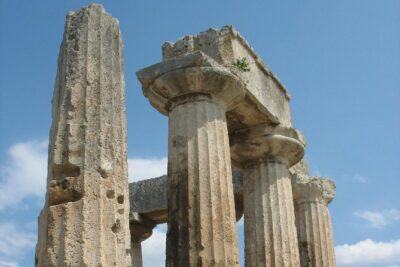
Private Biblical Tour Ancient Corinth & Isthmus Canal from Athens
Read our review →
Ancient Corinth & Nafplio Full Day Trip with Swim
Read our review →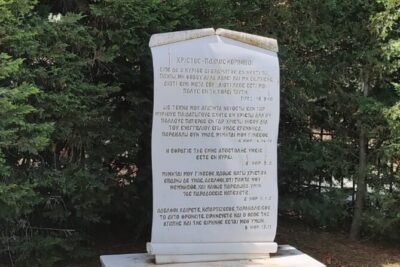
Private Tour of Apostle Paul’s Footsteps in Ancient Corinth
Read our review →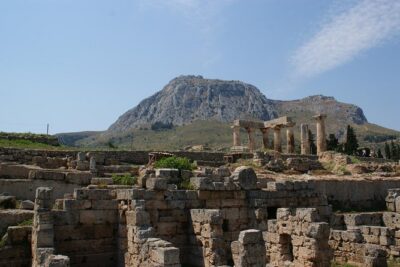
Corinth Half-Day Trip from Athens with Entrance Tickets
Read our review →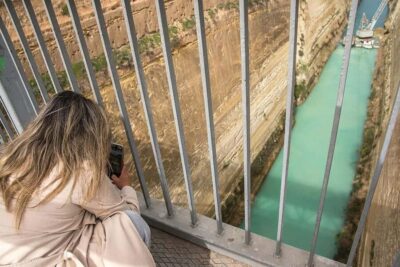
Browse the lists this tour appears in