Reviewed · PRIVATE
Semi-Private Balkans Tour; From Athens to Sarajevo or Belgrade
The big appeal here is simple: in 14 days, you cross seven countries while someone else handles the border crossings, hotels, fuel, road taxes, and daily driving. You move from ancient Greece through Albania, North Macedonia, Kosovo, Montenegro, Bosnia and Herzegovina, and Serbia, with UNESCO sites appearing at a steady clip.
I like the small maximum of 10 people, which should make the road time more personal than a large coach tour. I also like the mix of famous sights and everyday places, from Delphi and Meteora to Albanian coffee, Kosovo bazaars, a family farm, and Sarajevo’s old quarters. The drawback is the pace: this is a packed journey, and several days involve long drives and short visits. You see a great deal, but rarely linger.
In This Review
- Key points to know before booking
- Why this route works for a first visit
- Days 1 and 2: Delphi, Meteora, Ioannina, and Gjirokaster
- Days 3 and 4: Stone houses, castle towns, and Albanian art
- Days 5 and 6: Drilon, Saint Naum, and Lake Ohrid
- Day 7: Tirana through food, markets, and Bunk’Art 2
- Day 8: Kruja and the cultural crossroads of Prizren
- Day 9: Gjakova, Decan Monastery, and Rahovec wine country
- Day 10: A farm lunch option and Shkodra’s fortress views
- Days 11 and 12: Sveti Stefan, Budva, Kotor, and Mostar
- Day 13: Sarajevo, the Latin Bridge, and layered memory
- Transport, hotels, and the daily pace
- Who will get the most from this tour
- Should you book this 14-day Balkans tour?
- FAQ
- How long is the tour?
- Which countries are visited?
- What is the maximum group size?
- What is included in the price?
- Are lunches and dinners included?
- Is breakfast included?
- Where does the tour begin?
- Where can the tour end?
- Is airport transfer in Sarajevo included?
- Are the site entry tickets included?
- Can the schedule change?
- Is the tour refundable?
Key points to know before booking
- Seven countries in 14 days: Greece, North Macedonia, Kosovo, Albania, Montenegro, Bosnia and Herzegovina, and Serbia.
- A maximum of 10 people: Small enough for a more personal road tour.
- Private transportation included: Fuel, road taxes, international car insurance, and tourist taxes are covered.
- Strong UNESCO focus: Delphi, Meteora, Gjirokaster, Berat, Ohrid, Kotor, Mostar, and other protected sites feature prominently.
- Three-star hotel stays: Breakfast is included each morning, while lunches, dinners, drinks, and snacks are extra.
- Two possible endings: Airport transfer in Sarajevo or hotel drop-off in Belgrade, depending on your choice.
Why this route works for a first visit
The western Balkans can be awkward to connect on your own. Roads cross several national borders, public transport links are uneven, and a route that looks short on a map can take much longer in practice. This tour solves that problem with private transportation and a tour leader who stays with the group.
The route also gives you a useful historical sweep. You begin among ancient Greek temples and monasteries, then move through Ottoman towns, Orthodox religious centers, communist-era sites, Adriatic fortresses, and cities shaped by the Yugoslav wars. That range is the real strength of the trip.
You should know what kind of holiday this is. It is not a slow coastal break, and it is not a deep study of one country. It is a fast-moving introduction, with many one-hour stops and several border crossings. If you want to see the broad shape of the region before returning for longer stays, this is a sensible format.
The price is $5,142.79 per person. That is a serious sum, but it includes 13 nights with breakfast, private transport, a professional guide, admission tickets for the planned sites, road expenses, tourist taxes, and the Athens pickup. The value depends on how much you would otherwise spend arranging seven countries yourself. It is also based on double, twin, triple, or quadruple occupancy in three-star hotels, so solo room pricing and exact room arrangements deserve attention before booking.
A few more Athens days worth a look
- Best of Athens Half Day Private Tour
★ 5.0 · 3,714 reviews - Athens Full Day Private Tour
★ 5.0 · 2,903 reviews - Athens Airport Private Arrival Transfer with Meet & Greet
★ 4.5 · 1,495 reviews
Days 1 and 2: Delphi, Meteora, Ioannina, and Gjirokaster
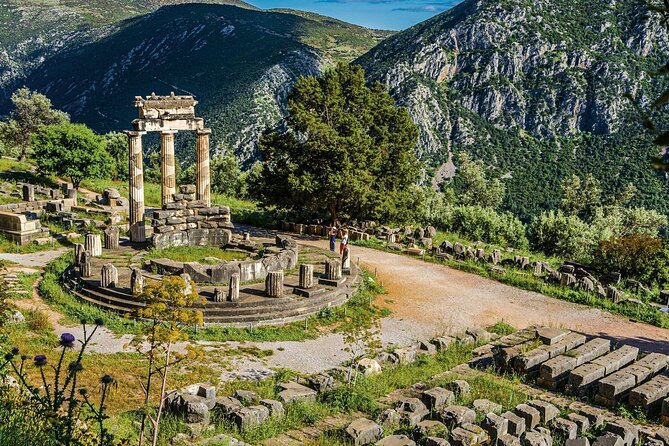
The opening day delivers two major Greek sights. Delphi was the ancient center of the Oracle of Apollo, and the visit covers the archaeological site and museum. You can expect to see the Temple of Apollo, the Treasury of the Athenians, the theater, the stadium, and the Charioteer of Delphi, a celebrated bronze statue dated to 475 B.C.
The listed visit is only about an hour, so this is an introduction rather than a full archaeological study. Still, having transportation from Athens makes Delphi much easier to fit into a wider regional route.
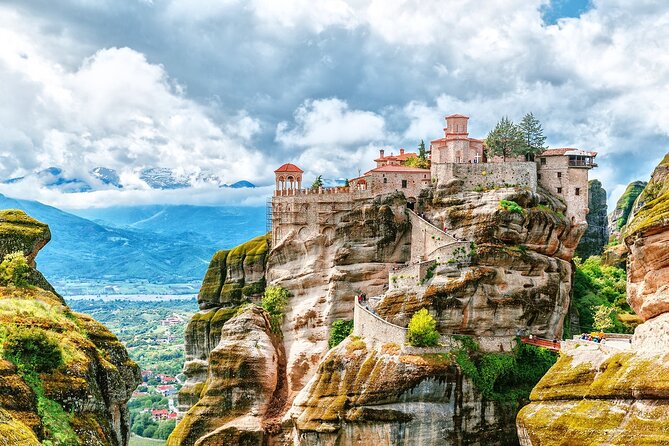
Meteora follows, with two hours among giant rock pillars topped by monasteries dating from the 14th and 15th centuries. The sunset stop is one of the most memorable visual moments of the trip, but remember that the schedule is tight. You will see the setting and atmosphere, not every monastery in detail.
On day two, Ioannina offers a change of mood. Its old town and castle reflect Byzantine and Ottoman periods, with narrow streets, old walls, historic buildings, cafés, and time to walk independently. This is a good place to slow down for a couple of hours before crossing into Albania.
The afternoon drive reaches Gjirokaster, known for its stone houses and steep streets. The short first visit is mainly a transfer-day introduction. The following day gives the town the attention it deserves.
Days 3 and 4: Stone houses, castle towns, and Albanian art
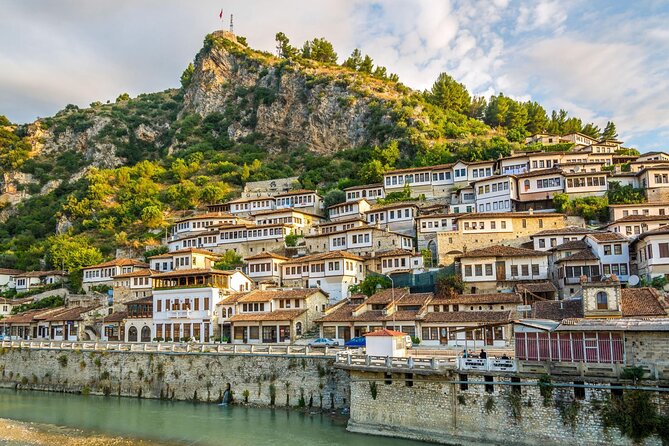
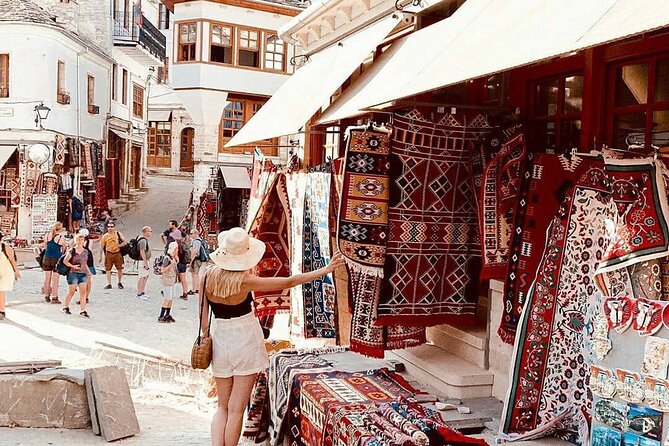
Gjirokaster is one of the most atmospheric stops in Albania. Its houses were built like small fortresses, and the town climbs the mountainside in pale stone. The castle is the anchor of the city, while the medieval bazaar below offers handmade crafts and local goods.
The visit to Skenduli House adds something that a castle walk cannot. This preserved home retains its original interior and gives you a look at domestic life in Gjirokaster. I consider this one of the most useful stops because it moves the experience beyond grand monuments.
Berat follows on day four. The town is known as the city of 1,001 windows, a reference to the old houses rising over the hillsides. Berat Castle is not simply a ruin to photograph. People still live within its walls, alongside churches, mosques, and old stone lanes.
The National Iconographic Museum Onufri introduces the work of the famous church painter associated with Berat. The museum is especially notable for the distinctive red color linked with his paintings. The Gorica neighborhood and its stone bridge then provide a more relaxed walk.
These two Albanian towns are among the best parts of the route for people who care about architecture and local traditions. The tradeoff is that the streets are narrow and often steep. Comfortable shoes will matter more here than stylish luggage.
Days 5 and 6: Drilon, Saint Naum, and Lake Ohrid
Day five begins with Driloni National Park in Albania, where springs feed a small lake surrounded by trees and greenery. It is a peaceful pause before another border crossing. Tushemisht adds a short stop with local character, natural scenery, and a lakeside setting.
After entering North Macedonia, you reach the Monastery of Saint Naum at the source of the Crni Drim River. The monastery sits beside clear spring water, with mountain views behind it. The setting is as important as the building, and the stop offers a welcome contrast to the stone towns and fortresses earlier in the trip.
Ohrid receives three hours on day six. The city and lake have UNESCO protection, and Ohrid is an important center of Orthodox Christianity. The walk includes viewpoints near the Church of St. John, the Church of St. Nicholas, and the Halveti Hayati Tekke mosque.
The claim that Ohrid has 365 Orthodox churches, one for each day of the year, is part of the city’s identity. You will not visit all of them, of course, but the old streets and lakeside setting make this one of the places where you may wish for more time.
That is a recurring theme here. The schedule gives you a strong first taste of Ohrid, yet a longer independent stay would allow more room for wandering, meals, and quiet time beside the lake.
Same city, a completely different century:
- Athens: Acropolis & up to 5 Archaeological Sites Combo Pass
★ 4.4 · 12,619 reviews - Athens: Acropolis Ticket with Optional Audio or Live Guide
★ 4.2 · 11,055 reviews - Athens: Acropolis, Parthenon & Acropolis Museum Guided Tour
★ 4.8 · 9,316 reviews - Athens: Cape Sounion & Poseidon Temple Sunset Half-Day Trip
★ 4.8 · 8,241 reviews
Day 7: Tirana through food, markets, and Bunk’Art 2
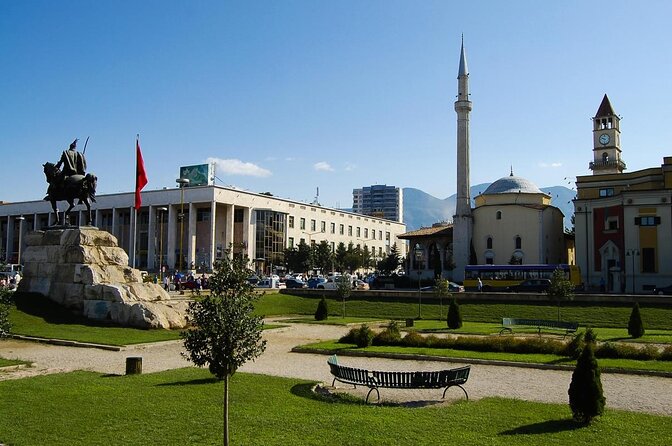
Tirana is explored with a local companion and a food-centered program. The day begins with byrek, a pastry filled with cheese, meat, or spinach, at a small local spot. You then pass through Tregu Çam, a market associated with the Albanian Çam community, where bargaining is part of the experience.
The food continues with traditional dessert, Albanian coffee, and qofte, grilled meatballs served with bread. Vegetarians are offered bread with Albanian gjize, a cottage cheese. There is also a taste of Albanian raki.
This is one of the tour’s best attempts to connect sightseeing with ordinary city life. You are not simply checking off monuments. You are seeing markets, cafés, food stalls, and residential streets, with a local person explaining the setting.
Bunk’Art 2 brings the day into Albania’s communist past. The museum occupies a former nuclear bunker built to protect Enver Hoxha and senior party officials during the Cold War. Exhibits cover the communist army and daily life under the regime.
The food stops are included as part of the day’s experience, but lunches and dinners generally are not included in the overall tour price. Ask your guide which meals are covered on your departure date so your budget stays clear.
Day 8: Kruja and the cultural crossroads of Prizren
Kruja is tied to Albanian resistance against Ottoman expansion in the 15th century. Its castle sits high on rocky ground, and the old bazaar below is one of the best places on the route to shop for handmade Albanian souvenirs.
The wooden shops and narrow lanes make Kruja more than a quick photo stop. You can look for carpets, jewelry, and other crafts, but keep the short schedule in mind. The castle visit includes lesser-used paths associated with movement in and out of the fortress during attacks.
The border crossing into Kosovo leads to Prizren, a city shaped by Illyrian, Byzantine, and Ottoman influences. A river runs through the old town, and bridges connect streets lined with historic houses, religious buildings, shops, and cafés.
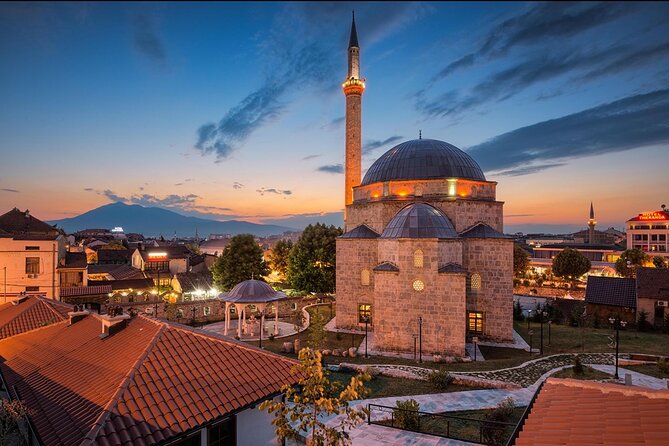
The Sinan Pasha Mosque is the main religious visit, with colorful interior patterns and Ottoman design. Kalaja Fortress sits above the town and gives you a broad view over Prizren. The climb is worthwhile, though uneven ground and the uphill approach may be tiring.
Prizren is also known for filigree metalwork and its annual Dokufest short film festival in August. You will not have time to cover every side of the city, but the combination of fortress, mosque, bazaar, and riverfront makes it a strong introduction to Kosovo.
Day 9: Gjakova, Decan Monastery, and Rahovec wine country
Gjakova has Kosovo’s oldest and largest bazaar. The market has been destroyed and rebuilt more than once, including after the Kosovo war, and its return to traditional form gives the stop added meaning. You can browse handmade crafts or pause for a meal.
The Monastery of Decan is an important Orthodox site, with white walls and frescoes tied to 14th-century life and Byzantine painting. Orthodox monks still live there and produce food such as cheese. The site is listed by UNESCO, although the description provided does not include a standard admission charge.
Rahovec Valley shifts the focus to agriculture. Grapes have been grown here since Illyrian times, and vineyards cover the rolling hills at elevations of about 350 to 520 meters. September brings an annual wine festival, but the normal stop is a chance to understand Kosovo’s winemaking tradition.
This day is less about famous city centers and more about regional life. It is useful for seeing how craft, religion, food, and farming fit into the wider culture.
Day 10: A farm lunch option and Shkodra’s fortress views
Mrizi i Zanave is an agro-tourism farm built around local food production. You will tour the farm, hear how the family business created jobs in the surrounding area, and see old communist buildings adapted for storage. You have free time to buy local products or arrange a traditional lunch.
This is a particularly good stop for anyone interested in food systems rather than restaurant dining alone. The tour explains where products come from and how a local business uses regional ingredients. Lunch is not generally included, so plan to pay separately if you choose to eat there.
Shkodra, in northern Albania, gives its name to the largest lake in the Balkans. Its history reaches back many centuries, and Rozafa Castle offers views toward the lake and the rivers flowing toward the Adriatic.
The city also carries Venetian architectural influence and is known for handmade carnival masks during its February festival. The castle visit lasts about two hours, giving you more room than some of the shorter city stops.
Days 11 and 12: Sveti Stefan, Budva, Kotor, and Mostar
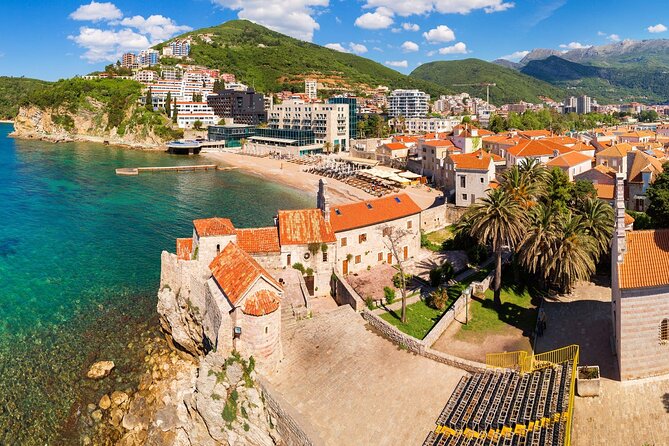
Montenegro begins with a viewpoint over Sveti Stefan. The former fishing village now operates as an exclusive residential resort, so the island itself is not available for ordinary sightseeing. The viewpoint is the practical way to see it, and half an hour is enough for photographs.
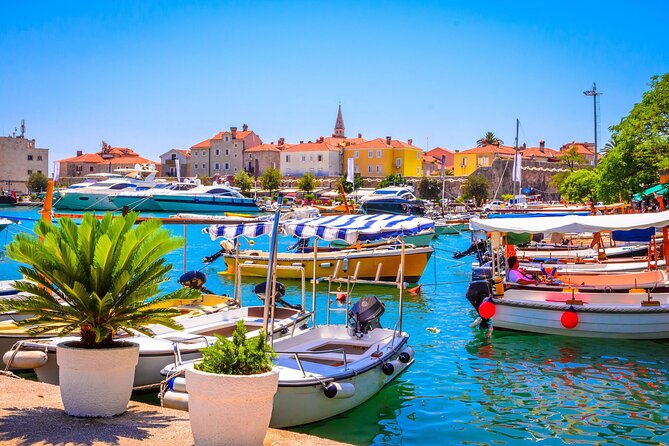
Budva combines a modern resort area with an older walled center. The visit focuses on medieval churches and the old town, rather than a beach stay. If you want swimming time, this schedule does not provide much of it.
Kotor is another high point. Its UNESCO-protected old town is a maze of cobbled streets, churches, and buildings marked with dates and former uses. The Church of St. Luke is included because of its local importance and symbolism of unity.
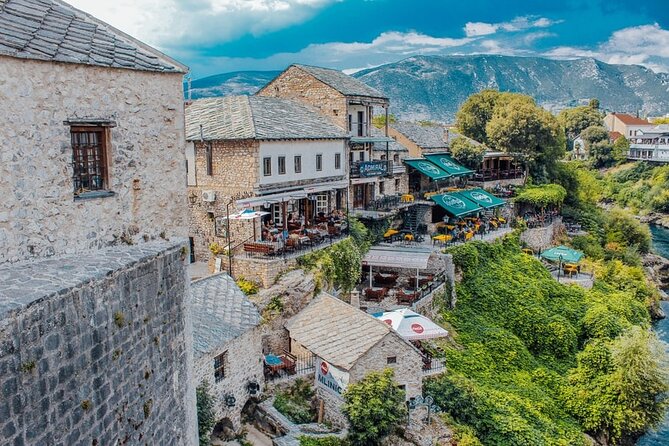
Day twelve crosses into Bosnia and Herzegovina and reaches Mostar. Stari Most, the Old Bridge, is the centerpiece, with Islamic architectural design dating from the 16th century. The surrounding bazaar has cobbled lanes, old mosques, shops, and reminders of the city’s wartime past.
Blagaj adds a quiet setting outside Mostar. Its tekija, or monastery, sits below a cliff beside the spring of the Buna River. The blue water and dramatic rock face make this a valuable half-day addition rather than a rushed bridge-only visit.
Day 13: Sarajevo, the Latin Bridge, and layered memory
Sarajevo brings together Ottoman, Austro-Hungarian, Jewish, Muslim, and Christian influences. The walking tour covers the city’s origins, the medieval Bosnian Kingdom, markets, mosques, churches, synagogues, and reminders of the Yugoslav war.
Bullet holes and cannon marks remain visible in parts of the city. That physical evidence gives the history a directness that no museum panel can quite match. The route includes uneven ground, so shoes with good grip are important.
At the Latin Bridge, you learn how the assassination of Archduke Franz Ferdinand helped trigger World War I. The visit connects a small bridge in Sarajevo with events that reshaped Europe.
You also have free time for traditional meat dishes and desserts in the old town. This is one of the few chances to pause without immediately heading to another border or monument, so use it well.
Transport, hotels, and the daily pace
The maximum group size is 10, and private transportation is included. That matters most on the long cross-border days, when a shared vehicle and an experienced driver save you from arranging separate buses and taxis.
The tour begins with hotel pickup in Athens at 9:00 a.m. Accommodation is in three-star hotels, with breakfast included for all 13 overnights. Exact properties are not provided, so ask about room occupancy, since the advertised price is calculated for double, twin, triple, or quadruple rooms.
The tour ends after breakfast on day 14. You can choose a free airport transfer to Sarajevo on that final day, or hotel drop-off in Belgrade. Any different Sarajevo airport transfer requires a separate quotation.
Expect a full schedule. Some stops last 30 minutes, while others run for one to three hours. Border checks, weather, public holidays, strikes, temporary closures, and other outside events can change the plan.
Who will get the most from this tour
I would recommend this trip to you if you want a guided first look at the western Balkans and prefer not to drive across multiple borders. It is especially well suited to people who enjoy archaeology, religious buildings, old towns, food traditions, and recent European history in equal measure.
The small group is a plus for solo visitors, couples, and friends who want company without a large bus crowd. Past guide names associated with this company include Eri Veseli, Ervin, and Julian, but your assigned guide may differ. Communication with the company is described as responsive, and special requests have been handled for some departures.
I would hesitate if you need unstructured days, luxury hotels, or long stays in each city. The schedule is too full for that. Also remember that the tour is non-refundable and cannot be amended for any reason, so confirm your dates, room arrangement, ending city, and border requirements before paying.
Should you book this 14-day Balkans tour?
Book it if your priority is coverage. You will see ancient Greek sites, Albanian castle towns, Lake Ohrid, Kosovo’s bazaars and monasteries, Montenegro’s Adriatic towns, Mostar, and Sarajevo without having to solve the transport puzzle yourself.
Skip it if your ideal holiday means staying three or four nights in each place. The route gives you a broad, useful introduction, but some cities deserve more time than the schedule allows. At $5,142.79, the tour makes the most sense when you value private transport, included admissions, guided context, and the convenience of moving through seven countries in one organized trip.
FAQ
How long is the tour?
The tour lasts approximately 14 days, beginning in Athens and ending with a transfer to Sarajevo Airport or hotel drop-off in Belgrade.
Which countries are visited?
The route includes Greece, North Macedonia, Kosovo, Albania, Montenegro, Bosnia and Herzegovina, and Serbia.
What is the maximum group size?
The tour has a maximum of 10 travelers.
What is included in the price?
The price includes three-star accommodation, breakfast, private transportation, a professional tour guide, listed entry tickets, tourist taxes, road taxes, petrol, and international car insurance.
Are lunches and dinners included?
No. Lunches, dinners, drinks, snacks, souvenirs, and personal spending are not included.
Is breakfast included?
Yes. Breakfast is included for all 13 hotel overnights.
Where does the tour begin?
The tour begins in Athens, with hotel pickup at 9:00 a.m.
Where can the tour end?
You can choose a transfer to Sarajevo Airport on day 14 or hotel drop-off in Belgrade.
Is airport transfer in Sarajevo included?
A free Sarajevo Airport drop-off is included only on the last day, day 14. A different airport transfer requires a separate quotation.
Are the site entry tickets included?
Yes. Entry tickets are included for the sites identified as included, such as Skenduli House, Berat Castle, the Onufri Museum, Saint Naum Monastery, Bunk’Art 2, Kruja Castle, Sinan Pasha Mosque, Kalaja Fortress, the Old Bridge in Mostar, and Blagaj tekija.
Can the schedule change?
Yes. Weather, strikes, bank holidays, temporary site closures, renovations, and other outside conditions can affect the schedule.
Is the tour refundable?
No. The experience is non-refundable and cannot be changed after booking.
Freshly added Athens trips
- Athens and Ancient Corinth Private from Athens★ 5.0 · 3 reviews
- From Athens: Mycenae and Epidaurus Private Tour★ 4.8 · 3 reviews
- Full day Meteora private tour★ 5.0 · 3 reviews
- Double Shore Dive (certified divers)★ 4.5 · 3 reviews
- Athens Hills: Mythology Treasure Hunt★ 5.0 · 3 reviews
- Sunset & swimming at Cape Sounio, Poseidon temple★ 5.0 · 3 reviews
- Philosophy Experience at Plato’s Academy Park – basic version★ 5.0 · 3 reviews
- Private Acropolis Tour – Ticket Included★ 5.0 · 3 reviews
Private, compared.


Athens Airport to Athens Hotels Private Arrival Transfer
Read our review →
Private Biblical Tour Ancient Corinth & Isthmus Canal from Athens
Read our review →
4 Hours – Athens & Acropolis Highlights Private Tour
Read our review →