
Reviewed · WORKSHOPS
Philosophy Experiential Workshop at Plato’s Academy Park -Athens
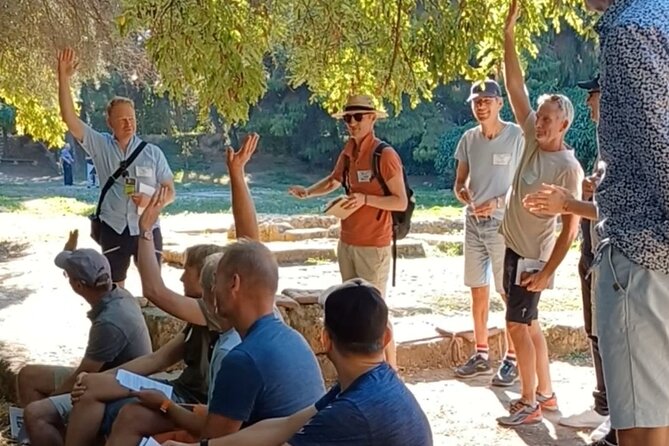
At Plato’s Academy Park, philosophy is not something you simply hear about. You sit near the remains of the ancient Gymnasium, consider Plato’s Allegory of the Cave, and test ideas through questions, debate, and role-play. The setting gives abstract thoughts a real sense of place.
I like the Socratic question-and-answer format, which keeps you involved instead of leaving you to watch a guide talk. I also like the replica ancient water-timer, a small but memorable prop that helps show how public debate was managed in the ancient world. The main drawback is that this is an outdoor workshop, so rain or poor weather can cancel it, and the park itself is not a grand monument on the scale of the Acropolis.
- Read and interpret ancient Greek texts in plain English, with no previous philosophy study needed.
- Visit the free Plato’s Academy Digital Museum when it is open, Tuesday through Friday from 10:00 AM to 4:00 PM.
- Discuss Plato’s Allegory of the Cave beside the remains of the ancient Gymnasium.
- Practice a role-play debate with a replica of an ancient water-timer.
- Keep the group small, with a maximum of 10 participants.
- Add an extra hour on Aristotle, including a game about virtue and personal choice.
In This Review
- Plato’s Academy Park turns philosophy into a lived experience
- Start at the Plato’s Academy Digital Museum
- Read ancient ideas before you walk to the ruins
- The ancient Gymnasium provides the setting
- Plato’s Cave becomes a group conversation
- The water-timer gives the debate a physical edge
- Add Aristotle for a third hour of philosophical play
- What the $53.92 price means
- Who should book this workshop
- Practical details before you reserve
- Should you book Plato’s Academy philosophy workshop?
- FAQ
- How long does the Plato’s Academy workshop last?
- Where does the activity start and end?
- Is the Plato’s Academy Digital Museum included?
- What happens if the museum is closed?
- What days and hours is the museum normally open?
- Do I need previous knowledge of philosophy?
- Can teenagers attend?
- How many people can join the workshop?
- What happens if the weather is poor?
Plato’s Academy Park turns philosophy into a lived experience
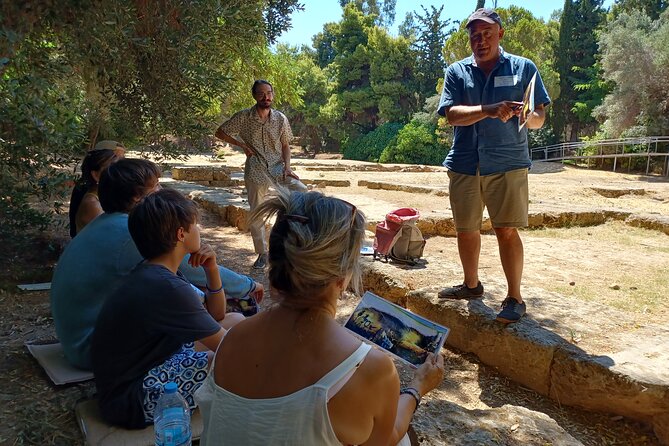
Many Athens activities ask you to look at ancient stones and picture the people who once used them. This one asks you to think as they did. That difference matters.
The two-hour session is built around participation. You read short passages, interpret them, answer questions, and listen to other points of view. The facilitator uses plain English, so you do not need a background in Plato, Socrates, or Aristotle. The aim is not to make you memorize difficult terms. It is to help you ask better questions.
The park is linked to the ancient Academy founded by Plato. You will not find a complete classical building here. Instead, the experience uses the surviving remains, the open setting, and the ideas associated with the place. If you want polished ruins and grand photo stops, this may feel modest. If you like connecting a physical site to a way of thinking, it offers more than a quick look at old stones.
The experience is offered in English and suits adults and teenagers aged 14 and up. Anyone under 18 must attend with an adult, who is responsible for supervision.
Start at the Plato’s Academy Digital Museum
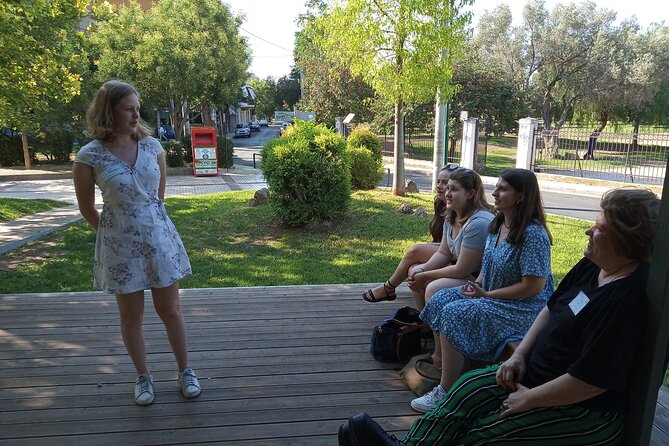
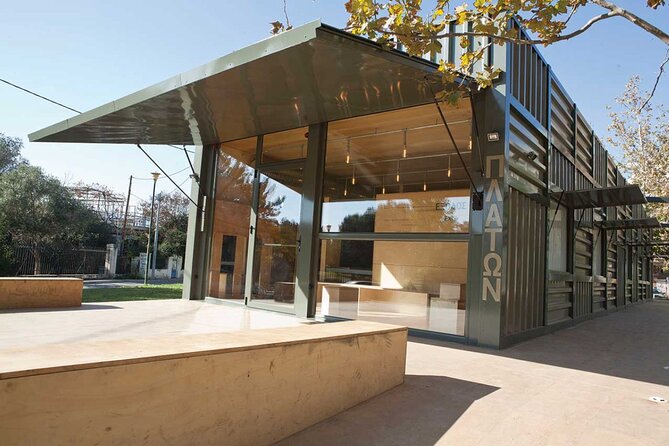
The meeting point is Plato’s Academy Digital Museum at Alkmeonos 1, Athens 104 42. The museum has free admission, and the workshop begins with a short visit when the museum is operating.
This is a small museum, not a half-day institution with room after room of objects. Its value is its focus. It gives you a compact introduction to Plato, the Academy, and the setting before you head into the park. That preparation helps you understand why the ruins matter and gives the later discussion a clear starting point.
The museum’s schedule requires attention. It is normally open Tuesday through Friday from 10:00 AM to 4:00 PM, but operating days and hours can change, and it can sometimes close without notice. On days when it is unavailable, the facilitator replaces the museum stop with a discussion covering the same main ideas.
That replacement keeps the workshop intact, but it changes the rhythm. You lose the brief indoor introduction and gain more direct conversation. If seeing the museum is important to you, check its status close to your visit and ask Hellas Revival for confirmation.
A few more Athens days worth a look
- Athens: Classic Cooking Class with Market Visit and Wine
★ 5.0 · 1,101 reviews - Athens: Food Market Visit and Cooking Class with Wine
★ 4.9 · 1,087 reviews - Greek Cooking Class in Athens Including Rooftop Dinner with Acropolis View
★ 5.0 · 826 reviews
Read ancient ideas before you walk to the ruins
After the museum, the group takes part in a philosophical warm-up. You read and interpret ancient Greek texts, with help from the facilitator.
This is a smart way to begin. Plato can seem remote when you encounter his ideas in a book or on a classroom shelf. Reading a short passage and discussing what it means gives you a personal entry point. You do not need to produce a perfect answer. The point is to notice how a text can support more than one interpretation.
The workshop is designed for people without previous knowledge. The English is kept simple, and the facilitator avoids difficult terminology. That makes this a good choice for a mixed group, including adults who have not studied philosophy since school and teenagers who may respond better to conversation than to a formal lecture.
You should still expect to think. This is not passive sightseeing with a few facts added along the way. The facilitator may ask what you think a passage means, why a character acts in a certain way, or how an ancient argument might apply today. The quality of the session depends partly on your willingness to take part.
The ancient Gymnasium provides the setting
The group then walks through Plato’s Academy Park to the ancient Gymnasium ruins. Here, the facilitator places Plato’s work in a wider Greek philosophical timeline, connecting Socrates, Plato, and Aristotle.
That connection is useful because these figures are often reduced to separate names. The session shows how their ideas relate and how philosophical teaching developed across generations. You get a basic structure before the main discussion begins.
The ruins are important, but keep your expectations measured. The archaeological remains are limited, and you are not entering a fully preserved academy classroom. There is also a small chance that excavation work will be taking place. If that happens, you will view the ancient Gymnasium from a short distance and settle in another part of the park.
This is one reason to choose the activity for its discussion rather than its archaeology alone. The site gives the workshop atmosphere and context. It does not replace the major archaeological sights in central Athens.
The outdoor setting also means you should dress for the weather and wear comfortable clothing. Respectful conduct is required because the workshop takes place at a historical site. Participants are expected to remain sober, clean, polite, and considerate about noise, clothing, and photography.
Plato’s Cave becomes a group conversation
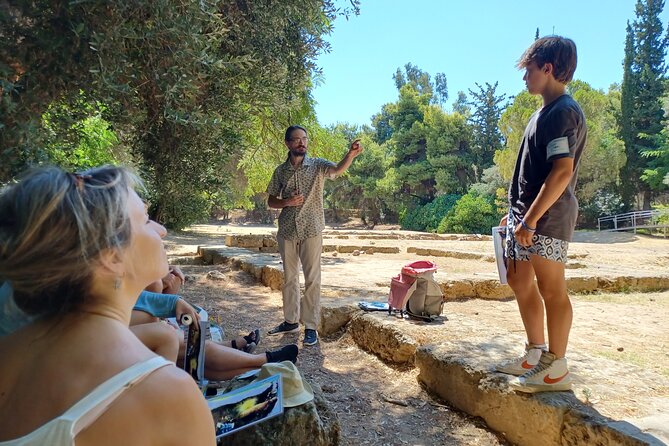
The central session focuses on Plato’s Allegory of the Cave. The facilitator uses the Socratic method, asking questions rather than simply explaining what you should think.
In the allegory, people are confined in a cave and mistake shadows for reality. The story raises questions about knowledge, education, habit, and the difficulty of changing your view. Sitting near the Academy ruins gives the discussion a strong connection to the place, but the value comes from the exchange itself.
You might be asked what the cave represents, who controls the shadows, or what happens when someone returns to those who have never seen anything else. The discussion can then move toward modern life and the role of philosophy today. The supplied feedback makes clear that this modern connection is an important part of the experience, not an afterthought.
I like this format because there is room for several readings. You are not being tested on the correct interpretation. You are encouraged to explain your reasoning and respond to other people’s ideas. That can make the session especially rewarding for couples, families, and small groups who enjoy discussing big questions together.
It can also feel uncomfortable if you prefer a tightly scripted activity. The facilitator guides the conversation, but the group’s questions and energy shape the result. A quiet group may produce a calmer session. A curious group may create a lively debate.
Same city, a completely different century:
- Athens: Acropolis & up to 5 Archaeological Sites Combo Pass
★ 4.4 · 12,619 reviews - Athens: Acropolis Ticket with Optional Audio or Live Guide
★ 4.2 · 11,055 reviews - Athens: Acropolis, Parthenon & Acropolis Museum Guided Tour
★ 4.8 · 9,316 reviews - Athens: Cape Sounion & Poseidon Temple Sunset Half-Day Trip
★ 4.8 · 8,241 reviews
The water-timer gives the debate a physical edge
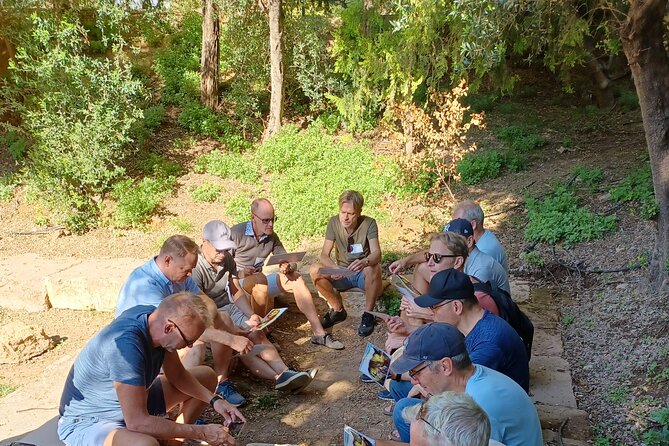
The final activity is a role-play debate using a real replica of an ancient water-timer. In the ancient world, a water clock could help control speaking time during public discussion. Here, it turns an abstract lesson about civic debate into something you can see and use.
This is one of the workshop’s most distinctive details. Rather than hearing that public speakers had limited time, you experience the pressure of making a point before the water runs out. It adds a playful element without turning the subject into a simple game.
The debate also lets you apply the earlier ideas. You have already read a text, considered Plato’s arguments, and talked about knowledge and perspective. Now you must form a position, express it clearly, and listen to a response.
The role-play is likely to appeal to teenagers and adults who enjoy participation. It may be less comfortable for anyone who dislikes speaking in front of a group. Still, the maximum group size of 10 should make the activity more manageable than a large classroom exercise.
Add Aristotle for a third hour of philosophical play
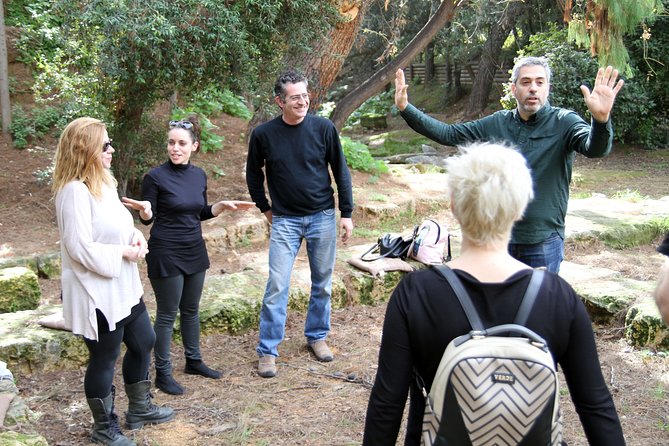
You can request an additional hour focused on Aristotle. This extension includes a game about virtue and choice.
The extra session changes the emphasis from Plato’s questions about knowledge and reality to Aristotle’s interest in character, action, and how people make decisions. The virtue game gives you a practical way to consider those ideas rather than simply hearing a biography of Aristotle.
The added hour is worth considering if philosophy is a major reason for your visit or if your group enjoys discussion. If your schedule is already full of ancient sites, two hours may be enough. Athens rewards pacing, and a thoughtful workshop can become tiring if you have spent the morning walking in the sun.
Because the basic experience is approximately two hours, ask in advance about the extra hour if you want to include it. The main session and the Aristotle extension are presented as separate parts of the experience.
What the $53.92 price means
At $53.92 per person, this costs more than simply walking through Plato’s Academy Park, which you can visit without paying for this workshop. The price pays for a facilitator, a planned educational structure, liability insurance, and VAT, not for admission to a major paid monument.
The value depends on what you want from Athens. If you only need a quick look at the ruins, the workshop is not the economical choice. You can see the park on your own and spend nothing on an entrance ticket.
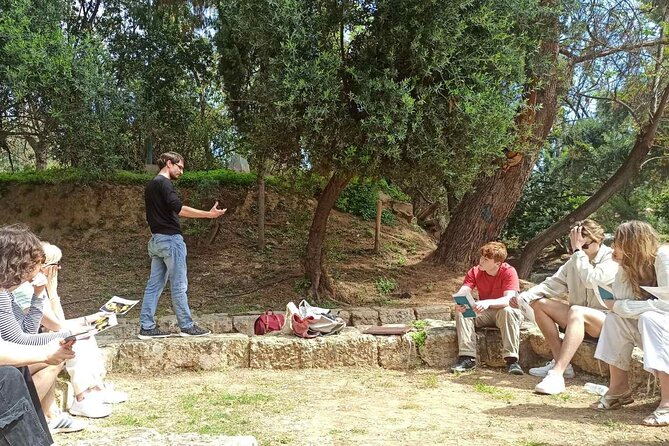
If you want a small-group activity that gives the site purpose, the cost is easier to justify. You receive two hours of guided discussion, text interpretation, historical context, and role-play. The group limit of 10 is important here. A smaller group gives you a better chance to speak and ask questions.
The free museum visit adds value when it is open, although it is brief and small. The strongest part of the price is the facilitator’s work. This is an educational interactive workshop, not a standard guided tour. You are paying for the questions, structure, and conversation.
Group discounts may be available. Private arrangements can also be requested, which may suit a family, school group, or group of friends with a shared interest in philosophy.
Who should book this workshop
I would choose this for an adult or teenager who wants more from Athens than a sequence of photo stops. It is especially well suited to:
- Families with teenagers aged 14 or older
- Couples who enjoy discussing books, ideas, and social questions
- Teachers or students looking for a memorable connection to classical philosophy
- Visitors who have already seen the major monuments and want a quieter cultural activity
- Anyone curious about Plato but worried that philosophy will feel too academic
The workshop is not limited to philosophy specialists. Its plain language and question-based format make it accessible to beginners. You do need some patience with open discussion and a willingness to offer your own thoughts.
It may not suit you if you want a conventional archaeological tour with detailed architectural explanations. It is also a poor fit for a rainy day, a tight schedule, or anyone seeking a fully indoor activity.
The experience has received a 4.8 rating from 37 reviews, with 95 percent recommending it. More useful than the numbers is the pattern behind them: the strongest praise centers on the interactive format, the facilitator’s ability to keep the discussion engaging, and the chance to consider Plato’s ideas at the Academy itself. Olga has led sessions described as relaxed, clear, and educational, with practical examples that encourage continued thought after the workshop ends.
Practical details before you reserve
The activity begins and ends at the Plato’s Academy Digital Museum. It is near public transportation, and service animals are allowed. Most people can take part, but the session involves walking through an outdoor archaeological park and sitting or standing in an open setting.
The workshop operates in good weather. If poor conditions force a cancellation, Hellas Revival will notify you at least three hours ahead and offer another date, a similar workshop, or a full refund.
You can cancel for a full refund up to 24 hours before the start time. Cancellations or changes made within 24 hours are not accepted for a refund.
The group may take photographs or video during the session. By attending in a public space, you consent to this material being recorded and possibly published by the provider or other participants, although you can withdraw your consent by contacting the provider in writing.
Should you book Plato’s Academy philosophy workshop?
Book it if you want to think at the place where Plato taught, not just look at a ruin and move on. The Allegory of the Cave discussion, the water-timer debate, and the small group make this a distinctive Athens activity.
Skip it if your main goal is a major archaeological monument, a fully indoor tour, or a fast schedule of famous sights. The park is modest, the museum is small, and the experience depends on conversation.
For the right audience, the $53.92 price buys something hard to get from a standard sightseeing stop: a chance to connect ancient ideas with your own questions, in the very setting that gave those ideas their name.
FAQ
How long does the Plato’s Academy workshop last?
The main workshop lasts approximately two hours. You can request an additional hour focused on Aristotle’s philosophy, including a game about virtue and choice.
Where does the activity start and end?
It starts at Plato’s Academy Digital Museum, Alkmeonos 1, Athens 104 42, Greece. The activity ends back at the same meeting point.
Is the Plato’s Academy Digital Museum included?
Yes. The museum has free entrance. The workshop includes a brief visit when the museum is open.
What happens if the museum is closed?
The facilitator replaces the museum visit with a discussion covering the same main insights. The museum’s hours and operating days can change, and it may sometimes close without notice.
What days and hours is the museum normally open?
The stated operating hours are Tuesday through Friday, from 10:00 AM to 4:00 PM. These hours can change, so you should check close to your visit.
Do I need previous knowledge of philosophy?
No. The workshop is suitable for beginners and uses plain English without difficult terminology.
Can teenagers attend?
Yes. The activity is suitable for adults and teenagers aged 14 and older. Anyone underage cannot book alone and must attend with an adult who supervises them.
How many people can join the workshop?
The maximum group size is 10 participants. A private option may be available upon request, and group discounts are offered.
What happens if the weather is poor?
Because the workshop takes place outdoors, it may be canceled in poor weather. You will be notified at least three hours ahead and offered a different date, a similar workshop, or a full refund.
Freshly added Athens trips
- Athens and Ancient Corinth Private from Athens★ 5.0 · 3 reviews
- From Athens: Mycenae and Epidaurus Private Tour★ 4.8 · 3 reviews
- Full day Meteora private tour★ 5.0 · 3 reviews
- Double Shore Dive (certified divers)★ 4.5 · 3 reviews
- Athens Hills: Mythology Treasure Hunt★ 5.0 · 3 reviews
- Sunset & swimming at Cape Sounio, Poseidon temple★ 5.0 · 3 reviews
- Philosophy Experience at Plato’s Academy Park – basic version★ 5.0 · 3 reviews
- Private Acropolis Tour – Ticket Included★ 5.0 · 3 reviews
Workshops, compared.

Classic Cooking Class with Market Visit and Wine
Read our review →
Food Market Visit and Cooking Class with Wine
Read our review →
Greek Cooking Class in Athens Including Rooftop Dinner with Acropolis View
Read our review →
Greek Small-Group Athens Cooking Class & Dinner
Read our review →

Greek Cuisine Cooking Class and 3-Course Dinner
Read our review →
Traditional Greek cooking class and lunch or dinner with an Acropolis view
Read our review →
Athens Airport Private Transfer by Mercedes-Benz E Class Wagon to City Center
Read our review →Browse the lists this tour appears in