
Reviewed · WORKSHOPS
Philosophy Experiential Workshop at Aristotle’s Lyceum, Athens
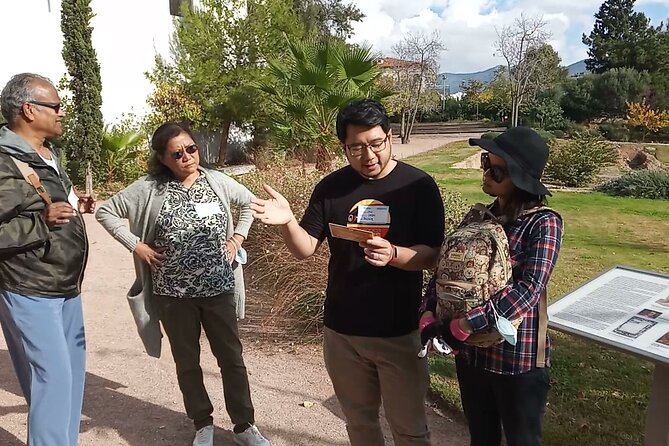
Aristotle’s Lyceum becomes far more than a set of ruins during this small-group philosophy workshop. You walk the paths linked to Aristotle’s school, discuss what makes a good life, and test his idea of virtue through real-life choices. It is a thinking tour, not a standard history talk.
I like the relaxed setting in Rizari Park, where the session begins under the trees, and I like the practical focus on eudaimonia, Aristotle’s idea of living well. The workshop uses plain English, welcomes people with no philosophy background, and keeps the group to 10. The main consideration is that it takes place outdoors, and the €5 Lyceum admission is not included in the $54.01 price.
In This Review
- Key points at a glance
- Why Aristotle’s Lyceum works better as a conversation
- Starting under the trees at Rizari Park
- Walking into the Archaeological Site of Lyceum
- Aristotle’s golden mean through a virtue game
- Reading Aristotle in an open-air amphitheater
- What the small group changes
- Adding Plato for a longer session
- Price, timing, and practical value
- Who will enjoy this Athens experience
- Should you book the Philosophy Experiential Workshop?
- FAQ
- How long does the philosophy workshop last?
- Where does the workshop begin?
- Is admission to Aristotle’s Lyceum included?
- Is this a regular guided tour?
- Do I need prior knowledge of philosophy?
- Can teenagers attend?
- What happens if the weather is poor?
Key points at a glance
- Walk where Aristotle taught: The discussion continues inside the Archaeological Site of Lyceum, not just beside it.
- Beginner-friendly philosophy: Socrates, Plato, Aristotle, virtue, and eudaimonia are explained with simple examples.
- A real conversation, not a scripted tour: Expect questions, ethical choices, and plenty of room to share your own ideas.
- Small groups matter: With a maximum of 10 people, the facilitator can respond to your questions and tailor the discussion.
- Choose more philosophy: An optional extra hour adds Plato and an interactive ethical debate.
- Plan for outdoor conditions: Good weather is required, and the separate €5 entry fee should be part of your budget.
Why Aristotle’s Lyceum works better as a conversation
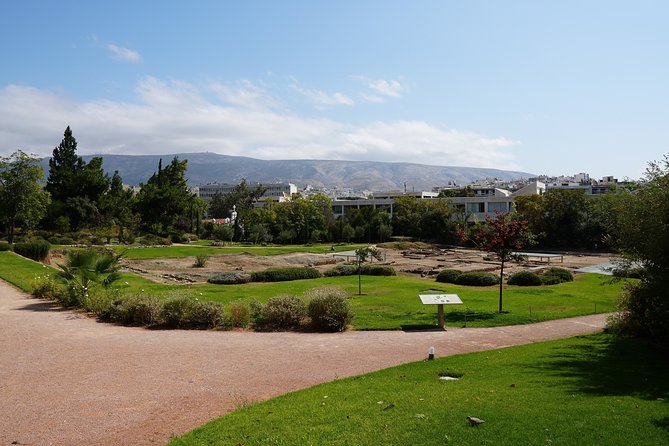
Many ancient sites in Athens are easy to admire and hard to understand. You see stones, foundations, and a helpful sign, but the people and ideas connected to the place can remain distant. This workshop takes a different route. It uses the site as a setting for asking questions that still matter.
The session links Socrates, Plato, and Aristotle in a short timeline. You do not need to arrive with a degree in philosophy. The facilitator explains the main terms in plain English, then gives you ways to test the ideas against ordinary choices.
That approach is the strongest reason to book. You are not expected to memorize dates or repeat famous sayings. You are asked to consider what courage, fairness, self-control, and good judgment look like in daily life.
The atmosphere also sounds notably personal. Alex is praised for making beginners feel comfortable asking questions and sharing ideas. Eva is described as engaging and able to shape the discussion around the group. Facilitator quality matters here because the value of the session depends less on a long script and more on how well the conversation is handled.
A few more Athens days worth a look
- Athens: Classic Cooking Class with Market Visit and Wine
★ 5.0 · 1,101 reviews - Athens: Food Market Visit and Cooking Class with Wine
★ 4.9 · 1,087 reviews - Greek Cooking Class in Athens Including Rooftop Dinner with Acropolis View
★ 5.0 · 826 reviews
Starting under the trees at Rizari Park
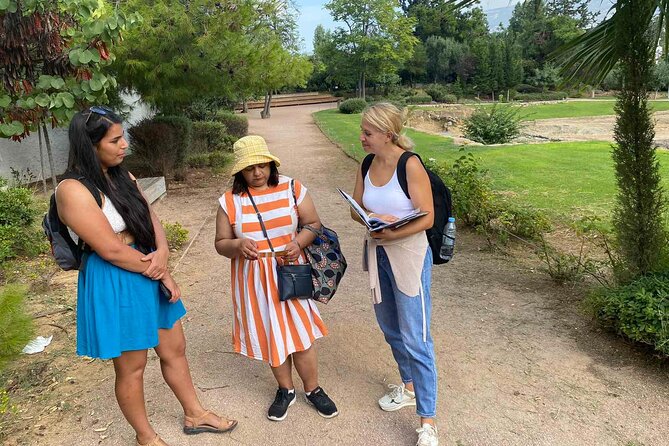
The experience begins at Vasilissis Sofias 24, beside Rizari Park in central Athens. The park provides a quiet opening away from the traffic and hard stone of the main archaeological sites. Under the trees, you get a short introduction to the development of Greek philosophy.
This first stop is useful because it gives the rest of the workshop a clear frame. Socrates questioned accepted ideas, Plato developed a wider theory of knowledge and society, and Aristotle brought close attention to ethics, politics, nature, and practical life. The presentation is brief and accessible, rather than a long lecture.
You will likely spend part of this opening section listening and part responding. The format is designed for discussion, so the group may move quickly from ancient thinkers to modern examples. If you are worried about not knowing enough, that is not a problem. The workshop is specifically built for beginners.
Rizari Park is also a practical place to start an outdoor activity. Even so, Athens can be hot, and shade will not remove the need for water, sun protection, and comfortable shoes. The activity lasts about 1 hour and 45 minutes, but much of that time is spent outside and on foot.
Walking into the Archaeological Site of Lyceum
From the park, the group walks to the nearby Archaeological Site of Lyceum. This was the location of Aristotle’s school, where teaching and philosophical discussion were linked to movement. The ancient practice of discussing ideas while walking gives the workshop its physical shape.
The site itself is not presented as a conventional guided tour. That distinction is important. You will not receive a full archaeological explanation of every visible feature, and the facilitator is not simply leading you from one monument to the next. Instead, the ruins provide the place and historical setting for a philosophy session.
Admission costs €5 per person and is paid separately. At the listed workshop price of $54.01, you should allow for that extra charge when comparing this experience with a normal site visit. The price is easier to justify if you want a guided discussion and a structured activity, rather than admission alone.
The walk through the Lyceum is the most distinctive part of the program. You are encouraged to think while moving, much as Aristotle’s students did. That simple idea makes the ancient school feel more connected to human behavior. Philosophy is not locked inside a classroom or museum case. It becomes something you do with your group.
Aristotle’s golden mean through a virtue game
The workshop’s central exercise explores Aristotle’s concept of virtue. The facilitator presents choices and ethical dilemmas, then asks you to consider how different responses might fall between extremes.
This is where the golden mean comes in. Aristotle did not argue that every decision should be moderate in a vague or timid way. His idea is closer to finding the appropriate response for a particular situation. Courage, for example, lies between cowardice and reckless behavior. Generosity can sit between stinginess and wastefulness.
The virtue-choice game gives you a practical way to grasp that idea. Instead of only hearing a definition, you weigh options and explain your reasoning. The activity can be especially useful for families with older teenagers, educators, and people who enjoy discussion more than passive sightseeing.
You should expect disagreement, but not a competitive debate where someone has to win. The point is to notice how values change when the circumstances change. A small group helps here. With no more than 10 participants, there is a better chance for each person to speak without the session becoming noisy or disorganized.
The interactive format has also been praised for making critical thinking feel fun. That is a fair description of what this experience aims to do. It treats philosophy as a shared puzzle, not an exam.
Same city, a completely different century:
- Athens: Acropolis & up to 5 Archaeological Sites Combo Pass
★ 4.4 · 12,619 reviews - Athens: Acropolis Ticket with Optional Audio or Live Guide
★ 4.2 · 11,055 reviews - Athens: Acropolis, Parthenon & Acropolis Museum Guided Tour
★ 4.8 · 9,316 reviews - Athens: Cape Sounion & Poseidon Temple Sunset Half-Day Trip
★ 4.8 · 8,241 reviews
Reading Aristotle in an open-air amphitheater
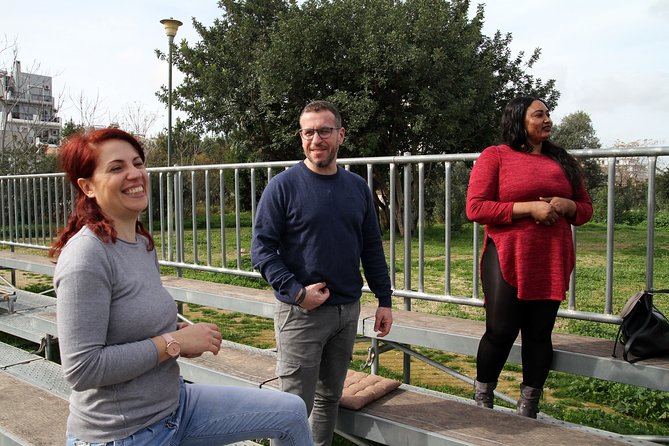
The final gathering takes place at a small open-air amphitheater overlooking the ruins. This gives the workshop a natural pause after the walking discussion and ethical game.
Here, you read selected passages from Aristotle, including some in Ancient Greek. You do not need to understand Ancient Greek to benefit from this part. Hearing the original language adds a direct connection to the texts, while the explanation keeps the meaning clear for English speakers.
The closing discussion returns to eudaimonia, often translated as happiness but better understood as a life that goes well through good choices, character, and purpose. The subject can speak to different ages in different ways. A teenager might think about friendships and pressure. A parent or educator might consider how character is formed. An adult visitor might connect the ideas to work, relationships, or personal goals.
The setting helps, too. You are looking toward the remains of Aristotle’s school while discussing how his ideas still apply. That link between place and subject is the reason this experience offers more than a philosophy talk in a hotel room.
What the small group changes
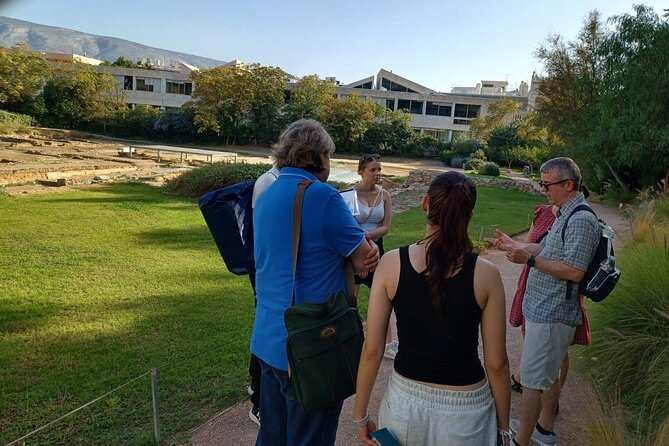
The maximum group size is 10. That is a useful limit for this type of activity because discussion becomes difficult when too many people are present. You can ask for clarification, offer a personal example, and hear several different views without waiting through a long line of responses.
A small group also allows the facilitator to adjust the level. If everyone is new to philosophy, the conversation can stay with basic terms and examples. If the group wants more detail, the discussion can move further into Aristotle’s moral theory.
The experience is offered in English. The language is described as plain and suitable for people without previous knowledge. You should still be comfortable listening and speaking in English, since discussion is a major part of the session.
A private upgrade is available for groups that want the experience to themselves. That may be useful for a family, school group, or friends who prefer a more personal pace. The supplied information does not give the private price, so you will need to check that option when booking.
Adding Plato for a longer session
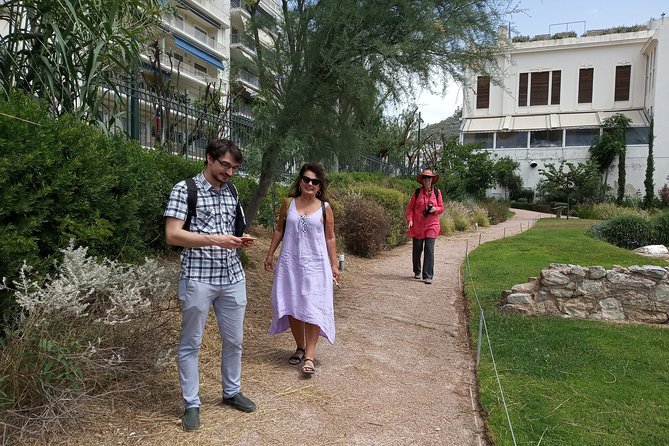
You can add another hour focused on Plato’s philosophy. The extra section includes an interactive debate about an ethical dilemma.
This extension makes sense if you want a broader comparison between Plato and Aristotle rather than a short introduction to the three major thinkers. The standard workshop already sets up the relationship among Socrates, Plato, and Aristotle, while the added hour gives Plato more time.
Think about your group before adding it. The basic activity lasts around 1 hour and 45 minutes, which is a manageable length during a busy Athens sightseeing day. The extra hour may suit serious learners or school-age participants who enjoy discussion, but it may feel long for anyone hoping for a quick stop between museums.
Price, timing, and practical value
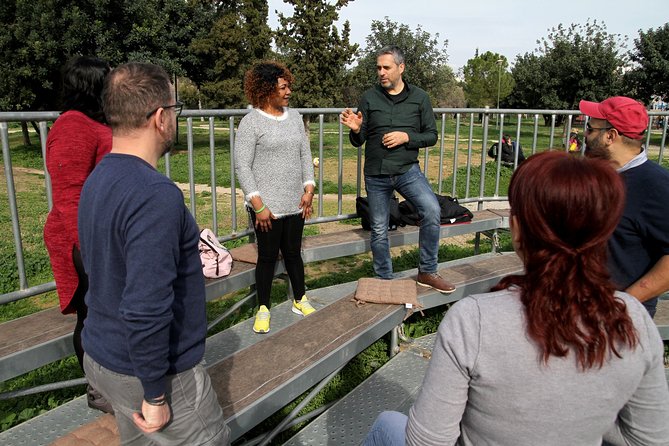
The listed price is $54.01 per person, with group discounts available. Add the €5 Lyceum admission, which is not included. The total cost is higher than a simple archaeological entry ticket, but the comparison is not quite like for like.
You are paying for an expert facilitator, a planned discussion, a virtue activity, a walk connected to Aristotle’s school, and a small group. The strongest value comes if you want context and participation. If you only want to see the ruins, buying admission on its own may be enough.
The session is booked an average of 34 days ahead, so advance planning is sensible, especially if you need a certain day. You receive confirmation at booking, and a mobile ticket is available.
The activity begins and ends at the same meeting point. It is near public transportation, and most people can take part. Service animals are allowed. Participants should wear comfortable clothing and shoes suited to an outdoor walk.
Good weather is required. If poor conditions force a cancellation, you will be notified at least three hours ahead and offered another date, a similar workshop, or a full refund. You can cancel for a full refund up to 24 hours before the start time. Changes or cancellations inside that 24-hour window are not accepted.
Because part of the experience takes place at a historical site, you are expected to behave respectfully. That includes appropriate dress, sober conduct, reasonable noise, cleanliness, and respectful photography. The facilitator can end participation without a refund if someone behaves disrespectfully.
The activity may include photo or video recording in the public space. You can withdraw your consent by contacting the provider in writing, but the provider is not responsible for images made or used by other participants.
Who will enjoy this Athens experience
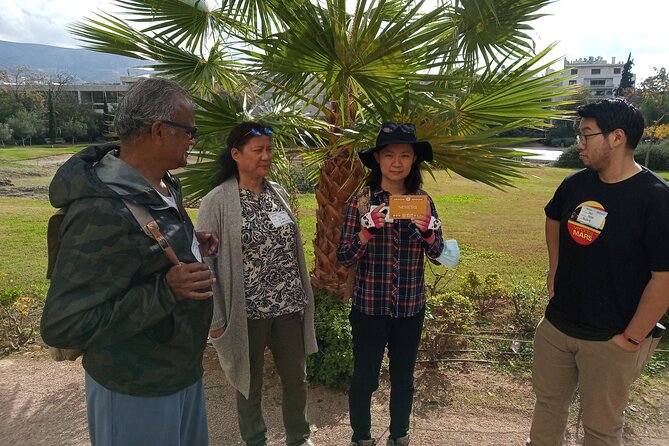
I would choose this workshop if you like learning through questions rather than collecting facts. It suits curious adults, couples, families with teenagers over 14, educators, and anyone who wants a slower, more thoughtful break from major monuments.
It also works well for people who feel unsure about philosophy. The session does not assume previous study, and the examples are meant to make the terms clear. You can arrive knowing little about Aristotle and still take part.
It may not suit you if you want a traditional archaeological tour, a long list of dates, or a fully scripted explanation. This is not a guided tour in the usual sense. You will need to participate, listen, and think aloud.
Teenagers must be at least 14, and an adult must book with and supervise any underage participant. Facilitators are trained and certified in first aid, but they cannot provide medication, so bring your own, especially if you have outdoor allergies.
Should you book the Philosophy Experiential Workshop?
Book it if you want to connect Athens with ideas that still shape daily life. The walk through Aristotle’s Lyceum, the virtue-choice game, and the final Ancient Greek readings give the session a clear sense of place.
I especially like the balance between history and personal reflection. You learn who Socrates, Plato, and Aristotle were, but you also ask what their ideas mean for your own choices. Alex and Eva appear to bring the warm, flexible teaching style this format needs.
Skip it if your priority is a conventional site tour or if you dislike group discussion. Also factor in the separate €5 entry fee and the possibility of weather changes. For the right audience, though, this is a thoughtful and unusually active way to spend part of an Athens morning or afternoon.
FAQ
How long does the philosophy workshop last?
The standard experience lasts approximately 1 hour and 45 minutes. An optional extra hour is available for a Plato-focused session with an interactive ethical debate.
Where does the workshop begin?
It begins at Vasilissis Sofias 24, Athina 106 76, Greece, beside Rizari Park. The activity ends back at the meeting point.
Is admission to Aristotle’s Lyceum included?
No. The Archaeological Site of Lyceum charges an additional €5 per person.
Is this a regular guided tour?
No. It is described as a philosophy experience rather than a conventional guided tour. You walk through the site while discussing Aristotle’s moral theory and related ideas.
Do I need prior knowledge of philosophy?
No. The workshop is designed for beginners, with key terms explained in plain English through simple examples.
Can teenagers attend?
Yes. The activity is suitable for adults and teenagers over 14. Participants under 18 cannot book alone, and an adult must book and supervise them.
What happens if the weather is poor?
The workshop may be canceled because it takes place outdoors. You will be notified at least three hours ahead and offered another date, a similar workshop, or a full refund.
Freshly added Athens trips
- Athens and Ancient Corinth Private from Athens★ 5.0 · 3 reviews
- From Athens: Mycenae and Epidaurus Private Tour★ 4.8 · 3 reviews
- Full day Meteora private tour★ 5.0 · 3 reviews
- Double Shore Dive (certified divers)★ 4.5 · 3 reviews
- Athens Hills: Mythology Treasure Hunt★ 5.0 · 3 reviews
- Sunset & swimming at Cape Sounio, Poseidon temple★ 5.0 · 3 reviews
- Philosophy Experience at Plato’s Academy Park – basic version★ 5.0 · 3 reviews
- Private Acropolis Tour – Ticket Included★ 5.0 · 3 reviews
Workshops, compared.

Classic Cooking Class with Market Visit and Wine
Read our review →
Food Market Visit and Cooking Class with Wine
Read our review →
Greek Cooking Class in Athens Including Rooftop Dinner with Acropolis View
Read our review →
Greek Small-Group Athens Cooking Class & Dinner
Read our review →

Greek Cuisine Cooking Class and 3-Course Dinner
Read our review →
Traditional Greek cooking class and lunch or dinner with an Acropolis view
Read our review →
Athens Airport Private Transfer by Mercedes-Benz E Class Wagon to City Center
Read our review →Browse the lists this tour appears in