
Reviewed · WORKSHOPS
Greek dance lessons
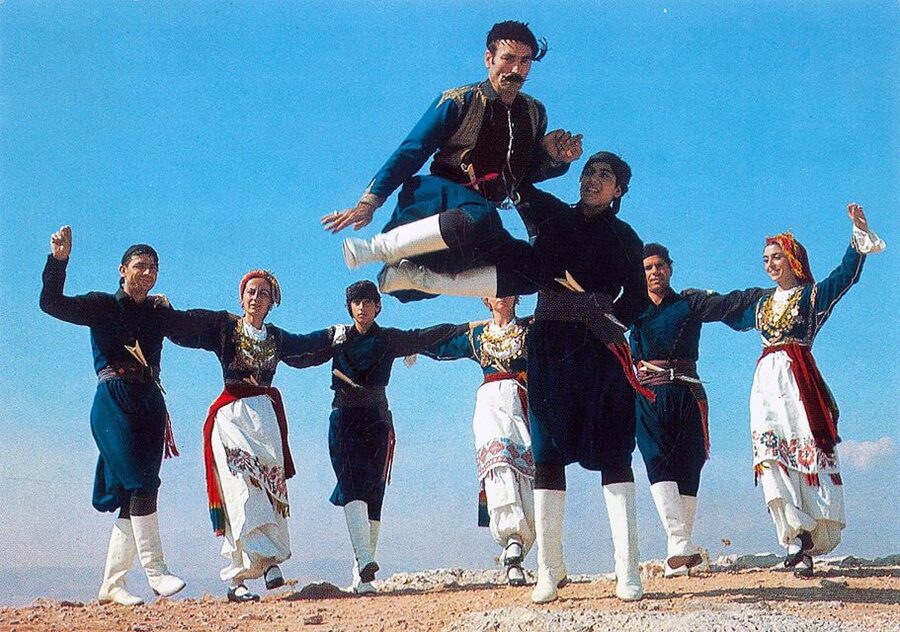
Greek dance is more than a string of steps. It is a way to celebrate, welcome the seasons, express emotion, and connect one region of Greece with another. This 1.5-hour lesson in Plaka takes you from an office near the Acropolis Metro Station to a flower-filled courtyard in an old 18th-century building, where an experienced instructor teaches folk dances from the islands and mainland.
I like two things right away: beginners are welcome, and the lesson adds useful cultural context instead of treating dance as a quick party trick. You also get to see Greek costumes and the jewelry worn with them, which gives the footwork a human setting.
The main consideration is price. At $73 per person, this is not the cheapest short activity in Athens, especially if you are only looking for a casual dance class. The value improves if you want an easy cultural introduction with a central location and costume presentation included.
In This Review
- Key points to know before you book
- Starting near the Acropolis Metro Station
- Learning Greek dances without pressure
- From the Aegean and Ionian islands to the mainland
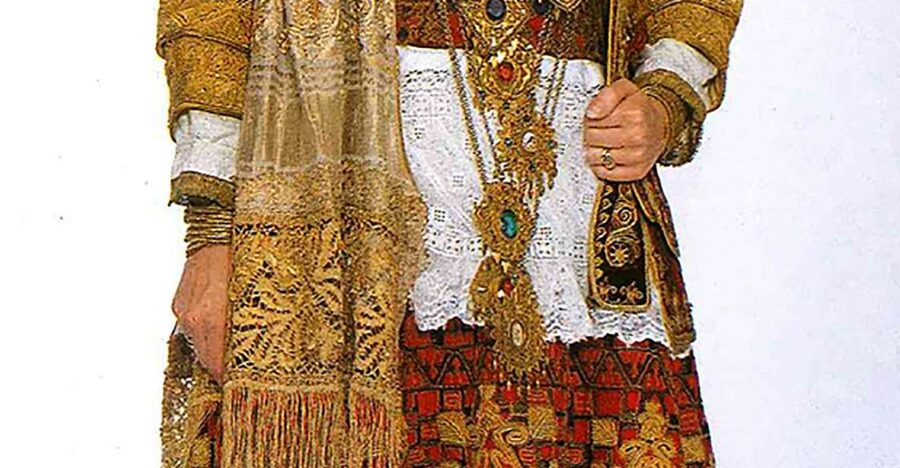
- Seeing the costumes and jewelry
- What the 90-minute schedule means for you
- Is $73 a fair price?
- Timing, cancellation, and access
- Who should book this Greek dance lesson?
- Should you book it?
- FAQ
- Where does the Greek dance lesson meet?
- How long does the activity last?
- Which languages are available?
- Do I need previous dance experience?
- What else is included besides dancing?
- Can I cancel for a refund?
Key points to know before you book
- Walk through Plaka first: The meeting point is close to the Acropolis Metro Station, about three minutes on foot, followed by a walk through Athens Old Town.
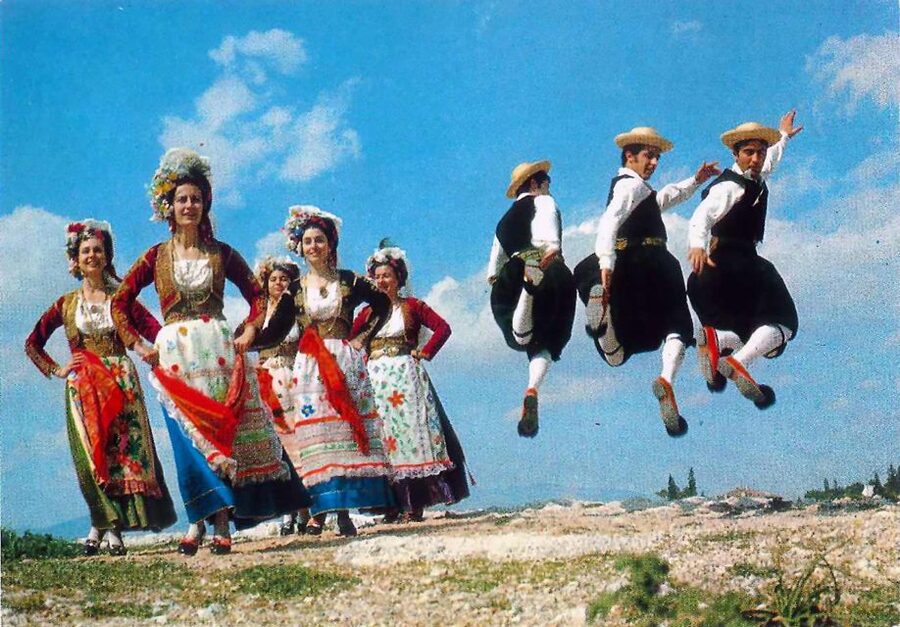
- Dance from several Greek regions: The lesson covers well-known folk dances linked to the Aegean and Ionian islands as well as mainland Greece.
- Good for first-timers: The teaching is designed to be easy and fun, with enough structure for people who have little or no dance experience.
- Costumes add context: You will see examples of Greek clothing and learn about the jewelry worn with different outfits.
- English and Spanish instruction: The listed teaching languages are English and Spanish.
- Plan ahead: Reservations are accepted 48 hours before the activity, and cancellation is free up to 24 hours before the start.
Starting near the Acropolis Metro Station
Your meeting point is at an office very close to the Acropolis Metro Station. That is useful in practical terms. You do not need to cross Athens for this class, and you can pair it with a morning or afternoon in Plaka, the old quarter below the Acropolis.
The walk takes you through Plaka’s picturesque alleys toward the lesson site. This short approach matters because it sets the scene before the dancing begins. You are not being dropped into a generic studio on the edge of town. You begin among the old lanes of central Athens, then move into a historic property linked with George Finlay, a British historian of the Greek revolution.
The meeting point is described as an 18th-century building. The property is a well-preserved four-floor structure with a flowery yard. The dance lesson takes place there, giving the activity a more personal setting than a large commercial hall.
You should allow enough time to find the office and gather before walking onward. The meeting point is easy to reach, but the class is not simply a door-to-door studio appointment. The Plaka walk is part of the setup, so comfortable shoes make sense.
A few more Athens days worth a look
- Athens: Classic Cooking Class with Market Visit and Wine
★ 5.0 · 1,101 reviews - Athens: Food Market Visit and Cooking Class with Wine
★ 4.9 · 1,087 reviews - Greek Cooking Class in Athens Including Rooftop Dinner with Acropolis View
★ 5.0 · 826 reviews
Learning Greek dances without pressure
Once you reach the property, an experienced dance teacher introduces you to Greek folk and traditional dances. The instruction is intended to be straightforward, so you do not need previous training or a natural sense of rhythm. One participant gave the lesson a top score while joking that they had discovered they had no rhythm at all. That is a useful warning and a reassurance at the same time: you may not become a Greek dance champion in 90 minutes, but you should be able to join in without feeling tested.
The class focuses on well-known dances from different parts of Greece. The information provided does not name each dance, so you should not book this expecting a fixed list of specific steps. Instead, think of the class as a guided introduction to regional dance traditions.
That variety is one of the activity’s strongest features. Greece is not culturally uniform from one coast to the next. Island communities, mainland villages, and different local areas developed their own ways of moving, gathering, and celebrating. Learning several dances helps you see that Greek folk culture is made up of many local identities rather than one single national style.
The lesson is also social by design. Greek dances often involve a line or circle, with participants moving together rather than performing alone. The supplied details do not promise a particular group size or a live band, so you should not assume either. Still, the format is clearly built around participation, not a stage show.
For a first visit to Athens, this can be a pleasant change from standing quietly in front of monuments. You spend the time moving, listening, and trying something with your own body. That makes the cultural lesson easier to remember, even if your feet occasionally disagree with the instructor.
From the Aegean and Ionian islands to the mainland
The class introduces dances associated with the beautiful islands of the Aegean and Ionian Seas, along with traditions from mainland Greece. That geographic spread gives the session a useful frame.
The Aegean islands are often pictured through their sea views and whitewashed towns, but their local customs are just as important. The Ionian islands have their own regional character, shaped by a different corner of Greece. Mainland communities add another set of traditions. You will not study all of Greek dance in 90 minutes, but you will get a clear sense that place matters.
Greek dance has long been connected with celebration and ceremony. Ancient Greeks believed dance was created by the gods, and dance became linked with religious events and cult practices. In everyday life, dance has also been used to express feeling, mark the seasons, welcome people, and celebrate together.
That background gives the class more weight than a simple sequence of exercises. When the instructor explains why different dances matter, the steps become part of a larger story about community and emotion. I like this approach because it helps you understand why Greek dancing appears so often at celebrations, rather than treating it as a tourist symbol pulled out for a photo.
The cultural explanation should also help you notice differences in pace, movement, and group formation. The exact teaching plan can vary, but the stated goal is to connect the dances with the regions and people who created them.
Seeing the costumes and jewelry
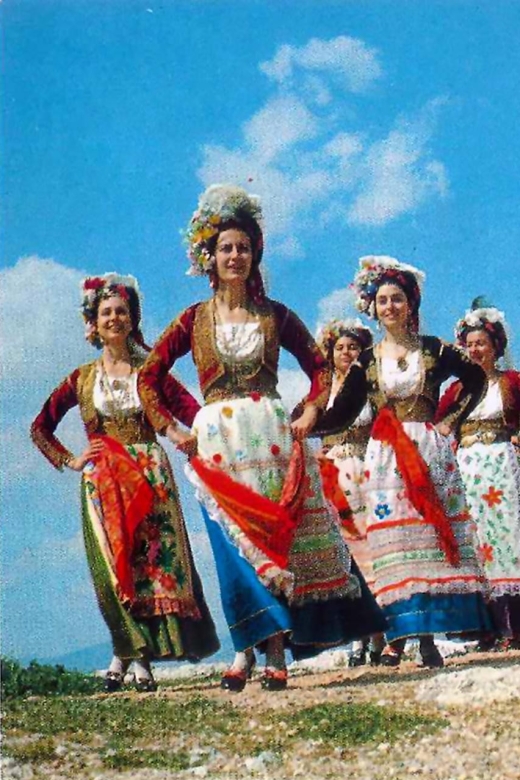
The activity includes an introduction to Greek costumes, along with the special jewelry that adorns them. You also receive general information about clothing traditions.
This portion is valuable because clothing can explain regional identity as clearly as dance. A costume is not just decoration. Its fabric, shape, ornaments, and jewelry can show where a community comes from and when the clothing was worn. The supplied details do not identify particular regions, garments, or jewelry pieces, so you should think of this as an overview rather than a specialist costume exhibition.
Still, the presentation adds something you would miss in a dance-only class. As you learn the steps, you can connect movement with appearance and ceremony. Clothing affects how a dancer carries themselves, and jewelry can signal the importance of an occasion. Even a brief explanation makes the traditions feel less like a collection of colorful objects.
Do not expect a full museum visit. The main activity is dancing, and the costume material supports that lesson. If your main interest is Greek dress history, you may need a dedicated museum or exhibition as well. If you want a compact cultural experience that combines movement, clothing, and regional background, this balance works well.
Same city, a completely different century:
- Athens: Acropolis & up to 5 Archaeological Sites Combo Pass
★ 4.4 · 12,619 reviews - Athens: Acropolis Ticket with Optional Audio or Live Guide
★ 4.2 · 11,055 reviews - Athens: Acropolis, Parthenon & Acropolis Museum Guided Tour
★ 4.8 · 9,316 reviews - Athens: Cape Sounion & Poseidon Temple Sunset Half-Day Trip
★ 4.8 · 8,241 reviews
What the 90-minute schedule means for you
A 90-minute duration is long enough to try several dances without taking over your day. You can fit it around sightseeing in Plaka, the Acropolis area, or other central Athens stops.
The time is also short enough to keep the class approachable. You are unlikely to face an all-day commitment or a demanding performance course. The lesson aims to teach well-known dances in an easy and fun manner, so the emphasis is on participation and discovery.
The tradeoff is that the class cannot offer a detailed study of every dance or costume tradition. You will receive an introduction, not a complete course. If you want technical mastery, repeated practice, or advanced choreography, this is probably too brief.
I see the format working best for people who want to add a hands-on activity to a city break. It suits couples, families, friends, and solo visitors who enjoy learning through participation. It may also appeal to anyone who feels that museum visits and guided walks begin to blur together after several days.
The class is taught in English or Spanish. That makes it easier to follow the explanations, though the listing does not identify the instructor by name. You should book based on the activity and setting rather than expecting a named specialist or a particular teacher.
Is $73 a fair price?
At $73 per person, the lesson sits above the cost of a simple self-guided cultural stop. You are paying for an organized experience, an instructor, access to the historic property, the walk from the Acropolis area, dance teaching, and the costume and jewelry presentation.
The strongest value comes from combining several elements in one short session. A normal dance class might teach steps but offer little background. A museum might explain clothing but never let you test the movement. This activity links both, then places them in a historic Plaka setting.
The price is less compelling if you only want entertainment or a quick photo opportunity. You could spend less on other Athens activities if your goal is simply to fill an hour. It makes more sense for visitors who specifically want Greek culture explained through participation.
The high ratings available for the experience point to its accessible teaching and enjoyable format. One French participant called it ideal for beginners after learning many dances, while another described it as fun and informative. A separate booking was summed up as perfect. Those comments do not promise that every person will love the lesson, but they support the idea that the class succeeds most clearly as a friendly introduction rather than a rigorous dance workshop.
Timing, cancellation, and access
You can cancel up to 24 hours before the activity for a full refund. You can also reserve now and pay later, which is useful when your Athens schedule is still shifting.
Reservations are accepted 48 hours before the activity. Do not leave this one until the last day if you know you want to attend.
The information is inconsistent about wheelchair access. One section lists the activity as wheelchair accessible, while another says it is not suitable for wheelchair users. The route includes a walk through Plaka, and the class takes place in an old multi-floor building, so you should confirm current access arrangements directly before booking if mobility is a concern.
The experience is offered in English and Spanish. No group size, exact dance list, or instructor name is provided, so those details should not be assumed.
Who should book this Greek dance lesson?
I would choose this activity if you want an active cultural experience in central Athens and like the idea of learning by doing. It is especially suitable for beginners, since the teaching is meant to be easy to follow and no dance background is required.
It also works well for visitors who have already seen the Acropolis and want a different side of Greek culture. The walk through Plaka, the old building, regional dances, and costume presentation create a varied 90-minute outing.
Families and mixed-ability groups may appreciate the low-pressure tone, though the access contradiction needs checking first. Couples and friends can treat it as a lighthearted shared activity. Solo visitors may find the group format a simple way to take part in Greek culture without arranging a private guide.
I would think twice if you want a detailed scholarly presentation, a performance by professional dancers, or advanced instruction. The class offers an overview, not a specialist seminar. I would also compare the $73 price with your other Athens plans if your budget is tight.
Should you book it?
Book this lesson if you want to move beyond sightseeing and get a practical feel for Greek regional culture. The setting near the Acropolis, the walk through Plaka, and the costume and jewelry explanation give the dance lesson more substance than a stand-alone class.
Skip it if you dislike group participation, need a highly specific dance syllabus, or are seeking a long technical workshop. For most first-time visitors who want a relaxed, beginner-friendly activity, the 90-minute format is a sensible fit. Just confirm accessibility in advance and reserve at least 48 hours before you plan to go.
FAQ
Where does the Greek dance lesson meet?
You meet at an office very close to the Acropolis Metro Station, about three minutes away on foot. From there, you walk through the alleys of Plaka to the lesson location.
How long does the activity last?
The Greek dance lesson lasts 1.5 hours, or 90 minutes.
Which languages are available?
The instructor teaches in English and Spanish.
Do I need previous dance experience?
No. The class is designed to teach well-known Greek folk dances in an easy and fun way, making it suitable for beginners.
What else is included besides dancing?
You learn about Greek costumes, the jewelry worn with them, general clothing traditions, and the culture of different Greek regions.
Can I cancel for a refund?
Yes. You can cancel up to 24 hours in advance for a full refund.
Freshly added Athens trips
- Athens and Ancient Corinth Private from Athens★ 5.0 · 3 reviews
- From Athens: Mycenae and Epidaurus Private Tour★ 4.8 · 3 reviews
- Full day Meteora private tour★ 5.0 · 3 reviews
- Double Shore Dive (certified divers)★ 4.5 · 3 reviews
- Athens Hills: Mythology Treasure Hunt★ 5.0 · 3 reviews
- Sunset & swimming at Cape Sounio, Poseidon temple★ 5.0 · 3 reviews
- Philosophy Experience at Plato’s Academy Park – basic version★ 5.0 · 3 reviews
- Private Acropolis Tour – Ticket Included★ 5.0 · 3 reviews
Workshops, compared.

Classic Cooking Class with Market Visit and Wine
Read our review →
Food Market Visit and Cooking Class with Wine
Read our review →
Greek Cooking Class in Athens Including Rooftop Dinner with Acropolis View
Read our review →
Greek Small-Group Athens Cooking Class & Dinner
Read our review →

Greek Cuisine Cooking Class and 3-Course Dinner
Read our review →
Traditional Greek cooking class and lunch or dinner with an Acropolis view
Read our review →
Athens Airport Private Transfer by Mercedes-Benz E Class Wagon to City Center
Read our review →Browse the lists this tour appears in