
Reviewed · WORKSHOPS
Democracy Experiential Workshop Activity on Pnyx hill, Athens
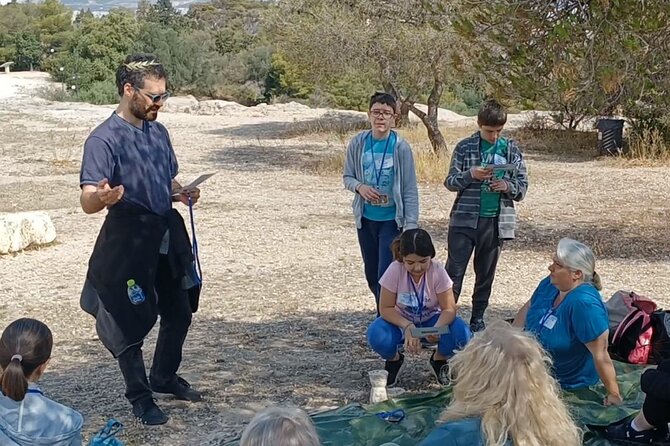
At Pnyx Hill, you do not simply look at the birthplace of Athenian democracy. You take part in a small recreation of it. From the ancient speaker’s platform, you debate a case, manage speaking time with a replica water-timer, cast a vote, and decide which citizen should face ostracism.
I like the hands-on use of ancient-style objects, especially the ceramic ostrakon you inscribe and keep. I also like the setting: you sit above Athens with a clear view toward the Acropolis and Parthenon, in the very place where public assemblies once met.
The main drawback is the 300-meter uphill walk and the lack of toilets or refreshment stands on the hill. This is an outdoor workshop, not a standard guided tour, so hot weather, limited shade, and the role-play format may not suit every visitor.
In This Review
- Key points to know before you book
- Why Pnyx makes democracy feel personal
- Reaching the ancient speaker’s platform
- Taking part in an ancient Assembly
- Ostracism and the ceramic keepsake
- The short hill tour and Exploration Game
- What the $66.01 price gets you
- Weather, conduct, and practical limits
- Who will enjoy this Pnyx workshop most
- Should you book the Democracy Experiential Workshop?
- FAQ
- Where does the workshop begin?
- How long does the activity last?
- Is this a regular guided tour of Pnyx?
- What language is the workshop offered in?
- Is the workshop suitable for children?
- What happens if the weather is poor?
Key points to know before you book
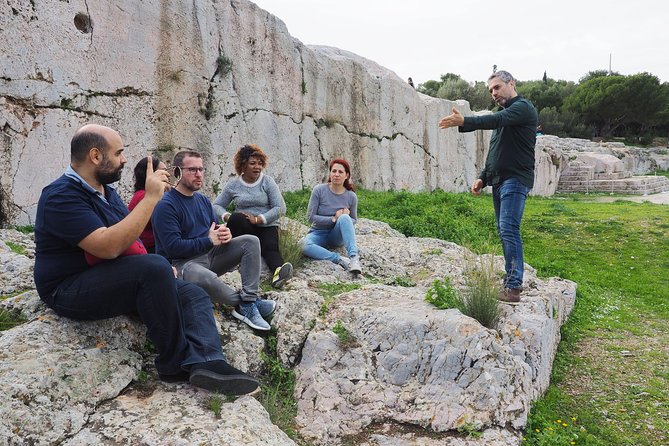
- You vote from the ancient Assembly site: The workshop takes place at Pnyx, where Athenian citizens gathered to debate public matters.
- You play an active role: You speak, debate, vote, and take part in a symbolic ostracism ceremony rather than only listening to a lecture.
- You use two unusual replicas: A ceramic water-timer controls speaking time, while a ceramic ostrakon becomes your personal keepsake.
- You get Acropolis views without a standard museum format: The hill gives the history a strong visual setting, though the ground is uneven and the walk climbs uphill.
- The group stays small: A maximum of 10 people makes it easier to speak and take part in the discussion.
- The final team game needs four participants: Smaller bookings can still enjoy the workshop, but the Exploration Game is available only for groups of four or more.
Why Pnyx makes democracy feel personal
Many ancient sites ask you to picture the people who once used them. Pnyx gives you a more direct way in. The workshop places you in the role of an Athenian citizen and asks you to make decisions in a public meeting.
That matters because democracy here is not presented as a neat modern idea that appeared fully formed. You see it as a working process involving argument, public speaking, rules, time limits, voting, and difficult choices. The activity also helps you notice who was included in classical Athenian political life and who was not, even though the supplied details do not set out a full lecture on that subject.
The opening discussion uses the Socratic method. In plain terms, the facilitator guides you through questions and shared conversation instead of delivering a long speech. You are encouraged to think aloud, test an idea, and listen to other people before the role-play begins.
I find this approach a good match for Pnyx. The site is important, but its stones alone do not explain how public decision-making worked. The conversation gives you a frame, and the activity then lets you try the process yourself.
The workshop is offered in English, with plain language and no difficult terminology. That is useful if you want historical context without a formal academic presentation. It also makes the experience suitable for adults and teenagers over 10, provided an adult books with and supervises any underage participant.
A few more Athens days worth a look
- Athens: Classic Cooking Class with Market Visit and Wine
★ 5.0 · 1,101 reviews - Athens: Food Market Visit and Cooking Class with Wine
★ 4.9 · 1,087 reviews - Greek Cooking Class in Athens Including Rooftop Dinner with Acropolis View
★ 5.0 · 826 reviews
Reaching the ancient speaker’s platform
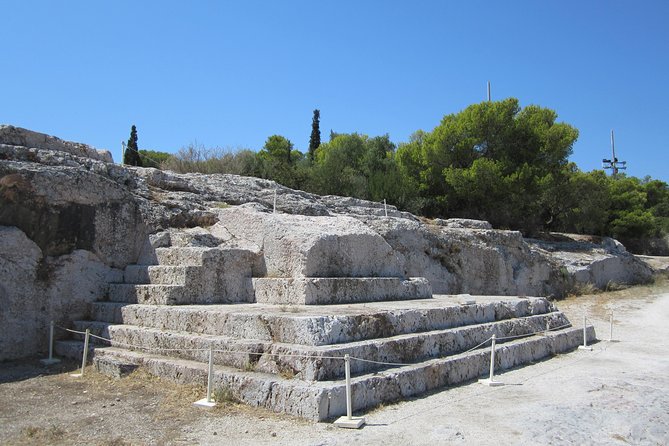
You meet at Rovertou Galli 39 in Athens, near public transportation. From there, the activity continues on foot toward Pnyx Hill. The key physical detail is the 300-meter uphill walk to the ancient vema, the stone platform used by speakers addressing the Assembly.
This is not a long hike, but an uphill section on an outdoor historical site can feel demanding in warm weather. Wear comfortable shoes and light, practical clothing. You should also bring any medication you need, especially for allergies, since the facilitators are first-aid trained but cannot provide medication.
Once you reach the speaker’s platform, the group settles in the nearest shaded area. Shade is welcome, but you should not assume that the entire activity takes place in comfort. Pnyx is an open-air site, and the workshop requires suitable weather.
There are no toilets or canteens on the hill. Use facilities and buy water near the meeting point before setting out. This small bit of planning will make the two-hour session much easier, especially during Athens’ hotter months.
The hill’s position is one of the great rewards. You get an impressive view toward the Acropolis and Parthenon, but the point is not simply to take a scenic photo. You are looking across the city from the place where citizens once gathered to discuss war, peace, and public affairs.
Taking part in an ancient Assembly
The central role-play recreates an Assembly meeting. You are given a case scenario to debate, then invited to speak your mind and vote. The format gives the group a reason to listen to one another, not just wait for the facilitator to finish talking.
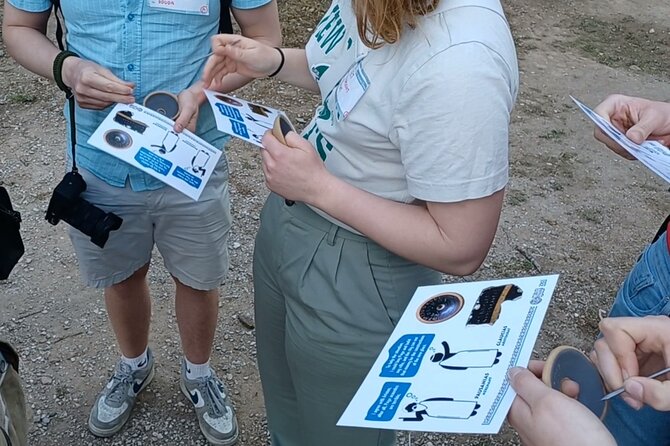
The replica water-timer, sometimes called a waterthief, controls the length of each speech. This is one of the most memorable details because it turns an abstract rule into a physical object. You can see how public speaking was limited by time, and you have to make your point before the water runs out.
The object is a ceramic replica of an ancient water-timer. It is used during the activity rather than handed over as a souvenir. That distinction matters if you are comparing this workshop with a standard historical tour: the object is part of the lesson because you handle it and see how it shaped the meeting.
The group size is capped at 10 people. That is a sensible limit for a discussion-based activity. With a large crowd, the role-play could become a performance watched by a few confident speakers. With a small group, you have a better chance to contribute directly.
Still, you should know what you are signing up for. This is not a quiet, private visit to Pnyx with a guide pointing out stones. You may be asked to speak in front of the group, argue for a position, and respond to other people. If you prefer to observe rather than participate, the format may feel more demanding.
The plain-English approach helps keep the session open to beginners. You do not need specialist knowledge of Greek history. The workshop is designed around the experience of making a decision, so the value comes from taking part rather than arriving with a long list of facts.
Ostracism and the ceramic keepsake
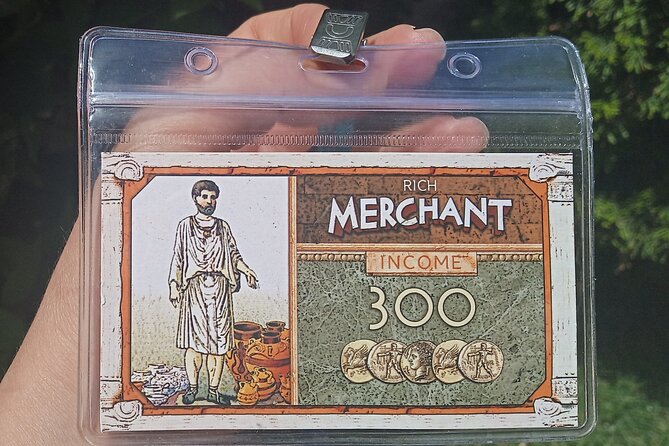
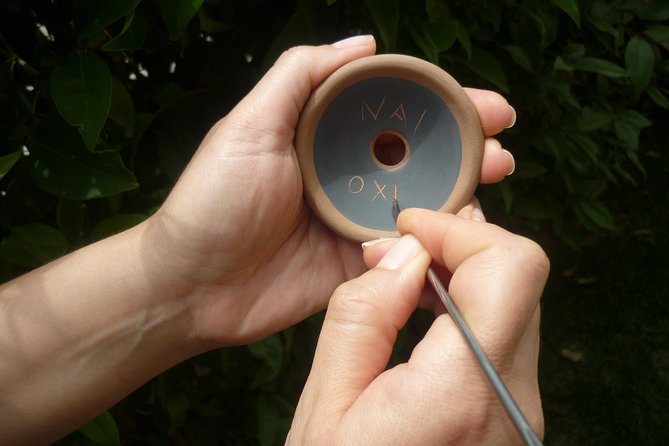
The next activity focuses on ostracism, one of the more dramatic tools associated with Athenian democracy. You identify the citizen judged to be dangerous, write that person’s name on an ostrakon, and symbolically exile them from the city.
The exercise gives the word ostracism a clear physical meaning. Instead of hearing a quick definition and moving on, you handle a ceramic voting disk and make a choice. The act also raises a useful question: Can a democratic system protect itself while still risking unfair or emotional decisions?
Each participant carves and keeps an ostrakon as a commemorative piece. This is a real strength of the experience. Many tours leave you with photographs and a few new facts. Here, you leave with a small object tied to the decision you made during the session.
The keepsake is not presented as an ancient artifact. It is a replica that you use and retain. That makes it suitable for families and younger participants, and it gives the activity a physical reminder that can help the discussion continue after you leave Pnyx.
The subject can also feel more serious than a simple craft exercise. Ostracism involved removing a person from the city, and the role-play asks you to consider how public suspicion and political power can work together. The workshop connects those old decisions with questions about modern democracy, freedom of expression, equality before the law, and the importance of each citizen’s voice.
Same city, a completely different century:
- Athens: Acropolis & up to 5 Archaeological Sites Combo Pass
★ 4.4 · 12,619 reviews - Athens: Acropolis Ticket with Optional Audio or Live Guide
★ 4.2 · 11,055 reviews - Athens: Acropolis, Parthenon & Acropolis Museum Guided Tour
★ 4.8 · 9,316 reviews - Athens: Cape Sounion & Poseidon Temple Sunset Half-Day Trip
★ 4.8 · 8,241 reviews
The short hill tour and Exploration Game
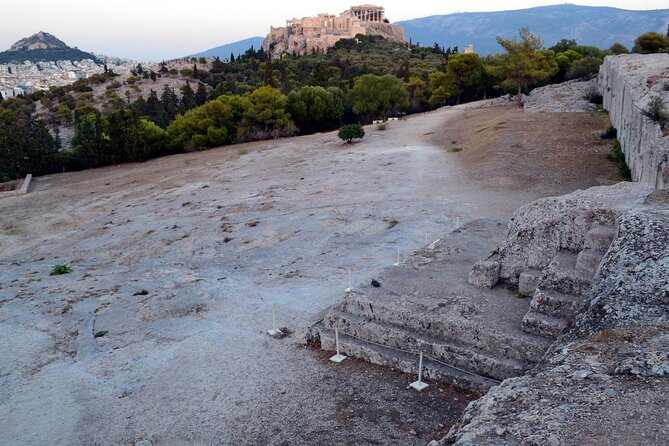
After the Assembly and ostracism activity, the facilitator gives you a brief tour of the hill. This portion helps place the role-play back in its physical setting and gives you a little more time to look around Pnyx.
Do not expect a full archaeological tour of Athens. The experience is specifically an interactive history workshop for beginners, not a conventional guided visit. If you want detailed coverage of every monument, inscription, or archaeological period in the area, you should add a separate sightseeing visit to your plans.
The session ends with the Exploration Game, a team challenge designed to reinforce what you have just learned. It is available for groups of four or more. If fewer than four people attend, you should not count on this final game being part of your experience.
I like the placement of the game at the end. You first receive context, then act out a public meeting, then finish with a lighter challenge. That rhythm keeps the two-hour activity from becoming a single long discussion. It also works well for families or mixed-age groups, as long as everyone is willing to participate.
What the $66.01 price gets you
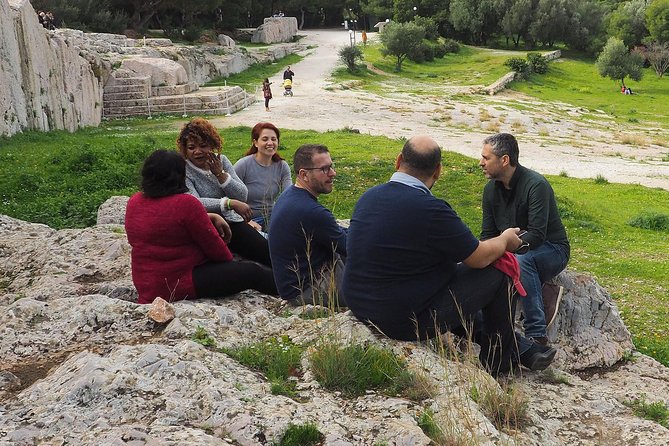
At $66.01 per person, this costs more than simply walking up Pnyx Hill on your own. The hill itself is a public historical place, so the price is not buying access to an exclusive monument or a long sightseeing route.
You are paying for the facilitator, the structured role-play, the replica water-timer, the ceramic ostrakon you keep, liability insurance, and local VAT. The main value is the design of the activity. It turns a site that can be easy to overlook into a place where you do something specific and memorable.
For me, the price makes the most sense if you want history presented through action. A group of friends, a family with older children, or a visitor who enjoys discussion will likely get more from it than someone who wants a cheap overview of Pnyx.
The small maximum group size also matters. A 10-person limit supports the discussion and makes it more likely that you will have a speaking role. Group discounts are available, which may improve the value for a larger booking.
The workshop is about two hours long. That is enough time for the introduction, uphill walk, Assembly role-play, ostracism, hill tour, and team challenge without taking up an entire day in Athens. You can pair it with other nearby sightseeing, but plan around the outdoor conditions and allow time to cool down afterward if the weather is hot.
Weather, conduct, and practical limits
This activity depends on good weather. If poor weather forces a cancellation, you will be notified at least three hours ahead and offered another date, a similar workshop, or a full refund. The experience also requires a minimum number of participants, so a cancellation for that reason comes with the choice of another date or activity, or a full refund.
For your own cancellation, you can receive a full refund if you cancel at least 24 hours before the local start time. Changes or cancellations made inside that window are not accepted for a refund.
Because Pnyx is a historical site, respectful conduct is required. Keep clothing, noise, cleanliness, photography, and general behavior suitable for a heritage setting. The facilitator can end participation without a refund if someone behaves disrespectfully toward the place or other people.
Service animals are allowed, and most people can take part. The uphill walk remains the main physical consideration. The activity takes place outdoors and includes standing, walking, sitting in a shaded area, and active participation.
You should also be aware that the workshop takes place in a public space where photography and video may occur. By attending, you consent to possible filming and later publication by the provider or other participants, though you can withdraw your consent by contacting the provider in writing. The provider is not responsible for material recorded and used by other people.
Who will enjoy this Pnyx workshop most
I would recommend this experience to curious first-time visitors who want more than a checklist of ancient monuments. It is especially well suited to people who remember ideas better after trying them, rather than after hearing a long explanation.
It also fits families with teenagers over 10. The water-timer, voting, ostrakon activity, and team game give younger participants something concrete to do. An adult must book with underage participants and supervise them.
This is a good pick for a small group of friends, too. The group limit gives everyone a chance to join the Assembly discussion, while group discounts may help with the price.
I would be more cautious if you have limited mobility, dislike uphill walking, or want extensive archaeological detail. The activity is not described as accessible for every mobility level, and the 300-meter climb could prevent full participation. I would also choose a regular site tour instead if you prefer a guide-led explanation with little audience involvement.
The workshop is highly rated, with a 5 out of 5 score from 23 ratings and a 100 percent recommendation rate. Those figures fit the strongest feature of the experience: it gives the ideas of democracy a setting, a time limit, a ballot, and a consequence.
Should you book the Democracy Experiential Workshop?
Book it if you want to understand Pnyx by using it as the setting for a decision. The combination of the Acropolis view, small group, simple English, water-timer, public debate, and handmade ostrakon gives you more to remember than a short stop for photographs.
Skip it if you want a purely observational tour, have trouble with a 300-meter uphill walk, or need toilets and refreshments close at hand throughout the visit. For everyone else, this is a thoughtful two-hour addition to an Athens itinerary, especially if you want to think about how democratic choices work rather than simply hear that Athens was the birthplace of democracy.
FAQ
Where does the workshop begin?
It begins at Rovertou Galli 39, Athina 117 41, Greece. The activity ends back at the meeting point.
How long does the activity last?
The workshop lasts approximately two hours.
Is this a regular guided tour of Pnyx?
No. It is an interactive history workshop for beginners, focused on democracy rather than a standard guided tour of the archaeological site.
What language is the workshop offered in?
It is offered in English. The language is plain English, without difficult words or technical terminology.
Is the workshop suitable for children?
It is suitable for adults and teenagers over 10 years old. Underage participants cannot book alone, and at least one adult must book and supervise them.
What happens if the weather is poor?
The activity may be canceled because it takes place outdoors and requires good weather. You will be notified at least three hours ahead and offered another date, a similar workshop, or a full refund.
Freshly added Athens trips
- Athens and Ancient Corinth Private from Athens★ 5.0 · 3 reviews
- From Athens: Mycenae and Epidaurus Private Tour★ 4.8 · 3 reviews
- Full day Meteora private tour★ 5.0 · 3 reviews
- Double Shore Dive (certified divers)★ 4.5 · 3 reviews
- Athens Hills: Mythology Treasure Hunt★ 5.0 · 3 reviews
- Sunset & swimming at Cape Sounio, Poseidon temple★ 5.0 · 3 reviews
- Philosophy Experience at Plato’s Academy Park – basic version★ 5.0 · 3 reviews
- Private Acropolis Tour – Ticket Included★ 5.0 · 3 reviews
Workshops, compared.

Classic Cooking Class with Market Visit and Wine
Read our review →
Food Market Visit and Cooking Class with Wine
Read our review →
Greek Cooking Class in Athens Including Rooftop Dinner with Acropolis View
Read our review →
Greek Small-Group Athens Cooking Class & Dinner
Read our review →

Greek Cuisine Cooking Class and 3-Course Dinner
Read our review →
Traditional Greek cooking class and lunch or dinner with an Acropolis view
Read our review →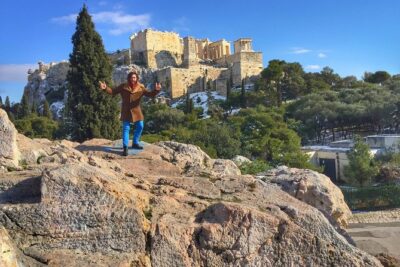
Athens Airport Private Transfer by Mercedes-Benz E Class Wagon to City Center
Read our review →Browse the lists this tour appears in