
Reviewed · COOKING CLASSES
Cooking Class with Aspasia in the Heart of Athens
The most interesting part of this Athens experience is the setting: you cook in Aspasia’s own home, not in a restaurant kitchen or a polished cooking school. Over about three hours, you help prepare seven Greek dishes, then sit down together for the meal with two glasses of white wine.
I like the personal scale and the menu’s tour of Greek regions, from Cretan dakos to eggs kayanas from Mani and ravani from Northern Greece. I also like that the host welcomes beginners, with one participant praising Aspasia’s patience and saying the evening felt more like making a food friend than taking a formal lesson.
The main consideration is the level of hands-on cooking. This may be a warm, social home meal with guided preparation rather than a technical class built around sauces, knife skills, or advanced recipes. If you want to cook every dish from start to finish, ask for clarification before booking.
In This Review
- Key points to know before booking
- Cooking Greek food in a real Athens home
- A menu that travels around Greece
- What the three-hour schedule feels like
- The meal is part of the lesson
- Is the $130 price worthwhile?
- Who will enjoy this experience most?
- Practical details for your Athens plans
- My recommendation for this Athens cooking class
- FAQ
- Where does the cooking experience take place?
- How long does the experience last?
- Is this a private activity?
- What language is the experience offered in?
- What dishes are included?
- Is wine included?
- Does the activity finish at the meeting point?
- What is the cancellation policy?
Key points to know before booking
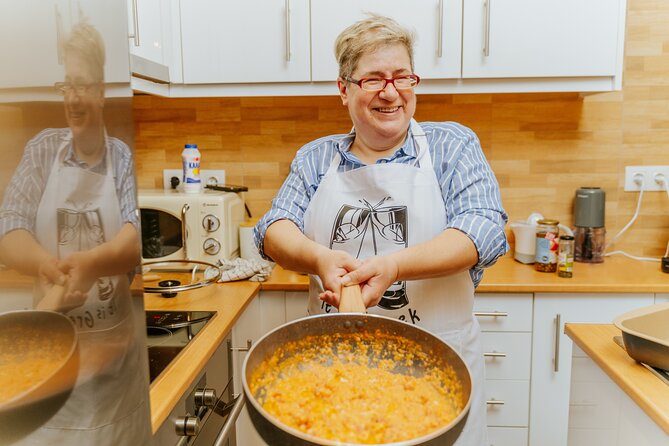
- A private meal in Aspasia’s bright Athens home: Your group is the only group taking part.
- Seven Greek dishes in about three hours: The menu covers starters, two mains, and dessert.
- A tour of regional Greek cooking: Try Cretan dakos, Mani-style eggs kayanas, and Northern Greek ravani.
- Two glasses of white wine included: The meal is designed for conversation as well as cooking.
- Best for relaxed beginners and food lovers: Aspasia is described as patient and encouraging.
- A possible mismatch for serious home cooks: Participation may feel limited if you expect a full technical lesson.
Cooking Greek food in a real Athens home
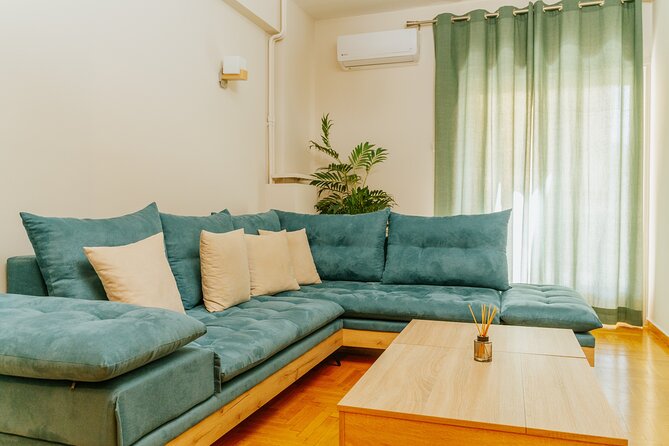
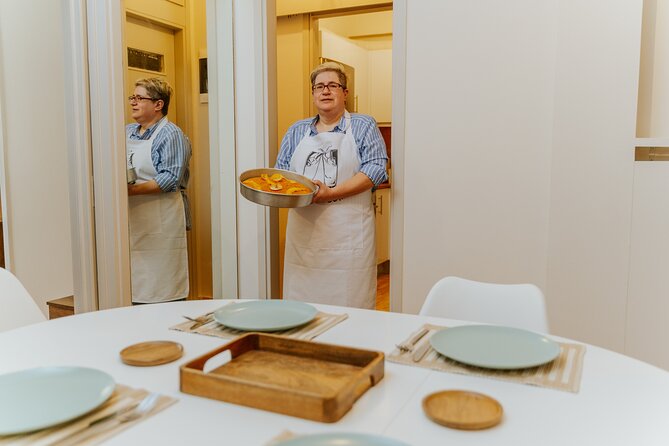
This is a small, personal experience built around food and conversation. You meet at Tsocha 3 in Athens, then enter Aspasia’s light-filled, carefully decorated home for a private session conducted in English.
That home setting changes the mood. You are not sitting in rows while an instructor demonstrates from across a counter. You are sharing a domestic space, helping with a meal, and eating what has been prepared in the same place. I like this because Greek food makes the most sense when it is connected to family kitchens and long meals, not just restaurant menus.
The private format matters, too. Only your group participates, so you can ask questions without competing with a large class. If you are new to Greek cooking, you should have room to ask about ingredients, seasoning, and how the dishes fit into everyday meals.
At the same time, do not assume that private means intensely hands-on. The information indicates that most dishes are prepared in front of participants, with encouragement to join in at each stage. One account describes the host as patient and helpful, while another found the activity closer to socializing and being served than to a formal cooking class. That difference is the key issue to consider.
More cooking classes in Athens:
- Athens: Classic Cooking Class with Market Visit and Wine
★ 5.0 · 1,101 reviews - Athens: Food Market Visit and Cooking Class with Wine
★ 4.9 · 1,087 reviews - Greek Cooking Class in Athens Including Rooftop Dinner with Acropolis View
★ 5.0 · 826 reviews
A menu that travels around Greece
The menu is appealing because it does not focus on one famous plate. Instead, it moves through several parts of Greek food culture, with simple ingredients used in different ways.
You begin with paximadi bread, olives, and graviera cheese. Paximadi is a dry, sturdy Greek bread, and graviera is a hard cheese that can taste mildly sweet or slightly spicy. This is a straightforward opening, but it gives you a feel for the country’s fondness for salty, rustic foods served with bread and olive oil.
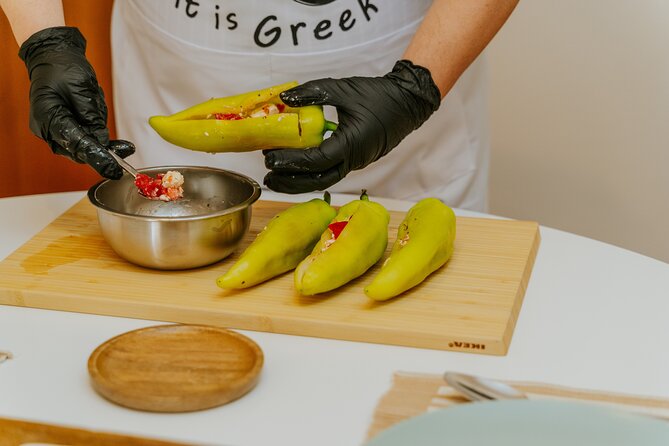
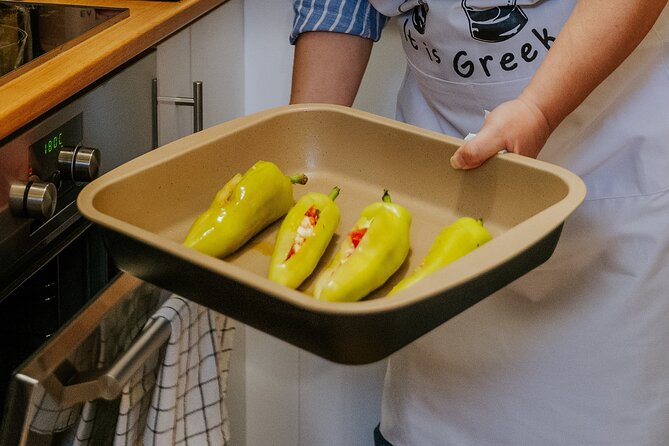
The stuffed long sweet peppers bring a softer, vegetarian note. They are filled with feta, tomatoes, and herbs such as spearmint. This is the kind of dish that can look familiar at first, yet the herbs and cheese give it a clear Greek character. It is also a useful recipe for home cooks because the ingredients are accessible and the preparation is not intimidating.
Next comes eggs kayanas, a dish associated with Mani in southern Greece. The basic combination is scrambled eggs, fresh tomatoes, and cured pork called siglino. It is a good example of regional cooking that relies on a few strong ingredients rather than a long list of steps.
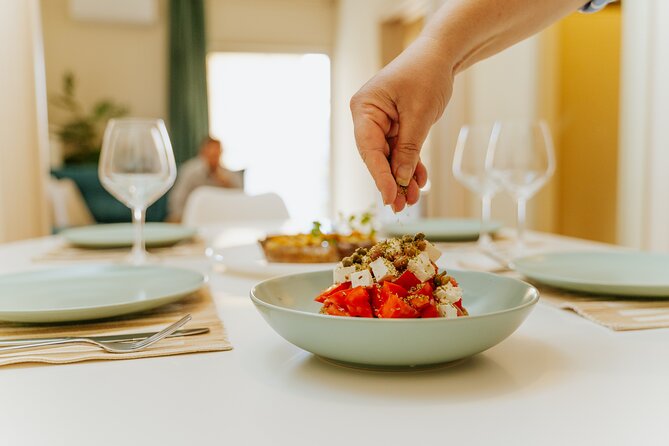
The Cretan dakos salad adds a different texture. Crispy barley rusks are softened by tomato and olive oil, then paired with feta. Dakos is one of the more distinctive items on the menu because the rusk gives the salad a firm bite. If you already know Greek salad as cucumber, tomato, olives, and feta, this is a useful reminder that Greek salads vary widely by region.
The first main dish is Greek meatballs with yogurt sauce. The meatballs use ground beef, flour, and Greek spices, and the yogurt adds a cool contrast. This is described as a classic grandmother-style dish, which tells you something about the purpose of the menu: it aims at familiar home cooking rather than restaurant showmanship.
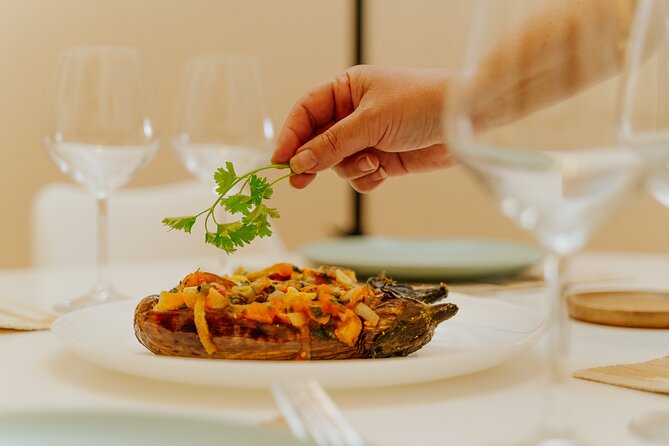
Eggplants imam provide the second main. The eggplants are stuffed with onions, tomatoes, garlic, herbs, and spices. This is a hearty vegetarian dish and a welcome counterpoint to the meatballs. It also shows how Greek cooking can make a filling meal from vegetables, olive oil, and aromatics.
Dessert is ravani, a semolina cake soaked in aromatic syrup and associated with Northern Greece. The cake gives the meal a sweet ending, though you should note one small inconsistency in the available information: a participant described making rice pudding instead. If the dessert matters to you, confirm the current menu with Aspasia before the session.
What the three-hour schedule feels like
The experience lasts about three hours, which is enough time for preparation, eating, and conversation without taking an entire day from your Athens plans. It is best placed on an evening when you are not rushing to a museum, ferry, or scheduled dinner.
The session begins with preparation and instruction. Aspasia introduces the recipes and shares information about the dishes as you work. The atmosphere is intended to be light and social, rather than strict or classroom-like.
For a beginner, this format can be very comfortable. One participant who described having little cooking experience found Aspasia patient and clear, and enjoyed being guided through stuffed peppers, eggplant, scrambled eggs, meatballs, and dessert. If you feel nervous around a kitchen, the friendly home setting may help.
For a confident cook, the value depends on how much active work you are allowed to do. A person who had taken and hosted cooking classes expected more direct participation, including instruction on sauces, spices, and family cooking methods. That person felt disappointed by the amount of food prepared in front of the group.
My advice is simple: tell Aspasia what you want from the session at the start. If you want to chop, mix, season, shape, and assemble, say so. If you mainly want to learn about Greek dishes while enjoying a relaxed meal, the format may suit you well.
The meal is part of the lesson
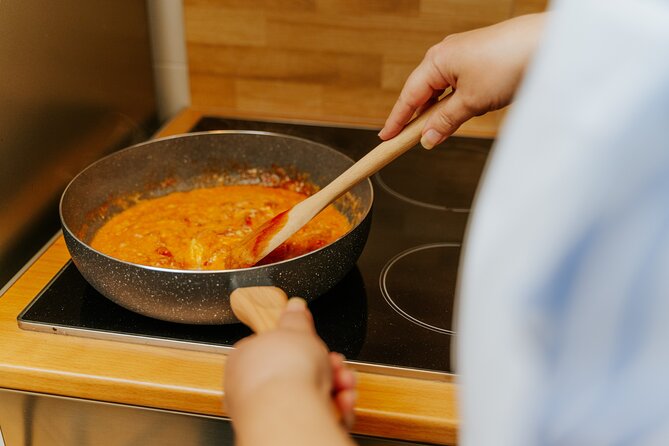
After the preparation, you eat the food together at the home. This is not just a final tasting. Sitting down with the dishes gives you a chance to understand how they work as a Greek meal, with small starters, vegetable dishes, meat, and dessert sharing the table.
Two glasses of white wine per person are included. That detail helps set expectations: the experience is partly culinary instruction and partly hosted dinner. Conversation and social connection are central, not side benefits.
I like this aspect for visitors who want a personal evening rather than another scheduled attraction. You get to talk with a local host, ask questions in a relaxed setting, and see how a group of dishes comes together. The evening may also appeal to solo participants, since the private format and host-led conversation can make the setting feel more welcoming than eating alone in a restaurant.
The tradeoff is that the meal takes up a meaningful part of the three hours. If your priority is learning as many techniques as possible, you may prefer a class with fewer dishes and more time devoted to each one. Seven dishes create variety, but they can also mean that each recipe receives only limited attention.
A few more Athens days worth a look
- Greek Small-Group Athens Cooking Class & Dinner
★ 5.0 · 574 reviews - Athens: Greek Cooking Class & Dinner on a Rooftop
★ 5.0 · 383 reviews - Athens: Greek Cuisine Cooking Class and 3-Course Dinner
★ 4.8 · 270 reviews - Traditional Greek cooking class and lunch or dinner with an Acropolis view
★ 5.0 · 250 reviews
Is the $130 price worthwhile?
At $130.04 per person, this is not a cheap dinner. You should not compare it only with the cost of buying ingredients or ordering meatballs and eggplant at a neighborhood restaurant.
The price covers a private experience, an English-speaking host, a three-hour session, seven dishes, and two glasses of wine. It also includes the personal setting and the time Aspasia spends welcoming and guiding your group. For someone who values conversation, local contact, and a home-cooked meal, those extras may justify the cost.
Still, the price makes your expectations important. If you mainly want to eat Greek food, you can likely spend less at a restaurant. If you want a serious cooking workshop with detailed recipes and extensive practice, you may also find more focused classes better suited to your goals.
I see the value strongest for people who want a hosted evening with cooking included, rather than a professional culinary course. The experience is closer to being welcomed into a local home and helping with dinner than to earning a certificate in Greek cuisine.
One participant felt the cost was high because the dishes were familiar and much of the cooking appeared to be done by the host. Another participant considered the evening deeply enjoyable and formed a lasting friendship with Aspasia. Those sharply different reactions are useful. The experience can be excellent value if warmth and connection matter to you, but poor value if you measure it by hands-on technique alone.
Who will enjoy this experience most?
I would recommend it to first-time visitors who want a meal connected to Greek home cooking. Beginners may feel especially comfortable because Aspasia is described as patient, and the menu uses recognizable ingredients rather than demanding specialist equipment.
It also suits couples, families, and small private groups who enjoy eating together. The private format means you do not need to adapt to strangers, and the three-hour length gives you time to talk without turning the evening into a rushed demonstration.
Vegetarians will find several useful dishes on the menu, including stuffed peppers, Cretan dakos, and eggplants imam. However, eggs kayanas includes cured pork, and the meatballs use ground beef, so anyone with dietary restrictions should discuss them with Aspasia before booking.
This is less suitable for cooks who already know the basics and want advanced Greek technique. The menu includes familiar preparations such as cake, meatballs, stuffed vegetables, and eggs, even though the regional background adds interest. You may enjoy the meal, but you should not book expecting a professional kitchen workshop unless the hands-on format is confirmed.
Practical details for your Athens plans
The meeting point is Tsocha 3, Athens 115 21, Greece. The activity ends back at the same meeting point, so you do not need to arrange a separate return location.
A mobile ticket is accepted, and the experience is offered in English. It is near public transportation, which makes it easier to fit into an Athens sightseeing day. Confirmation is provided when you book.
Service animals are allowed. The activity requires a minimum number of participants, so if that minimum is not reached, you will be offered another date or experience, or a full refund.
Cancellation is free up to 24 hours before the start time. Changes or cancellations inside that 24-hour window are not accepted for a refund. Keep the local Athens time in mind when making changes.
The experience is often booked about 29 days ahead. That does not mean you must reserve a month early, but it suggests that you should not leave this private evening until the last minute, especially if your Athens dates are fixed.
My recommendation for this Athens cooking class
Book this experience if you want a friendly home meal with Greek cooking at its center. Aspasia’s patience, the private setting, the regional menu, and the chance to eat together make it a warm choice for beginners and food-focused visitors.
Think twice if you want every dish to be fully prepared by you. The most important question is not the menu or the wine. It is how much of the chopping, mixing, seasoning, and cooking your group will handle. Confirm that before booking, and this can be a memorable way to spend an evening in Athens. If you expect a technical master class, choose a more formal cooking school instead.
FAQ
Where does the cooking experience take place?
It takes place at Aspasia’s home at Tsocha 3, Athina 115 21, Greece.
How long does the experience last?
The cooking session lasts approximately three hours.
Is this a private activity?
Yes. Only your group participates in the activity.
What language is the experience offered in?
The experience is offered in English.
What dishes are included?
The menu includes paximadi bread with olives and graviera cheese, stuffed long sweet peppers, Greek eggs kayanas, Cretan dakos salad, Greek meatballs with yogurt sauce, eggplants imam, and ravani dessert.
Is wine included?
Yes. Each person is served two glasses of white wine.
Does the activity finish at the meeting point?
Yes. The activity ends back at the meeting point.
What is the cancellation policy?
You can cancel at least 24 hours before the start time for a full refund. Cancellations or changes made less than 24 hours before the start time are not accepted for a refund.
Freshly added Athens trips
- Athens and Ancient Corinth Private from Athens★ 5.0 · 3 reviews
- From Athens: Mycenae and Epidaurus Private Tour★ 4.8 · 3 reviews
- Full day Meteora private tour★ 5.0 · 3 reviews
- Double Shore Dive (certified divers)★ 4.5 · 3 reviews
- Athens Hills: Mythology Treasure Hunt★ 5.0 · 3 reviews
- Sunset & swimming at Cape Sounio, Poseidon temple★ 5.0 · 3 reviews
- Philosophy Experience at Plato’s Academy Park – basic version★ 5.0 · 3 reviews
- Private Acropolis Tour – Ticket Included★ 5.0 · 3 reviews
Cooking Classes, compared.
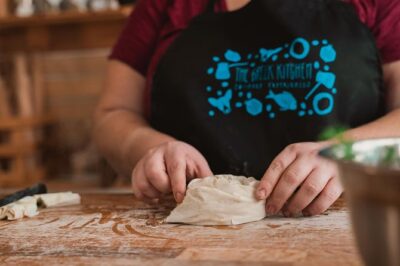
Classic Cooking Class with Market Visit and Wine
Read our review →
Food Market Visit and Cooking Class with Wine
Read our review →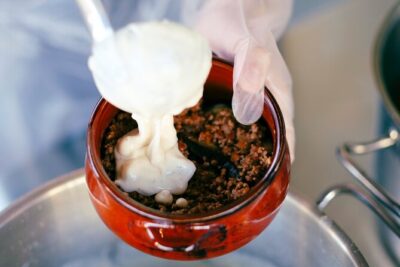
Greek Cooking Class in Athens Including Rooftop Dinner with Acropolis View
Read our review →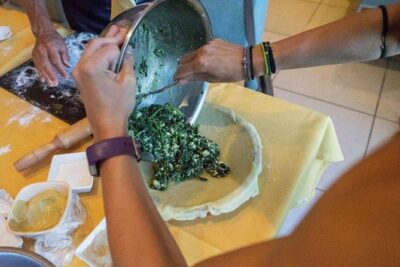
Greek Small-Group Athens Cooking Class & Dinner
Read our review →
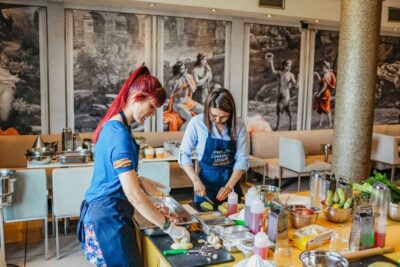
Greek Cuisine Cooking Class and 3-Course Dinner
Read our review →
Traditional Greek cooking class and lunch or dinner with an Acropolis view
Read our review →
Athens Greek Cooking Class Pita Gyros from Scratch with a Local
Read our review →Browse the lists this tour appears in