
Reviewed · OLIVE OIL TASTINGS
Breakfast in the markets with olive oil and honey tasting
Athens shows its most useful side over breakfast, among the food stalls and family shops around Athinas Street. In 2.5 hours, you eat what locals eat, learn how Greek coffee is made, taste olive oil and honey, and finish at a meze taverna used by market traders rather than tour groups.
I like the direct contact with family-run food businesses, including an olive shop operated by an olive farmer and a beekeeper family. I also like the small group limit of 10, which makes it easier to ask questions and follow your guide through busy market streets. The main drawback is the food: this is not a good fit for vegans or anyone with lactose intolerance.
In This Review
- Key points at a glance
- Why this Athens breakfast tour works
- Starting at Monastiraki and heading toward Evripidou
- Athinas Street, where Athens shops for ingredients
- Olive oil, honey, and the people behind them
- Greek coffee made the traditional way
- The breakfast spread in Omonoia
- Guides, group size, and the feel of the walk
- Dietary limits and what to bring
- Is $58 a good value?
- Who should book this breakfast walk?
- Should you book Breakfast in the Markets with Olive Oil and Honey Tasting?
- FAQ
- Where does the tour meet?
- How long does the experience last?
- What foods are included?
- Will I taste olive oil and honey?
- Is the tour suitable for dietary restrictions?
- What is included in the price?
Key points at a glance
- Breakfast happens in working markets: Walk among meat, fish, produce, spice, olive, and deli stalls around Evripidou and Athinas Street.
- You meet food producers: Taste olive oil with an olive farmer and honey connected to a local beekeeping family.
- The meal is generous for a morning tour: Expect Greek yoghurt, honey, pies, sausage, cheeses, beans, deli meats, coffee, and other regional snacks.
- The last stop is especially local: Eat breakfast at a meze taverna where market traders go.
- Guides add the cultural context: Mike is described as personable and well informed, while Rachel has helped adapt choices for a guest with dietary needs.
- The timing works well: Book an early start and you keep most of the day free for museums, neighborhoods, and recommended tavernas.
Why this Athens breakfast tour works
Many food walks in Athens focus on polished restaurants or a set menu. This one begins with the city’s supply chain: produce, spices, fish, meat, cheese, olives, and the people who sell them. You are not simply tasting prepared dishes. You are seeing where everyday ingredients enter the city’s kitchens.
That matters because Greek breakfast is not always a single plate. It can be coffee with a pie, yoghurt with honey, cheese, sausage, beans, or small savory bites picked up from a shop. The tour gives you a useful introduction to those habits, then points you toward places where you can shop and eat during the rest of your stay.
You pay $58 per person for 2.5 hours. That is a fair price if you value a guided food walk with several tastings, a sit-down breakfast, producer visits, and market orientation. You also save time and guesswork. The guide can show you where to buy spices, olives, and Greek delicacies at local prices.
This is not a bargain if you want only a quick coffee and pastry. It is also not a full-day food tour. Think of it as a morning introduction to central Athens, with enough food to function as breakfast and perhaps a light lunch.
More olive oil tastings in Athens:
- Athens Old Town: Greek Olive Oil & Herbs Tasting
★ 4.2 · 41 reviews - Olive Oil Tour & Tasting with sommelier -Kalentzi, Athens daytrip
★ 5.0 · 18 reviews - From Athens: Olive Oil Tasting, Olive Grove & Wine Experience
★ 5.0 · 13 reviews
Starting at Monastiraki and heading toward Evripidou
The meeting point is outside the small pie shop En Athinas. It is next to the Cecil Hotel and a large Cosmote shop, so look for those landmarks rather than relying only on a street address. The tour begins in Monastiraki, one of the easiest central points to reach on foot or by public transport.
From there, you walk about five minutes to Evripidou. This short start is helpful if you are still getting your bearings in Athens. Wear comfortable shoes, since the route uses city streets and market areas rather than staying in one seated location.
Evripidou brings you into the food-shopping side of central Athens. The visit lasts about 30 minutes and includes tasting food while your guide explains the role of the market and its sellers. You may see stalls devoted to spices, olives, cheese, deli foods, and other staples used in Greek cooking.
The best way to approach this stop is with curiosity rather than a fixed picture of a formal market hall. The appeal is the mix of shops and working traders. You are watching people buy ingredients for home cooking and business kitchens, not just browsing displays made for sightseeing.
Athinas Street, where Athens shops for ingredients
The next market section is on Athinas Street and takes about 30 minutes. This is where the tour’s contrast becomes clear. A few streets from the postcard version of Athens, you find meat, fish, fruit, vegetables, spices, and prepared foods moving through a practical neighborhood market.
Your guide introduces you to local traders and explains how fresh produce is selected and bought. You also learn where to shop for Greek ingredients at prices aimed at residents. That advice can be more useful than a list of souvenir shops, especially if you plan to rent a flat, prepare a picnic, or take food home.
The market can be sensory and crowded, with strong smells and plenty of activity. That is part of the point, but it may feel less comfortable than a quiet café breakfast. If you prefer slow dining from the first minute, this tour asks you to walk and sample first.
The route gives you context for the food on your plate. Seeing fruit, cheese, olives, and spices in their market setting helps you understand how much of Greek cooking depends on a few good ingredients handled simply.
Olive oil, honey, and the people behind them
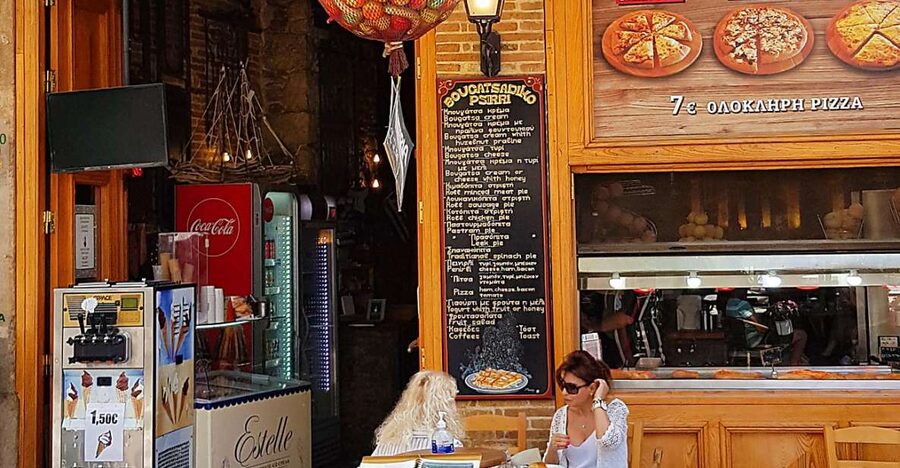
One of the most worthwhile parts is the producer connection. You visit an olive shop run by an olive farmer and taste olive oil while learning how Greeks use it in daily cooking. This is more useful than simply being told that olive oil is important. You can compare flavors and ask how to choose and use it.
The tour also includes honey tasting with an explanation of its place in the Greek diet. You meet the beekeeper family connected with the honey, which gives the tasting a human scale. Honey is not treated as just a sweet topping. It is part of the food culture and pairs naturally with sheep’s milk yoghurt.
I would pay close attention here if you plan to buy olive oil or honey. You are shown places to shop for Greek delicacies at local prices, and a guide can help you understand what belongs in a suitcase and what is better eaten fresh. The specific products available can vary, so do not expect one exact bottle or honey variety to be guaranteed.
More food stops in Athens:
- Greek Food Walking Tour in Athens
★ 5.0 · 4,740 reviews - Athens: Street Food Tasting Tour
★ 4.9 · 2,557 reviews - Small Group Greek Traditional Food Tour in Athens 20+ Tastings
★ 5.0 · 1,759 reviews - Athens: Food Market Visit and Cooking Class with Wine
★ 4.9 · 1,087 reviews
Greek coffee made the traditional way
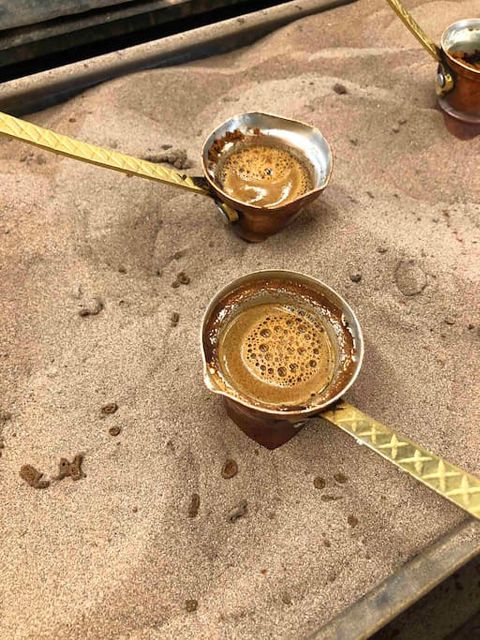
Coffee is part of the tour’s cultural lesson, not merely a drink between food stops. You see Greek coffee made in the traditional way and learn how Greek coffee developed. The guide also explains how coffee fits into social life and the rhythm of the morning.
The serving is likely small and strong, and the preparation is slower than an espresso machine. Take your time with it. This is a chance to see why coffee in Greece is tied to conversation and routine rather than being only a quick caffeine stop.
If you do not usually drink coffee, the experience still has value because the preparation is part of the story. The tour also includes a Greek spirit, so the morning is not limited to one kind of beverage. Since the exact spirit is not specified, ask your guide what you are tasting and how it is normally served.
The breakfast spread in Omonoia
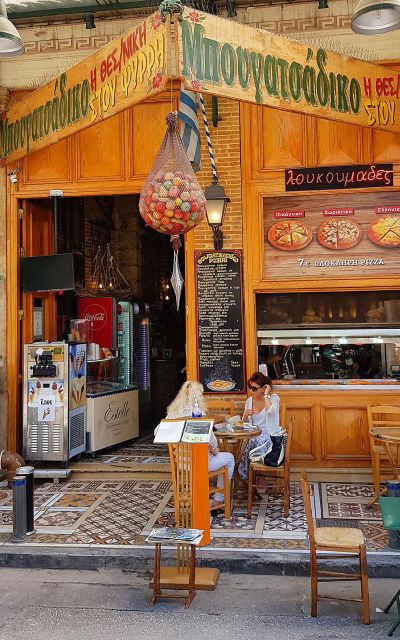
The longest section takes place around Omonoia and lasts about 70 minutes. This is the main eating portion, with breakfast, dessert, coffee, local snacks, and regional foods. The setting is a meze taverna known to market traders, which gives the meal a more everyday feel than a restaurant selected mainly for its views.
Expect a broad Greek breakfast rather than one standard dish. The included foods can include:
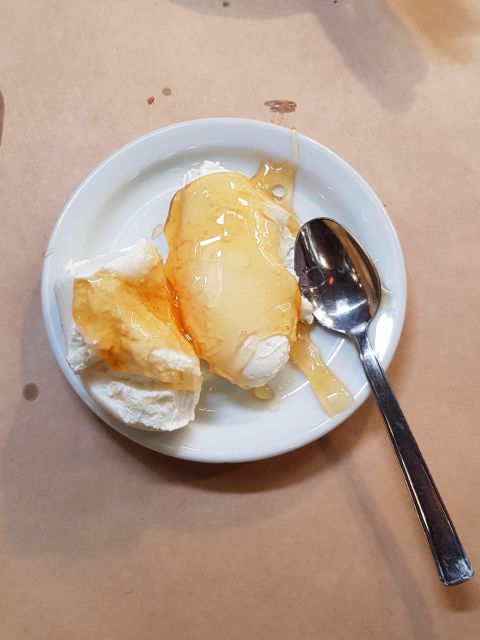
- Greek sheep’s milk yoghurt with local honey
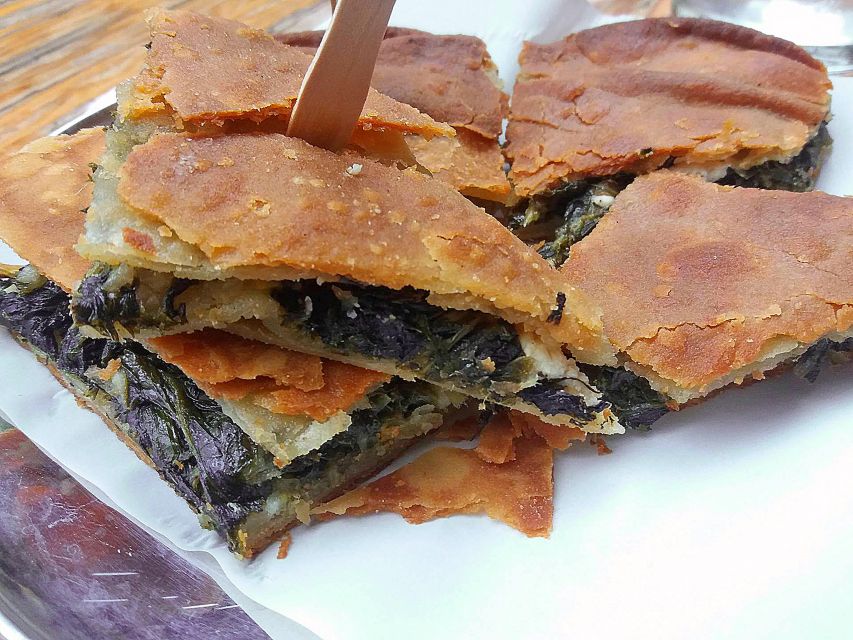
- Typical Greek breakfast pies such as spanakopita
- Sausage, deli meats, and cheeses
- Beans and other savory foods
- Greek coffee
- Dessert and local snacks
- A Greek spirit
The sheep’s milk yoghurt is a useful detail for anyone interested in regional ingredients. It has a different character from ordinary cow’s milk yoghurt, and the local honey gives you a chance to compare the two products together.
The pies are another strong reason to take the tour early. Savory pies are practical Greek breakfast food, and tasting them in this setting helps you recognize them later in bakeries and cafés. You can then return to a favorite style during your trip.
The taverna stop may also be flexible. One guest received a vegetarian sit-down meal that exceeded expectations, even though it was not planned in advance. That suggests the meal can sometimes adjust to circumstances, but you should not depend on an unplanned change. Send all dietary requirements when booking and speak with the guide at the start.
Guides, group size, and the feel of the walk
The group is limited to 10 people and the tour runs in English. That is a good size for a market walk. Your guide can explain unfamiliar foods, introduce you to sellers, and keep the group together without the stiffness of a large coach excursion.
Mike has been praised for being personable, clear, and well informed about the food, people, and culture. Rachel is described as engaging and attentive, and she has gone out of her way to help with a guest’s dietary restriction. You may not have either guide on your particular date, but their role is central to the experience. The market itself is easy to visit without a guide. The introductions and explanations are what you are paying for.
The pace is active but manageable. There is a five-minute walk from Monastiraki to Evripidou, then short guided sections through the markets before the longer breakfast stop. You should be comfortable standing, walking, and eating several small portions over the morning.
This is a social experience rather than a private food consultation. With up to 10 people, you will share tastings and seating. The smaller group makes conversation easier, but anyone seeking complete independence may prefer to explore the markets alone.
Dietary limits and what to bring
The tour is specifically listed as unsuitable for vegans and people with lactose intolerance. Dairy appears in the yoghurt and cheeses, while meat and other animal products are part of the breakfast. Vegetarians may find workable choices, but you must provide your requirements at booking rather than assume the menu will change.
Bring comfortable shoes and water. You will be walking through central markets and standing during some tastings. The early timing can also help in warm weather, since the tour gets you through much of the route before the middle of the day.
Hotel pickup and drop-off are not included. You make your own way to the meeting point outside En Athinas and return to Monastiraki at the end. This is easy to combine with central Athens plans, but allow enough time to reach the meeting point without rushing.
Is $58 a good value?
At $58, the price makes sense if you treat this as both breakfast and a guided orientation to Athens food shopping. You receive several tastes, a sit-down meal, coffee, a spirit, olive oil and honey experiences, market visits, and direct access to a guide who can recommend places for later meals.
The value is strongest for a first morning in Athens. You can use the advice immediately, perhaps returning to a spice shop or trying one of the recommended tavernas later. You also finish near Monastiraki, leaving the rest of the day open.
The value is weaker for anyone who dislikes group eating, cannot eat dairy, or wants a narrow specialty such as wine, pastries, or fine dining. This is a broad introduction to Greek market food, not a carefully controlled tasting menu.
The tour has a current rating of 4.8 from eight verified bookings. The most consistent praise centers on the guides, the cultural explanations, the small group, and the combination of delicious food with market access. That matches the tour’s design: the food gets you there, but the people and shopping knowledge give the morning its lasting use.
Who should book this breakfast walk?
I would choose this for a first or second day in Athens, especially if you want help understanding what to order later. It suits people who like markets, family businesses, simple food, and conversation with a guide.
It is also a good choice if you want a morning activity that does not consume your whole day. After returning to Monastiraki, you can continue to museums, archaeological sites, or neighborhoods recommended during the walk.
I would skip it if your diet rules out yoghurt, cheese, meat, or other animal products. I would also skip it if you want a quiet, seated breakfast from start to finish. The market setting is the attraction, and markets come with noise, smells, movement, and changing conditions.
Should you book Breakfast in the Markets with Olive Oil and Honey Tasting?
Book it if you want a practical introduction to Athens through food, not a list of famous sights. The strongest parts are the producer tastings, the market setting, the traditional coffee, and the local taverna breakfast.
Choose an early start so you can use the rest of the day for sightseeing and follow the food advice while it is fresh. Tell the provider about dietary needs when booking, and remember that this is not suitable for vegans or people with lactose intolerance.
For $58, it is a solid choice for an English-speaking food lover who wants a small group, a substantial morning meal, and a better sense of where Athenians shop and eat.
FAQ
Where does the tour meet?
You meet outside En Athinas, a small pie shop next to the Cecil Hotel and a large Cosmote shop in Monastiraki.
How long does the experience last?
The tour lasts 2.5 hours and returns to Monastiraki at the end.
What foods are included?
The experience includes Greek yoghurt with local honey, typical breakfast pies, sausage, cheeses, beans, deli meats, Greek coffee, dessert, local snacks, and regional foods.
Will I taste olive oil and honey?
Yes. You visit an olive shop run by an olive farmer, taste olive oil, and meet the beekeeper family connected with the honey tasting.
Is the tour suitable for dietary restrictions?
You should provide dietary requirements when booking. The experience is not suitable for vegans or people with lactose intolerance.
What is included in the price?
The $58 price includes the guided market walk, food and drink tastings, breakfast, the olive oil and honey experiences, and visits to local food businesses. Hotel pickup and drop-off are not included.
Freshly added Athens trips
- Athens and Ancient Corinth Private from Athens★ 5.0 · 3 reviews
- From Athens: Mycenae and Epidaurus Private Tour★ 4.8 · 3 reviews
- Full day Meteora private tour★ 5.0 · 3 reviews
- Double Shore Dive (certified divers)★ 4.5 · 3 reviews
- Athens Hills: Mythology Treasure Hunt★ 5.0 · 3 reviews
- Sunset & swimming at Cape Sounio, Poseidon temple★ 5.0 · 3 reviews
- Philosophy Experience at Plato’s Academy Park – basic version★ 5.0 · 3 reviews
- Private Acropolis Tour – Ticket Included★ 5.0 · 3 reviews
Olive Oil Tastings, compared.

Athens Old Town: Greek Olive Oil & Herbs Tasting
Read our review →
Olive Oil Tour & Tasting with sommelier -Kalentzi, Athens daytrip
Read our review →
Full-Day Private Tour Corinth and Olive Oil Tasting from Athens
Read our review →
Olive Oil Tasting, Olive Grove & Wine Experience
Read our review →
Private tour in Nafplio with Olive oil Tasting Tour in Corinth
Read our review →
2-Day Delphi & Olympia Tour with Olive Oil & Honey Tasting
Read our review →Browse the lists this tour appears in