

Reviewed · COOKING CLASSES
Athens: Traditional Vegan Cooking Class incl. Drinks
Greek cooking gets a plant-based makeover at SOYBIRD, a cooking school in Koukaki near the Acropolis. You’ll prepare familiar dishes such as moussaka, spanakopita, tzatziki, and fava, using cashew béchamel, almond feta, and other dairy-free ingredients.
I like the small-group format, which gives you a real job instead of leaving you to watch a chef work. I also like the full meal at the end, with water, white wine, and beer included. The main caution is that the class is informal and hands-on, not a polished demonstration. In a full group, the compact kitchen can feel a little hectic.
In This Review
- Key points at a glance
- Why this Athens cooking class is different
- Arriving at SOYBIRD in Koukaki
- Cooking moussaka with cashew béchamel
- Fava, dakos, and almond feta
- Spanakopita, koulouri, and ekmek
- How the three-and-a-half-hour session works
- The meal, drinks, and social side
- What the price includes and how to judge the value
- Who should book this class
- My call: book it for the food and the company
- FAQ
- Where does the vegan cooking class take place?
- How long does the activity last?
- What language is the class offered in?
- What dishes will I prepare?
- Are drinks included?
- How many people are in the class?
- Can I book a private lesson?
- Can I cancel for a refund?
Key points at a glance
- Six or more Greek dishes: Make moussaka, fava, dakos, spanakopita, koulouri, tzatziki, and ekmek.
- A vegan Greek menu: Cashew béchamel and homemade almond feta show how classic dishes can be adapted without meat or dairy.
- Small-group cooking: Classes generally run with 5 to 10 people, though the stated maximum for the activity is 14.
- A shared dinner: Sit down together after cooking and enjoy the food with water, white wine, and beer.
- Useful take-home material: A digital recipe book lets you try the dishes again at home.
- A social evening: The setup works well for couples, solo visitors, friends, and mixed groups of vegans and non-vegans.
Why this Athens cooking class is different
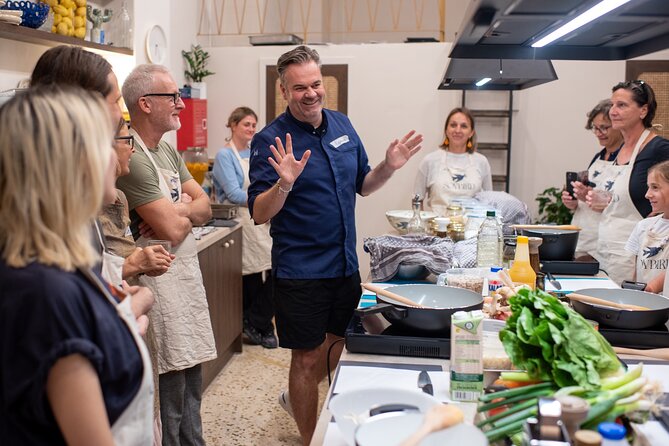
Many Greek food activities put you in front of a plate. This one puts you to work. At SOYBIRD, you are not simply sampling vegan versions of Greek food. You help prepare them, then eat the results around the same table.
That matters because Greek food is built on techniques you can use again: blending dips, seasoning legumes, handling pastry, cooking vegetables slowly, and balancing salty, sour, sweet, and herbal flavors. The class gives you a practical look at how those elements fit together.
The menu is also more ambitious than a quick lesson focused on one dish. You may prepare moussaka with cashew béchamel, fava topped with caramelized onions, dakos with almond feta, spinach pie, sesame rings, tzatziki, and ekmek for dessert. That is a lot of food for a three-and-a-half-hour session, so expect an active kitchen rather than a slow, highly polished chef demonstration.
The experience is designed for a minimum of five people. Most groups are described as small, with five to ten participants, but the activity information allows up to 14. I would ask about the expected group size if personal attention is especially important to you.
More cooking classes in Athens:
- Athens: Classic Cooking Class with Market Visit and Wine
★ 5.0 · 1,101 reviews - Athens: Food Market Visit and Cooking Class with Wine
★ 4.9 · 1,087 reviews - Greek Cooking Class in Athens Including Rooftop Dinner with Acropolis View
★ 5.0 · 826 reviews
Arriving at SOYBIRD in Koukaki
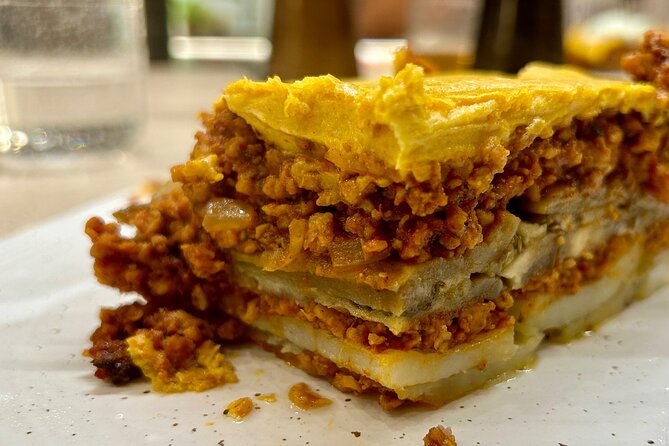
The class starts at SOYBIRD, at Veikou 75-77 in Athens 117 41. It is in Koukaki, a convenient area near the Acropolis and close to public transportation.
The location works well in a sightseeing schedule. You can pair the class with time around the Acropolis area, though you should allow yourself enough time to arrive without rushing. This is a fixed cooking session, not a drop-in food stop, and the activity ends back at the same meeting point.
The address is worth checking carefully before you set out. A cooking class is less forgiving of late arrivals than a museum or cafe. Confirmation is provided when you book, and the experience is offered in English.
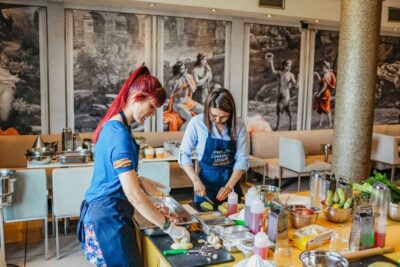
Inside, the class has the feel of a working kitchen rather than a large teaching studio. That can be part of its charm. You cook beside other people, share tasks, and get to know the group while the food comes together.
It can also create limits. One detailed account described the space as small for eight people plus the instructor. Utensils were not always easy to find, and some ingredients needed clearer labels. If you like everything laid out in a neat, professional station, this may feel loose around the edges.
Cooking moussaka with cashew béchamel
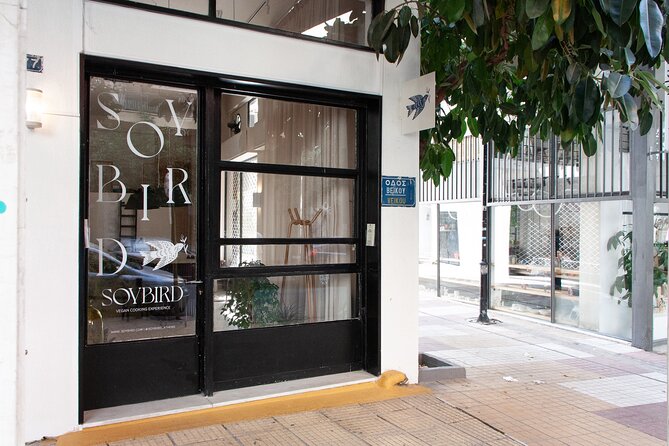
Moussaka is one of the best choices for showing what this class is about. The familiar Greek dish usually depends on meat and a creamy topping. Here, the béchamel is made with cashews, giving you a dairy-free version that still aims for the comforting texture associated with the classic.
You will prepare the dish as part of a larger group effort rather than making a private serving from start to finish. The class works in two teams, with people sharing jobs across the recipes. That means you may not control every step of every dish, but you will see a broad range of preparations during the evening.
The scale of the menu is a major plus. You leave with more than one recipe and a better sense of how a Greek meal is built. The tradeoff is that instructions may come from recipe cards and verbal guidance rather than a full demonstration before each step.
This is important for beginners. The class is suitable for people with little cooking experience, but you need to be comfortable asking questions and following directions as the kitchen moves along. A highly structured lesson with one chef demonstrating every technique may suit you better if you want to watch first and copy second.
Fava, dakos, and almond feta
Fava is a simple Greek staple made from legumes, but it rewards careful seasoning and good texture. Here it is paired with caramelized onions, which add sweetness and depth to the soft base.
The dish is a good reason to take the class even if you are not vegan. It focuses on ingredients that are central to Greek home cooking rather than relying on meat substitutes. You learn how pulses, onions, olive oil, herbs, and acidity can carry a dish.
Dakos brings another useful lesson. This Cretan-style preparation is built around crisp rusks and toppings, with homemade almond feta replacing the usual cheese element. Making a plant-based cheese from almonds gives the class one of its more unusual projects, and it is the sort of recipe you can adapt at home for a starter or light meal.
Tzatziki also appears on the menu, prepared as a yogurt and cucumber dip in the traditional spirit of the dish. The vegan version gives you a chance to think about texture and tang without dairy. Since the menu includes several spreads and toppings, you get a clear sense of how Greek food often works through small, strongly seasoned components served together.
A few more Athens days worth a look
- Athens: Gastronomic Vegan Group Walking Tour
★ 5.0 · 13 reviews - Athens: Vegan Local Street Food Guided Walking Tour
★ 5.0 · 9 reviews - The Vegetarian food tasting tour
★ 5.0 · 8 reviews - Athens’s original vegan food tour
★ 5.0 · 6 reviews
Spanakopita, koulouri, and ekmek
Spanakopita is another familiar Greek favorite, here made with spinach and without animal products. Handling pastry can be the most hands-on part of the menu, and the preparation gives you something concrete to practice after returning home.
One useful detail from the class format is that you work as part of a team. That makes large recipes manageable, but it also means the final result is shared. You should expect cooperation, not an individual cooking competition.
Koulouri, the sesame-covered Greek bread ring, rounds out the savory side of the menu. Its presence adds a simple baked or shaped item to a meal otherwise filled with dips, vegetable dishes, and layered preparations.
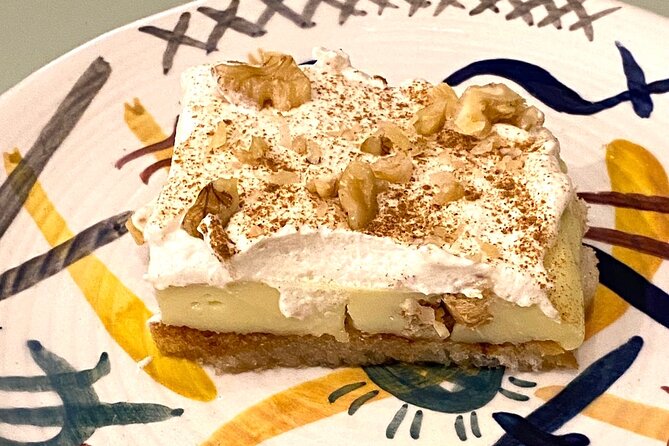
Dessert is ekmek, a Greek sweet specialty. The menu gives you a full progression from starter to main dishes to dessert, which is one reason the price feels more reasonable than a short lesson with a single tasting.
The amount of food is generous on paper. You are not paying only for instruction. You are also paying for ingredients, a sit-down meal, drinks, and recipes to use later. That makes the class a stronger value for people who want dinner included in their evening plans.
How the three-and-a-half-hour session works
The class opens with a short introduction. You then split into two teams and prepare the dishes step by step. The cooking is active, social, and collaborative, with the instructor moving between tasks.
The teaching style appears intentionally informal. Some sessions have been led by Alexandra, Mirka, or other SOYBIRD instructors, and the strongest accounts describe the coaches as friendly, patient, and able to keep several recipes moving at once. Alexandra is specifically praised for guiding a group through six recipes, while Mirka is noted for helping participants adapt Greek dishes into vegan versions.
Do not expect a formal cooking-school setup in which every action is shown from the front of the room. The class relies on shared preparation and written instructions. That works well if you enjoy learning by doing, but it may be frustrating if you need a demonstration before handling each ingredient.
A few practical habits will help. Keep track of your station, ask where utensils are before you need them, and check ingredient labels carefully. One participant found that items such as measuring jugs were not immediately obvious and that pepper and volcanic salt were not always clearly marked.
Basic kitchen awareness also matters. Tie back long hair, follow food-safety instructions, and expect to help with some cleanup. Washing and drying dishes may be part of the group effort, especially when the kitchen is busy.
The class lasts approximately three hours and 30 minutes. That is enough time for cooking, conversation, eating, and drinks, but it is not a quick activity. Avoid scheduling a tight evening appointment immediately afterward.
The meal, drinks, and social side
Once the cooking is finished, you sit down and eat the dishes together. Water, white wine, and beer are included, which changes the feel of the activity. It becomes a shared dinner rather than a lesson that ends when the oven turns off.
This social side is one of the strongest reasons to book. You may arrive alone, as a couple, or with friends, and the two-team format gives you an easy way to meet the people around you. Cooking creates conversation without forcing it.
The class also works for mixed diets. You do not need to be vegan to find value in the recipes. A meat-eater can learn how Greek cooking uses vegetables, legumes, pastry, nuts, and herbs, while a vegan visitor gets a menu designed around their needs rather than a token substitution.
The meal is also a chance to judge the recipes in finished form. During preparation, you may taste separate elements without knowing how they will work together. Sitting down with moussaka, fava, dakos, spanakopita, dips, bread rings, and dessert lets you see the menu as a complete Greek-style spread.
The atmosphere may be lively and slightly noisy when the group is full. If you want a quiet dinner or a private lesson, request a private class. Private lessons are available on request, but the total price depends on the size of your group.
What the price includes and how to judge the value
The listed price is $94.66 per person. For a 3.5-hour activity, that is not a budget meal, but the comparison should be made against a full evening out, not just a restaurant plate.
You receive hands-on instruction, ingredients for multiple dishes, a substantial shared meal, water, white wine, beer, and a digital recipe book. The recipe book adds lasting value because you can recreate the food at home instead of leaving with only a pleasant memory.
I think the price makes the most sense if you want three things at once: a meal, a social activity, and a practical introduction to vegan Greek cooking. It is less compelling if you only want to taste Greek food or if you already cook these dishes confidently.
The class has a very high overall rating of 4.9 from 41 ratings, with 95 percent of participants recommending it. The praise centers on the tasty food, friendly atmosphere, clear recipes, fresh ingredients, and the number of dishes prepared.
The weaker points are worth taking seriously. One participant found the session hectic, with unclear utensil storage, limited labeling, no traditional demonstration, and not enough room for eight people plus the instructor. The same account still described the evening as fun and recognized how hard the host worked.
That balance tells you what you are buying. This is a warm, communal kitchen session with a lot of food and a relaxed teaching style. It is not a precision cooking workshop with a helper at every station.
Who should book this class
I would recommend it most strongly to:
- Vegans seeking Greek food designed for them from the start
- Vegetarians who want a practical meal and new recipes
- Non-vegans curious about plant-based Greek cooking
- Couples looking for an evening activity beyond a restaurant
- Solo visitors who enjoy meeting people through food
- Beginners who like learning through direct participation
- Confident home cooks who want ideas for almond feta, cashew béchamel, and Greek vegetable dishes
It may not suit you as well if you dislike group activities, want a private chef-led lesson, or need a quiet and highly organized kitchen. The class requires a minimum of five people, so the appointment can be canceled if that number is not reached. You will be notified 24 hours beforehand if it does not go ahead.
The induction cooker also makes this activity unsuitable for people with pacemakers. That is an important safety note, not a minor footnote.
You can cancel for a full refund up to 24 hours before the start time. Changes or cancellations inside that period are not accepted for a refund. The cut-off follows local Athens time.
My call: book it for the food and the company
Book this SOYBIRD class if you want to do more than eat Greek food. The menu is broad, the vegan adaptations are thoughtful, and the shared dinner gives the evening a satisfying finish. The digital recipe book is a useful bonus, especially for dishes such as fava, almond feta, spanakopita, and cashew béchamel.
Go in ready to share space, follow written instructions, and lend a hand with cleanup. You may find the format a bit rushed when the kitchen is full, but you also get a lively, genuine group activity with enough food to make the price feel fair.
For a polished cooking demonstration, choose another format. For a friendly Athens evening where you cook, eat, drink, and leave with recipes you can use, this is a strong choice.
FAQ
Where does the vegan cooking class take place?
The class begins and ends at SOYBIRD, SOYBIRD Cooking Classes Athens, Veikou 75-77, Athina 117 41, Greece. The school is in Koukaki, near the Acropolis, and close to public transportation.
How long does the activity last?
The cooking class lasts approximately three hours and 30 minutes.
What language is the class offered in?
The class is offered in English.
What dishes will I prepare?
The sample menu includes moussaka with cashew béchamel, fava with caramelized onions, dakos with homemade almond feta, spanakopita, koulouri sesame rings, tzatziki, and ekmek dessert.
Are drinks included?
Yes. Water, white wine, and beer are included with the shared meal.
How many people are in the class?
The classes are described as small groups of five to ten people. The activity has a stated maximum of 14 participants, and the course requires at least five people to operate.
Can I book a private lesson?
Yes. Private lessons are available on request. The total cost depends on the size of your group.
Can I cancel for a refund?
You can cancel at least 24 hours before the start time for a full refund. Cancellations or changes made less than 24 hours before the start time are not accepted for a refund. If the class is canceled because the minimum group size is not reached, you will be offered another date or experience, or a full refund.
More Workshops in Athens
- Greek Small-Group Athens Cooking Class & Dinner
★ 5.0 · 574 reviews - Athens: Greek Cooking Class & Dinner on a Rooftop
★ 5.0 · 383 reviews - Athens: Greek Cuisine Cooking Class and 3-Course Dinner
★ 4.8 · 270 reviews - Traditional Greek cooking class and lunch or dinner with an Acropolis view
★ 5.0 · 250 reviews
More food stops in Athens
- Greek Food Walking Tour in Athens
★ 5.0 · 4,740 reviews - Athens: Street Food Tasting Tour
★ 4.9 · 2,557 reviews - Athens: Greek Foodie Tour with Tastings
★ 4.9 · 2,177 reviews - Small Group Greek Traditional Food Tour in Athens 20+ Tastings
★ 5.0 · 1,759 reviews
Freshly added Athens trips
- Athens and Ancient Corinth Private from Athens★ 5.0 · 3 reviews
- Full day Meteora private tour★ 5.0 · 3 reviews
- Double Shore Dive (certified divers)★ 4.5 · 3 reviews
- From Athens: Mycenae and Epidaurus Private Tour★ 4.8 · 3 reviews
- Athens Hills: Mythology Treasure Hunt★ 5.0 · 3 reviews
- Sunset & swimming at Cape Sounio, Poseidon temple★ 5.0 · 3 reviews
- Philosophy Experience at Plato’s Academy Park – basic version★ 5.0 · 3 reviews
- Private Acropolis Tour – Ticket Included★ 5.0 · 3 reviews
Cooking Classes, compared.
Classic Cooking Class with Market Visit and Wine
Read our review →
Food Market Visit and Cooking Class with Wine
Read our review →
Greek Cooking Class in Athens Including Rooftop Dinner with Acropolis View
Read our review →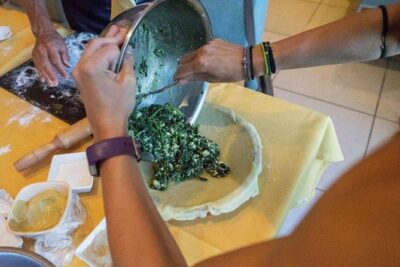
Greek Small-Group Athens Cooking Class & Dinner
Read our review →
Greek Cuisine Cooking Class and 3-Course Dinner
Read our review →
Traditional Greek cooking class and lunch or dinner with an Acropolis view
Read our review →
Athens Greek Cooking Class Pita Gyros from Scratch with a Local
Read our review →Browse the lists this tour appears in