
Reviewed · COOKING CLASSES
Athens: Greek Cooking Class with Meal and Drinks
Greek cooking gets a clever plant-based makeover at Soybird Studio in Koukaki, a short distance from the Acropolis. You work in small teams on dishes such as moussaka, spanakopita, fava, tzatziki, almond feta, and Greek desserts, then sit down to eat the full spread together.
I like the hands-on format, since you do more than watch a chef perform. I also like the friendly scale, with no more than 12 to 14 people and plenty of help from hosts such as Alexandra, Dimitra, Mirka, Konstantinos, and Fotini. The main thing to note is that every dish is vegan, so this is best for people who are curious about plant-based Greek food, not those expecting a standard meat-and-dairy cooking class.
In This Review
- Key points at a glance
- Cooking Greek classics without meat or dairy
- Arriving at Soybird Studio in Koukaki
- The first kitchen briefing and team setup
- Moussaka, spanakopita, and the main savory dishes
- Dips, spreads, bread, and the almond feta surprise
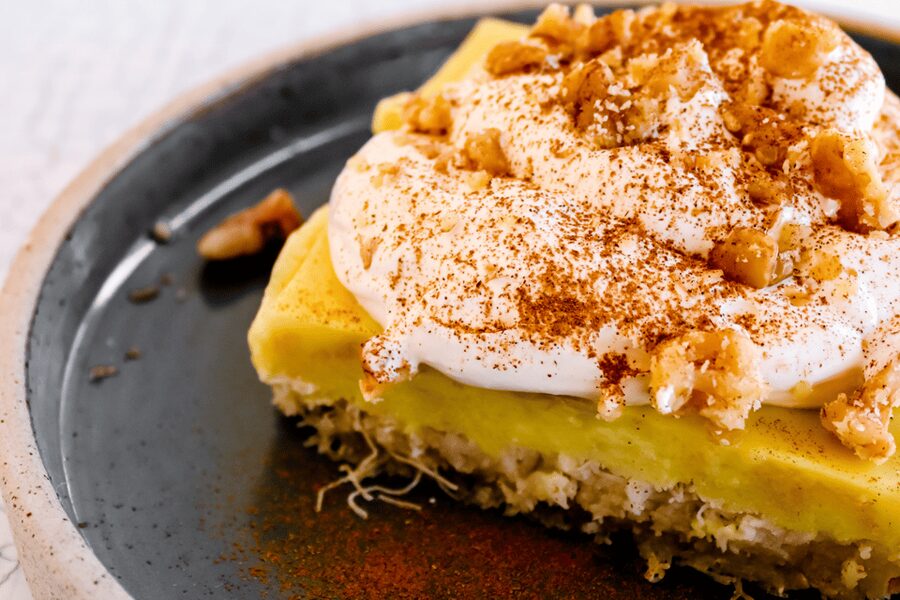
- Ekmek and the final shared buffet
- Drinks and the relaxed social atmosphere
- What the three and a half hours are really worth
- Who should book this Athens cooking class
- Timing, access, and useful booking details
- Should you book the Soybird vegan cooking class?
- FAQ
- Where is the Greek cooking class held?
- How long does the activity last?
- Is the food completely vegan?
- What drinks are included?
- Do I get the recipes after the class?
- Is the class suitable for children and wheelchair users?
Key points at a glance
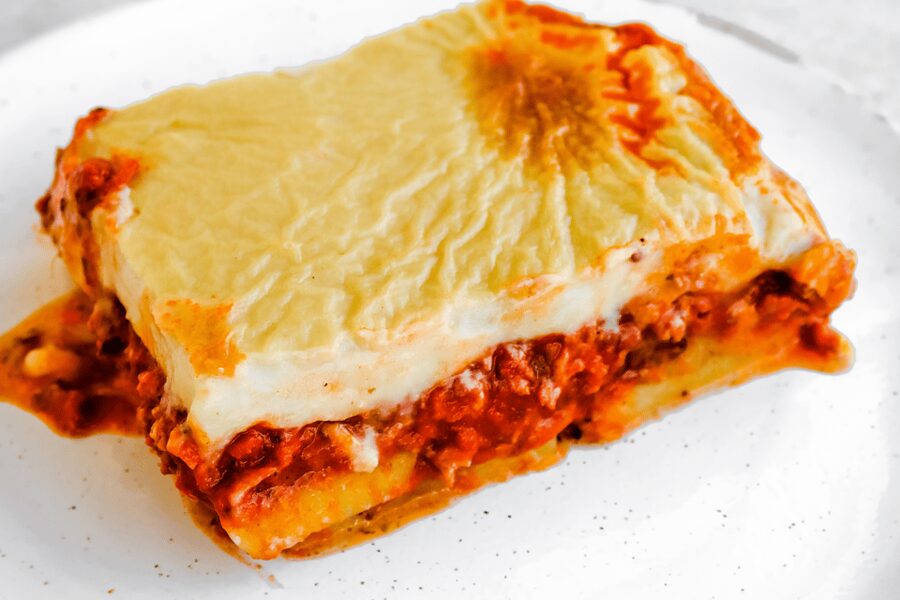
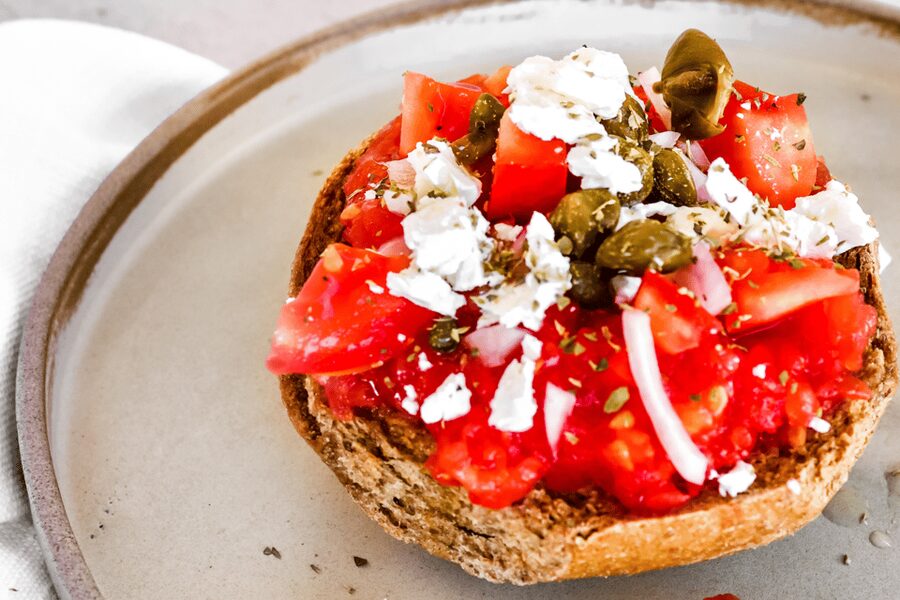
- Nine or so Greek dishes: The menu can include moussaka with cashew béchamel, spanakopita, fava, tzatziki, almond feta, dakos, koulouri, and ekmek.
- Two small cooking teams: You help prepare several dishes rather than standing at the edge of the kitchen.
- A generous shared buffet: Everything goes on the table at the end, with drinks included.
- A modern Koukaki studio: Soybird is on the ground floor near the Acropolis, in a clean, organized cooking space.
- Recipes for your own kitchen: An English digital recipe book lets you repeat the class at home.
- A good fit for non-vegans: The food focuses on Greek flavors, herbs, pastry, legumes, nuts, and vegetables rather than imitation meat.
Cooking Greek classics without meat or dairy
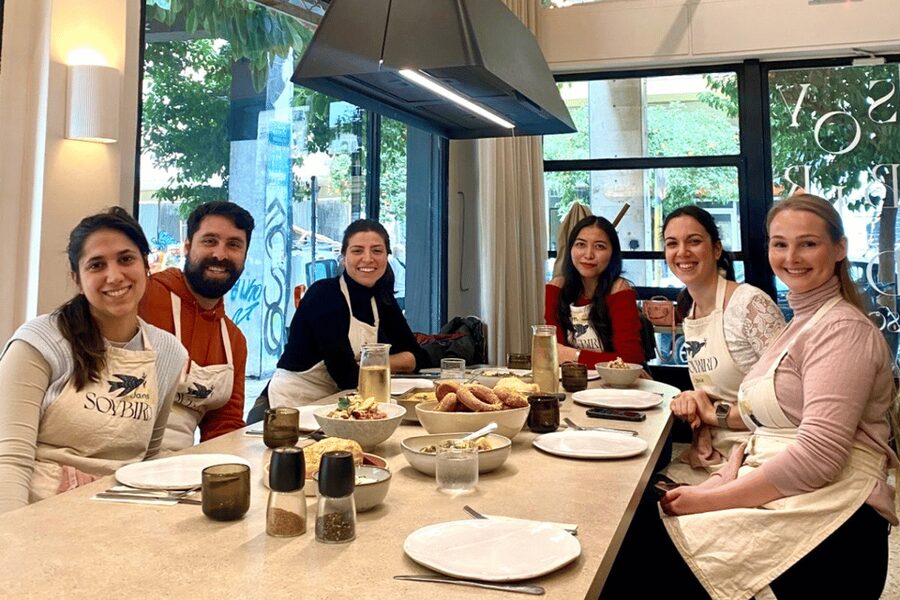
The clever part of this class is that it uses familiar Greek dishes as the starting point. You are not simply learning a collection of generic vegan recipes. You are working with recognizable food from a Greek table, including layered moussaka, spinach-filled pastry, creamy dips, bread, dessert, and small plates.
That makes the class useful even if you are not vegan. You learn how cashews can replace béchamel ingredients, how almonds can become a feta-style cheese, and how legumes and vegetables can carry a dish without leaving it bland. Several people who attended without following a vegan diet found the food satisfying enough that they did not miss meat or dairy.
I would still read the description carefully before booking. The vegan focus is central, not a minor detail. If you want to learn classic moussaka made with minced meat or a conventional feta recipe, this is not the right class. If you want to understand how Greek cooking can be adapted while keeping its familiar character, it is a strong choice.
More cooking classes in Athens:
- Athens: Classic Cooking Class with Market Visit and Wine
★ 5.0 · 1,101 reviews - Athens: Food Market Visit and Cooking Class with Wine
★ 4.9 · 1,087 reviews - Greek Cooking Class in Athens Including Rooftop Dinner with Acropolis View
★ 5.0 · 826 reviews
Arriving at Soybird Studio in Koukaki
The cooking school is in Koukaki, near the Acropolis. Enter SOYBIRD in Google Maps for directions, then look for the ground-floor space on the far right-hand side of the building in front of you.
You should arrive 10 minutes early. That small margin matters in a group class, since the opening introduction and team arrangements set the pace for the whole session. Hotel transfer is not included, so you make your own way to the studio.
The space is described as modern, clean, and well organized, with good equipment and fresh ingredients ready for use. You receive an apron, and the class is wheelchair accessible. Wear comfortable clothes that allow you to move around the work area without fuss.
The group limit is 14 people, and classes usually need at least six participants to run. A small class does not mean private instruction, but it does give you a fair chance to chop, mix, roll, shape, and ask for help.
The first kitchen briefing and team setup
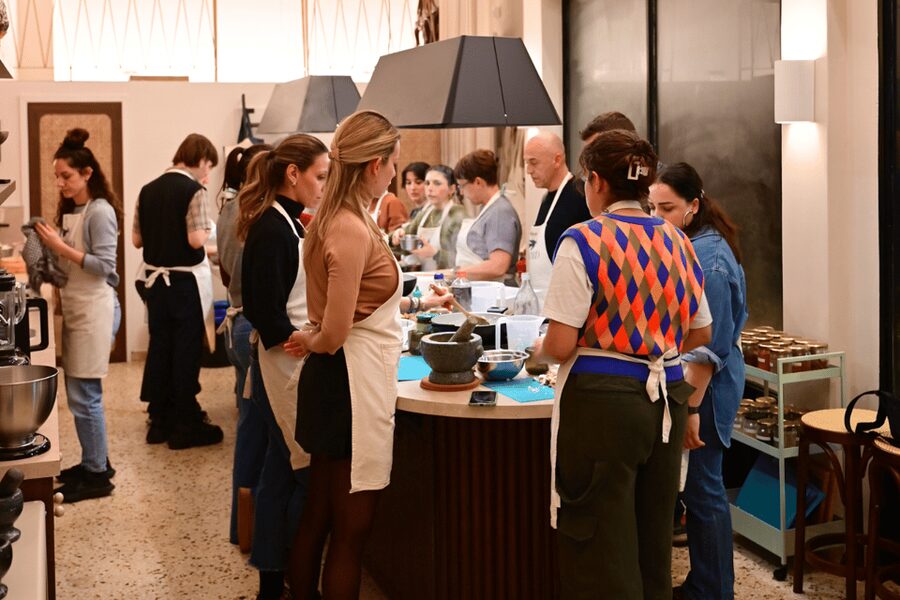
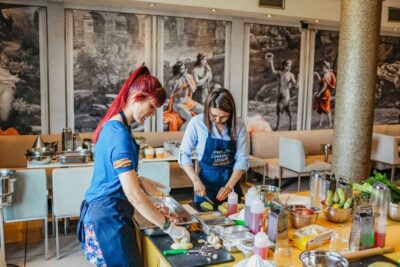
The class begins with a short introduction, followed by the practical work. You are split into two groups, with each team taking responsibility for several dishes.
This arrangement is one of the most important details to understand. You are not guaranteed to prepare every item on the menu from start to finish. The cooking is divided so the group can produce a large meal within three and a half hours. You may cook around four dishes yourself while other plates are handled by the second team.
That tradeoff works well for the final meal, since the table can hold eight or nine different preparations. It is less ideal if your goal is to master every recipe during the class. The digital recipe book helps fill that gap, but watching another team make a dish is not quite the same as preparing it yourself.
The structure also creates a social rhythm. You work alongside people you may not know, share tasks, compare results, and help one another when a recipe gets busy. The hosts guide the process without taking every job away from you. This is a class for participation, not a polished demonstration where you sit and take notes.
Moussaka, spanakopita, and the main savory dishes
Moussaka is one of the most appealing reasons to book. Here, the familiar Greek layered dish is made with cashew béchamel rather than dairy. The class shows you how a creamy top layer can be built with plant-based ingredients while keeping the comforting shape of the original.
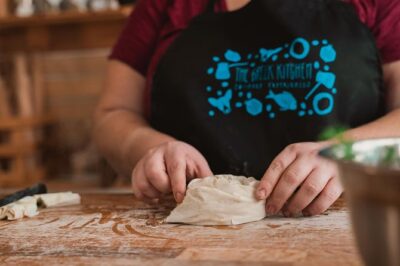
Spanakopita brings another useful lesson: working with filo pastry. One session included making the pastry from scratch, an unexpectedly enjoyable task for people who had never tried it. Rolling and handling filo takes patience, so this is a hands-on technique you can remember long after the class ends.
The recipes are designed for different experience levels. You can be a confident home cook or someone who needs clear guidance with each stage. Hosts such as Alexandra, Dimitra, and Mirka have been praised for giving calm instructions, stepping in when needed, and letting participants do the work themselves.
The pace may feel busy when several dishes need attention at once. That is part of the appeal, but it also means you should not expect a slow, private lesson on one recipe. You are learning through a shared kitchen and a broad menu.
A few more Athens days worth a look
- Greek Small-Group Athens Cooking Class & Dinner
★ 5.0 · 574 reviews - Athens: Greek Cooking Class & Dinner on a Rooftop
★ 5.0 · 383 reviews - Athens: Greek Cuisine Cooking Class and 3-Course Dinner
★ 4.8 · 270 reviews - Traditional Greek cooking class and lunch or dinner with an Acropolis view
★ 5.0 · 250 reviews
Dips, spreads, bread, and the almond feta surprise
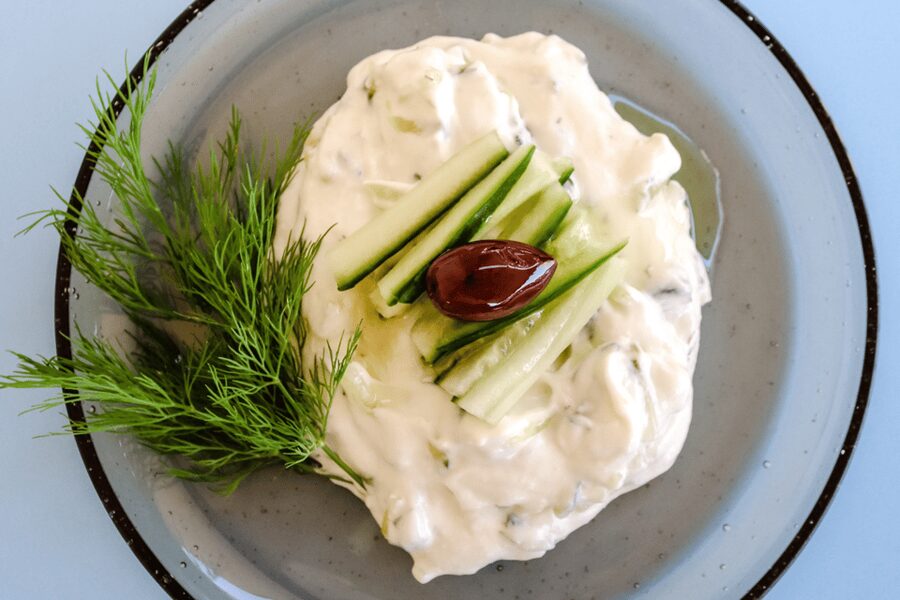
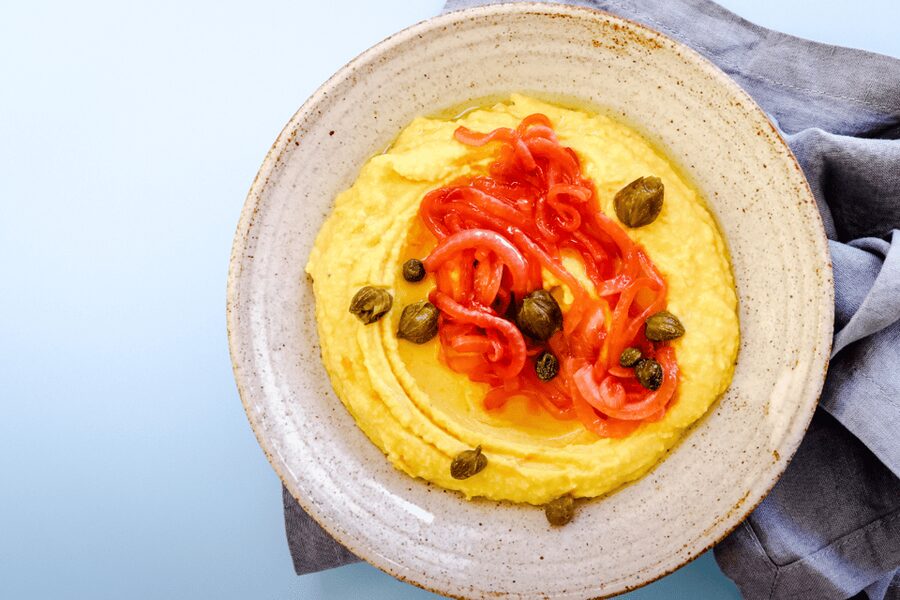
The smaller dishes give the class much of its Greek character. Fava, a smooth yellow split-pea spread, works as a simple lesson in seasoning and texture. Tzatziki uses cucumber and plant-based yogurt for a cool dip with the familiar Greek profile.
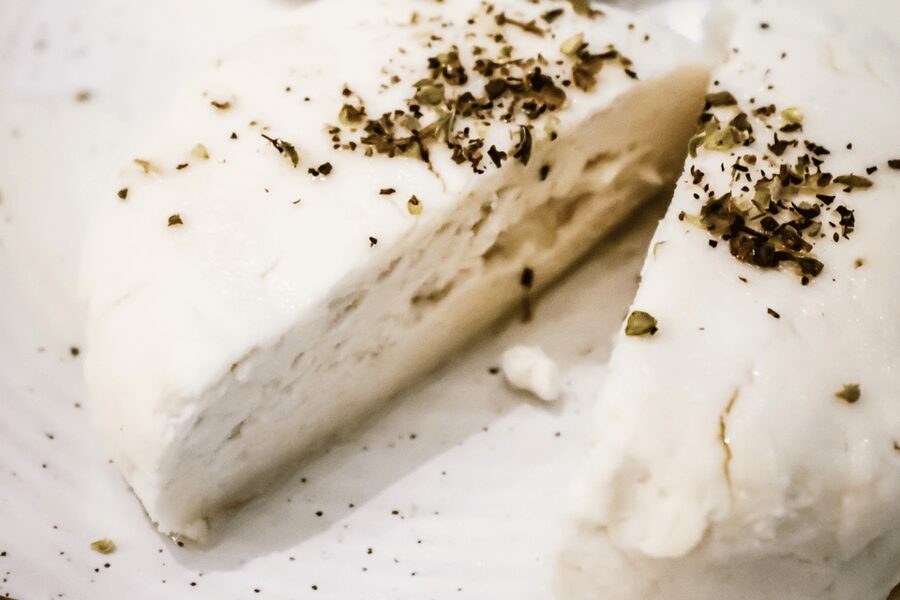
The almond feta is the unusual item. It offers a nut-based alternative to the salty cheese found on many Greek tables. You get to see how almonds can be turned into a spreadable, feta-style component that works with bread, salad, or mezze.
Dakos adds another regional touch, built around crisp bread and fresh toppings. Koulouri, the sesame-coated bread ring, brings a bit of bakery work to the session. These recipes matter because they show how Greek food is often assembled from humble ingredients, with flavor coming from herbs, olive oil, acidity, texture, and careful seasoning.
You should expect variations in the exact dishes prepared. The menu lists a broad selection, and the cooking teams divide the work. The core promise is a wide Greek spread, not a fixed guarantee that you personally will make every listed dish.
Ekmek and the final shared buffet
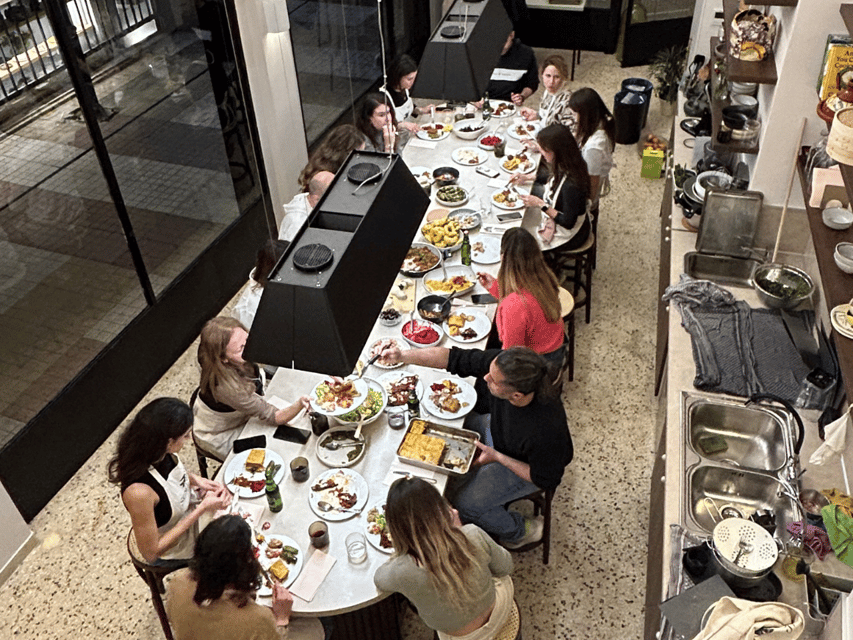
Ekmek provides the sweet finish. It is a Greek dessert specialty and gives the meal a different texture from the savory plates. After the cooking ends, the class puts everything on the table and eats together as a buffet.
This final meal is more than a convenient way to use the food. It is the point where the group sees how the separate tasks fit together. One team may have worked on moussaka while another prepared dips, bread, or dessert. At the table, you can try the complete range rather than judging only the dish you made.
Come hungry. The portions are generous, and the food can add up quickly when the table holds several starters, a main dish, bread, dips, and dessert. There may be more food than the group can finish, which is a better problem than leaving the class hungry.
The shared meal also gives solo participants an easy way to meet people. You can book alone and still have a natural social setting, since cooking in teams leads into a communal meal rather than ending with a quick goodbye.
Drinks and the relaxed social atmosphere
Water, infused water, coffee, white wine, beer, and ouzo are included. The stated package includes one glass of wine or a beer, while the wider description also mentions drinks during the session and ouzo. If the exact drink allowance matters to you, check the current booking details before you pay.
The drinks support the easygoing mood, but they are not the main reason to choose this class. The strongest part is the combination of work and conversation. You are measuring, shaping, and tasting while the hosts keep the group moving.
The instructors are a major part of that atmosphere. Alexandra has been singled out for patient guidance and warmth. Dimitra has been praised for making the class fun and informative, while Mirka has been noted for her enthusiasm and helpful manner. Konstantinos, sometimes hosting with Fotini, has been described as humorous, attentive, and good at making sure everyone receives a useful task.
Because instructors can vary, you should treat those names as examples rather than a promise of who will teach your session. The consistent feature is an English-speaking host who guides the cooking and encourages questions.
What the three and a half hours are really worth
The price is $93 per person. That is not a bargain if you compare it with a quick Greek lunch, but the comparison is not quite fair. You are paying for three and a half hours of instruction, ingredients, kitchen use, an apron, drinks, a full meal, and a digital recipe book.
The broad menu improves the value. You may help prepare several dishes, eat a substantial spread, and take home enough recipes to make future meals. The class also saves you from buying a long list of ingredients and figuring out plant-based substitutions on your own.
I would see the price as fair for a small-group cooking workshop near the Acropolis, especially if you value both the meal and the social setting. It is less compelling if you only want to eat Greek food, since Athens offers plenty of restaurants at a lower cost. Choose this for the skills, the shared work, and the recipes, not just for dinner.
Private groups of eight or more can request a custom quote. That could suit families, friend groups, or a food-focused celebration, though children under eight are not accepted in the regular experience.
Who should book this Athens cooking class
I would recommend it to:
- Vegetarians and vegans: You can explore Greek food without needing to ask for meat-free substitutions.
- Curious non-vegans: The class shows how traditional flavors can work with plant-based ingredients.
- Solo visitors: The team format makes it easy to meet people without joining a formal sightseeing group.
- Couples and friends: You can cook together, share drinks, and leave with recipes rather than only photographs.
- Home cooks at mixed skill levels: The instructions suit beginners while still offering techniques such as filo pastry and nut-based sauces.
- Food-focused visitors staying near the Acropolis: Koukaki makes the activity easy to pair with a day around the Acropolis area.
I would be more cautious if you dislike group activities, have your heart set on meat-based Greek recipes, or want individual attention on every dish. The two-team system is friendly and practical, but it naturally spreads the work among participants.
Timing, access, and useful booking details
The activity lasts 3.5 hours, with starting times depending on availability. It is taught in English, and English and Greek-speaking hosts are available. You do not need to arrange hotel transportation, since the meeting point is the Soybird Studio itself.
The minimum age is eight. Comfortable clothing is the only specific item to bring, and the studio provides the apron, ingredients, and tools.
You can cancel up to 24 hours before the activity for a full refund, and the reserve-now, pay-later option gives you some flexibility while planning your Athens schedule. A class normally runs as planned, but if an exceptional cancellation occurs, the provider says it will notify you at least 24 hours ahead.
Should you book the Soybird vegan cooking class?
Book it if you want a social, hands-on food experience with a wide Greek menu and a proper meal at the end. The best reasons are the small groups, patient instruction, generous portions, included drinks, and recipe book that lets the experience continue at home.
Do not book it expecting a conventional Greek cooking lesson centered on meat, dairy, and one-on-one tuition. The vegan approach and shared team structure are the defining features.
For most food-loving visitors, the $93 price is justified by the length, ingredients, instruction, and meal. Arrive early, wear comfortable clothes, and save room for moussaka, spanakopita, almond feta, and ekmek. You will leave with more than a full stomach: you will have a better sense of how Greek cooks build flavor from simple plant-based ingredients.
FAQ
Where is the Greek cooking class held?
The class is held at Soybird Studio in Koukaki, central Athens, near the Acropolis. Enter SOYBIRD in Google Maps, then find the ground-floor cooking school on the far right-hand side of the building in front of you.
How long does the activity last?
The cooking class lasts 3.5 hours. Starting times vary, so you should check availability when booking.
Is the food completely vegan?
Yes. The menu is designed around vegan versions of Greek dishes, including moussaka with cashew béchamel, tzatziki, spanakopita, fava, almond feta, dakos, koulouri, and ekmek.
What drinks are included?
The experience includes water, infused water, coffee, white wine, beer, and ouzo. The stated inclusions specify one glass of wine or a beer.
Do I get the recipes after the class?
Yes. You receive an English digital recipe book so you can prepare the dishes at home.
Is the class suitable for children and wheelchair users?
The activity is wheelchair accessible, but it is not suitable for children under eight years old.
Freshly added Athens trips
- Athens and Ancient Corinth Private from Athens★ 5.0 · 3 reviews
- From Athens: Mycenae and Epidaurus Private Tour★ 4.8 · 3 reviews
- Full day Meteora private tour★ 5.0 · 3 reviews
- Double Shore Dive (certified divers)★ 4.5 · 3 reviews
- Athens Hills: Mythology Treasure Hunt★ 5.0 · 3 reviews
- Sunset & swimming at Cape Sounio, Poseidon temple★ 5.0 · 3 reviews
- Philosophy Experience at Plato’s Academy Park – basic version★ 5.0 · 3 reviews
- Private Acropolis Tour – Ticket Included★ 5.0 · 3 reviews
Cooking Classes, compared.
Classic Cooking Class with Market Visit and Wine
Read our review →
Food Market Visit and Cooking Class with Wine
Read our review →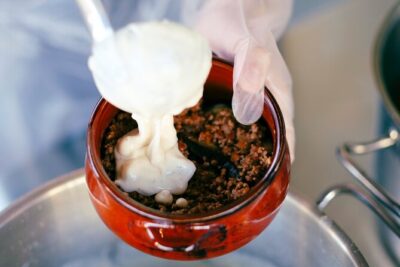
Greek Cooking Class in Athens Including Rooftop Dinner with Acropolis View
Read our review →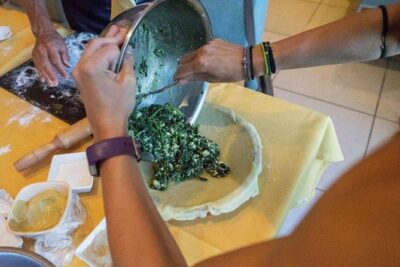
Greek Small-Group Athens Cooking Class & Dinner
Read our review →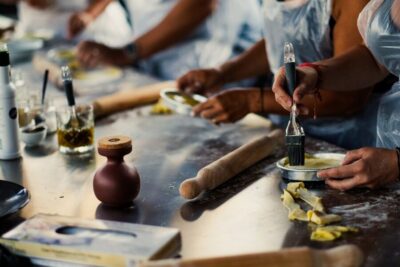
Greek Cuisine Cooking Class and 3-Course Dinner
Read our review →
Traditional Greek cooking class and lunch or dinner with an Acropolis view
Read our review →
Athens Greek Cooking Class Pita Gyros from Scratch with a Local
Read our review →Browse the lists this tour appears in