
Reviewed · FOOD & DRINK
Athens Food Tour with 10+ Tastings of Greek Traditional Dishes
Athens is easiest to understand with something tasty in your hand, and this small-group walk makes a meal of the city center. You’ll sample sesame bread, flaky pies, seafood, dips, fried zucchini, olives, dessert, coffee, wine, and ouzo while moving through the market district, Monastiraki, Plaka, and streets near the Acropolis.
I like the wide range of tastings, which gives you more than a single restaurant meal, and I like the way guides such as Maria, Ilias, Christina, and Frosso help you find places you may not notice on your own. The main consideration is simple: you need to arrive hungry and ready to walk, since the food is plentiful and the route covers several stops.
In This Review
- Key points to know before booking
- Why this food walk works well in Athens
- Starting among Monastiraki’s shops and stalls
- Seeing Athens through the Central Market
- Passing Hadrian’s Library and ancient Athens
- Walking into Plaka and the old neighborhoods
- What you will eat, from koulouri to dessert
- How much food should you expect?
- The guides shape the experience
- Who should book this Athens experience?
- Booking timing and cancellation details
- Should you book the Athens Food Tour?
- FAQ
- How long does the Athens Food Tour last?
- How many tastings are included?
- Are drinks included?
- Where does the tour start and finish?
- Is hotel pickup included?
- How many people can join the tour?
- Can dietary requirements be accommodated?
Key points to know before booking
- Ten or more Greek tastings: Expect bread, pastries, seafood, dips, meze, dessert, and local drinks.
- A useful first-day activity: The food stops and neighborhood advice can help you plan later meals in Athens.
- Small groups of up to 12: You get a more personal walk than on a large coach-style outing.
- Central Athens in one compact route: The walk passes the Flea Market, Central Market, Hadrian’s Library, and Plaka.
- A filling three-hour experience: Many people find it substantial enough to replace breakfast and lunch.
- Bring comfortable shoes and dietary details: Walking is a real part of the tour, and food requirements should be shared in advance.
Why this food walk works well in Athens
Greek food is not just souvlaki and salad, though you may encounter familiar favorites elsewhere in the city. This tour focuses on the everyday foods that help you see how Athenians eat: a sesame bread ring grabbed in the morning, a small pastry from a bakery, shared dips, olives, seafood, and sweets that end a long meal.
The format is useful because you taste many things without committing to a full plate at every stop. You can compare textures and flavors as you go, then return to the dishes you liked later in your trip.
The route also gives you a practical introduction to central Athens. You are not sealed inside a restaurant for three hours. You move through shopping streets, market lanes, old neighborhoods, and major sights, with food providing the thread between them.
I would book this near the beginning of your stay. The guide can point out places to eat, explain local customs, and help you get your bearings in the Plaka and Monastiraki area. Several guides, including Maria and Ilias, are praised for remembering names, answering questions, and offering useful dining advice beyond the scheduled tastings.
More food stops in Athens:
- Greek Food Walking Tour in Athens
★ 5.0 · 4,740 reviews - Athens: Street Food Tasting Tour
★ 4.9 · 2,557 reviews - Small Group Greek Traditional Food Tour in Athens 20+ Tastings
★ 5.0 · 1,759 reviews
Starting among Monastiraki’s shops and stalls
The meeting point is at Flea Market Ifestou, Athina 105 55, close to the Monastiraki shopping area. This is a practical starting place because you are already in one of Athens’ most active central districts, near public transportation and within reach of several major sights.
The shopping area mixes clothing boutiques, souvenir shops, specialty stores, and bargain stalls. Avissinias Square is known for antiques and older household items, so the first part of the walk gives you plenty to look at between bites.
Do not expect a quiet, polished food hall. Monastiraki is a working shopping district with crowds, displays, narrow passages, and plenty of visual noise. That is part of its appeal, but it can also make the opening minutes less relaxed.
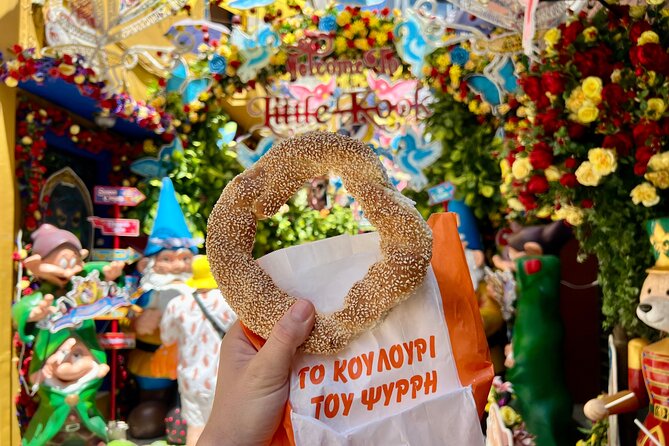
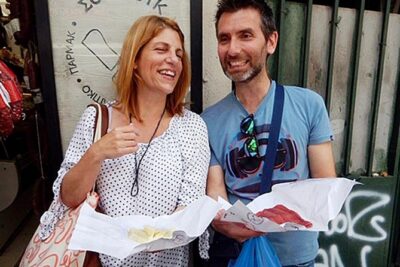
The food helps set the tone. You may begin with crunchy koulouri, the sesame-covered bread ring commonly eaten as a quick snack. It is simple, portable, and distinctly tied to daily life in Greece. Tiropita adds a richer note, with flaky phyllo pastry wrapped around a traditional cheese filling.
These first tastings are not meant to fill you immediately. They give you a baseline for Greek pastry, bread, and snack culture before the larger plates arrive.
Seeing Athens through the Central Market
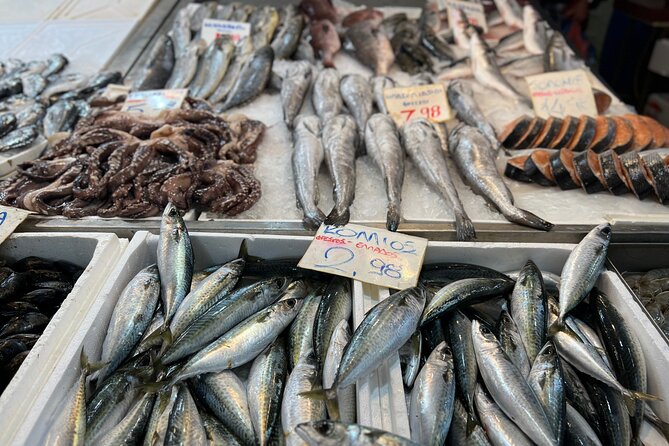
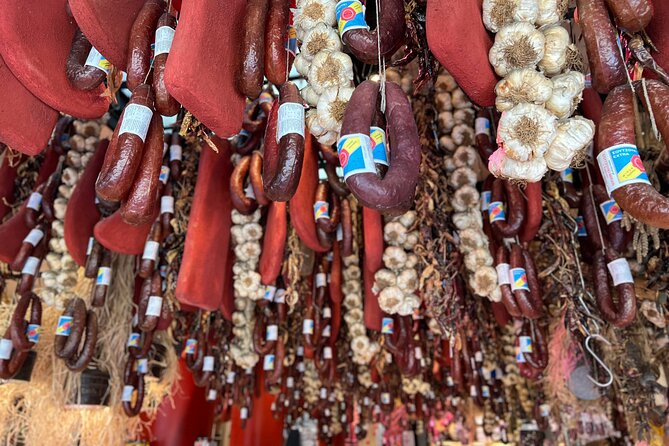
The Central Market is one of the most useful stops on the route. It is a living food center with seafood, meat, fruit, and vegetables sourced for local shoppers. You get a better sense of how food reaches Athens’ kitchens than you would from a restaurant table alone.
The seafood tasting is especially important because it connects the meal to Greece’s Mediterranean setting without turning the tour into a formal seafood dinner. The exact offering can change, since the menu depends on availability, weather, and the places operating that day.
Market visits can be intense. There are strong smells, tight spaces, and plenty of movement. If you prefer a calm, seated meal, this section may feel busy. If you enjoy seeing ordinary food shopping in progress, it is one of the most useful parts of the walk.
Your guide also helps give the market meaning. Ilias, in particular, is described as someone who knows many people in the neighborhood, while other guides are praised for explaining Greek food customs as they move through the streets. That local contact can make the market feel less like a sightseeing stop and more like part of the city’s daily rhythm.
Passing Hadrian’s Library and ancient Athens
The route includes the Roman ruins of Hadrian’s Library, a cultural complex built in 132 CE by Emperor Hadrian. You will not spend the entire tour in an archaeological lecture, but the stop adds an important layer to the food walk.
This is one place where the tour’s balance matters. The main subject is food, with history and neighborhood life woven into the route. If you want detailed archaeological interpretation, you should plan separate time for Athens’ museums and ancient sites.
Still, the setting changes how you read the city. A bakery, market stall, or small restaurant is not floating in isolation. It exists among Roman remains, old streets, newer shops, and the constant traffic of a modern capital.
One four-star assessment specifically wished for more historical information about the area. That is a fair expectation to manage. Your guide will provide cultural and local context, but this is primarily a culinary walk rather than a full history tour.
Same city, a completely different century:
- Athens: Acropolis & up to 5 Archaeological Sites Combo Pass
★ 4.4 · 12,619 reviews - Athens: Acropolis Ticket with Optional Audio or Live Guide
★ 4.2 · 11,055 reviews - Athens: Acropolis, Parthenon & Acropolis Museum Guided Tour
★ 4.8 · 9,316 reviews - Athens: Cape Sounion & Poseidon Temple Sunset Half-Day Trip
★ 4.8 · 8,241 reviews
Walking into Plaka and the old neighborhoods
Plaka spreads around the northern and eastern slopes of the Acropolis. Its narrow streets, neoclassical buildings, and older neighborhood feel make it a natural setting for a food tour.
The route is described as easy by one participant, but you should still take the walking note seriously. You will move between several food stops, with some walking up and down streets. Comfortable shoes are a must, especially if you are combining this experience with a full day of sightseeing.
The pace appears to be one of the strengths of the tour. Frosso is praised for keeping a good rhythm and stopping in shady spots, while another guide is noted for not rushing people from one tasting to the next. That matters in Athens, where summer heat can make even a short walk tiring.
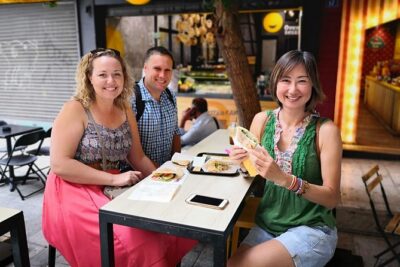
The group limit is 12 people. A very small group may be even smaller on your date, and one group had only three people. That makes it easier to ask questions, hear the guide, and get help with food choices. It also means the energy of the experience depends partly on the group you join.
What you will eat, from koulouri to dessert
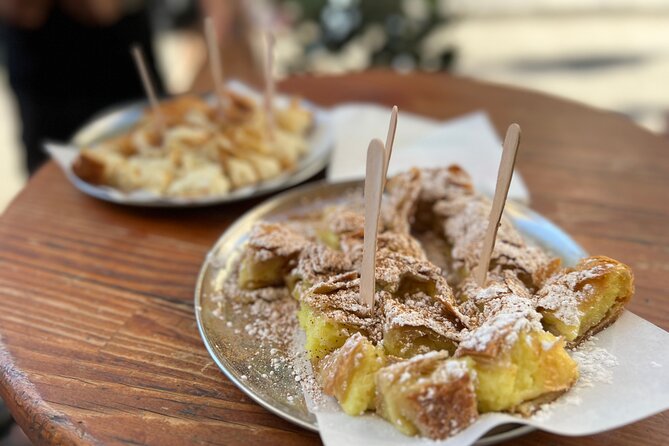
The tasting list covers a broad stretch of Greek food rather than repeating the same style of dish. You can expect some or all of the following:
- Koulouri, a crisp sesame bread ring
- Tiropita, a flaky phyllo pastry
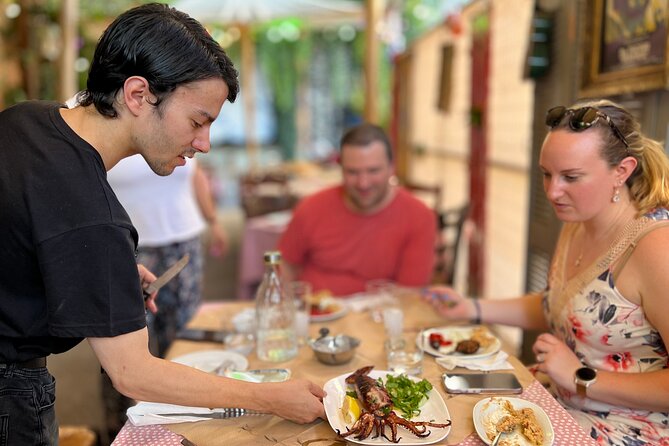
- Mediterranean seafood
- Tzatziki and mixed dips
- Fried zucchini balls
- Assorted meze plates
- Olives and local olive oils
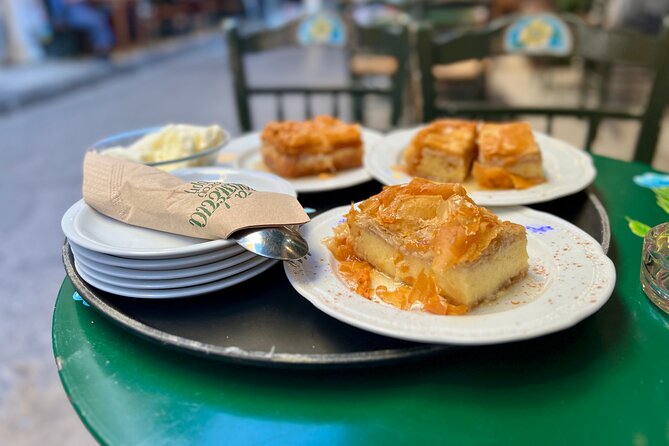
- Galaktoboureko, a sweet custard pastry
- A secret dish chosen by the local team
- Greek coffee
- Local wine
- Ouzo
The exact menu is not fixed. Availability, weather, and the operating schedule of food stops can change the route and tastings. That flexibility is normal for a market-based food walk, but it means you should not book with the expectation of receiving a precise restaurant menu.
The variety is the real value. You move from crisp bread to flaky pastry, creamy dips, fried vegetables, seafood, salty olives, and syrupy dessert. It is a much better introduction to Greek eating than sampling only one famous dish.
Save room for galaktoboureko. The dessert combines phyllo with a sweet custard center, and it arrives after a meal’s worth of savory food. You may be full by then, but skipping dessert would be a mistake.
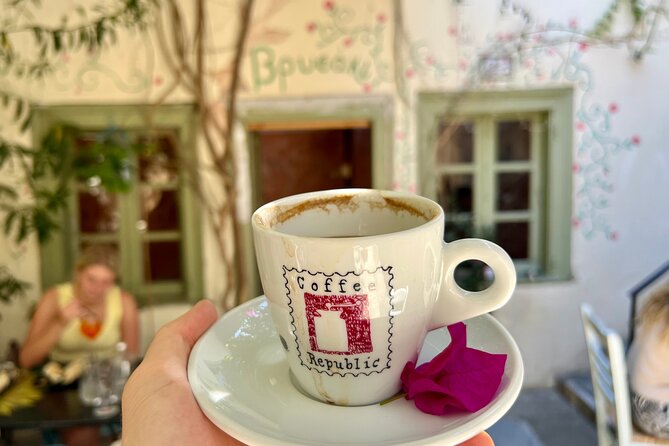
The drinks also make the experience feel like a meal rather than a series of tiny samples. Greek coffee gives you a taste of local café culture, while wine and ouzo show two familiar sides of Greek drinking. If you do not drink alcohol, contact the company before the tour so your needs can be handled as well as possible.
How much food should you expect?
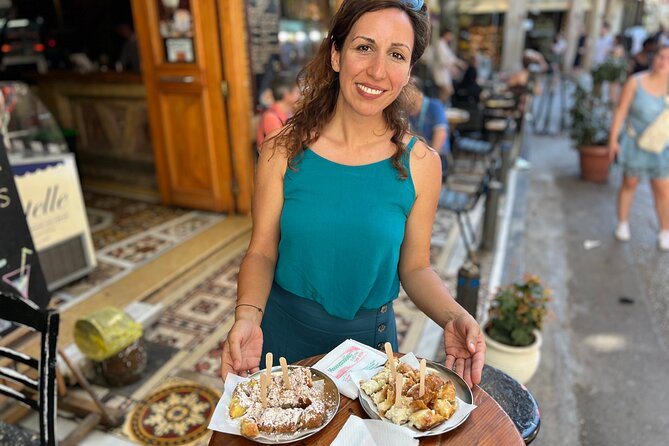
The practical advice is to eat a light breakfast or skip it. The food is described repeatedly as plentiful, with some people finding it enough to cover breakfast and lunch. This is not a tour where you nibble one olive at each stop and then head off to find lunch.
That generous amount is a major reason the $103.99 price can make sense. You are paying for a guided walk, multiple food stops, drinks, local interpretation, and a small group rather than just one entrée. Compared with buying each item separately, the value depends on how many tastings you want, but the experience is designed to function as a substantial meal.
The price is less attractive if you mainly want a cheap introduction to Greek snacks or prefer choosing every dish yourself. It is more appealing if you want variety, guidance, and a meal combined with sightseeing.
I also see value in the advice that comes with the food. A guide who knows local places can save you from spending the rest of your trip in restaurants aimed mainly at passing sightseers. That kind of practical help is hard to price, especially on a first visit.
The guides shape the experience
The strongest part of this tour is the guide. The food list is appealing, but the person leading you determines how much you learn and how comfortable the walk feels.
Maria is praised for pointing out traditional dining options and helping people find their way around the Plaka area. Ilias is described as energetic, warm, and passionate about Greek culture, with a habit of learning everyone’s name early in the tour. Christina is praised for answering questions and taking special care with an older family member. Frosso is noted for a comfortable walking pace and sensible shade breaks. Eugenia is described as friendly and approachable.
Those details give you a useful sense of what to look for. The best guide here is not simply someone who names each dish. You want someone who connects the food with Greek life, explains what you are eating, and pays attention to the group’s pace.
Guide assignments can vary, so you should not book on the assumption that a specific person will lead your date. Still, the range of positive comments suggests that the company’s Athens team places real weight on personal interaction.
Who should book this Athens experience?
I would recommend it to first-time visitors who want an edible orientation to central Athens. It is especially useful if you like trying unfamiliar dishes but do not want to choose blindly from a menu.
It suits couples, families, and solo visitors who enjoy meeting a small group. The family experience involving an 82-year-old participant also shows that a guide may be attentive to different walking needs, though you should consider your own mobility and contact the operator with concerns before booking.
Food lovers will get the most from the variety. You should also enjoy wandering through markets and older neighborhoods, since the sightseeing is part of the experience rather than a short transfer between restaurants.
I would be more cautious if you need a fully fixed itinerary, have serious dietary restrictions, dislike seafood, or want a tour centered on ancient monuments. Dietary requirements must be discussed in advance, and the menu may change. The company can try to accommodate you, but no guarantee is given in the supplied details.
The activity is offered in English and accepts mobile tickets. Hotel pickup is not included, so you need to reach Flea Market Ifestou yourself. The tour ends back at the meeting point, which makes it easy to continue exploring Monastiraki or return to your accommodation by public transportation.
Booking timing and cancellation details
This experience is often reserved well ahead, with an average booking lead time of 57 days. That does not guarantee every date sells out, but it is a good reason to reserve early if your Athens schedule is tight.
You can cancel for a full refund up to 24 hours before the local start time. Changes or cancellations inside that window are not accepted for a refund.
The tour requires good weather and a minimum number of participants. If the operator cancels for either reason, you are offered another date or experience, or a full refund. That policy is worth noting when planning an important first day in Athens.
Should you book the Athens Food Tour?
Book it if you want a filling introduction to Greek food with a walk through the market district, Monastiraki, Hadrian’s Library, and Plaka. The combination of more than 10 tastings, drinks, local advice, and a group capped at 12 makes this more useful than a basic snack crawl.
I would schedule it early in your trip, wear good shoes, and arrive genuinely hungry. Be clear about dietary needs before the day, and keep your expectations focused on food and local culture rather than a detailed archaeological tour.
Skip it if you want a quiet, fixed-menu lunch or a dedicated ancient Athens tour. For most people seeking a friendly first taste of the city, though, this offers a generous plate of Athens in about three hours.
FAQ
How long does the Athens Food Tour last?
The tour lasts approximately three hours, although the actual duration can vary. One reported experience lasted longer than the planned schedule.
How many tastings are included?
The experience includes 10 or more tastings. The food can include koulouri, tiropita, seafood, tzatziki, mixed dips, fried zucchini balls, meze, olives, olive oils, galaktoboureko, and a secret dish.
Are drinks included?
Yes. Greek coffee, local wine, and ouzo liquor are included among the listed tastings.
Where does the tour start and finish?
It starts at Flea Market Ifestou, Athina 105 55, Greece. The activity ends back at the meeting point.
Is hotel pickup included?
No. Hotel pickup is not included, so you must make your own way to the meeting point.
How many people can join the tour?
The tour has a maximum of 12 participants.
Can dietary requirements be accommodated?
You should contact the company in advance with any dietary requirements. The menu and itinerary can change based on availability, weather, and other circumstances.
Freshly added Athens trips
- Athens and Ancient Corinth Private from Athens★ 5.0 · 3 reviews
- From Athens: Mycenae and Epidaurus Private Tour★ 4.8 · 3 reviews
- Full day Meteora private tour★ 5.0 · 3 reviews
- Double Shore Dive (certified divers)★ 4.5 · 3 reviews
- Athens Hills: Mythology Treasure Hunt★ 5.0 · 3 reviews
- Sunset & swimming at Cape Sounio, Poseidon temple★ 5.0 · 3 reviews
- Philosophy Experience at Plato’s Academy Park – basic version★ 5.0 · 3 reviews
- Private Acropolis Tour – Ticket Included★ 5.0 · 3 reviews
Food & Drink, compared.


Small Group Greek Traditional Food Tour in Athens 20+ Tastings
Read our review →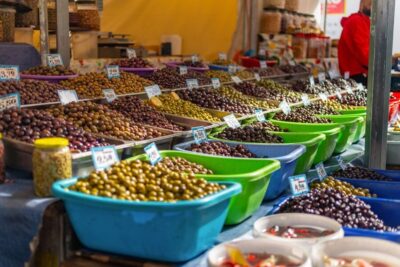
Food Market Visit and Cooking Class with Wine
Read our review →
Athens Authentic Greek Food Walking Tour (Small Group)
Read our review →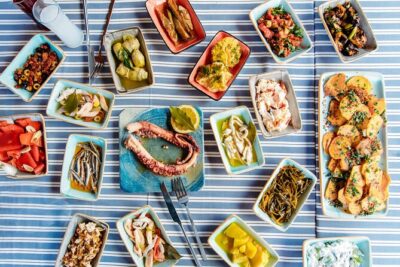

Browse the lists this tour appears in