
Reviewed · SCUBA DIVING
Athens East Coast: Discover Scuba Diving in Nea Makri
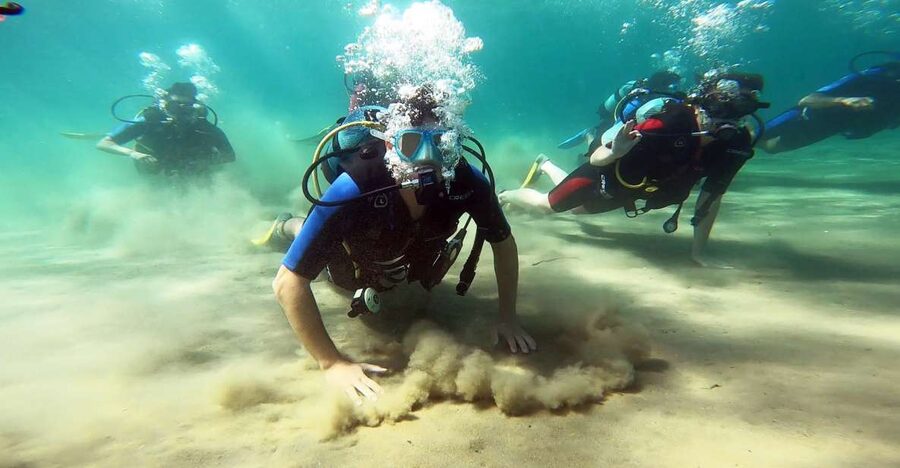
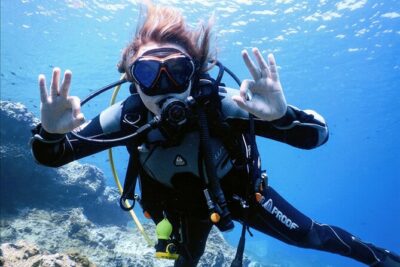
Schinias Bay gives you a proper taste of scuba without sending you far from Athens. In a small group of up to four, you learn the basics, practice in shallow water, then spend 30 to 40 minutes below the surface at a modest depth of 5 to 6 meters. That setup is reassuring for a first attempt, especially if breathing through a regulator feels strange at first.
I like the calm, personal teaching, particularly from Dimitris, Denis, and Rafail, who are repeatedly praised for patient explanations and close attention. I also like the useful extras, including equipment, DAN dive insurance, refreshments, and underwater photos or video in the $106 price.
The main catch is getting there from central Athens if you do not have a car. Pickup is free from hotels in Nea Makri, but a taxi from Athens can add a serious cost, and public bus connections may take patience. Sea urchins are also present at the site, so underwater shoes are a smart addition.
In This Review
- Key points at a glance
- Why Schinias Bay works for first-time scuba
- At the dive center: theory before the water
- Shallow-water practice makes the transition easier
- The 5 to 6 meter underwater session
- What the small group changes
- Sea urchins, footwear, and other practical details
- Reaching Nea Makri from Athens
- Is $106 a fair price?
- Who should book this experience?
- My take on the overall experience
- Should you book it?
- FAQ
- Where does the scuba activity meet?
- How long does the experience last?
- How long will I be underwater?
- Do I need previous scuba experience?
- What languages do the instructors speak?
- What is the minimum age?
- What should I bring?
- Can I fly soon after the activity?
Key points at a glance
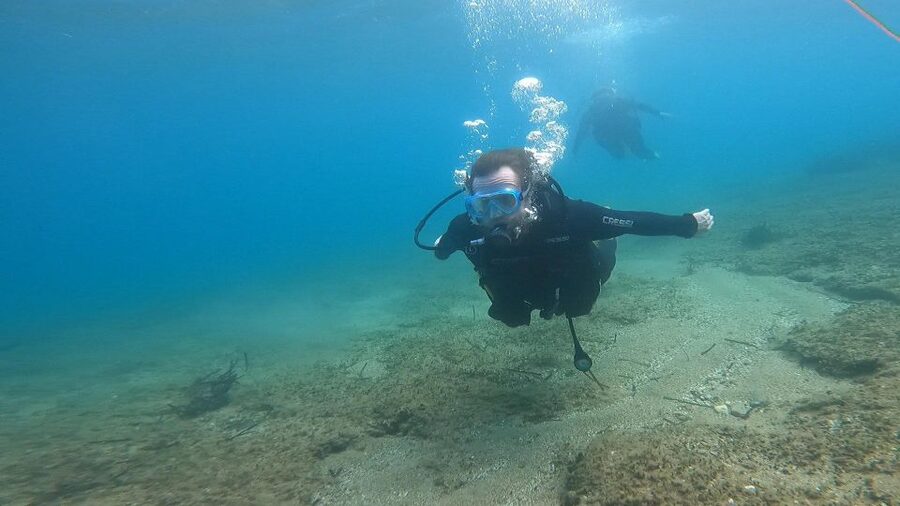
- Schinias Bay setting: Warm, clear water creates a friendly place for a first underwater session.
- 30 to 40 minutes below the surface: You descend only 5 to 6 meters, keeping the experience manageable for beginners.
- Groups limited to four: Small numbers give you more direct help and less waiting around.
- Patient instruction: Dimitris, Denis, and Rafail focus on calm explanations, safety, and comfort.
- Useful inclusions: Equipment, DAN insurance, bottled water, juice or tea, and photos or video are covered.
- A practical warning: Sea urchins can be common around the entry area, so bring suitable footwear if you have it.
Why Schinias Bay works for first-time scuba
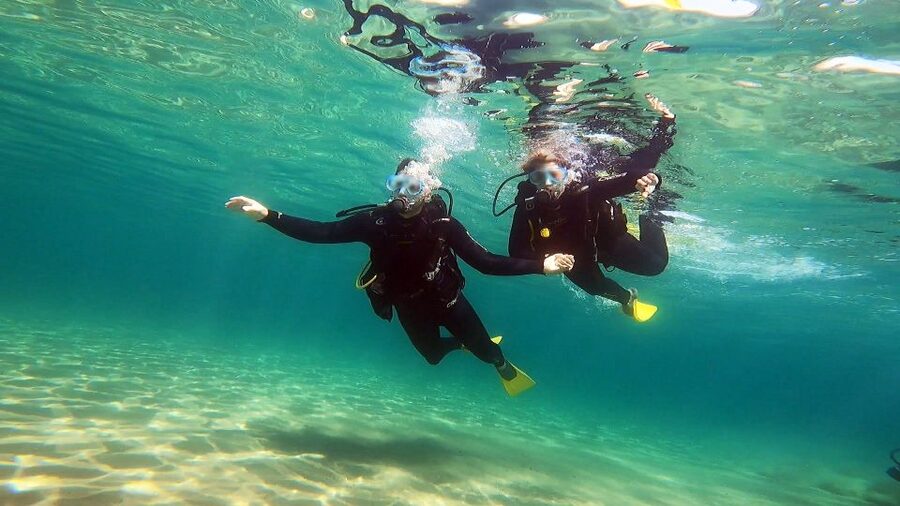
This is not a certification course or a full day at sea. It is an introduction designed to help you decide if scuba suits you. You remain close to shore, work at a shallow depth, and have an instructor guiding you through each stage.
That matters because the first challenge is often not the fish or the scenery. It is getting used to the mask, buoyancy, breathing, and hand signals while staying relaxed. A short session in shallow Mediterranean water gives you room to learn without the pressure of a demanding technical program.
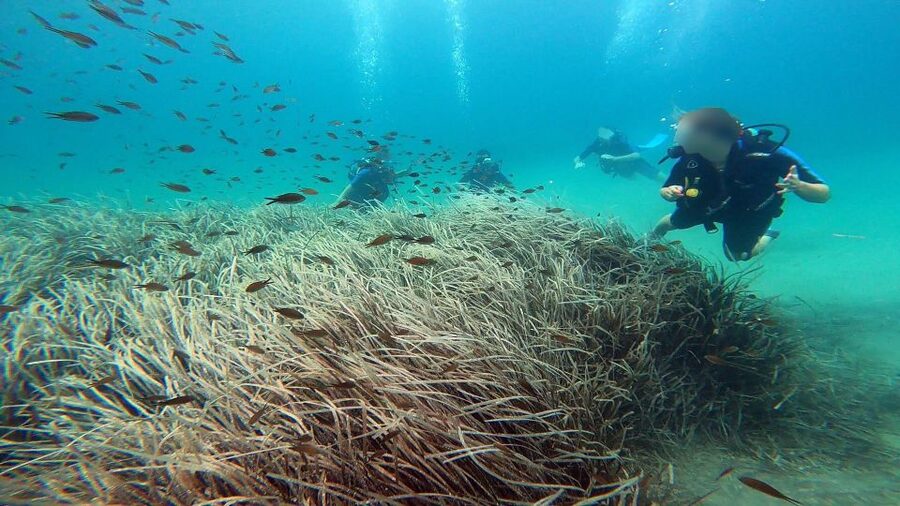
The water at Schinias Bay is described as warm and clear, and the seabed offers marine life to look for during the underwater portion. You might see fish and other small sea creatures, though this is a beginner activity rather than a promise of a major reef or large-animal encounter.
The location also makes a pleasant change from Athens sightseeing. After museums, traffic, and hot stone streets, you get a few hours beside and beneath the sea. The activity lasts three hours in total, so it fits more easily into a holiday schedule than a full-day boat excursion.
More dive days near Athens:
- Discover Small Group Scuba Diving Experience in Nea Makri, Athens
★ 5.0 · 81 reviews - Anavyssos Athens Riviera: Beginners’ Guided Try Scuba Diving
★ 5.0 · 72 reviews - Private Discover Scuba Diving for Beginners in Athens with Pickup
★ 5.0 · 35 reviews
At the dive center: theory before the water
You begin at the local partner’s dive center at Frinis 20 in Nea Makri. The first formal stage is a safety briefing lasting about 30 minutes. This is not filler. It is where you learn what the equipment does, how to breathe, how to equalize pressure, and how to respond if you feel uncomfortable.
The program covers the basic scuba gear and essential safety rules. You also receive guidance on communication underwater, an important point because you cannot simply talk to your instructor once the regulator is in your mouth.
I would pay close attention here, even if you have watched scuba videos before. The most useful part of an introductory session is understanding how to stay calm and signal clearly. The instructors are available in English and French, which helps if you want questions explained carefully rather than rushed through.
Several of the instructors have been singled out for their manner. Dimitris is described as organized, calm, professional, and good at explaining things more than once when needed. Denis has helped nervous beginners settle into the activity, while Rafail has also been praised for competence and patience.
That personal attention is especially valuable in a group of four. You are not one face in a large class. The instructor can watch how you manage the mask and regulator, check that your equipment fits, and respond to small problems before they become stressful.
Shallow-water practice makes the transition easier
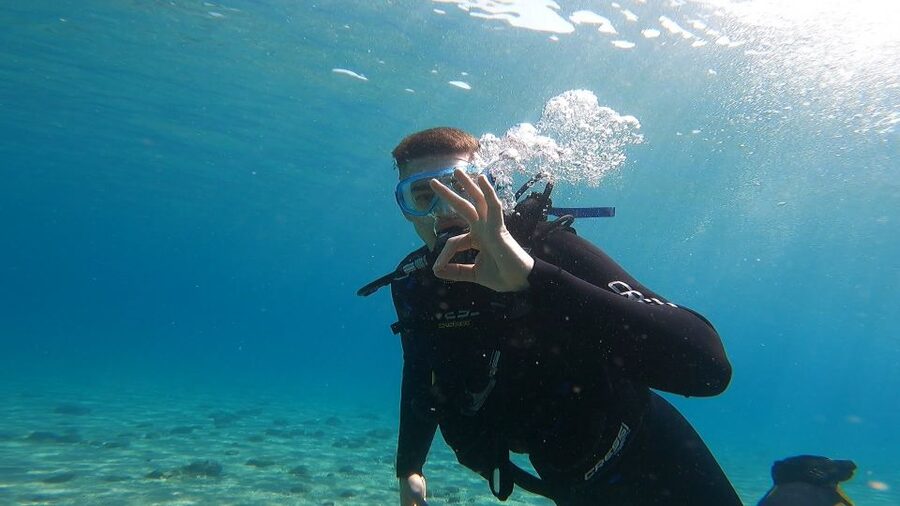
After the briefing, you move into calm, shallow water for hands-on practice. This is where the classroom information starts to make sense. You get used to the equipment and breathing pattern before heading farther down.
For many beginners, this is the most important part of the experience. Putting your face underwater with a mask and breathing apparatus can feel unnatural. Shallow water lets you pause, adjust your mask, and regain your rhythm without having to cope with the full depth immediately.
The instructors focus on comfort rather than speed. If you need an explanation repeated, ask. If you feel uneasy, tell the instructor right away. The structure is built for first-timers, and the small group means your concerns should not disappear in a crowd.
You need basic swimming skills, but you do not need previous scuba experience. Children from age eight can participate, though anyone under 18 must be accompanied by an adult. Unaccompanied minors are not accepted.
The health questionnaire is another important step. Some medical conditions, including asthma and heart or respiratory problems, can prevent you from participating. If you have a relevant condition, consult your doctor before booking rather than waiting until the activity day.
The 5 to 6 meter underwater session
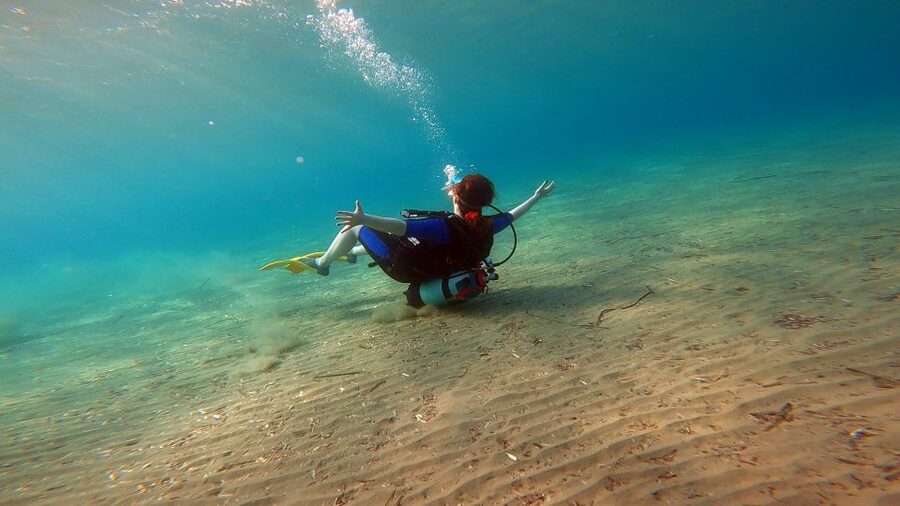
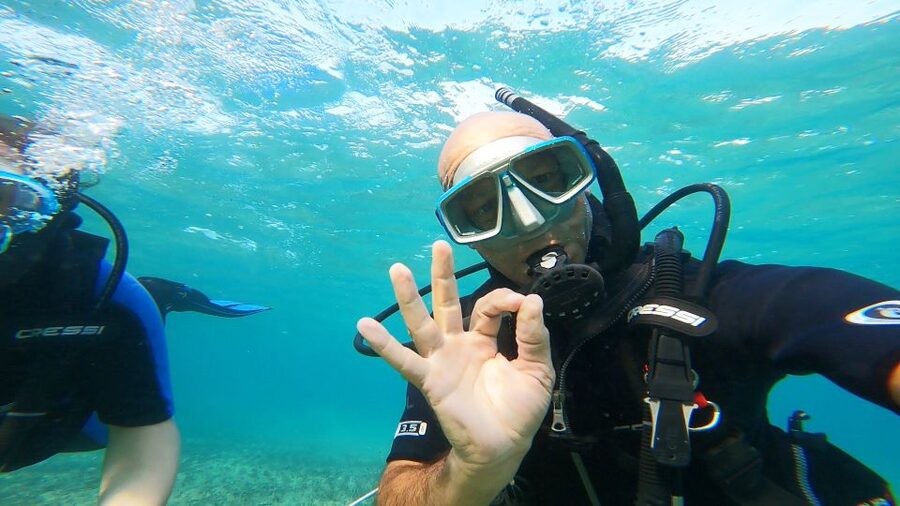
Once you are ready, you descend to about 5 to 6 meters and spend 30 to 40 minutes exploring the seabed. This is shallow enough to feel approachable, but deep enough to give you a real sense of being underwater rather than simply swimming along the surface.
The pace should suit a first experience. You can focus on breathing, body position, and the instructions from your guide while looking for fish and other marine life. Clear water helps you see what is around you, though visibility always depends on sea conditions.
This is also where expectations matter. You are not signing up for a dramatic offshore expedition or a long technical route. The appeal is the chance to try scuba in a controlled setting, with an instructor nearby and a manageable depth.
The activity is described in the schedule as about two hours for the scuba portion, alongside the 30-minute safety briefing. In practice, that wider block includes preparation, equipment, shallow-water exercises, entry and exit, and the 30 to 40 minutes spent below the surface. Allow the full three hours rather than planning another appointment immediately afterward.
Underwater photos or video are included, which gives you a way to remember the experience without trying to handle a camera while learning. That is a useful inclusion for a first session, when your attention should stay on breathing and communication.
Same city, a completely different century:
- Athens: Acropolis & up to 5 Archaeological Sites Combo Pass
★ 4.4 · 12,619 reviews - Athens: Acropolis Ticket with Optional Audio or Live Guide
★ 4.2 · 11,055 reviews - Athens: Acropolis, Parthenon & Acropolis Museum Guided Tour
★ 4.8 · 9,316 reviews - Athens: Cape Sounion & Poseidon Temple Sunset Half-Day Trip
★ 4.8 · 8,241 reviews
What the small group changes
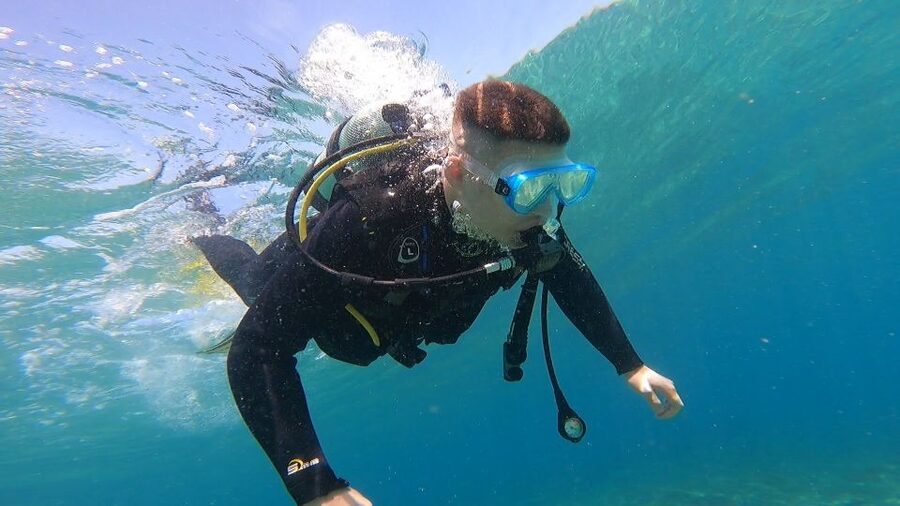
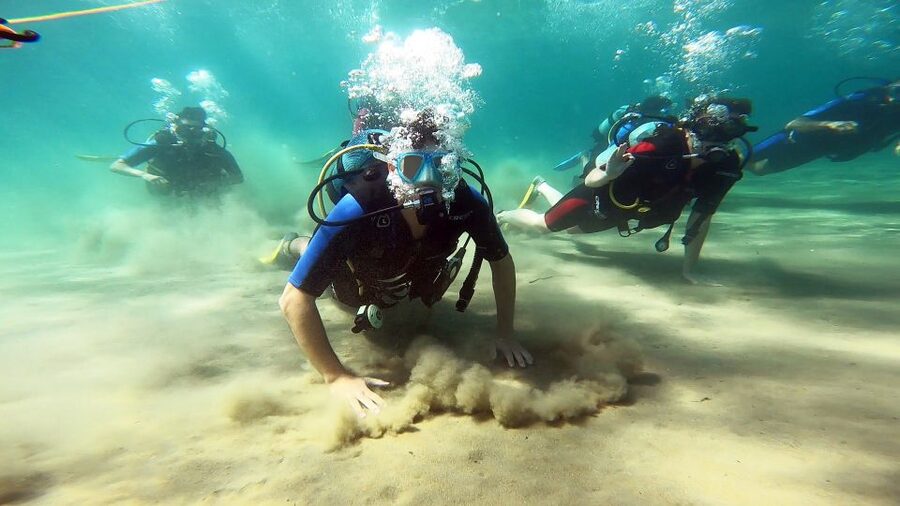
A maximum of four people is one of the strongest features here. Small groups do not guarantee a perfect session, but they give the instructor more time to watch each person and make adjustments.
That is useful when two people in the group have different comfort levels. One person may settle quickly, while another needs more time in shallow water. A patient instructor can keep the session relaxed instead of pushing everyone at the same speed.
The group limit also makes the experience feel less like a mass activity. You are still joining a planned program, but the setting is more personal. Several instructors have been praised for checking that people felt safe, explaining procedures clearly, and keeping a close eye on the group below the surface.
If you are booking for a parent and child, the age policy is worth noting. An eight-year-old can join, but a child must be accompanied by an adult. A 13-year-old and parent have successfully taken part together, making this a possible family activity for confident swimmers who meet the health requirements.
Sea urchins, footwear, and other practical details
One useful warning is easy to overlook: sea urchins may be common around the entry area. You are asked to bring swimwear and a towel, but I would also pack underwater shoes if you own them. They are not listed as an included item, and the rocky or shallow entry can be uncomfortable without foot protection.
Bring only what you need for the session. Bottled water and either juice or tea are included, so you have a small refreshment waiting after the activity. Equipment is supplied, meaning you do not need to bring your own mask, fins, tank, or other scuba gear.
The provider also includes DAN dive insurance. That does not replace checking your own travel insurance, but it is a worthwhile part of the activity package and adds reassurance for a first-time participant.
Do not plan to fly within 12 hours after the session. This is a standard safety consideration for scuba, and it matters if you are squeezing the activity into the final morning of an Athens trip. Give yourself enough time before your flight.
Weather and sea conditions can affect the experience. Strong waves or rain may interfere with the session, even though the bay is generally presented as a good beginner setting. Keep your schedule a little flexible if possible.
Reaching Nea Makri from Athens
The meeting point is the dive center at Frinis 20 in Nea Makri. If you are staying in Nea Makri, free hotel pickup is available from all hotels, but you need to request it in advance and make contact before the activity.
From central Athens, transport deserves careful thought. One booking experience found that taxis could make the overall cost much higher, while the Ktel bus was a cheaper possibility. Bus service may be less straightforward, and getting back can be frustrating if you are unsure of the stop or schedule.
For that reason, compare the $106 activity price with the full cost of reaching Nea Makri. If you are already staying on the east coast, the price looks much better. If you are based in central Athens and need taxis in both directions, the total may be less attractive than the headline price suggests.
The reward for making the trip is that you combine a coastal outing with the scuba session. You are not just crossing town for a short pool lesson. You are going to Schinias Bay, where the setting itself is part of the experience.
Is $106 a fair price?
At $106 per person, this is not the cheapest way to spend three hours near Athens. The value improves when you count what is included: professional instruction, all diving equipment, DAN insurance, refreshments, taxes and fees, and photos or video.
You are also paying for a very small group. A cheaper large-group class may give you less direct help, which matters when you are learning to breathe underwater for the first time. The instructor’s patience and attention are central to the experience, not minor extras.
The price makes the most sense for someone who wants a gentle first introduction without buying equipment or committing to a certification course. It is less convincing if you already have scuba experience and want deeper water, longer bottom time, or a more challenging site.
Free cancellation up to 24 hours before the activity and the option to reserve now and pay later make planning easier. Still, the transport cost from Athens should be part of your budget from the start.
Who should book this experience?
I would choose this for a first-time scuba participant who wants clear instruction, shallow water, and a small group. It also suits couples, families with older children, and friends who want to try the activity together.
It is especially useful for people who feel nervous about the first step. The program gives you theory, practice, and a guided underwater session in that order. You do not have to work out the equipment alone or rush straight into deeper water.
Basic swimming ability is required, and the activity is not suitable for anyone under eight. People with heart or respiratory problems should not book without medical advice, and some existing conditions may rule out participation entirely.
I would also avoid scheduling it too close to a flight. The 12-hour no-flying guidance means this belongs earlier in your trip, not as a last-minute airport filler.
My take on the overall experience
The strongest feature is the teaching. An introductory scuba activity succeeds when the instructor can make safety instructions simple, notice when someone is anxious, and avoid turning a nervous moment into a bad memory. Dimitris, Denis, and Rafail have all been praised for those qualities.
The second strength is the scale. Four people is small enough for personal help but still social if you are traveling with a partner, child, or friend. The warm water, marine life, and included photos give the session more substance than a basic equipment demonstration.
The drawbacks are practical rather than dramatic. Transport from Athens can be expensive or awkward, and the sea urchins call for sensible footwear. The underwater portion is also shorter than the total three-hour schedule might suggest, so book it for an introduction, not an extended expedition.
The activity has a 4.9 rating from 124 reviews, with especially strong praise for safety, patience, clear instruction, and beginner-friendly guidance. Those are exactly the qualities I would prioritize when choosing a first scuba experience.
Should you book it?
Book this Nea Makri session if you want a careful first taste of scuba in a warm Mediterranean bay and you value patient, personal instruction. It is a good fit for beginners, families with children aged eight or older, and anyone who wants photos and equipment included in one straightforward price.
Think twice if you are staying far from Nea Makri and will need costly taxis, or if you want a longer, deeper, more advanced underwater route. For everyone else, the combination of a four-person limit, shallow practice, attentive instructors, insurance, and a real 30 to 40 minute seabed visit makes this a sensible introduction close to Athens.
FAQ
Where does the scuba activity meet?
You meet at the local partner’s dive center at Frinis 20 in Nea Makri. Free hotel pickup is available from hotels in Nea Makri if you request it in advance.
How long does the experience last?
The full activity lasts three hours. This includes about 30 minutes of safety instruction and preparation, followed by the water program and the underwater session.
How long will I be underwater?
The guided underwater portion lasts about 30 to 40 minutes. You descend to approximately 5 to 6 meters.
Do I need previous scuba experience?
No. The program is designed for beginners and includes theory, equipment instruction, and practice in shallow water before the main session.
What languages do the instructors speak?
Instruction is available in English and French.
What is the minimum age?
The minimum age is eight. Children must be accompanied by an adult, and unaccompanied minors are not accepted.
What should I bring?
Bring swimwear and a towel. Underwater shoes are also a sensible choice because sea urchins may be present at the site.
Can I fly soon after the activity?
Flying within 12 hours after scuba is not recommended. You must also complete a health questionnaire before taking part.
Freshly added Athens trips
- Athens and Ancient Corinth Private from Athens★ 5.0 · 3 reviews
- From Athens: Mycenae and Epidaurus Private Tour★ 4.8 · 3 reviews
- Full day Meteora private tour★ 5.0 · 3 reviews
- Double Shore Dive (certified divers)★ 4.5 · 3 reviews
- Athens Hills: Mythology Treasure Hunt★ 5.0 · 3 reviews
- Sunset & swimming at Cape Sounio, Poseidon temple★ 5.0 · 3 reviews
- Philosophy Experience at Plato’s Academy Park – basic version★ 5.0 · 3 reviews
- Private Acropolis Tour – Ticket Included★ 5.0 · 3 reviews
Scuba Diving, compared.
Discover Small Group Scuba Diving Experience in Nea Makri, Athens
Read our review →
Anavyssos Athens Riviera: Beginners’ Guided Try Scuba Diving
Read our review →
Private Discover Scuba Diving for Beginners in Athens with Pickup
Read our review →
Athens Scuba Diving Experience for Certified Divers with Pickup
Read our review →
Discover Scuba Diving Private Fun Activity in Athens
Read our review →
Browse the lists this tour appears in