

Reviewed · DINNER EXPERIENCES
Athens: Around Greece in 5 Dishes: Dinner, Theater & Music
The clever idea here is simple: your dinner becomes a journey around Greece. Instead of sitting through a separate performance after your meal, you eat, listen, and watch as an actor and folk musicians bring each region’s food traditions to life.
I like the generous portions and the way the menu moves beyond the usual Greek restaurant order. I also like the serious approach to the theater, with traditional instruments, regional stories, and no plastic tourist decor or forced Opa! routines.
The main consideration is the late start. Dinner begins at 8:30 pm and the experience lasts about two hours, so this suits a night owl better than a family needing an early meal. The performance is central to the evening, so it may not be the right pick if you want a quiet dinner.
In This Review
- Key points to know before booking
- A dinner that travels from northern mountains to southern islands
- Praxitelous 40 and the late 8:30 pm start
- Dakos begins the regional food tour
- Hortopita brings wild greens and crisp filo
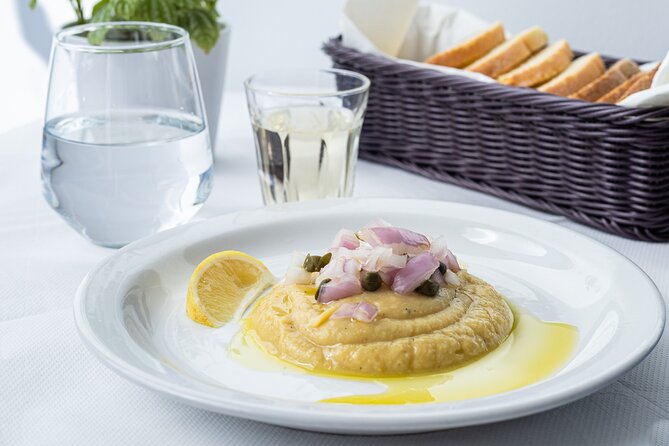
- Fava shows the quiet side of Greek cooking
- Spetzofai adds sausage, peppers, and tomato
- Revani finishes with semolina, yogurt, and syrup
- Theater at the table, not a show across the room
- Greek wine makes the tasting feel like a full night out
- Who will enjoy this Athens evening most
- Practical details that affect your decision
- Should you book Around Greece in 5 Dishes?
- FAQ
- Where does the experience begin?
- What time does the dinner start?
- How long does it last?
- Where does the experience end?
- How many people can join?
- What food is served?
- Are vegetarian or vegan options available?
- Is wine included?
- Is the experience accessible to most people?
- What is the cancellation policy?
Key points to know before booking
- Five dishes, five parts of Greece: The menu links each course to a different regional food tradition.
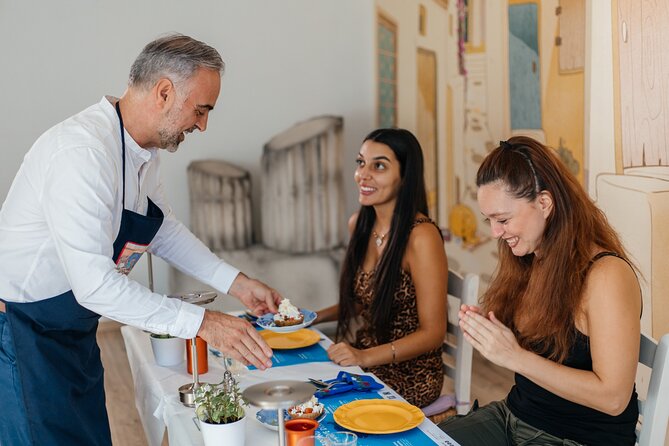
- Theater happens at your table: You are part of the setting rather than watching a distant stage show.
- Greek wine accompanies the meal: The wine helps turn the tasting into a full dinner outing.
- Generous portions: The food adds up to a hearty meal, not a few token tasting bites.
- Small group size: The maximum is 20 people, which should make the performance easier to follow.
- Late Athens evening: The meeting time is 8:30 pm at Praxitelous 40, with the experience ending at the same point.
A dinner that travels from northern mountains to southern islands
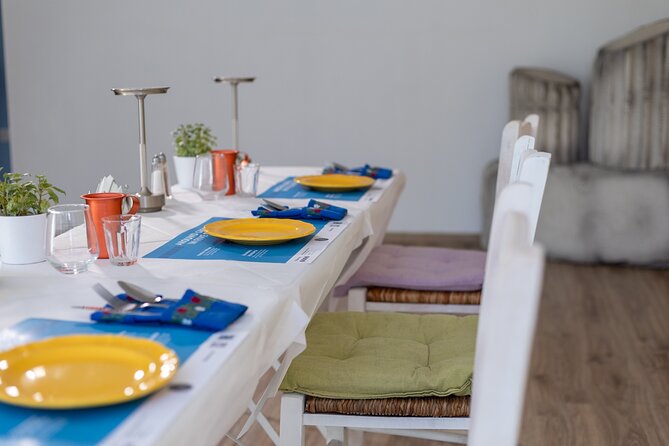
Many Greek food experiences focus on familiar standards: souvlaki, moussaka, Greek salad, and perhaps grilled fish. This one takes a different route. Its five-course menu is designed as a map of Greek cooking, with each dish connected to a different corner of the country.
That gives the meal a clear purpose. You are not simply sampling five unrelated plates. You are tasting how ingredients, climate, and local habits change from place to place.
The evening combines food, acting, and folk music in one setting. Professional performers tell stories and explain traditions while you eat. The result is closer to dinner theater than to a standard guided food tour, but the meal remains substantial enough to count as dinner.
The format also helps if you have limited time in Athens. In about two hours, you receive an introduction to several Greek regional traditions without needing to travel beyond the city. You will not see those regions in person, of course, but the menu gives you a useful first taste of their character.
A few more Athens days worth a look
- Greek Cooking Class in Athens Including Rooftop Dinner with Acropolis View
★ 5.0 · 826 reviews - Enjoy Cape Sounio Private Majestic Sunset With Seaside Dinner
★ 5.0 · 613 reviews - Greek Small-Group Athens Cooking Class & Dinner
★ 5.0 · 574 reviews
Praxitelous 40 and the late 8:30 pm start
The experience begins at Praxitelous 40, Athina 105 60, Greece. It ends back at the same meeting point, so you do not need to arrange a second pickup location or figure out where the performance finishes.
The 8:30 pm start is worth planning around. In Greece, a late dinner is hardly unusual, but visitors who normally eat at 6 or 7 pm may find the timing a little slow to adjust to. I would keep the afternoon meal modest, then arrive ready to eat.
This is also an evening activity rather than a daytime sightseeing stop. You can use the earlier part of the day for museums, neighborhoods, or a longer excursion, then come here for a structured night out.
The group limit is 20 people. That is not a private dinner, but it is small enough for the actor’s storytelling and music to remain personal. A large crowd can make table-based theater feel distant. With a maximum of 20, you have a better chance of seeing and hearing what is happening.
The meeting point is near public transportation, and most people can participate. Service animals are allowed. The supplied details do not describe stairs, seating arrangements, or specific access features, so contact the provider if you need a particular accommodation.
Dakos begins the regional food tour
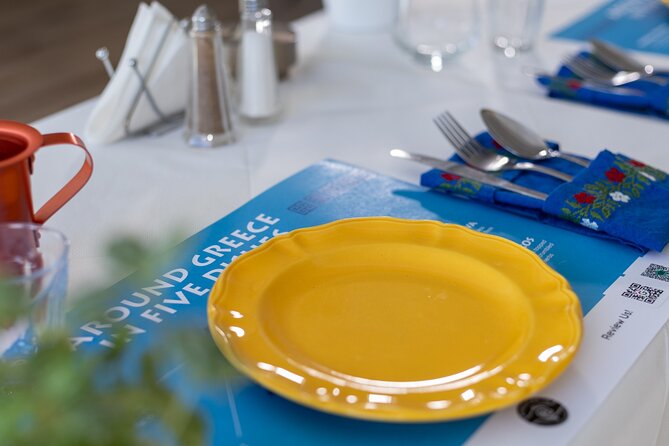
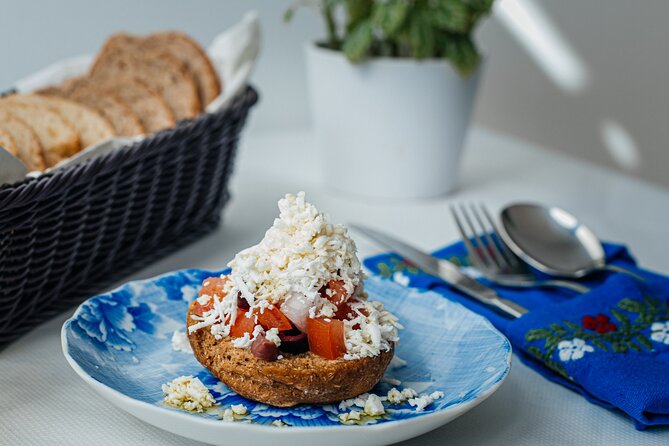
The first plate is dakos, a specialty built around a wholewheat barley rusk. It comes topped with fresh tomatoes, olives, aged feta, oregano, and other herbs. A vegan version is available.
Dakos shows how simple ingredients can make a filling dish. The barley rusk gives it a firm, dry base, while the tomatoes add moisture and the feta brings a salty, tangy edge. The olives and herbs keep the dish firmly in the Greek kitchen.
This is not the soft bread and dip that often appears at the start of a meal. The texture is part of the point. You get a sturdy bite, fresh tomato, and aged cheese in the same mouthful.
If you choose the vegan option, you still receive the central idea of the dish: barley, tomato, olives, and herbs. The menu specifically notes that a vegan version is available, which is useful for plant-based diners planning ahead.
Dakos is a good opening course for this kind of evening because it introduces the connection between food and place right away. The dish is humble, but the story around it gives the ingredients more meaning.
Hortopita brings wild greens and crisp filo

Next comes hortopita, made with a mixture of wild greens and herbs wrapped in crisp filo pastry. It is a vegetable pie with a strong contrast between the delicate pastry and the earthy filling.
The word horta refers broadly to edible greens, many of them gathered from the countryside. That gives this course a different feel from dakos. The first dish is built around barley, tomato, and cheese. Hortopita shifts attention to greens, herbs, and pastry.
The crisp filo matters. It keeps the dish light in texture even though the filling is satisfying. If you enjoy savory pies, this is likely to be one of the more approachable courses on the menu.
It also gives the performance a useful food subject. Regional cooking is not only about famous dishes. It is also about what grows locally and how cooks turn basic ingredients into everyday meals.
Same city, a completely different century:
- Athens: Acropolis & up to 5 Archaeological Sites Combo Pass
★ 4.4 · 12,619 reviews - Athens: Acropolis Ticket with Optional Audio or Live Guide
★ 4.2 · 11,055 reviews - Athens: Acropolis, Parthenon & Acropolis Museum Guided Tour
★ 4.8 · 9,316 reviews - Athens: Cape Sounion & Poseidon Temple Sunset Half-Day Trip
★ 4.8 · 8,241 reviews
Fava shows the quiet side of Greek cooking
The first main dish is fava, a smooth puree of yellow split peas topped with raw onion and extra virgin olive oil. Despite the name, this Greek preparation is not the same as the broad beans that some diners may expect from the word fava.
The dish is soft, mild, and comforting. The onion gives it bite, while the olive oil adds a silky finish. Compared with the crisp rusk and filo pastry that come before it, fava slows the meal down.
This is a useful reminder that Greek food is not all grilled meat and sharp lemon. Legumes, olive oil, and onions form the basis of many satisfying Greek dishes. Fava can look plain on the plate, but it is the kind of food that depends on good texture and balance.
The serving is part of a larger meal, yet the portions are described as generous. One person who tried the experience found the first dish alone surprisingly filling. I would not arrive assuming this is a light tasting menu. Plan for a complete dinner.
Spetzofai adds sausage, peppers, and tomato
Spetzofai provides the most rustic and hearty course. It combines handmade pork sausages with fresh bell peppers, slow-cooked in a rich tomato sauce. Vegetarian and vegan versions are available.
This is the dish most likely to appeal to anyone looking for robust countryside cooking. The sausage adds salt and fat, the peppers bring sweetness, and the tomato sauce ties everything together.
The course also gives the menu useful range. Fava is gentle and creamy. Spetzofai is bolder and heavier. By placing both on the same table, the meal shows how much variety exists within Greek cooking.
If you do not eat meat, the plant-based option means you do not have to miss the dish’s main idea. You will still get the peppers and tomato sauce, with the provider offering a vegetarian or vegan alternative in place of the pork sausage.
The menu does not state exactly what accompanies each course, so do not assume bread, side dishes, or a particular substitution beyond the options listed. The five named dishes form the core of the dinner.
Revani finishes with semolina, yogurt, and syrup
Dessert is revani, a light semolina sponge cake made with olive oil and Greek yogurt. It is decorated with blanched almonds and soaked in syrup.
Revani has a soft, moist texture and a sweet finish. The olive oil and yogurt keep the cake from feeling like a plain sponge, while the almonds add a little crunch. After the savory courses, it gives the meal a clear ending without turning into an oversized dessert parade.
The syrup is important. If you prefer desserts that are barely sweet, this may be more than you want. If you like syrup-soaked cakes, it should provide the satisfying final note that the menu calls for.
Like the earlier courses, revani is connected to Greek home cooking rather than restaurant spectacle. That fits the evening’s aim: food with a story, served as part of a broader look at regional traditions.
Theater at the table, not a show across the room
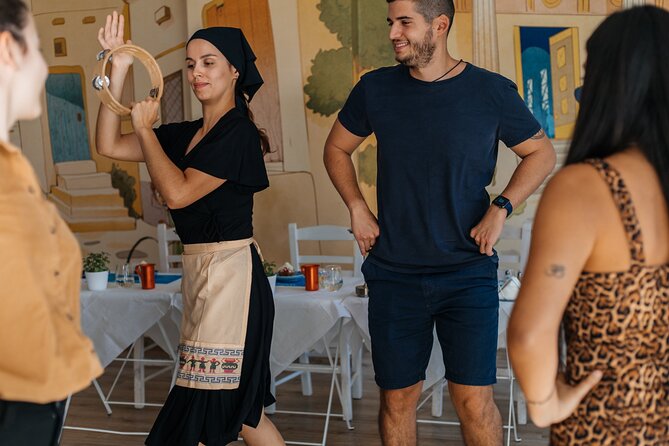
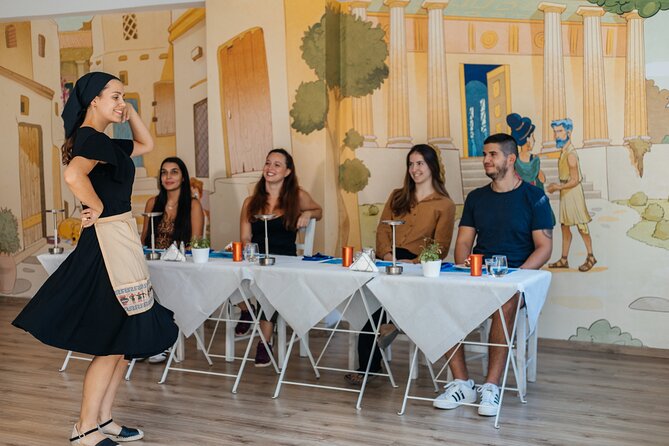
The performance is the feature that changes this from a normal dinner. You are not seated in a theater watching actors from a distance. The action takes place around the table as you eat.
An actor guide tells stories connected to the dishes and the areas they represent. Folk musicians add the sound of traditional instruments, helping the food feel tied to a living culture rather than presented as a list of ingredients.
Some diners have described the acting as a one-person show, with the food service and performance working together. The supplied details do not give the performers’ names, and the exact staging may vary, but you can expect a professional actor-led production rather than a standard restaurant explanation.
I like this format because it gives the meal a rhythm. Each course has a role, and the storytelling helps you remember what you ate. You are more likely to recall fava as part of a regional story than as simply another yellow puree.
There is also a clear line between theatrical energy and tourist cliché. The experience specifically avoids plastic decorations and routine Opa! shouting. That matters if you want Greek culture presented with some care instead of a string of stock gestures.
Still, the theatrical style will not suit every diner. You may be addressed, drawn into the atmosphere, or asked to focus on the performance while eating. If you want long, private conversations over dinner, choose a conventional taverna instead.
Greek wine makes the tasting feel like a full night out
Greek wine accompanies the meal, adding another regional element to the evening. The supplied details do not specify the grape varieties, number of pours, or whether nonalcoholic alternatives are available, so ask the provider if those points matter to you.
Wine changes the value calculation. At $86.89 per person, you are paying for more than five dishes. The price also covers the live acting, folk music, storytelling, service, and the convenience of a complete evening at one location.
That is a fair proposition if you would otherwise pay separately for dinner and a cultural performance. It is less attractive if your main goal is simply to eat the cheapest Greek meal possible. Athens has plenty of ordinary places where you can spend much less on food alone.
The portions help support the price. This is not presented as a series of tiny samples. The courses add up to a hearty meal, and one diner found the first plate filling enough to make the generous serving sizes clear.
The best value comes when you care about both halves of the evening. You should book it for the combined experience, not just for dakos, fava, or revani.
Who will enjoy this Athens evening most
I would point this experience toward several types of visitors:
- First-time visitors to Greece who want a quick introduction to food traditions beyond the familiar tourist menu.
- Couples and friends looking for a shared evening with conversation, music, and a little performance.
- Food-focused visitors who prefer regional dishes and home-style preparations to generic restaurant fare.
- Cultural travelers who want context for what they are eating.
- Vegetarian and vegan diners, since dakos, spetzofai, and other parts of the menu have stated plant-based options.
Families may enjoy it, but the late 8:30 pm start is the main question. The supplied information says most people can participate, but it does not give a minimum age or child pricing.
I would be more cautious if you have food allergies. The menu includes dairy, pork, almonds, filo, wheat, olive oil, and syrup, and no full allergen statement is provided. Contact Mythopraxis before booking rather than relying on substitutions at the table.
The atmosphere is also better for people who enjoy being part of a production. If you prefer to keep dinner quiet and independent, the actor-led format may feel like too much.
Practical details that affect your decision
The activity lasts about two hours, which is long enough for a complete meal and performance without taking up an entire night. Because it ends where it begins, the final logistics are simple.
Confirmation is provided when you book. The experience has free cancellation up to 24 hours before the start time for a full refund. Changes or cancellations made less than 24 hours before 8:30 pm are not accepted for a refund.
Weather can affect the booking, even though this is a dinner experience. If poor weather causes a cancellation, you will be offered another date or a full refund. The provider also requires a minimum number of participants, so a cancellation for that reason brings the same choice of a new date, another experience, or a full refund.
The activity is commonly booked well in advance, with an average booking lead time of 77 days. That does not guarantee every date sells out, but it is a good reason to reserve early if your Athens schedule is fixed.
Should you book Around Greece in 5 Dishes?
Book it if you want a proper dinner with a cultural performance, not merely a food stop. The five dishes offer useful variety, the servings are substantial, Greek wine completes the meal, and the acting gives the menu a memorable frame.
I would especially choose it early in a Greece trip. The regional stories may help you recognize foods later in tavernas and markets, and the plant-based alternatives make it more flexible than many traditional dinner shows.
Skip it if you need an early meal, dislike attention during dinner, or want to choose every dish yourself. For everyone else, the $86.89 price is reasonable when you count the food, wine, music, and theater together. It is a polished Athens night out with enough substance to avoid feeling like a tourist trick.
FAQ
Where does the experience begin?
It begins at Praxitelous 40, Athina 105 60, Greece.
What time does the dinner start?
The experience starts at 8:30 pm.
How long does it last?
It lasts approximately two hours.
Where does the experience end?
It ends back at the meeting point at Praxitelous 40.
How many people can join?
The maximum group size is 20 people.
What food is served?
The menu includes dakos, hortopita, fava, spetzofai, and revani.
Are vegetarian or vegan options available?
Yes. A vegan dakos option is available, and vegetarian or vegan alternatives are available for spetzofai.
Is wine included?
Greek wine accompanies the meal.
Is the experience accessible to most people?
The activity states that most people can participate, and service animals are allowed.
What is the cancellation policy?
You can cancel at least 24 hours before the start time for a full refund. Cancellations or changes made less than 24 hours before the experience are not refunded or accepted.
Freshly added Athens trips
- Athens and Ancient Corinth Private from Athens★ 5.0 · 3 reviews
- From Athens: Mycenae and Epidaurus Private Tour★ 4.8 · 3 reviews
- Full day Meteora private tour★ 5.0 · 3 reviews
- Double Shore Dive (certified divers)★ 4.5 · 3 reviews
- Athens Hills: Mythology Treasure Hunt★ 5.0 · 3 reviews
- Sunset & swimming at Cape Sounio, Poseidon temple★ 5.0 · 3 reviews
- Philosophy Experience at Plato’s Academy Park – basic version★ 5.0 · 3 reviews
- Private Acropolis Tour – Ticket Included★ 5.0 · 3 reviews
Dinner Experiences, compared.

Greek Cooking Class in Athens Including Rooftop Dinner with Acropolis View
Read our review →
Enjoy Cape Sounio Private Majestic Sunset With Seaside Dinner
Read our review →
Greek Small-Group Athens Cooking Class & Dinner
Read our review →

Greek Cuisine Cooking Class and 3-Course Dinner
Read our review →
Athens Night Sightseeing Tour with Greek Dinner Show
Read our review →
Traditional Greek cooking class and lunch or dinner with an Acropolis view
Read our review →Browse the lists this tour appears in