
Reviewed · ATHENS SEGWAY TOURS
Athens: 3-Hour Grand Tour by Segway
Athens makes a lot more sense when you connect its ancient hills, modern streets, leafy gardens, and old neighborhoods in one sweep. This three-hour Segway tour does exactly that, taking you from Hadrian’s Arch and the Temple of Zeus to Monastiraki, Pnyx, Areopagus, Plaka, and the Acropolis area without asking you to walk every step.
I like the small group of no more than 10 people, and I like the way the route mixes famous sights with places tied to democracy, theater, and the first modern Olympic Games. The main caution is simple: entrance fees are not included, and the Segway gives you an excellent overview rather than long, inside visits at each monument.
In This Review
- Key points at a glance
- Why a Segway works well in Athens
- Hadrian’s Arch and the Temple of Zeus
- The Panathenaic Stadium and royal Athens
- The National Garden and central Athens
- Monastiraki, Kerameikos, and the old market zone
- Thisseion, Filopappou, and the hills of democracy
- Plaka, the Acropolis area, and the Odeon
- How much does $112 represent?
- Who should book this tour?
- Should you book the Athens Segway tour?
- FAQ
- Where does the Athens Segway tour start?
- Where does the tour finish?
- How long does the tour last?
- What languages are available?
- How many people are in the group?
- Is Segway training included?
- Are entrance fees included?
- Can I cancel the booking?
Key points at a glance
- The route covers far more ground than a walking tour: You reach the Acropolis area, National Garden, Panathenaic Stadium, Monastiraki, Kerameikos, Pnyx, Areopagus, and Plaka in three hours.
- Ancient Athens gets a modern introduction: The tour links the Greek Agora, Roman Agora, Kerameikos cemetery, and historic hills with present-day shopping streets and squares.
- You ride through central Athens, not just past it: Plaka, Thisseion, Makrygianni, and Monastiraki give you a feel for how the old city works today.
- The guide makes or breaks the experience: Akivi, Costas, Stylianos, and Margarita have each been praised for clear explanations, humor, and good route choices.
- Training and a helmet are included: You get an introduction to operating the Segway before setting off.
- The tour is best for orientation: It is a strong first look at Athens, but you will need separate time and tickets for substantial visits inside the Acropolis and other archaeological sites.
Why a Segway works well in Athens
Athens is spread across a compact but surprisingly hilly center. The Acropolis rises above the old neighborhoods, while Areopagus, Pnyx, and Filopappou add slopes and uneven routes that can make a hot-weather walking tour tiring.
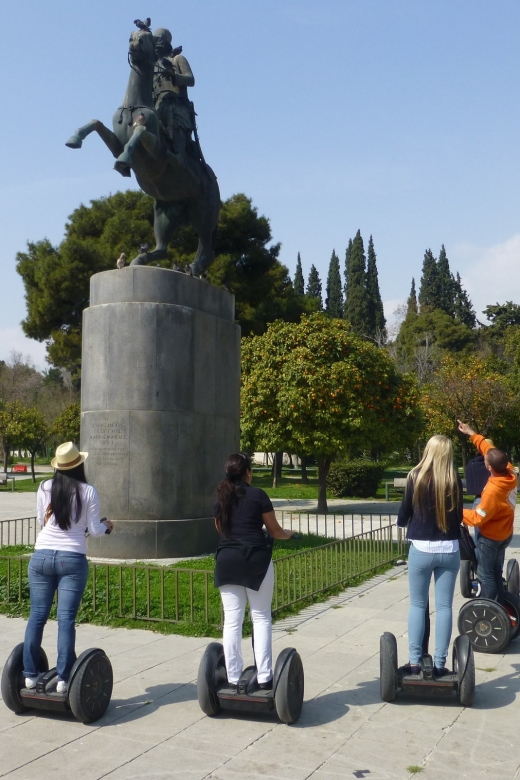
A Segway lets you cover these areas with less strain. One particularly useful part of this tour is the connection between the major sights. You do not simply stop at a monument, take a photo, and move on. You ride between ancient meeting places, Roman ruins, royal buildings, gardens, markets, and modern streets.
The experience begins at Eschinou 9 in Plaka with a training session. That matters. If you have never used a Segway, the first few minutes can feel slightly odd, and a proper introduction gives you time to understand steering, stopping, and balance before you join city streets.
A helmet is included, as is an English, Hebrew, Spanish, or Russian-speaking guide. The group limit of 10 keeps the outing more manageable than a large coach tour, especially when the guide needs to explain a monument or help the group move through a crowded area.
More segway rides around Athens:
- Best of Athens City Segway Tour
★ 5.0 · 207 reviews - Best of Athens Segway Tour
★ 4.9 · 127 reviews - Classical Athens Segway Tour
★ 5.0 · 114 reviews
Hadrian’s Arch and the Temple of Zeus
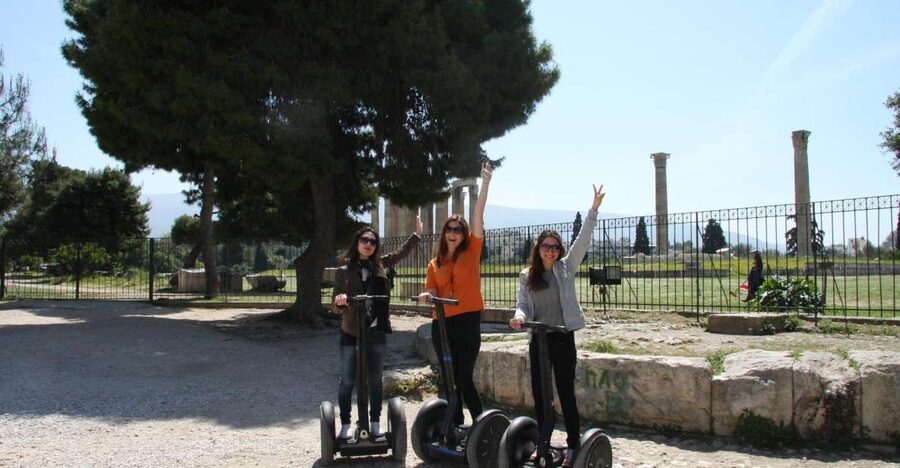
The first major sights are Hadrian’s Arch and the Temple of Olympian Zeus. They sit close together, making this an efficient start to the ancient side of Athens.
Hadrian’s Arch is a graceful Roman gateway, and it makes a useful photo stop because it frames the contrast between Roman Athens and the Acropolis area. You get time for photographs and a guided explanation, but do not expect a long archaeological visit.
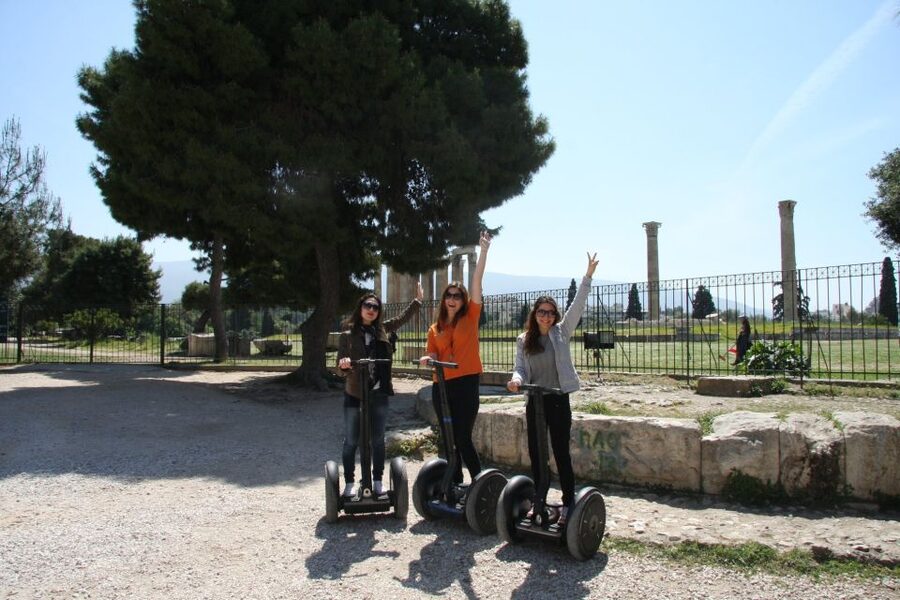
The nearby Temple of Zeus is more dramatic in scale than in preservation. Its surviving columns hint at the size of the original sanctuary, and the open setting lets you understand how grand the Roman-era project was. Since entrance fees are not included, confirm how the guide handles the stop and plan on viewing the monument from the permitted route unless you buy a separate ticket.
I like these opening stops because they give you a quick historical sequence: Greek Athens grew into Roman Athens, and the city you see today sits across both layers. The short riding segments also help you settle into the machine.
The Panathenaic Stadium and royal Athens
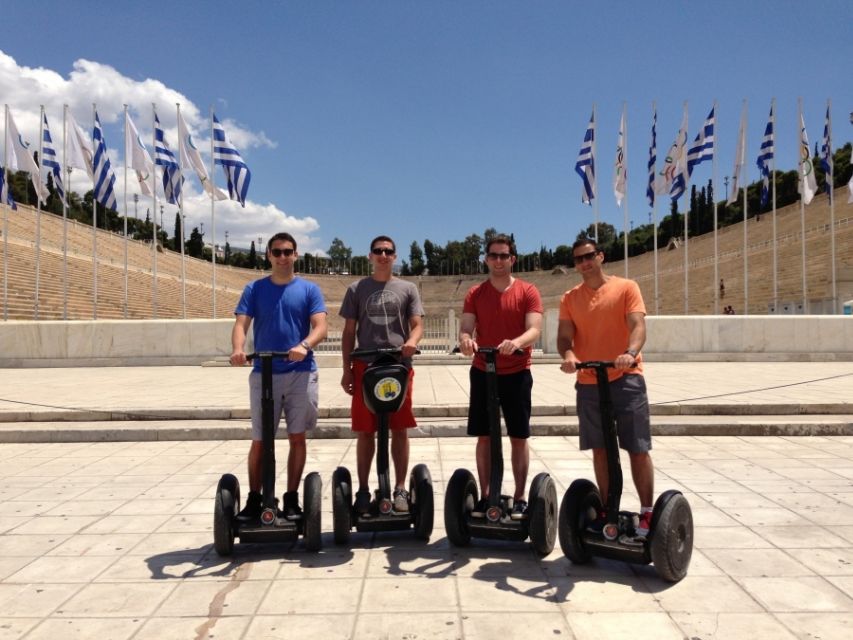
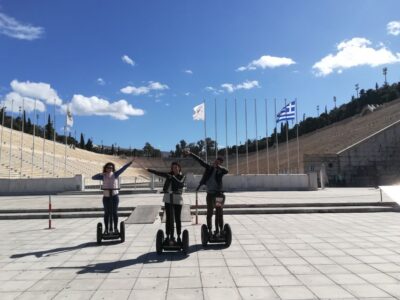
The Panathenaic Stadium gets about 20 minutes in the stated route, one of the longer stops. This white-marble stadium hosted the first modern Olympic Games in 1896, making it one of the clearest links between ancient sporting culture and the modern world.
You will have time for photographs, a guided explanation, and a look at the stadium’s striking horseshoe shape. The tour does not include entrance fees, so the visit may focus on the exterior unless you choose to enter separately.
From here, the ride continues toward the Presidential Palace and the National Garden. The Presidential Palace gives you a glimpse of modern Greek civic life, while the National Garden offers shade and a welcome change from Athens’s stone streets.
The gardens are especially useful on a hot day. One person in the tour group described riding in temperatures of 43 to 45 degrees Celsius, when the Segway made seeing Athens possible without a long, exhausting walk. That does not remove the heat, of course, but it can make the difference between enjoying the route and cutting your sightseeing short.
The National Garden and central Athens
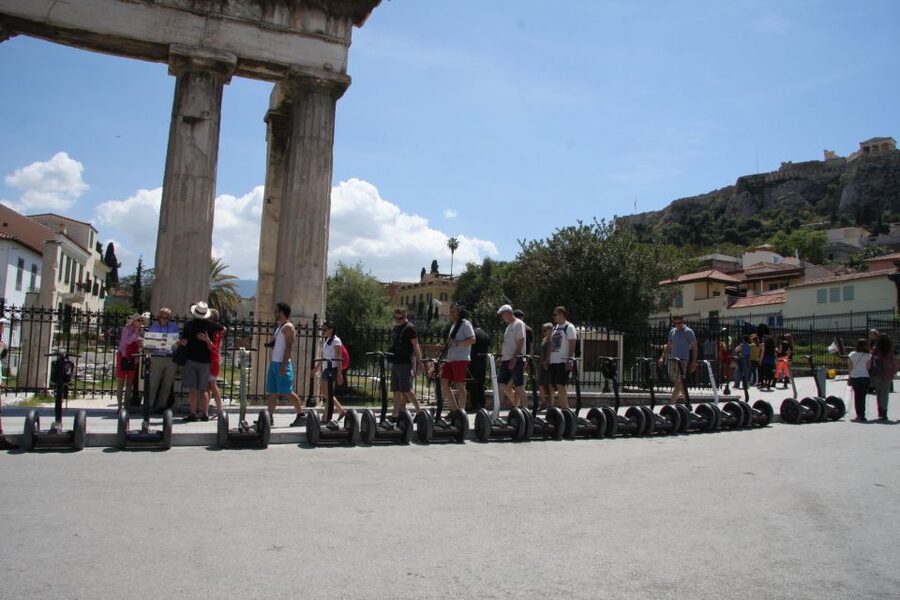
The National Garden stop lasts about 15 minutes in the planned schedule. You will pass through or alongside the garden, see the Zappeion building, and hear how this central green space fits into the city.
The Zappeion is an elegant neoclassical building near the stadium and gardens. It is not as famous as the Acropolis, but it helps round out your picture of Athens beyond ruins and souvenir streets.
The route then moves through central Athens, with a longer general sightseeing section of about 20 minutes. This is where the Segway earns its keep. Instead of spending the whole tour at fixed monuments, you glide down contemporary streets and connect the major districts.
The guide may need to adjust the exact path to traffic, pedestrians, or local conditions. That is a benefit, not a flaw. Several guides have been praised for choosing routes that avoid the busiest streets while keeping the ride safe and interesting.
A few more Athens days worth a look
- Tuk Tuk Athens Complete City Center Tour – 100% Electric (3 hour)
★ 5.0 · 252 reviews - Athens: Private 3-Hour City Tour on Eco-Friendly Tuk Tuk
★ 4.8 · 248 reviews - Athens: 3-Hour Sunset Cruise with Swim Stop, Snacks & Drinks
★ 4.8 · 82 reviews - Athens: Create Your Own Mosaic 3h Private Art Class
★ 5.0 · 62 reviews
Monastiraki, Kerameikos, and the old market zone
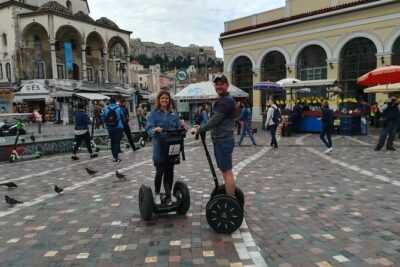
Monastiraki brings you into one of the most recognizable parts of central Athens. The square sits near ancient ruins, shopping streets, cafés, and the market district, so it gives you a quick lesson in the city’s overlapping past and present.
This is a good place to watch the city rather than rush through another monument. You may see people shopping, eating, browsing, and moving between the historic center and newer commercial streets. The tour includes a photo stop, guided sightseeing, and free time, although the schedule is too tight for a serious shopping session.
Kerameikos follows with a look at the ancient cemetery and district outside the old city walls. Its name also connects to the pottery workers who once lived there. The stop is shorter, about 10 minutes, but it offers a different view of ancient Athens from the grand temples and civic buildings.
I value Kerameikos because it reminds you that Athens was a lived-in city, not just a collection of famous monuments. Tombs, roads, workshops, and neighborhoods reveal ordinary life around the better-known public sites. Again, entrance fees are not included, so treat this as a guided look unless you arrange your own admission.
Thisseion, Filopappou, and the hills of democracy
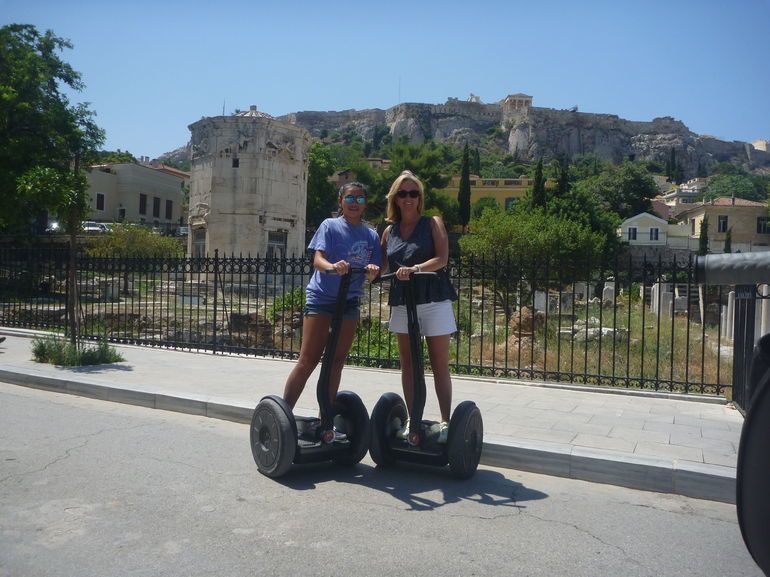
The ride through Thisseion is brief, about five minutes, but the neighborhood helps connect Kerameikos and the hill routes. Thisseion is one of the most pleasant central areas for outdoor dining and Acropolis views, though the tour is designed for sightseeing rather than a restaurant stop.
Next come Filopappou and Pnyx. These hills are among the most important stops for anyone interested in how Athenian democracy developed. Pnyx is traditionally linked with public assemblies, while the nearby hills offer open views toward the Acropolis and across the city.
The Pnyx and Filopappou portions each allow roughly 10 minutes. That is enough for a focused explanation and photographs, but not enough for a long walk over every path. You should also expect uneven ground and slopes in this part of the route. The Segway reduces walking time, but it does not turn ancient hill paths into smooth pavement.
Areopagus comes later, with around 15 minutes. This rocky outcrop sits beneath the Acropolis and is tied to ancient civic and legal life. It also offers one of the best elevated views on the route.
These hills are where the tour becomes more than a checklist of monuments. You get a sense of Athens as a place where people gathered to argue, vote, perform, worship, and make laws. A good guide can make that story clear without burying you in dates. Stylianos has been praised for animated storytelling and humor, while Margarita has been singled out for explaining the city in simple, easy-to-follow terms.
Plaka, the Acropolis area, and the Odeon
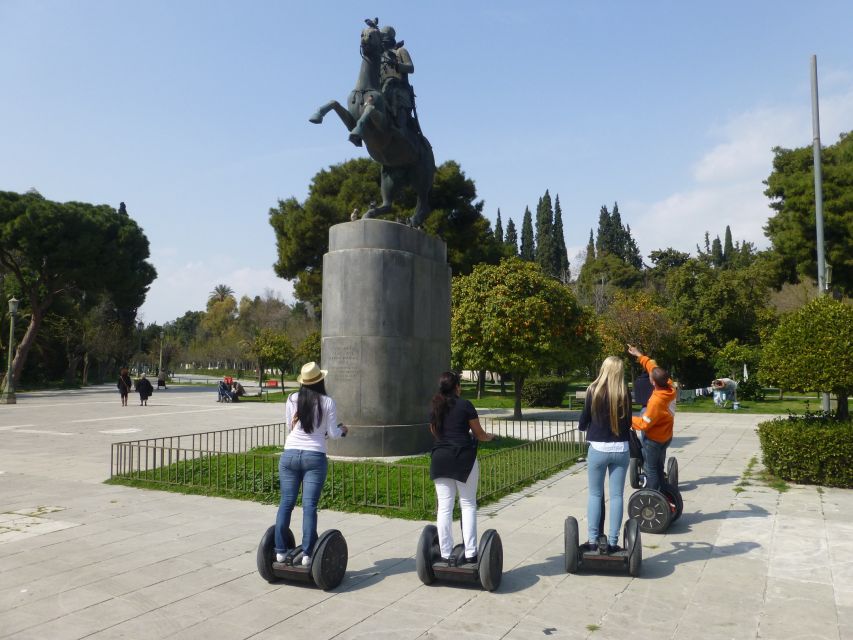
The route returns toward Plaka, the old neighborhood around the Acropolis. Its narrow streets, shops, and restaurants make it one of the city’s most atmospheric districts, though the area can be crowded and tricky for a group on wheels.
The Plaka stop is short, about five minutes, so think of it as a guided pass through the neighborhood rather than free time for browsing. If you plan to shop or eat here, save it for after the tour.
The Odeon of Herodes Atticus is another key Acropolis-area stop. This ancient theater still hosts performances, and its restored stone seating and curved stage wall make it easy to picture the role of theater in Athenian culture. The tour gives you a photo stop and explanation from outside or along the public route. It does not include a performance or an entrance ticket.
The itinerary also includes Makrygianni, the district beside the Acropolis Museum and the southern side of the Acropolis hill. It is a useful final connection before returning to Eschinou 9 in Plaka.
Although the experience is promoted as including the Acropolis, it is important to read that carefully. You see the Acropolis area and its associated sights, but this is not a three-hour interior visit to the Acropolis monuments. The attraction’s entrance fee is separate, and the Segway route is built around viewpoints, approaches, and nearby archaeological sites.
How much does $112 represent?
At $112 per person, this is not the cheapest way to see central Athens. A self-guided walk costs far less, and a standard walking tour may include more detailed time at one or two archaeological sites.
The price makes more sense if you value coverage, transport, and a live guide. In three hours, you reach places scattered across the center, including the Panathenaic Stadium, National Garden, Monastiraki, Kerameikos, Pnyx, Areopagus, Plaka, and the Acropolis area. Doing that on foot, especially in summer, takes more energy and planning.
The tour is also useful for a first day in Athens. You can get your bearings, note the places you want to revisit, and learn how the historic districts fit together. Akivi, Costas, Stylianos, and Margarita have each been praised for making the history clear and keeping the mood friendly.
The value drops if you want long, quiet visits inside the monuments. You will need to pay for admissions separately and return on your own for the Acropolis, Temple of Zeus, Panathenaic Stadium, or Kerameikos if you want a fuller look.
Who should book this tour?
I would choose this tour if you are in Athens for a short stay, dislike long walks in strong heat, or want a broad introduction before exploring on your own. It also suits a mixed-age group that wants to see many central sights together without committing to a full-day excursion.
It can work well for someone with limited walking endurance, but you still need to be comfortable standing, balancing, steering, and riding over city routes. The information provided does not promise a specific mobility accommodation, so contact the operator before booking if you have a physical limitation that affects balance or uneven surfaces.
Families and groups should appreciate the small party size. One group of seven used the tour so everyone could see Athens together, including a person who could not walk for long periods. That is a practical strength, though young children and anyone nervous about the equipment should take the training seriously.
Book it early in a hot-weather visit if possible, and choose a starting time that gives you the best chance of cooler conditions. You can cancel up to 24 hours ahead for a full refund, and the reserve-now, pay-later option gives you some flexibility if your plans are still moving.
Should you book the Athens Segway tour?
Book this experience if your goal is to see the shape of Athens quickly, hear the city explained by a personable guide, and avoid spending three hours walking between widely separated sights. The route is unusually broad for a short tour, and the stops at Pnyx, Areopagus, Kerameikos, and the Panathenaic Stadium add more substance than a simple Acropolis ride.
Skip it if you want detailed archaeological study, full entry to every monument, or a slow afternoon in one neighborhood. For most first-time visitors who want an active overview, $112 is a fair price for the range covered, especially in hot weather. Treat it as your introduction to Athens, not your complete visit to the Acropolis.
FAQ
Where does the Athens Segway tour start?
The tour starts at Eschinou 9 in Plaka, Athens 10558.
Where does the tour finish?
The activity ends back at the starting point at Eschinou 9.
How long does the tour last?
The Segway tour lasts three hours.
What languages are available?
The guide service is available in English, Hebrew, Spanish, and Russian.
How many people are in the group?
The group is limited to 10 participants.
Is Segway training included?
Yes. The tour includes an introduction and training session on how to use the Segway, along with a helmet.
Are entrance fees included?
No. Entrance fees to attractions are not included in the price.
Can I cancel the booking?
Yes. You can cancel up to 24 hours in advance for a full refund. You can also reserve now and pay later.
Freshly added Athens trips
- Full day Mycenae – Nafplio – Epidavros private tour★ 5.0 · 3 reviews
- Private Half Day to Ancient Corinth★ 5.0 · 3 reviews
- From Athens: 2-Day Meteora Trip with Tansportation & Hotel★ 5.0 · 3 reviews
- Athens Half Day Small Group Shopping Tour★ 5.0 · 3 reviews
- Athens & Corinth: Guided Christian Tour in Paul’s Footsteps★ 4.0 · 3 reviews
- Nemea wine roads, The most famous wine tour in Greece★ 4.5 · 3 reviews
- Athens: Greek Wine & Olive Oil Tasting at Brettos Plaka★ 4.5 · 3 reviews
- Mercedes Private Tour Corinth Canal-Ancient Nemea & Wine Tasting★ 5.0 · 3 reviews
Athens Segway Tours, compared.


Ancient Athens Segway Tour with Agora and Kerameikos
Read our review →
Segway Journey: Athens Tour From The Ancient Past To The Present
Read our review →Browse the lists this tour appears in