
Reviewed · DELPHI TOURS
9-Day Ultimate Greek Experience: Peloponnese, Delphi, Zagori, Meteora, Vergina
The best thing about this nine-day private journey is its reach. You move from ancient theaters and Byzantine hill towns to stone villages, mountain roads, royal Macedonian tombs, and Meteora’s cliff monasteries. It gives you a much fuller picture of Greece than an Athens-and-islands trip.
I like the freedom to shape the pace, and I like that lunch is included every day. I also appreciate the small touches: new vehicles, bottled water, a written information booklet, carefully chosen hotels, and the chance to avoid the busiest tourist routes. The main drawback is clear: this is an ambitious trip with several long driving days, and entrance fees, dinners, and a professional licensed guide cost extra.
In This Review
- Key points to know before booking
- What this Greek route does better than a standard vacation
- Days 1 and 2: Corinth, Mycenae, Nafplio, and Monemvasia
- Day 3: The wild Mani Peninsula and Byzantine Mystras
- Day 4: Olympia, Ancient Messene, and mountain Arcadia
- Day 5: Caves, the Odontotos train, and Delphi
- Day 6: Ioannina and Lake Pamvotis
- Day 7: Zagori villages, stone bridges, and the Vikos area
- Day 8: Metsovo, Vergina, and the first view of Meteora
- Day 9: Three Meteora monasteries and Thermopylae
- Price, meals, vehicles, and what you actually receive
- Who should book this trip
- Should you book the Ultimate Greek Experience?
- FAQ
- How long is the tour?
- Is the tour private?
- What time does the tour start?
- Is hotel pickup offered?
- Are breakfast and lunch included?
- Are dinners included?
- Are entrance fees included?
- Is a professional licensed guide included?
- What level of fitness is needed?
- Can the tour end at a cruise ship or airport?
- What is the cancellation policy?
Key points to know before booking
- A true mainland Greece route: You visit the Peloponnese, Delphi, Epirus, Macedonia, Meteora, and Thermopylae in one journey.
- Private and flexible: Only your group participates, with hotel pickup, a private vehicle, and room to adjust stops.
- Lunch is included daily: This saves planning time and makes the long touring days easier.
- Several overnight bases: Monemvasia, the Arcadian mountains, Delphi, Ioannina, Zagori, and Meteora give you more than quick photo stops.
- A mixture of famous and lesser-known places: Mycenae, Olympia, Delphi, and Meteora share the route with Mani, Zagori villages, stone bridges, and mountain towns.
- A high price with many inclusions: At $6,466.93 per person, the value depends on how much you value privacy, hotels, meals, and flexible touring.
What this Greek route does better than a standard vacation
Many first trips to Greece focus on Athens, Santorini, and Mykonos. Those places are worthwhile, but they tell only part of the story. This trip takes you into the mainland, where mountain villages, monasteries, Byzantine ruins, local cheese, and long family meals matter as much as the headline ancient sites.
You begin and end in Athens, but Athens is mostly a gateway here. The real focus is the road between the capital and northern Greece. That road is the point. You cross rural areas, climb mountain ranges, follow coastlines, and reach towns where life moves at a slower pace.
The private setup matters. You are not tied to a large bus schedule, and the route can include optional stops such as Ancient Messene, extra time in Dimitsana, East Zagori, or Pelion. Nikos is involved in planning, and Theo has served as a guide and driver on this type of trip. Your assigned guide may differ, so confirm that before booking if a particular person matters to you.
More Delphi day trips:
- Athens: Mythology of Delphi, Museum and Arachova Guided Tour
★ 4.6 · 4,008 reviews - From Athens: Delphi Full Day V.R. Audio Guided Tour
★ 4.6 · 3,028 reviews - From Athens: Small-Group Delphi, Museum & Arachova Day Trip
★ 4.8 · 2,476 reviews
Days 1 and 2: Corinth, Mycenae, Nafplio, and Monemvasia
Your first morning begins at 8 a.m. with the Corinth Canal, a quick but worthwhile stop. The canal cuts through the Isthmus of Corinth and separates the Peloponnese from mainland Greece. You get about 15 minutes here, enough for a look and photographs rather than a full visit.
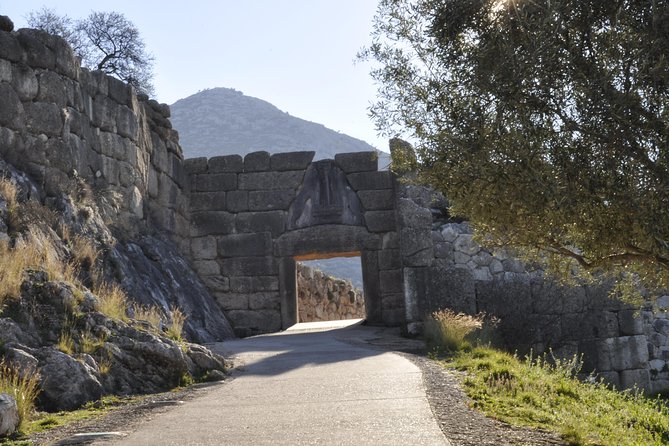
Mycenae gives the day its first major historical weight. This was the center of the Mycenaean civilization and the legendary home of King Agamemnon. Allow about 90 minutes. You will want comfortable shoes, since archaeological sites often involve uneven ground and open-air walking.
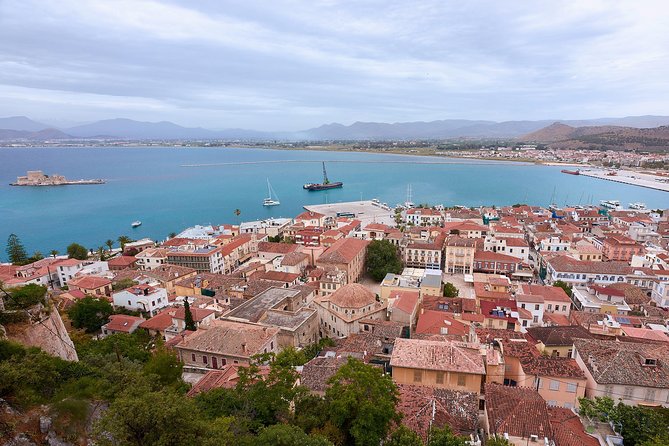
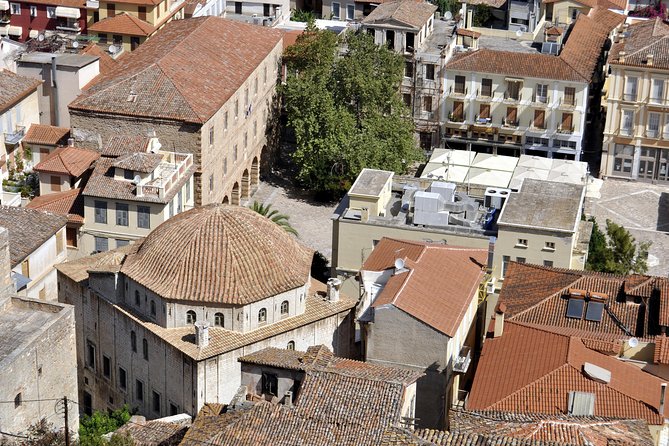
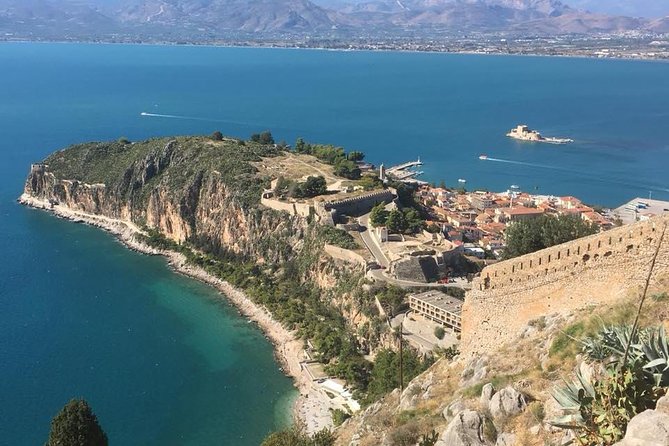
Nafplio is a welcome change of pace. Its old town is one of the prettiest in the Argolis region, with a romantic waterfront feel and free time to wander. Palamidi Castle is optional, and the famous 999 steps down to Nafplio make it a good choice for active visitors, but not a casual add-on for everyone.
The Ancient Theatre of Epidaurus is another major stop. Its acoustics are the star. You have about an hour to see the theater and surrounding site. Ancient Corinth can also be added, giving you another link to the city-state of Corinth and to the missionary journeys of Saint Paul.
Day two leaves the main roads. You stop at Tyros for coffee beside the sea, then climb the Parnon range. The cliff-hanging Monastery of Panagia Elona is a short stop with a dramatic setting. The route through Kosmas adds mountain scenery and village food before you reach Monemvasia.
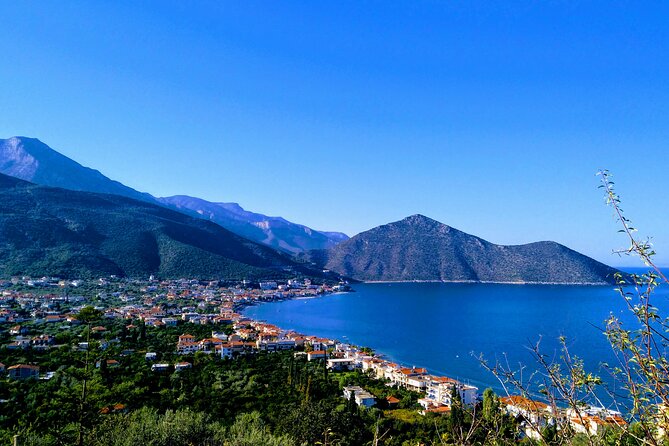
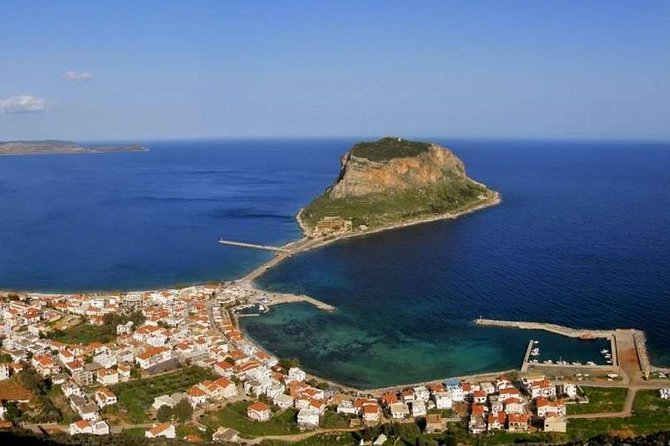
Monemvasia deserves time, and the schedule gives you an unusually long stay, roughly 15 hours. That means you can enjoy the medieval castle town beyond a rushed afternoon visit. Built against the rear of a sea rock, it is one of the most memorable places on the route. Ask how much walking is involved, since the historic area is not designed for cars and includes stone streets and slopes.
Day 3: The wild Mani Peninsula and Byzantine Mystras
Mani feels different from the greener northern parts of Greece. It is rugged, stony, and marked by old tower houses and small settlements. You get a broad look at the peninsula, followed by the Caves of Diros.
The caves are visited by guided boat. Stalactites and stalagmites are lit along the route, and the one-hour visit offers a dramatic change from the outdoor ruins and mountain roads. The admission fee is not included, so budget for it separately.
Areopoli is a stone-built town with a strong connection to Mani’s old pirate-threatened past. It is a good place to slow down, walk, and take in local architecture rather than chase another monument.
The day ends at Mystras, the famous Byzantine castle town above Sparta. Give yourself about 80 minutes, though the terrain may make the visit feel more demanding than the clock suggests. The views extend toward Sparta and the Laconian olive groves. If you have limited mobility, discuss the walking conditions before committing to this stop.
Day 4: Olympia, Ancient Messene, and mountain Arcadia
Ancient Olympia is one of the tour’s essential stops. This is where the original Olympic Games were held, beginning in the eighth century BC. The site includes the stadium, training areas, and temples dedicated to Zeus and Hera.
Two hours is a sensible amount of time for Olympia. It lets you see the major remains without turning the visit into an all-day archaeological marathon. The entrance fee is extra, as it is at the other major sites.
Ancient Messene is an excellent optional substitute or addition. Its size and preservation make it one of the strongest ancient city sites in Greece, with public buildings, religious structures, fortifications, houses, and tombs. If you have already visited several headline ruins, Messene may be the more rewarding choice because it offers a broader sense of how an ancient city worked.
Dimitsana and the Arcadian mountain villages offer a different kind of value. An extra night here is possible, and it makes sense if you prefer village walks, local meals, and a slower rhythm. The included accommodation is described as top quality, but you should ask for the exact hotel names before booking if lodging style is important to you.
More Meteora trips from Athens:
- Athens: Meteora Monasteries Day Trip with Caves and Lunch
★ 4.7 · 2,964 reviews - Athens: Meteora Monasteries Day Tour with Lunch
★ 4.8 · 2,196 reviews - Athens: Meteora Tour with Local Guide and Greek Lunch
★ 4.8 · 1,561 reviews - Athens: Meteora Monasteries, Caves & Coastal Stopovers with Lunch
★ 4.5 · 1,432 reviews
Day 5: Caves, the Odontotos train, and Delphi
Day five packs in several contrasting experiences. At Kastria Cave of the Lakes, you follow unusual galleries and see stalactite formations shaped by water over time. The cave entrance fee is not included.
The Odontotos rack railway is one of the route’s most distinctive choices. The historic little train runs from Diakopto toward Kalavrita through a gorge, using bridges and tunnels along the way. The journey lasts about an hour, and lunch is included that day. This stop adds a gentle rail experience to a trip otherwise built around private driving.
You then cross the Rio-Antirrio Bridge, an impressive cable-stayed crossing over the Gulf of Corinth. The stop itself is brief, but the bridge helps mark the transition from the Peloponnese to mainland Greece.
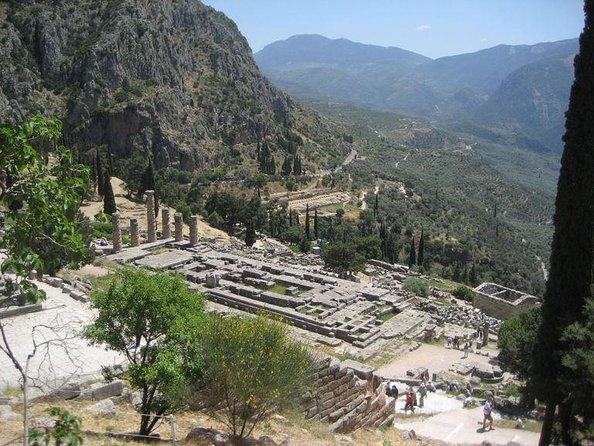
Delphi’s archaeological museum is the final major stop. It holds sculpture, statues, architectural pieces, and smaller objects from the sanctuary of the ancient oracle. The Charioteer of Delphi and the Sphinx of the Naxians are especially important. The museum visit takes about 90 minutes, and the admission fee is extra.
The schedule lists the museum rather than a full archaeological-site visit on this day. Clarify whether the sanctuary itself is included in your timing, especially if Delphi is a major reason for choosing the tour.
Day 6: Ioannina and Lake Pamvotis
This is one of the long driving days. You cross toward northwestern Greece and Ioannina, with breaks along the way. The distance is part of the trade-off for reaching Epirus in a private nine-day route.
Ioannina is a graceful lakeside city with Ottoman, Greek, and multicultural influences. The old castle district brings you into the world of Ali Pasha, the former Ottoman ruler, with narrow streets and views toward the lake.
The Silversmithing Museum is small, with about 20 minutes scheduled. It explains pre-industrial silver work in Epirus and displays jewelry, weapons, household silver, and personal objects. It is a focused visit, not a large general museum.
Lake Pamvotis gives you room to breathe. You can spend time by the water or go to a viewpoint overlooking the city, lake, island, and mountains. The lake island is mentioned as an option, but confirm exactly what is included in your day.
Day 7: Zagori villages, stone bridges, and the Vikos area
Zagori is among the strongest parts of the route for people who want traditional villages and mountain scenery. The western villages of Aristi, Megalo Papigo, and Mikro Papigo sit below the Astraka cliffs, with stone buildings and steep roads.
Near Aristi, you can approach the Voidomatis River. At Papingo, the Rogovo River has carved natural pools into a small canyon. Some pools are deep enough for diving, but the schedule does not promise swimming conditions, so treat this as a short nature stop rather than a planned water activity.
Mikro Papigo has cobbled lanes and a steep hillside setting below Mount Tymfi. Monodendri, at an altitude of about 1,060 meters, is another traditional settlement near the entrance to Vikos Gorge. The Rizario Centre of Handicrafts gives you a chance to see embroidery and weaving from the area.
The Stone Forest is a striking formation of finely layered limestone that resembles trees made of stone. It also offers views toward Vikos Gorge. Optional stops in East Zagori include Kokkorou’s ancient stone bridge and Dilofo, one of Epirus’s best-preserved villages.
This day has a lot of stops, so do not expect long hikes at each one. If you want serious walking in Zagori, ask about dropping some short visits in favor of a longer trail.
Day 8: Metsovo, Vergina, and the first view of Meteora
Metsovo is a practical coffee stop between Ioannina and Meteora, but it is worth more than a quick stretch. The mountain town is known for its central square and its many cheeses, which are sold throughout Greece. If food matters to you, ask whether you can sample local cheese rather than treating Metsovo as a simple roadside pause.
Vergina is the historical centerpiece of the day. The Museum of the Royal Tombs of Aigai is built inside the Great Tumulus over the royal Macedonian tombs. You see finds connected with Philip II, the father of Alexander the Great.
The museum is atmospheric and compact, with about an hour scheduled. Entrance is extra. This is a place where a licensed guide could add useful context, especially if you want to understand the Macedonian royal family and the significance of the tomb discoveries.
The day ends at Meteora, perhaps with a late afternoon look at the monasteries. The schedule says the first visit depends on time, with the main monastery visits planned for the next morning. That flexibility is sensible, since the day already covers a great deal of ground.
Day 9: Three Meteora monasteries and Thermopylae
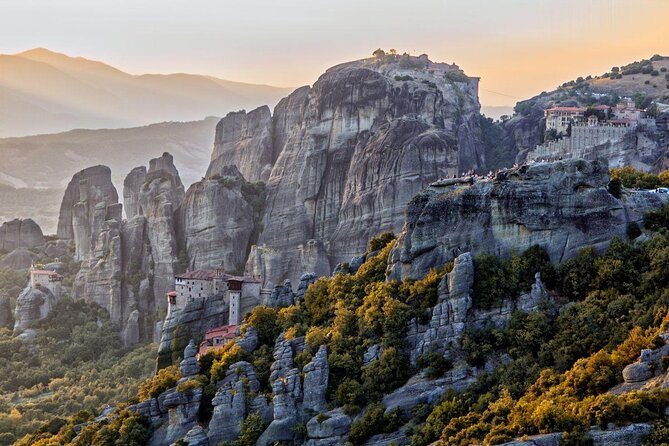
Meteora is the visual high point of the trip. Giant rock pillars rise above Kalambaka, carrying monasteries built in places that seem impossible from the road. The setting is both geological and religious, and it rewards a slow look.
The Great Meteoron Monastery is the oldest, largest, and most important of the surviving Meteora monasteries. You have about an hour there. Varlaam Monastery receives another 40 minutes and carries the name of the ascetic who first established a life on its rock in the fourteenth century.
The Holy Trinity Monastery is probably the most photographed of the group. Its construction dates to the period between 1458 and 1476. Three monasteries in one morning make for a strong visit, but stairways and uneven surfaces mean you should be ready for moderate physical effort.
The entrance fee for each monastery is not included. Clothing rules apply at Orthodox monasteries, so ask what is needed before you go. The exact monasteries open can vary by day, and the plan is to visit two monasteries that are open on that specific day, with Holy Trinity also listed as a possible stop. Confirm the final schedule in advance.
Thermopylae is a short final history stop, with the statue of King Leonidas marking the famous battlefield. You then return to Athens, with arrival expected around 5 p.m. Drop-off at a cruise ship or the airport can be arranged as an option.
Pelion is not part of the standard nine-day route. It is an optional extra day and night after Meteora, with mountain villages, streams, fruit growing, views toward the Aegean, and stories of the centaurs. Add it only if you have the time. The existing route is already full.
Price, meals, vehicles, and what you actually receive
At $6,466.93 per person, this is not a budget sightseeing trip. It is priced as a private, multi-day touring service with high-grade accommodation, a new 2021 to 2023 saloon or minivan, hotel pickup and drop-off, bottled water, breakfast on eight mornings, and lunch on all nine days.
That lunch inclusion matters. Long touring days can become tiring when you must repeatedly stop to find food, check menus, and settle bills. Here, the main meal is built into the day, though you still pay for dinners, drinks beyond the stated inclusions, personal spending, and gratuities.
The value is strongest for couples or small groups who want privacy and do not want to plan every transfer. It is weaker if you prefer to travel by public transport, choose your own hotels, or spend several days in each place. Entrance fees are also separate at Mycenae, Epidaurus, Olympia, Delphi, the caves, Vergina, and Meteora.
A professional licensed guide is optional. Your driver may provide practical help and local insight, but that is not the same as a licensed archaeological guide at every site. If ancient Greece is your main interest, pay for the guide or confirm exactly what commentary is included.
Who should book this trip
I would recommend it to couples, families, and small groups with moderate fitness who want to see mainland Greece in depth. It is especially suited to people who value good hotels, private transport, local meals, scenic roads, and the ability to adjust the schedule.
It is less suitable if you dislike long drives or want a relaxed beach holiday. Several days cover serious distances, and the itinerary often gives you one hour rather than half a day at a site. The private format helps, but it cannot remove the geography.
The strongest praise attached to this experience centers on personal attention, flexible planning, food, hotels, and the way the guides make a complicated route feel manageable. Communication before departure is a major part of the value. Use it. Ask for exact hotel names, daily driving times, the assigned guide, the licensed guide option, and the final list of monastery visits.
Should you book the Ultimate Greek Experience?
Book this tour if your dream Greece includes ancient ruins, mountain villages, local food, Byzantine churches, Ottoman-era towns, and dramatic roads rather than only beaches and famous islands. It is one of the most efficient ways to connect the Peloponnese with northern Greece without arranging every hotel and transfer yourself.
Skip it if you want slow mornings, independent travel, or a low-cost trip. The price is high, but the route is unusually broad and the inclusions are substantial. For the right person, the private vehicle, daily lunch, quality hotels, and flexible planning can make the cost worthwhile.
FAQ
How long is the tour?
The experience lasts approximately nine days, beginning in Athens and returning to Athens around 5 p.m. on the final day.
Is the tour private?
Yes. Only your group participates in the activity.
What time does the tour start?
The stated start time is 8 a.m.
Is hotel pickup offered?
Yes. Hotel pickup and drop-off are included, using a private saloon or minivan.
Are breakfast and lunch included?
Breakfast is included on eight days, and lunch is included on all nine days.
Are dinners included?
No. Dinners are not included.
Are entrance fees included?
No. Entrance fees to the archaeological sites, caves, museums, and Meteora monasteries are paid separately.
Is a professional licensed guide included?
No. A professional licensed guide is available as an optional extra.
What level of fitness is needed?
A moderate physical fitness level is requested. The route includes archaeological sites, mountain villages, cobbled streets, monastery visits, and some walking on uneven or sloped ground.
Can the tour end at a cruise ship or airport?
Yes. Drop-off at a cruise ship or the airport can be arranged as an option on the return to Athens.
What is the cancellation policy?
You can receive a full refund if you cancel at least six full days before the start time. Cancellations two to six days before the start may receive a 50 percent refund, while cancellations less than two days before the start are nonrefundable.
Freshly added Athens trips
- Athens and Ancient Corinth Private from Athens★ 5.0 · 3 reviews
- From Athens: Mycenae and Epidaurus Private Tour★ 4.8 · 3 reviews
- Full day Meteora private tour★ 5.0 · 3 reviews
- Double Shore Dive (certified divers)★ 4.5 · 3 reviews
- Athens Hills: Mythology Treasure Hunt★ 5.0 · 3 reviews
- Sunset & swimming at Cape Sounio, Poseidon temple★ 5.0 · 3 reviews
- Philosophy Experience at Plato’s Academy Park – basic version★ 5.0 · 3 reviews
- Private Acropolis Tour – Ticket Included★ 5.0 · 3 reviews
Delphi Tours, compared.

Mythology of Delphi, Museum and Arachova Guided Tour
Read our review →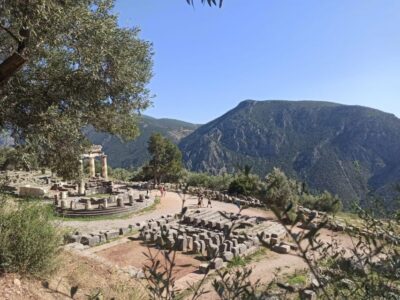
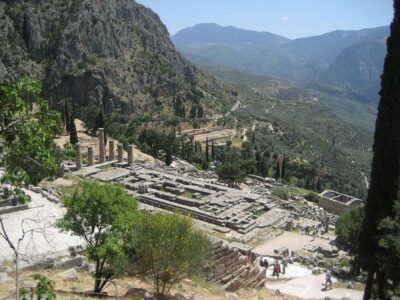
Small-Group Delphi, Museum & Arachova Day Trip
Read our review →
Delphi English Day Trip from Athens with Official Guide
Read our review →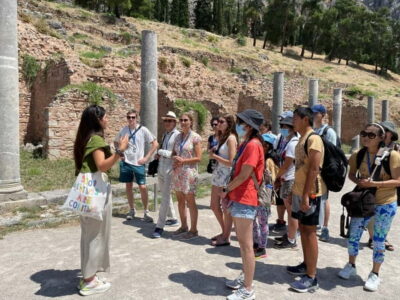
Delphi Guided Trip with Optional Lunch and Entry
Read our review →
Historical Delphi One Day Tour with Arachova Stop & Expert Guide
Read our review →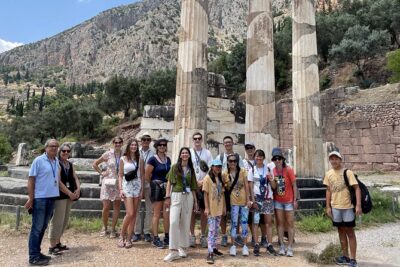
Premium Delphi Day Trip with an Expert Guide, Museum & Lunch
Read our review →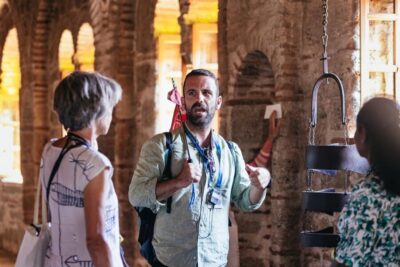
Browse the lists this tour appears in