
Reviewed · DELPHI TOURS
3-Day Peloponnese and Delphi Private Tour from Athens
The big appeal here is the sheer sweep: in three days, you move from the Corinth Canal and the tombs of Mycenae to the Olympic stadium, Delphi’s mountain sanctuary, and the mosaics of Hosios Loukas. Ancient Greece comes in several different flavors, not just one famous ruin.
I like the private format, which gives you a comfortable vehicle, live commentary, and help with meals and hotels rather than a large group moving by the clock. I also like the overnight stops in Nafplio and Galaxidi or Delphi, since they let you see smaller Greek towns instead of returning to Athens each night.
The tradeoff is pace. This is a road trip with long drives and several walking sites, so you will cover a lot of ground, but you will not have endless time at each monument. Entrance fees, lunches, dinners, and a licensed guide cost extra.
In This Review
- Key points to know before booking
- Why this route works for a short Greek trip
- Day 1: Corinth Canal, ancient cities, and Nafplio
- Epidaurus and the science of sound
- Mycenae, lunch in Tolo, and a night in Nafplio
- Day 2: Olympia and the road across the Gulf
- Achaia Clauss, the Rio-Antirrio Bridge, and Nafpaktos
- Day 3: Delphi, Arachova, and Hosios Loukas
- Arachova and the Byzantine mosaics of Hosios Loukas
- What the private service is really worth
- Who should book this three-day journey
- Final verdict: a smart splurge for first-time visitors
- FAQ
- Where does the tour begin and end?
- How long is the tour?
- Which destinations are included?
- Are hotels and breakfast included?
- Are archaeological entrance fees included?
- Are meals included?
- Is this a private tour?
- Can I book a licensed guide?
Key points to know before booking
- Six major ancient sites in three days: Corinth, Epidaurus, Mycenae, Olympia, Delphi, and Hosios Loukas all fit into one route.
- Private door-to-door service: Pickup and return are offered from Athens hotels, Airbnbs, the airport, ports, and rental locations.
- Two distinct overnight towns: You stay in Nafplio on the first night, then in Galaxidi or Delphi on the second, depending on availability.
- Comfortable transport matters: The tour uses newer luxury vehicles with air-conditioning, Wi-Fi, and bottled mineral water.
- Drivers shape the experience: Petros, Janus, and Giannis are named among the experienced English-speaking drivers associated with the tour.
- Budget for extras: Archaeological admission, most meals, drinks, and an optional licensed guide are not included.
Why this route works for a short Greek trip
If you have only a few days beyond Athens, this tour solves a real planning problem. The Peloponnese is packed with sites, but they are spread across a wide peninsula. Delphi sits north of the Gulf of Corinth, and Olympia is farther west still. Reaching them independently means arranging several hotels, working out transport, and deciding which ancient places to leave out.
Here, your driver handles the long connections while you look out at olive groves, orange trees, mountain roads, seaside towns, and farmland. The route is not simply a string of ruins. It shows you how varied mainland Greece can be, from the former capital of Nafplio to the Venetian harbor of Nafpaktos and the ski town of Arachova.
The private setup is especially useful for families or small groups with a shared interest in ancient history. You are not tied to strangers, and the vehicle returns you to Athens at the end. The tour also offers airport and port drop-off, which can make it useful at the beginning or end of a Greek holiday.
Still, three days is a tight frame. You should think of this as a strong first look, not a slow archaeological study. Some visits last only 30 minutes, while others involve broad sites, steps, uneven paths, and sun exposure.
More Delphi day trips:
- Athens: Mythology of Delphi, Museum and Arachova Guided Tour
★ 4.6 · 4,008 reviews - From Athens: Delphi Full Day V.R. Audio Guided Tour
★ 4.6 · 3,028 reviews - From Athens: Small-Group Delphi, Museum & Arachova Day Trip
★ 4.8 · 2,476 reviews
Day 1: Corinth Canal, ancient cities, and Nafplio
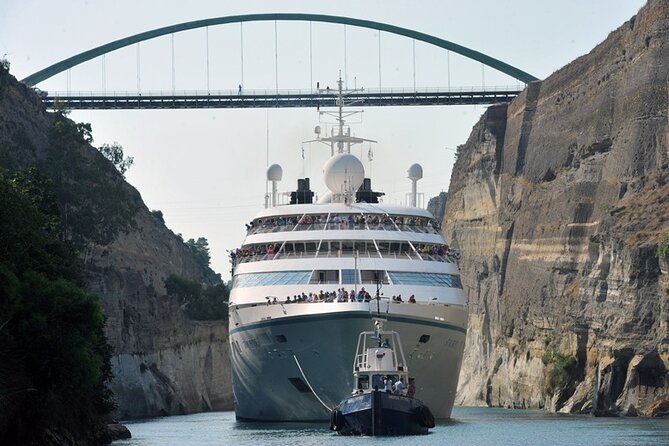
Your first morning begins with pickup from your Athens accommodation, airport, port, or rental location. After about an hour on the road, you reach the Corinth Canal, a narrow waterway cut across the isthmus. The canal is about 6.5 kilometers long and links the Aegean and Ionian seas.
The stop lasts around 15 minutes, which is enough for photos and a quick look at the dramatic cut through the rock. Do not expect a full canal cruise or a long visit. The attraction here is scale and engineering, especially when you see how narrow the passage is for modern ships.
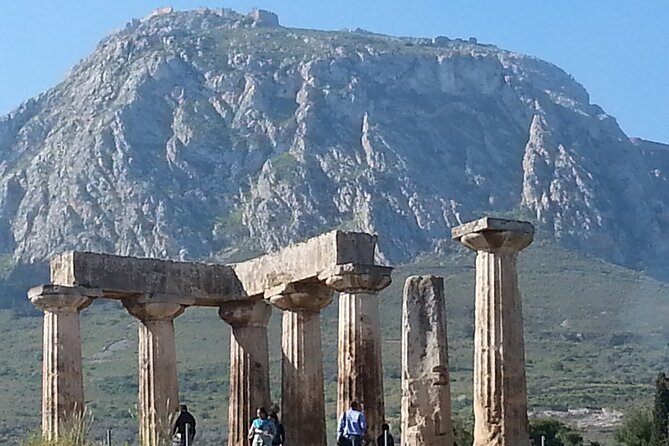
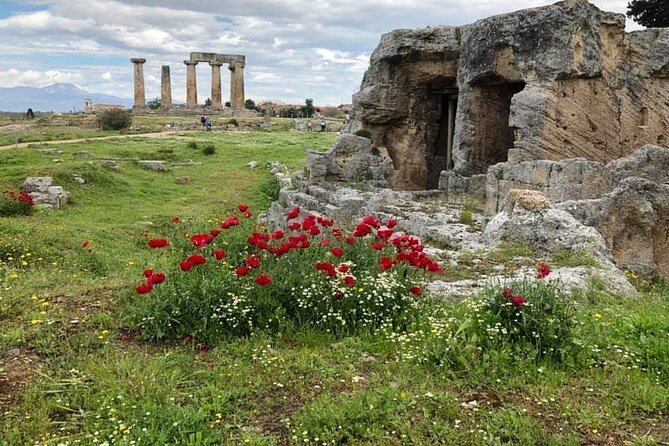
A short drive brings you to Ancient Corinth. The site is dominated by the Temple of Apollo, a Doric structure dating from about 550 to 530 BC. Much of what surrounds it comes from the Roman period, including the forum, public buildings, baths, the Asklepeion, and the Bema associated with St. Paul’s address to the Corinthians.
You get about an hour here, including time for the archaeological museum. I would pay close attention to the setting as well as the stones. Corinth was not an isolated hilltop sanctuary. It was a major city in a key position between northern and southern Greece, and the remains make more sense when you picture its commercial and political role.
The admission fee is not included, so add it to your day’s spending. A licensed guide is also extra. Your English-speaking driver provides live commentary, but a dedicated archaeologist can offer a more detailed reading of the site.
Epidaurus and the science of sound
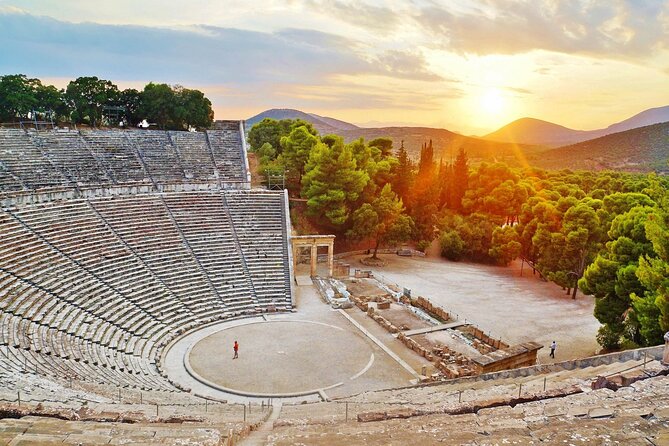
About 75 minutes later, you arrive at Epidaurus, a sanctuary devoted to Asclepius, the ancient god of healing. The site is a UNESCO World Heritage site, but the theater is the main reason most people remember the visit.
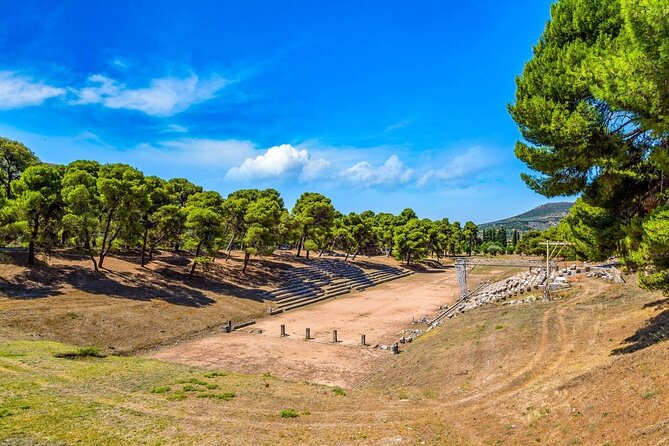
The Theater of Epidaurus is among the best-preserved classical Greek theaters. You can test its famous acoustics from the orchestra while someone else stands higher up in the seating. The point is not only the sound. The theater shows how carefully Greek architects combined sightlines, slope, proportion, and public gathering space.
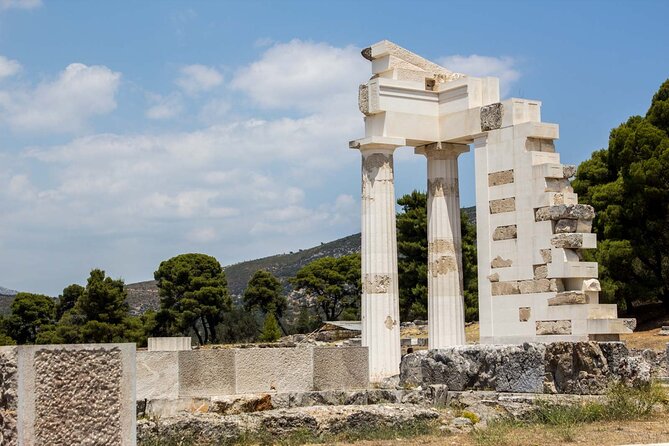
Allow roughly 90 minutes. Besides the theater, you see the Tholos, the Stoa of Abaton, the stadium, and the museum. The sanctuary was much more than a performance venue. It was a place connected with healing, ritual, athletic activity, and care for visitors.
The site requires walking, and the large open spaces can feel exposed in warm weather. Comfortable shoes and water are sensible. Since entry is extra, check the current admission arrangements when booking.
Mycenae, lunch in Tolo, and a night in Nafplio
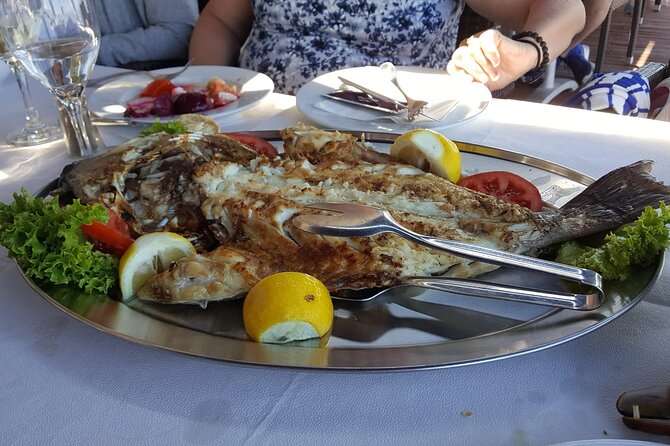
After Epidaurus, the route continues toward Tolo, a seaside village known for fish and seafood. Lunch is not included unless you choose the lunch option, so you can either arrange that option or pay directly at the tavern.
Then comes Mycenae, one of the strongest stops on the entire trip. The entrance through the Lion Gate is instantly memorable, and the massive stone walls give the place a heavy, almost cinematic feel. This was the center of the Mycenaean civilization, which dominated much of the eastern Mediterranean from the 15th to the 12th century BC.
You walk past royal graves and the Treasury of Atreus, a large beehive-shaped tomb. The site is linked with Agamemnon, the legendary king associated with Homer’s Iliad, but the ruins also offer solid archaeological evidence of a powerful Bronze Age society.
The planned visit is about an hour. That is enough to see the main features, but not enough for a slow inspection of every corner. Mycenae involves uneven ground and some elevation change, so this is one of the places where sturdy footwear helps.
The day ends in Nafplio, one of Greece’s most attractive small cities and the country’s first capital. Its old center has narrow cobbled lanes, neoclassical buildings, cafes, and taverns. From the waterfront, you can look toward Bourtzi, the small fortress in the harbor.
Accommodation is arranged at a four-star or boutique hotel such as Ippoliti, subject to availability. This overnight is a real benefit. Nafplio is much more pleasant to explore in the evening than as a quick daytime photo stop, though the schedule gives you about an hour of organized sightseeing rather than a full free evening.
A few more Athens days worth a look
- 3-Day Classical Greece Tour: Epidaurus, Mycenae, Nafplion, Olympia, Delphi
★ 4.5 · 342 reviews - From Athens: 3 Days in Meteora & Delphi with Tours & Hotel
★ 4.6 · 97 reviews - Meteora & Delphi 3 Days Semi Private Tour
★ 4.5 · 80 reviews - Athens: 3 days 2 nights Meteora with small size tours & hotel
★ 5.0 · 63 reviews
Day 2: Olympia and the road across the Gulf
After breakfast, expect a roughly two-hour drive to Olympia. This is the longest major stop of the morning, with about two hours for the archaeological site and museum.
Ancient Olympia was the religious center of the Olympic Games and one of the most important sanctuaries in the Greek world. You walk along ancient paths past the temples of Zeus and Hera, the Bouleuterion, the Prytaneion, the stadium, the Gymnasium, the Palestra, and the workshop linked with the sculptor Pheidias.
The stadium is the part that tends to make the ancient contests feel real. It is not a modern arena with grandstands and screens. It is a long, open field surrounded by earth banks, and that simplicity helps you picture athletes competing before large crowds.
The museum adds crucial context. Look for the Nike of Paionios and the Hermes with the Infant Dionysus, two of the collection’s best-known works. The museum visit keeps Olympia from becoming a confusing field of foundations. You see the sculpture and decoration that once gave the sanctuary its visual power.
You can eat lunch in the modern village of Olympia at a traditional tavern. Again, lunch is your responsibility unless you select the optional lunch arrangement. Two hours is a useful amount of time, but Olympia is broad and can be hot. If you enjoy ancient sites, you may wish you had longer.
Achaia Clauss, the Rio-Antirrio Bridge, and Nafpaktos
After Olympia, the tour may include a complimentary one-hour visit to Achaia Clauss, described as Greece’s oldest winery. The stop includes wine tasting and an introduction to Greek grape varieties and winemaking methods. It is optional, but it gives the day a welcome change of pace after several archaeological visits.
The route then reaches the Rio-Antirrio Bridge, also called the Charilaos Trikoupis Bridge. Completed in 2004 for the Olympic Games, it crosses the Gulf of Corinth and connects the Peloponnese with western mainland Greece. The bridge stop is brief, about 10 minutes, but the crossing itself is one of the memorable road sections of the tour.
Next comes Nafpaktos, a small Venetian port with a castle above town. You have about 30 minutes to walk around the harbor and stop for coffee or tea. That is enough to appreciate the setting, but not enough for a full castle visit. If you want substantial time here, ask the operator in advance what can be adjusted.
The drive continues to Galaxidi and Delphi. Depending on availability, your second night is at a four-star or boutique hotel such as Ganimede in Galaxidi or Nidimos in Delphi. Galaxidi has a seaside, island-like feel, while Delphi places you closer to the next morning’s archaeological visit.
This part of the trip is especially good for seeing Greece beyond Athens and the famous monuments. You pass through towns by the water and in the mountains, and the route itself becomes part of the experience.
Day 3: Delphi, Arachova, and Hosios Loukas
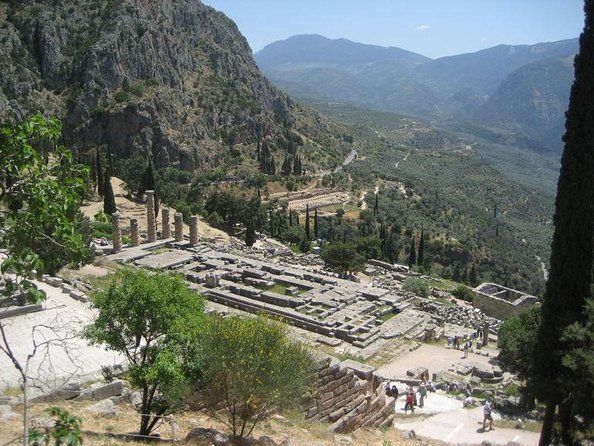
The final morning is devoted to Delphi, one of the most important religious centers of the ancient world. The sanctuary was linked with the oracle Pythia, whom rulers and military leaders consulted before major decisions. That political role helps explain why Delphi grew wealthy and why its buildings and offerings were so elaborate.
You visit the Temple of Apollo, the Amphictyonic Council, the Siphnian Treasury, the theater, the Tholos, the Gymnasium, and the stadium. The site climbs along the slope, so be ready for stairs, uneven paving, and changes in elevation. The views across the valley are part of what makes Delphi so memorable, but the walking can be tiring.
The museum is equally important. Its collection includes the Charioteer of Delphi, the Sphinx of the Naxians, and the statues of Kleobis and Biton. Plan to spend real attention here rather than treating it as an afterthought. The museum gives you the objects that once filled the sanctuary with color and human presence.
The site and museum visit takes about two hours. That is enough to cover the main route with a good driver’s introduction, though you may want longer if you read every display or photograph extensively.
Lunch follows at a traditional tavern such as To Patriko Mas, selected for its food, service, hygiene, and wide view toward the valley and sea. Lunch is not included, so budget separately. A good meal here can be one of the more relaxing moments of the trip after the morning’s uphill walking.
Arachova and the Byzantine mosaics of Hosios Loukas
After lunch, you stop in Arachova for about 30 minutes. This mountain resort is known for skiing, local embroidery, handmade goods, olives, and formaella cheese. The time is brief, so think of it as a chance to stretch your legs and sample local products rather than a full town visit.
The last major stop is Hosios Loukas, a UNESCO World Heritage site and one of the finest Byzantine monuments on the route. The monastery dates to the early 10th century and is known for its mosaics and frescoes. The crypt frescoes were cleaned in 1960 after being covered by plaster for many years.
This visit adds a period of Greek art that the ancient sites do not cover. After temples, theaters, athletic grounds, and Roman forums, the monastery shows the religious art and architecture of the Byzantine era. Allow about an hour, and remember that admission is not included.
From Hosios Loukas, your driver takes you back to your Athens residence, port, or airport at no extra charge. The return timing depends on the day’s roads and stops, so avoid placing a tight onward connection immediately afterward unless you confirm the schedule directly.
What the private service is really worth
The listed cost is $1,078.60 per person, which is substantial. Its value depends heavily on the size of your group. For one or two people, it is a premium way to cover a route that would be difficult by public transport. For a family or small group, the cost may compare more favorably with separate car hire, fuel, hotels, parking, navigation, and the time spent managing the route yourself.
You receive two nights of accommodation with breakfast, a private vehicle, Wi-Fi, air-conditioning, bottled water, an English-speaking driver, and pickup and return service. The vehicle also removes the stress of driving unfamiliar roads after long days at archaeological sites.
Do not mistake the included driver commentary for a full guided tour by an archaeologist. A licensed guide is available for an extra fee. If ancient art and site details are central to your trip, I would consider adding one, especially at Delphi, Olympia, or Mycenae.
The most praised part of the service is the human element. Drivers named Petros, Janus, and Giannis have been associated with especially strong experiences. Their role goes beyond steering the car: they explain Greek mythology and history, suggest restaurants, help with local customs, and choose practical stops. Giannis was also singled out for comfortable driving and helpful hotel choices away from standard tourist areas.
Who should book this three-day journey
I would recommend it to you if you want a broad introduction to mainland Greece and prefer private transport to a self-drive plan. It suits couples, families, and small groups who value comfort, flexible conversation, and door-to-door service.
It is also a good choice if you want more than ancient ruins. Nafplio, Tolo, Nafpaktos, Galaxidi, Arachova, the winery, and the bridge break up the archaeology with food, scenery, local products, and modern Greek life.
I would hesitate if you want long, quiet visits at every site. The schedule is ambitious, and the driving days are real. People with limited walking ability should also ask detailed questions before booking, since several sites include uneven surfaces and uphill sections.
The tour has a five-star rating from five published reviews, which is encouraging, but that is a small sample. The clearest pattern is praise for comfortable transport, boutique hotels, thoughtful food suggestions, and the drivers’ command of Greek history and mythology.
Final verdict: a smart splurge for first-time visitors
Book this tour if you want to see Corinth, Mycenae, Olympia, Delphi, and Hosios Loukas without spending weeks planning transport. Its strongest feature is not any single monument. It is the way the private route links major ancient sites with attractive towns and countryside, while a capable driver keeps the trip moving.
Skip it if your priority is a slow pace or the lowest possible cost. For everyone else, this is a practical three-day sweep of the Peloponnese and Delphi, with enough comfort and local guidance to make the long distances worthwhile. Free cancellation is available up to 24 hours before departure, which gives you some useful flexibility when making the final decision.
FAQ
Where does the tour begin and end?
Pickup and return are available from Athens hotels, Airbnb accommodations in Athens and its suburbs, Athens airport, ports, and rental locations. The driver waits at the lobby, port, or airport with a sign showing your name.
How long is the tour?
The experience lasts approximately three days and includes two nights of accommodation.
Which destinations are included?
The route includes the Corinth Canal, Ancient Corinth, Epidaurus, Mycenae, Nafplio, Olympia, Achaia Clauss as an optional stop, the Rio-Antirrio Bridge, Nafpaktos, Galaxidi, Delphi, Arachova, and Hosios Loukas.
Are hotels and breakfast included?
Yes. Two nights at four-star or boutique hotels with breakfast are included. Examples named for the route include Ippoliti in Nafplio, Ganimede in Galaxidi, and Nidimos in Delphi, subject to availability.
Are archaeological entrance fees included?
Most archaeological admission fees are not included. Achaia Clauss and the Rio-Antirrio Bridge stop are listed as included, while admission to sites such as Ancient Corinth, Epidaurus, Mycenae, Olympia, Delphi, and Hosios Loukas is extra.
Are meals included?
Breakfast at the hotels is included. Lunches, dinners, and drinks are not included unless you select the lunch option. The route includes restaurant suggestions in Tolo and Delphi.
Is this a private tour?
Yes. Only your group participates. You travel in a private luxury vehicle with air-conditioning, Wi-Fi, bottled mineral water, and an English-speaking driver.
Can I book a licensed guide?
Yes. A licensed guide is available on request for an additional cost. The standard tour includes an experienced English-speaking driver who provides live commentary.
Freshly added Athens trips
- Athens and Ancient Corinth Private from Athens★ 5.0 · 3 reviews
- From Athens: Mycenae and Epidaurus Private Tour★ 4.8 · 3 reviews
- Full day Meteora private tour★ 5.0 · 3 reviews
- Double Shore Dive (certified divers)★ 4.5 · 3 reviews
- Athens Hills: Mythology Treasure Hunt★ 5.0 · 3 reviews
- Sunset & swimming at Cape Sounio, Poseidon temple★ 5.0 · 3 reviews
- Philosophy Experience at Plato’s Academy Park – basic version★ 5.0 · 3 reviews
- Private Acropolis Tour – Ticket Included★ 5.0 · 3 reviews
Delphi Tours, compared.

Mythology of Delphi, Museum and Arachova Guided Tour
Read our review →
Small-Group Delphi, Museum & Arachova Day Trip
Read our review →
Delphi English Day Trip from Athens with Official Guide
Read our review →
Delphi Guided Trip with Optional Lunch and Entry
Read our review →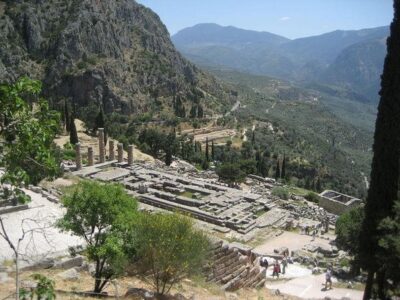
Historical Delphi One Day Tour with Arachova Stop & Expert Guide
Read our review →
Premium Delphi Day Trip with an Expert Guide, Museum & Lunch
Read our review →
Browse the lists this tour appears in